




Dense Stack No Miss: AUTOID UTouch 2-20 Anti-Collision Solution
A pallet in the warehouse holds four to five hundred cartons. The worker walks past with a standard RFID handheld reader. The system compares the results — thirty or forty tags are missing. Then comes the re-scan, the manual data entry, the inventory window stretching from 20 minutes to 2 hours. And the book-to-floor match still doesn't add up.
This isn't a "not reading far enough" problem. It's a signal collision problem — hundreds of tags in a dense stack all trying to talk at the same time.
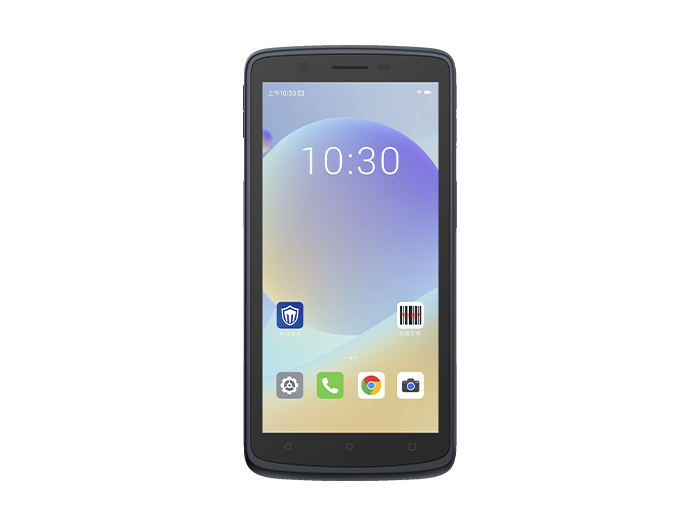
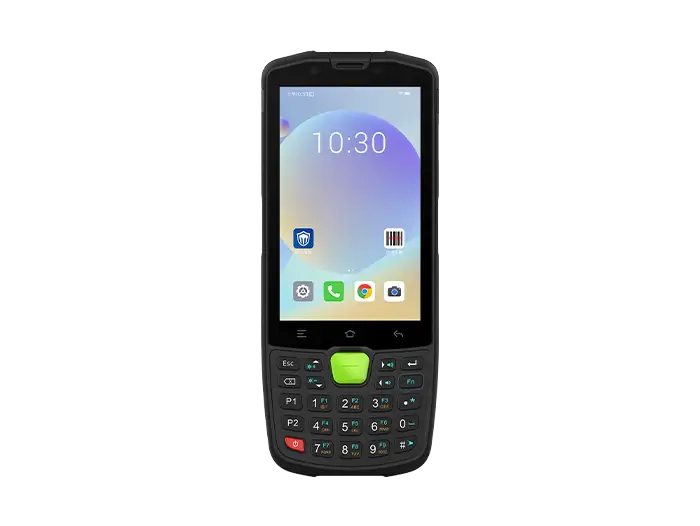
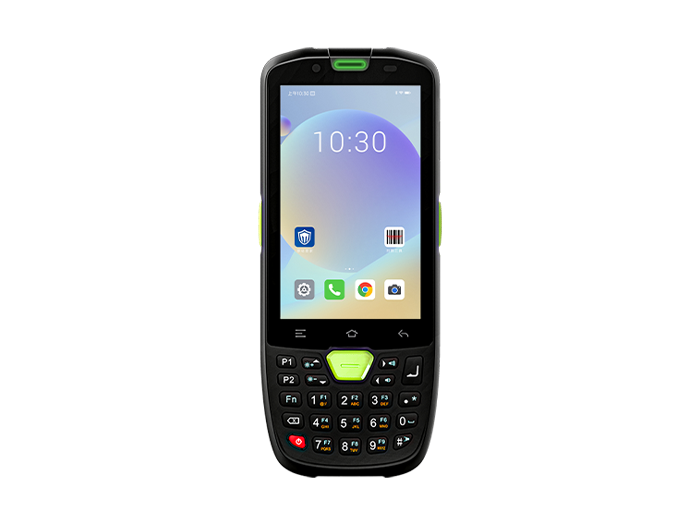
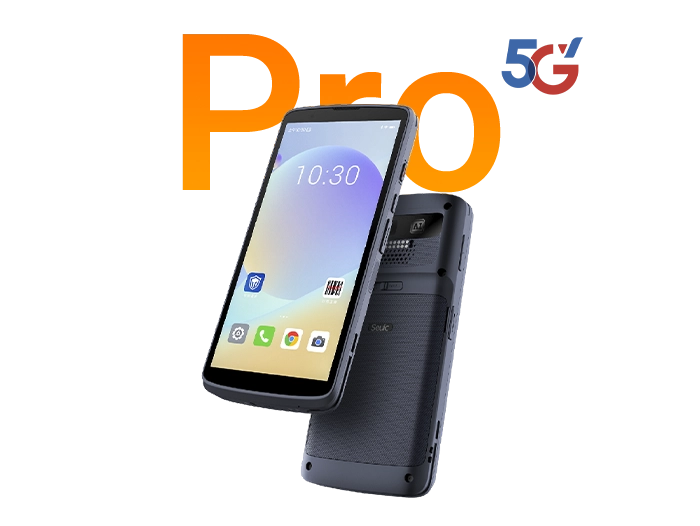
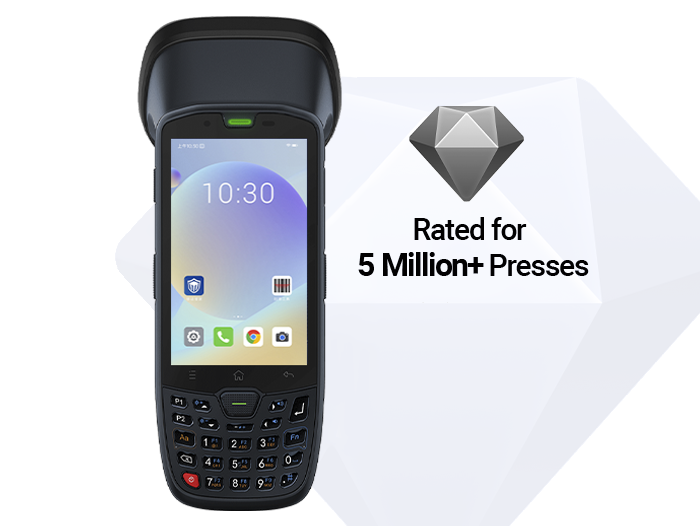
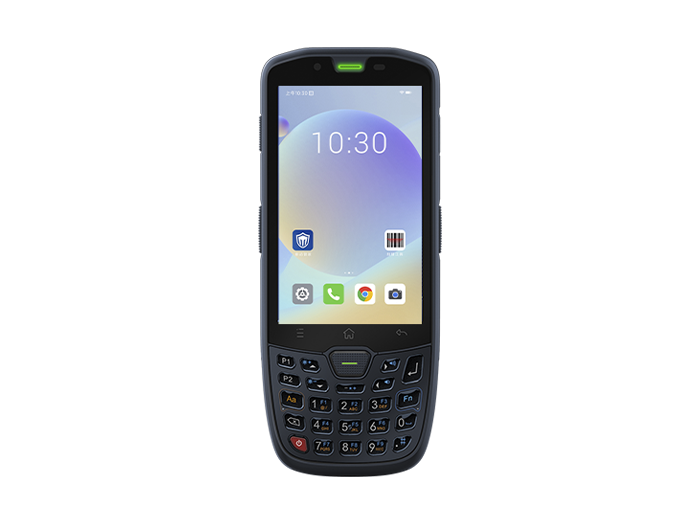
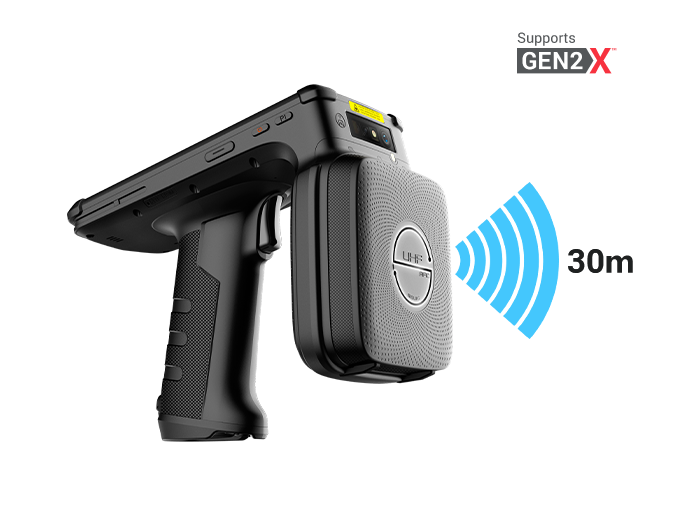
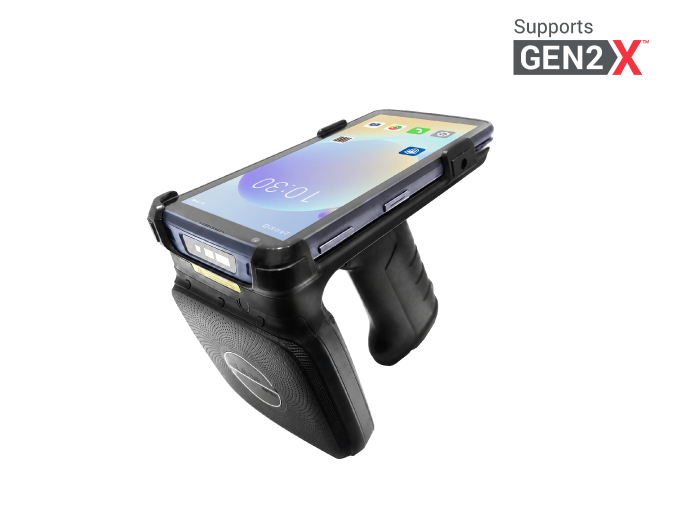
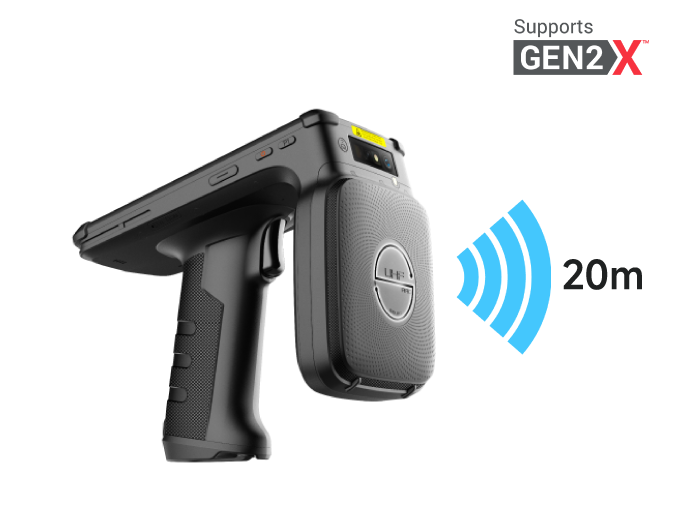
The SEUIC AUTOID UTouch 2-20 takes a straightforward approach: proprietary anti-collision algorithm + 1,300 reads/sec bulk read speed + 0–20m adjustable power stepping. It turns "reading hundreds of tags within a 1–2 second dwell window" from a game of chance into a predictable outcome. Then it layers on a sunlight-readable display, IP67, 2m drop resistance, and an 11,700mAh swappable battery — so this capability stays reliable on outdoor docks, open yards, and night shifts alike.
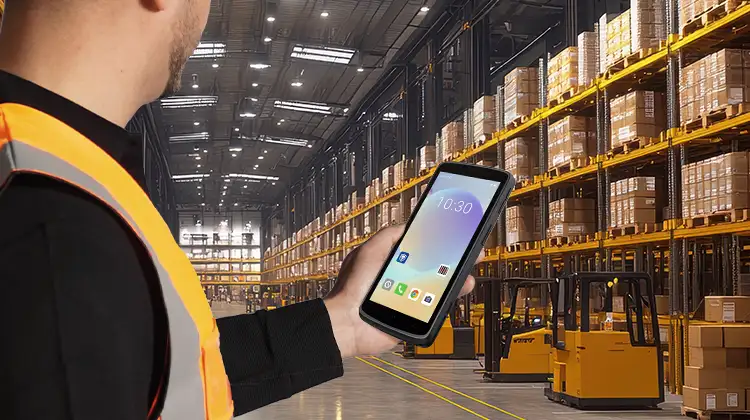
1. Why Traditional Devices Always Miss Those Last Few Dozen Tags
Many sites react to missed tags by switching to an RFID reader with "longer read range." The tags still get missed. The root cause isn't RF distance — it's three layers jamming up at the same time:
Protocol layer (tag collision): Hundreds of UHF tags wake up simultaneously. If the anti-collision scheduling is coarse, a large portion of tags never get a time slot. Their returned EPCs overlap in the air into garbled noise — the reader hears nothing intelligible.
RF layer (energy and obstruction): Cardboard attenuates the 920MHz signal. Five layers deep, the innermost tags have to penetrate multiple box walls. Liquid cargo absorbs 6–10dB of energy. Metal racking creates multipath reflections that produce dead zones and cross-pallet misreads.
Operational layer (time budget): A worker walks a cart past a pallet. Tags remain in the beam for only 1–2 seconds. If the device manages only 100–200 reads per second, it physically cannot finish reading several hundred tags in that window.
Traditional barcode scanners are even worse — you have to aim at each item individually. Dense stacks essentially force workers to crawl into the racking. Low-end RFID handhelds use pure ALOHA or fixed frame lengths. As tag counts rise, throughput collapses. "Spec says 30 meters, but 10% miss rate on the floor" is the norm.
Pain point summary: Missed reads in dense stacks = unresolved collisions + insufficient dwell time + return signal eaten by complex media. Switching to a longer-range device treats the symptom, not the cause.
2. Three Technical Solutions That Target the Miss Point Directly
2.1 Proprietary Anti-Collision Algorithm + 1,300 Reads/sec — Turning "Shouting Over Each Other" Into "Taking Turns"
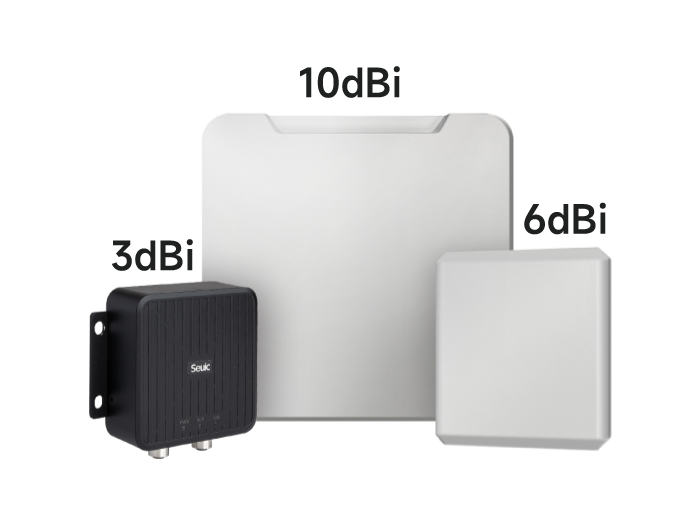
The AUTOID UTouch 2-20 is powered by SEUIC's self-developed anti-collision scheduling, paired with an E710-grade engine and a 5dBi high-sensitivity antenna. Maximum bulk read speed reaches 1,300 reads per second.
In the dense pallet scenario: once hundreds of tags enter the field, the algorithm dynamically allocates time slots, deduplicates by RSSI and read count, and completes a full pallet scan within a 1–2 second dwell window — instead of "reading half and moving on."
Compared to traditional fixed-frame ALOHA (throughput ceiling of ~36.8%), dynamic scheduling pushes effective recognition rates into the 99% range under high-density conditions.
Real-world impact for dense stacks: High-bay racking, full pallets of bottled goods, case-packed apparel, pharmaceutical totes — no more "scan twice to catch the misses." One pass, books match.
2.2 1–33dBm Precise Stepping + 0–20m Adjustable Range — Preventing "Neighbor Pallet Misreads"
Read range isn't always better. Two pallets sitting side by side on a dock, or shelves separated by 80cm — crank the power too high and you'll pull in tags from the next pallet over, creating cross-zone misreads and defeating the purpose of inventory accuracy.
The AUTOID UTouch 2-20 supports 1–33dBm stepped power control with an adjustable recognition range of 0–20m, lockable by scenario.
Dense small-bin positions: set 10–15dBm, read only the target pallet
High-bay racking: set 25–30dBm, reach the top tier
Outdoor yard: max out at 33dBm, cover 20m
With scene-based one-tap parameter presets, warehouse staff don't need to understand RF theory. Just select "Pallet Mode / Shelf Mode / Dock Mode."
2.3 Sunlight-Readable Display + IP67 / 2m Drop + 11,700mAh — No Blackouts or Glare Outdoors
Dense inventories often happen on open docks, freight yards, utility inspections, and gas meter routes — places where ordinary screens turn into mirrors under direct sunlight.
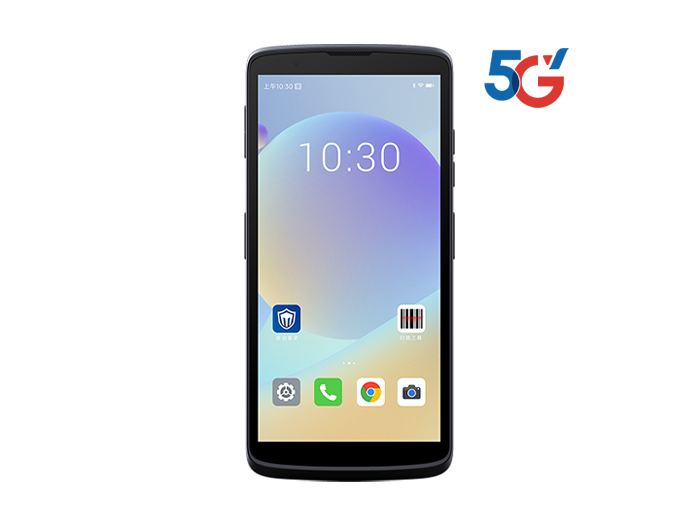
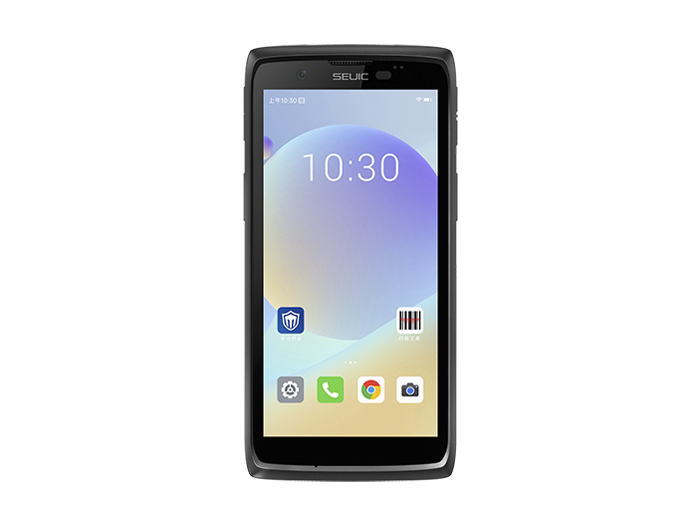
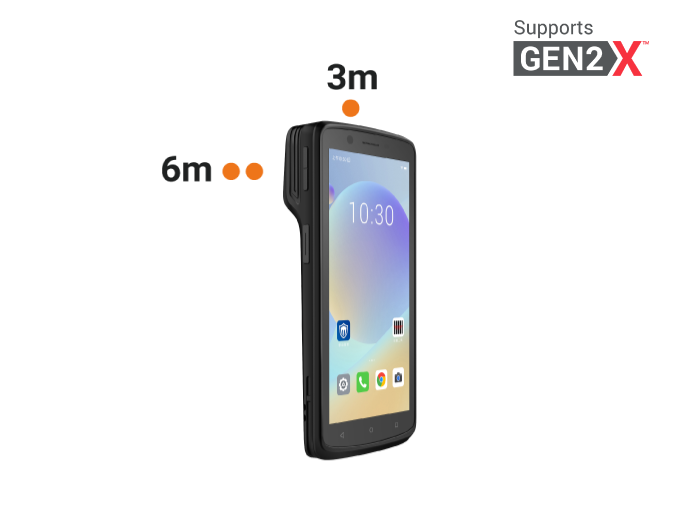
5.5-inch 1440×720 high-brightness capacitive touchscreen: Clearly readable under strong light, responsive with gloves on
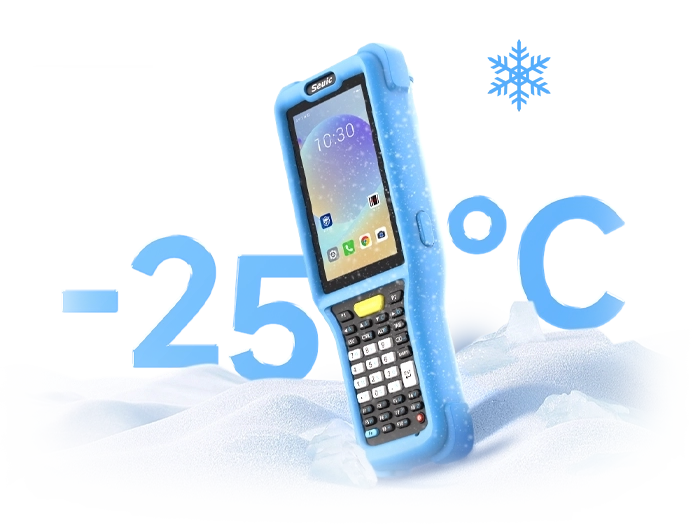
IP67 dust/waterproof + 2m concrete drop survival: Unfazed by rainy docks, muddy yards, or freezer condensation
11,700mAh (5,000 host + 6,700 handle, swappable): Reads 50,000+ tags in a single shift without breaking a sweat. QC3.0 fast charging. Hot-swap without powering down
Wi-Fi 6 roaming improved by 70%: Data syncs to WMS in real time as you walk — no local cache backlog or lost transactions
3. Which Industries Should Deploy This Device First
Warehousing / Third-Party Logistics (3PL) / E-commerce fulfillment centers: Full-pallet receiving, high-bay full-cycle inventory, dock-outbound verification — preventing cross-pallet misreads
Factories / Production supervisors / QC: Raw material bins, WIP transfer carts, finished goods pallets in dense stacks — batch traceability and error-proofing
Retail chains / Department stores / Apparel brands: Back-room case-stacked inventory, store rear stockroom dense hanging inventory — sunlight-readable display handles showroom lighting
Supermarket operations / Store managers: Mixed fresh-food back rooms (liquids + metal cans) and ambient high-stack inventory
Courier sorting / Transit hubs: Cage cart dense parcel group reads — 1–2 second pass, no missed parcels
Hospital pharmacies / Consumables storage / Nursing units: Dense drug carton stacks, anti-metal consumables cabinets — inventory accuracy directly affects medication safety
Gas / Water / Electric utility inspectors / Government field enforcement: Outdoor strong light, rain and dust environments — 20m long-range reads of meter box / valve tags. IP67 + 2m drop survival
4. Frequently Asked Questions (FAQ)
Q1: What if the pallet mixes liquid cargo and cardboard boxes? Can the AUTOID UTouch 2-20 still read everything?
A: Liquid absorption is real, but the AUTOID UTouch 2-20 compensates by scanning from both sides, adjusting power levels, and using anti-collision deduplication to recover inner-layer tag reads. For pure metal surfaces, pair with on-metal tags. The device's 33dBm full power can suppress most reflection dead zones.
Q2: Is the 1,300 reads/sec a lab peak or achievable on the floor?
A: Under typical dense pallet conditions (200–500 tags, 1.5-second dwell), combined with dynamic anti-collision, it runs stably at full speed. If tag batch sensitivity varies significantly, we recommend avoiding mixed batches on the same pallet.
Q3: Is the high-brightness display truly readable at noon outdoors?
A: Yes. The 5.5-inch 1440×720 high-brightness capacitive screen is industrially tuned for strong light visibility, with glove touch support. It's a full grade above standard Android screens in usability under direct dock sunlight.
Q4: Will it read tags from the neighboring shelf?
A: It can — if you don't adjust the power. That's exactly why the 1dBm stepping exists. Lock it to 10–15dBm to read only your target pallet, or enable zone filtering + read-count threshold deduplication.
Q5: Will the battery last a full shift?
A: The 11,700mAh swappable battery is rated for 50,000+ tag reads. For outdoor patrols, swapping the handle battery once every 8–10 hours is sufficient — no need to return to base for charging.
Missed reads in dense stacks are fundamentally three things piling up: unresolved collisions, not enough time, and the environment eating the signal. The AUTOID UTouch 2-20 doesn't brute-force its way through with more range. It uses an anti-collision algorithm to push bulk reads to 1,300/sec, 1dBm stepping to prevent cross-zone misreads, and a sunlight-readable display + IP67 + large battery to keep the connection alive outdoors. It turns inventory from "scan twice, patch once" into "one pass, books match the floor."
Would you like to review the AUTOID UTouch 2-20 specification comparison table first, or jump straight to an on-site deployment checklist? Contact SEUIC to request a one-on-one expert consultation and a free demo unit.
Related News
-
Can't Scan Wrinkled/Dirty Barcodes? CRUISE GeP AI Decoding Solution
Product Updates | 2026.11.23Learn More
-
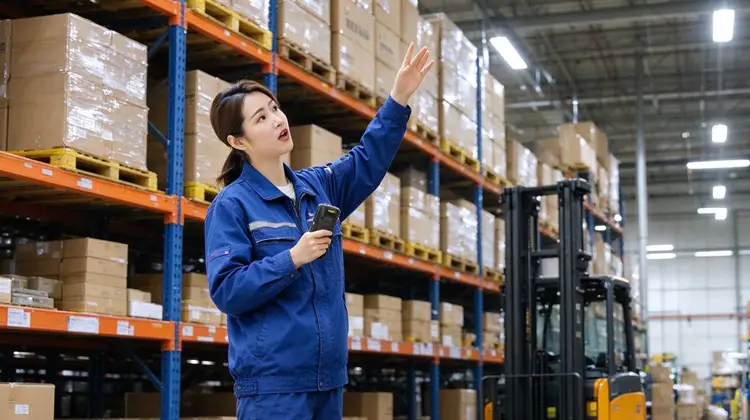
Scan High Shelves Without Climbing: AUTOID Q9 Pro Ground-Level Inventory Solution
Product Updates | 2026.11.23Learn More
-
No More Mis-Scans Under Glare: SEUIC CRUISE2 Bright Screen Solution
Product Updates | 2026.11.23Learn More
-
Hard to Read Engine Block Dot-Peen Code? HS305DP AI Reconstruction Solution
Product Updates | 2026.11.17Learn More