











Hard to Read Engine Block Dot-Peen Code? HS305DP AI Reconstruction Solution
The traceability code on an engine block is often not a "clear, crisp barcode." It's a row of tiny indentations punched into the metal by a dot-peen marker. The dots are disconnected, the edges are rough, and the cast aluminum surface has sand holes and porosity. Conventional scanners get confused — they try repeatedly, fail to read, slow down the production line takt time, and create gaps in the quality traceability chain.
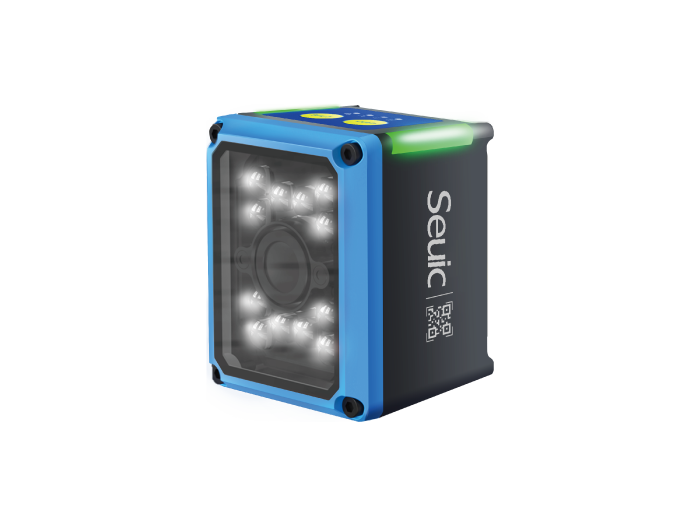
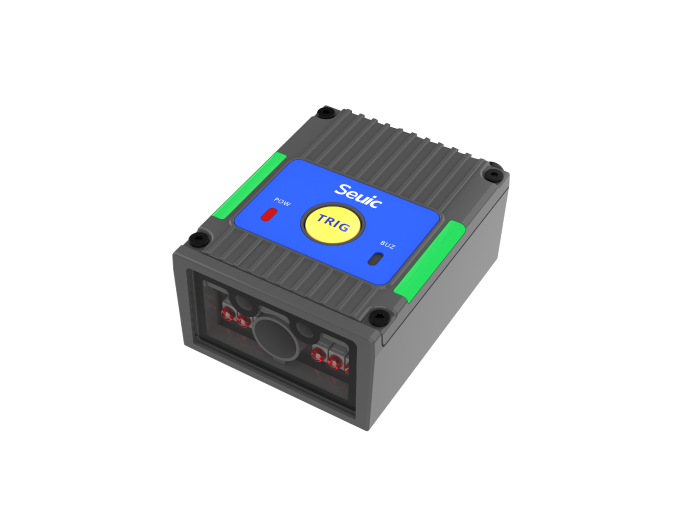
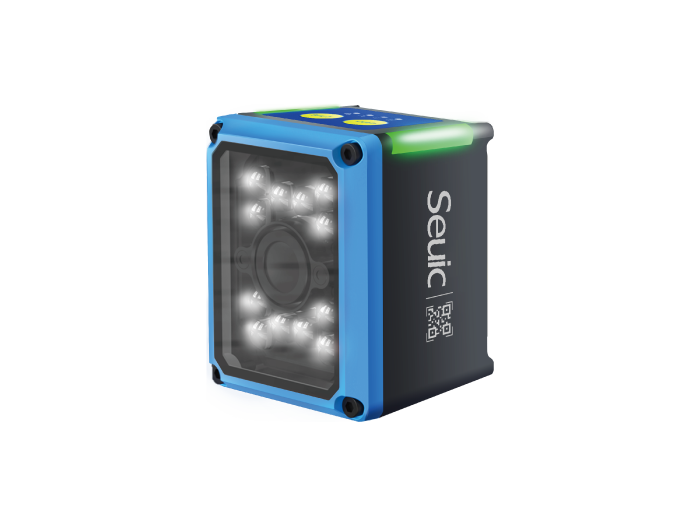
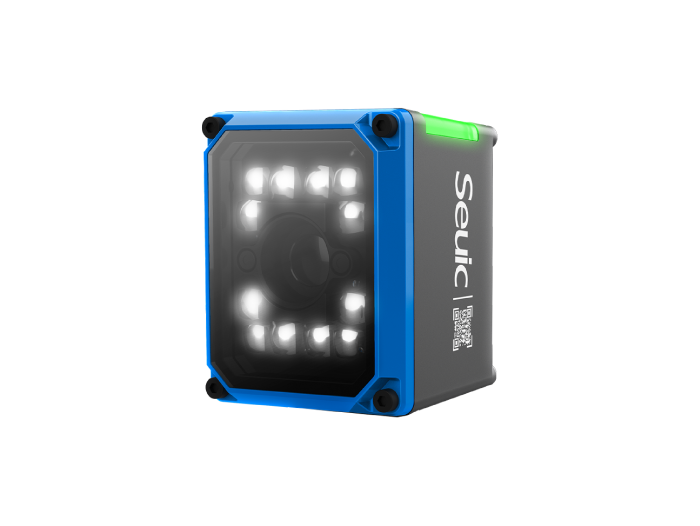
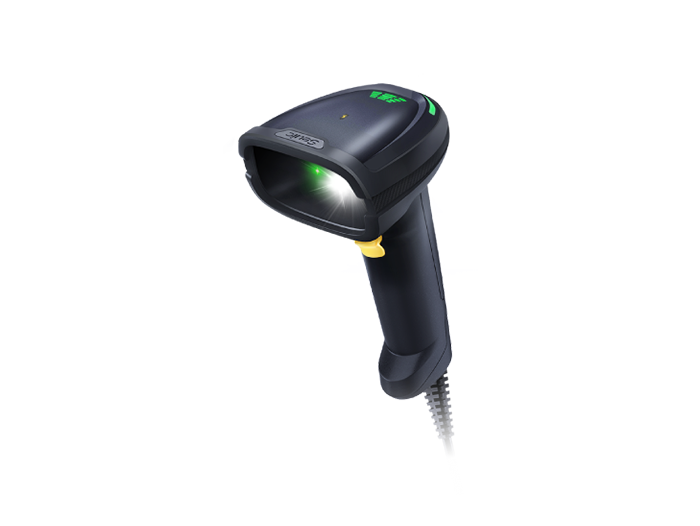
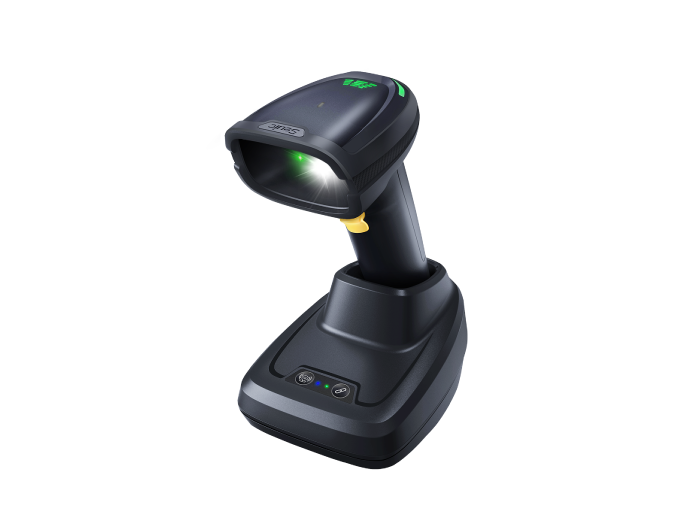
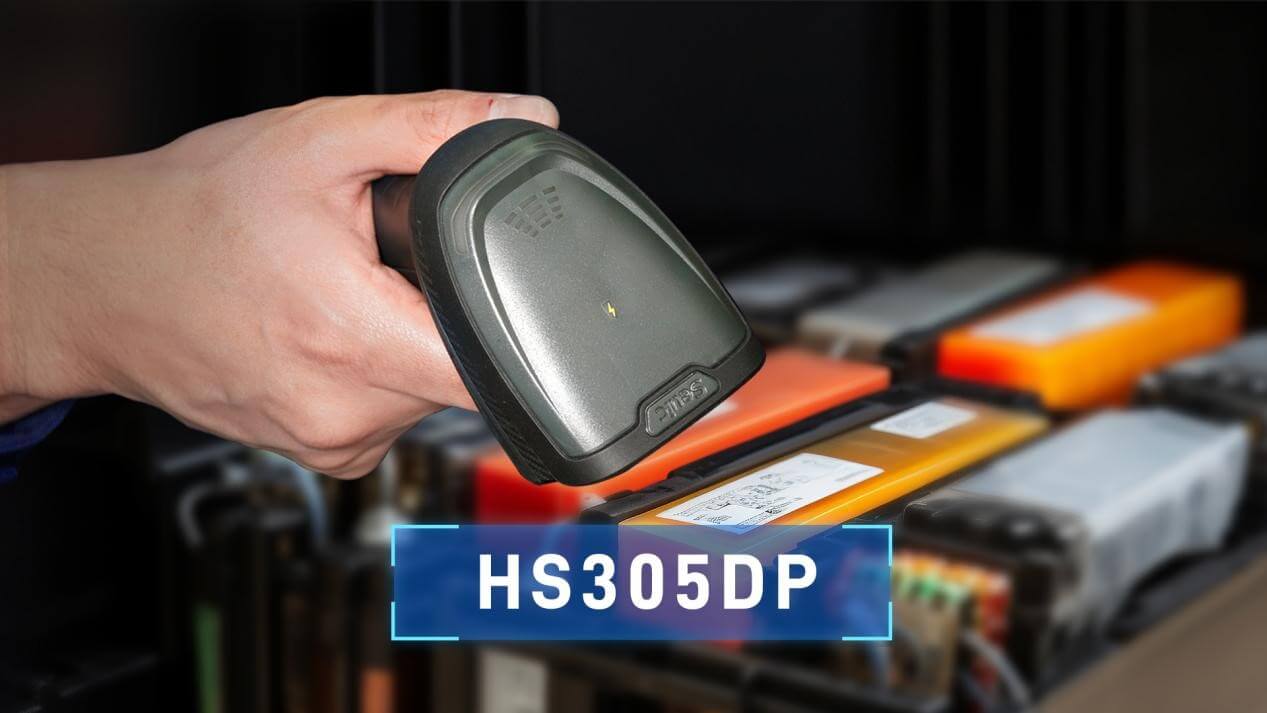
The SEUIC HS305DP AI-Powered Industrial Wired Barcode Scanner takes a different approach: "tri-color illumination + dual-core AI + discrete dot matrix reconstruction." It reassembles discontinuous dot-peen codes into complete Data Matrix symbols, achieving a 99.99% first-pass read rate — so engine block traceability goes from marking to data binding in a single pass.
1. Why Engine Block Dot-Peen Codes Are So Hard to Read
Dot-peen marking is fundamentally different from printed codes: each dot is an independent indentation with no continuous border. On an engine block, the challenges multiply:
Discontinuous characters: Large dot spacing, visible gaps — ordinary algorithms tend to filter out the dots as noise
Cast surface interference: Sand holes, porosity, and brushed texture on cast aluminum/cast iron blend in with real dots
Low contrast + high reflectivity: Minimal brightness difference between raw metal surface and shallow indentations; oil film and cutting fluid further reduce contrast
Curved surfaces and restricted angles: Tight workspace around the engine block; a slight tilt of the scanner and you get "No Read"
Traceability chain break risk: If the code can't be read, operators resort to manual transcription — wrong numbers and missed entries flow directly into the MES/quality system
Industry consensus: 80% of dot-peen code reading failures are not "bad marking" — they're "wrong lighting + no dot reconstruction algorithm."
2. How the SEUIC HS305DP "Reconstructs" Discrete Dot Matrices
2.1 Dual-Core Processor + AI Discrete Dot Matrix Reconstruction
The HS305DP features a dual-core processor with an AI model specifically trained on dot-peen, distorted, and damaged codes.
When facing an engine block dot-peen code, it doesn't wait for a "perfect black-and-white grid." Instead, it:
Identifies the dot array pattern (find locator edges, find the grid)
Infers and fills in missing, shallow, or burred dots
Restores a decodable matrix according to Data Matrix structure
Think of it as "brain-powered alignment" for broken codes — even if a sand hole covers half a dot, it can still read.
2.2 Red/White/Blue Tri-Color Intelligent Illumination — Purpose-Built for Metal Reflection
Different engine block materials require different optimal lighting:
Blue light: Suppresses high reflection on aluminum/iron, making dot shadows more pronounced — best for metal dot-peen codes
White light: Brightens low-contrast, shallow markings
Red light: Penetrates thin oil films and rust preventive coatings
The device switches illumination automatically — no operator parameter adjustment needed. For dot-peen codes on cast aluminum blocks that previously required wiping off oil and trying 3–4 angles, now it reads in one pass.
2.3 Global Shutter + 60fps High Frame Rate + Wide Angle Tolerance
1280×1080 global shutter CMOS — no motion blur
Elevation angle ±60°, skew angle ±55° — reads codes in deep bores and angled surfaces
Minimum QR code resolution 5mil — sharp reading of tiny dot-peen codes
2.4 Industrial-Grade Durability + Plug-and-Play
IP54 protection, 1.8m drop resistance — survives workshop oil, dust, and vibration
USB/COM/RS232 interfaces — connects directly to production line industrial PCs
162g ergonomic design — comfortable for extended scanning sessions
3. Applicable Industries and Scenarios
Automotive & Engine Production Lines: Engine blocks, cylinder heads, crankshafts, camshafts — dot-peen code traceability
Automotive Tier 1/2 Suppliers: Gears, valve bodies, NEV e-drive housings — DPM binding
Construction Machinery & Heavy Trucks: Large casting permanent IDs, aftermarket reverse tracing
3C & Electronics Manufacturing: PCB through-hole codes, metal shell laser codes
Lithium Battery & New Energy: Cell housing shallow-etched codes, low-contrast codes
Warehousing & Quality Traceability: Inbound binding, first-article inspection, after-sales recall localization
4. Frequently Asked Questions (FAQ)
Q1: There's oil film on the engine block surface. Can the HS305DP scan through it?
Yes. Red light penetration + AI enhancement handles thin cutting fluid/rust preventive films. For heavy oil contamination, a quick air blow before scanning improves first-pass stability.
Q2: Several dots are missing from the dot-peen code. Will the data be misread?
Data Matrix has built-in error correction. The HS305DP's AI reconstruction prioritizes "structure recovery before decoding" in missing-dot scenarios, then verifies symbol logic — minimizing misread rates.
Q3: Compared to a fixed-mount reader, what advantages does the handheld HS305DP offer?
Fixed readers suit standard-takt workstations. The HS305DP is ideal for flexible production lines with frequent engine block changeovers, large workpieces, and the need for manual supplementary scanning or spot checks — with lower deployment cost.
Q4: Do I need a separate dedicated illumination controller?
No. The tri-color illumination switches intelligently within the scanner body. USB plug-and-play.
Q5: Can it connect to MES/ERP?
Yes. Supports standard serial port/USB keyboard wedge output — connects directly to industrial PCs, PDAs, or host traceability systems.
Engine traceability ultimately comes down to one thing: "the code can be marked, and it can be read." The HS305DP uses AI discrete reconstruction + tri-color reflection suppression to turn dot-peen codes from "blurry indentations" into "bindable data" — so engine block traceability no longer stalls at the scanning station. A 99.99% first-pass read rate isn't just a spec sheet number. It means one less rescan on the line, and one less gap in quality.
Need to evaluate marking parameters and code reading compatibility for your engine blocks? Contact SEUIC to request a free demo unit for testing — validate with your actual workpieces.
SEUIC Technologies Co., Ltd., founded in 2002, focuses on core technology, continuous innovation, and building world-class branded products including mobile computers, RFID readers, tablets, barcode scanners, and fixed-mount readers. With highly reliable products and efficient service, our solutions are widely used in manufacturing, retail, logistics, healthcare, and more. We equip frontline workers with durable, real-time data collection tools to improve operational efficiency and drive productivity to new heights.
Related News

-

Can't Scan Wrinkled/Dirty Barcodes? CRUISE GeP AI Decoding Solution
Product Updates | 2026.11.23Learn More
-

Scan High Shelves Without Climbing: AUTOID Q9 Pro Ground-Level Inventory Solution
Product Updates | 2026.11.23Learn More
-

Dense Stack No Miss: AUTOID UTouch 2-20 Anti-Collision Solution
Product Updates | 2026.11.23Learn More
-

No More Mis-Scans Under Glare: SEUIC CRUISE2 Bright Screen Solution
Product Updates | 2026.11.23Learn More