

Who Decided That Counting Needs a Gun?
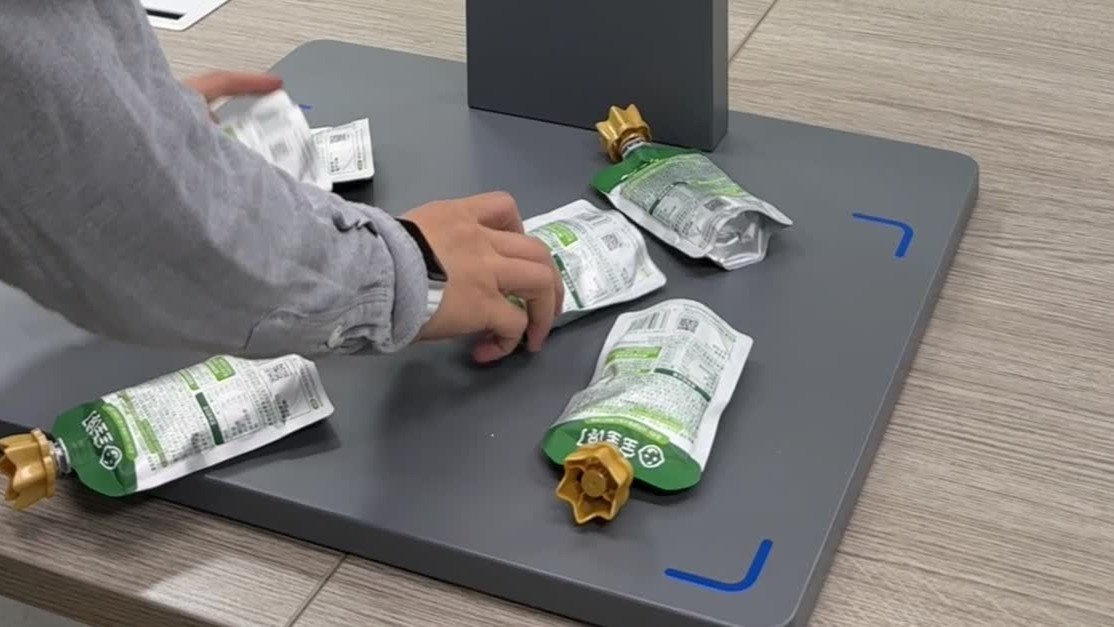
Walk into a clothing store on inventory day. Somebody has taken the RFID gun out of the cupboard, charged it the night before, and is now sweeping the rails with an arm held out in front of them. Two hours later the count is done, the gun goes back in the cupboard, and nobody touches it again for a month.
That cupboard is worth thinking about.
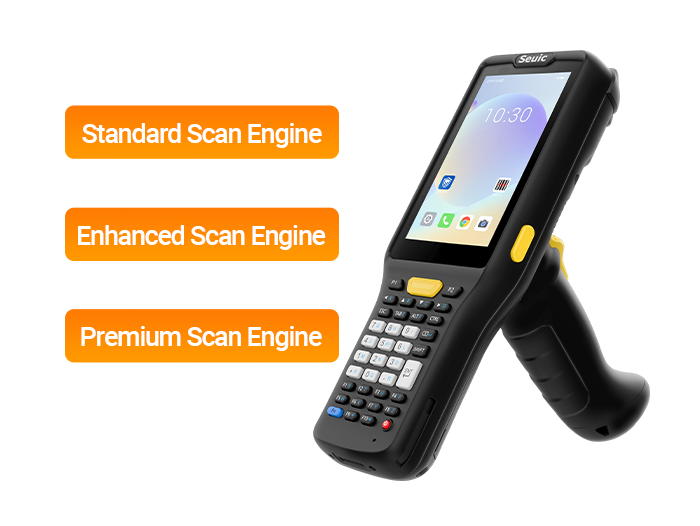
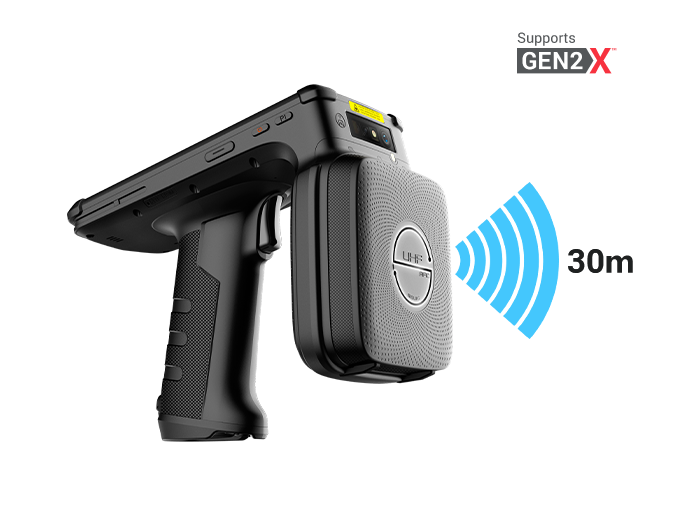
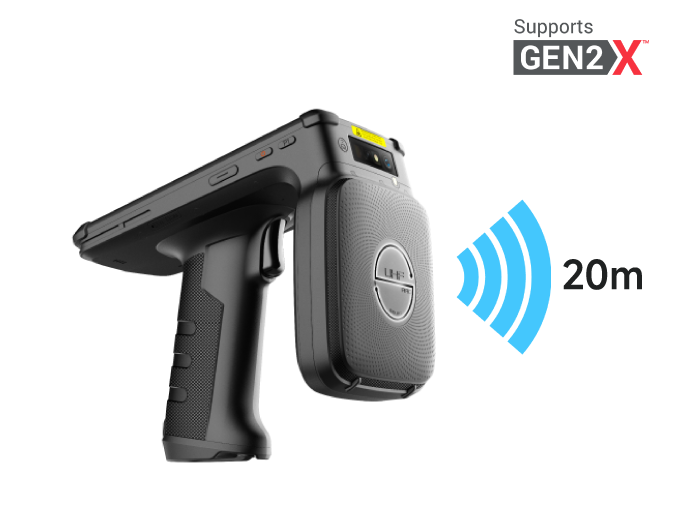
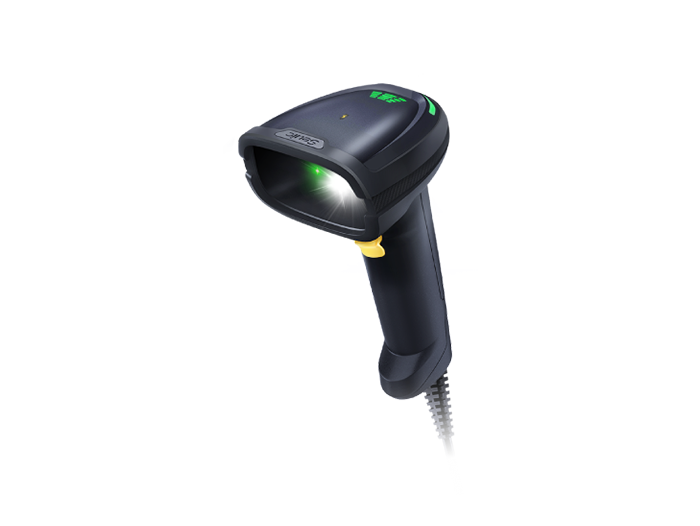
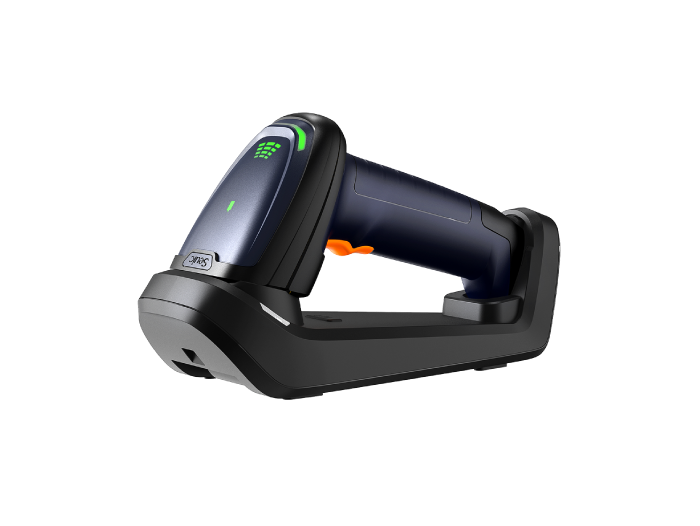
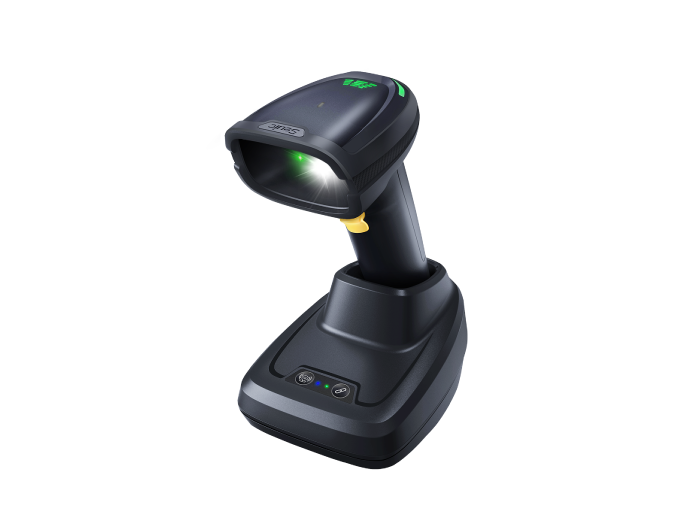
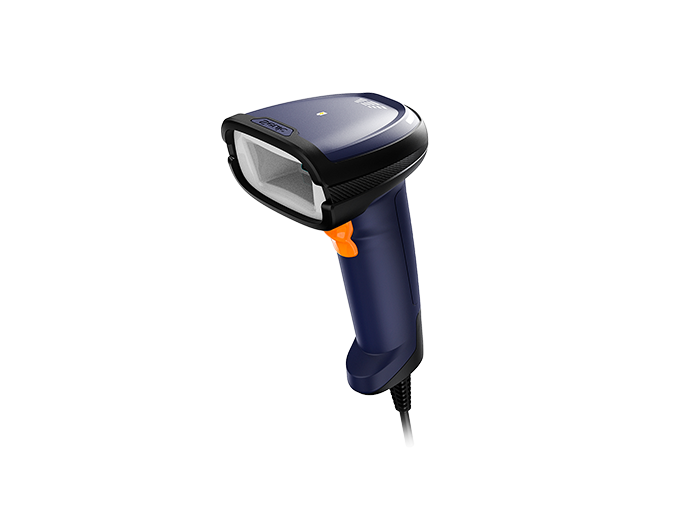
The pistol grip became the default shape of RFID long before most of today's use cases existed. It was designed for warehouses: high racking, pallets deep in an aisle, tens of thousands of tags to read in one pass, an operator whose entire shift is the count. For that work it remains the right tool, and nothing here argues otherwise.
But a large share of what RFID is asked to do today looks nothing like that.
The work that doesn't fit the gun
A store associate counts stock between customers, not instead of them. A hospital technician checks equipment on a ward round. An office manager audits laptops and chairs once a quarter. A hotel tracks linen through housekeeping. In all of these, reading tags is one task inside a job made of many, and the reader has to coexist with everything else the person does — looking up stock, taking a photo, scanning a barcode, reading a badge, answering a call.
A gun does one thing well and everything else awkwardly. It needs a holster, a charging cradle, a second device for the rest of the work, and someone to remember where it was left. The cost of a tool is not only its price: it is also the friction of picking it up.
What actually matters at short range
The reflex when comparing RFID readers is to compare read range. In a warehouse aisle that reflex is sound. In a store it is close to useless, because the problem is the opposite one.
Stand in front of a shelf with a reader that pushes maximum power and you will read the shelf behind it, the rail across the aisle, and the stockroom through a plasterboard wall. Every one of those reads is a counting error, and the person doing the inventory has no way of knowing which. This is the quiet reason retail RFID projects disappoint: not that tags weren't read, but that too many were.
So the specification that deserves attention is the opposite of range. It is how finely the reader can turn its power down, and how reliably it holds a tight read field at five or ten centimetres when you need to read one item and only one. A reader that can work from a few centimetres to a few metres, under the operator's control, covers the store case properly. A reader that only knows how to shout does not.
Two other things matter more than range at short distance. Bulk read speed, because a rail of three hundred garments should be a single sweep, not a sequence of them. And the ability to read in more than one orientation, because tags on the side of a box, in a narrow gap, or at the back of a shelf don't present themselves politely to a single antenna direction.
The weight question, which is really a usage question
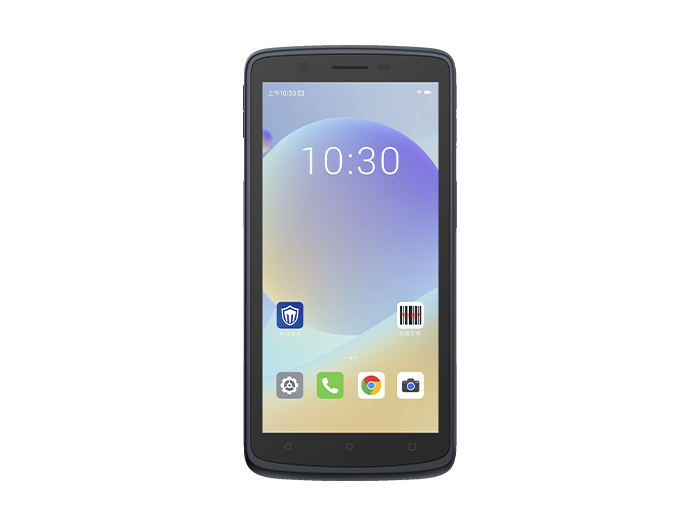
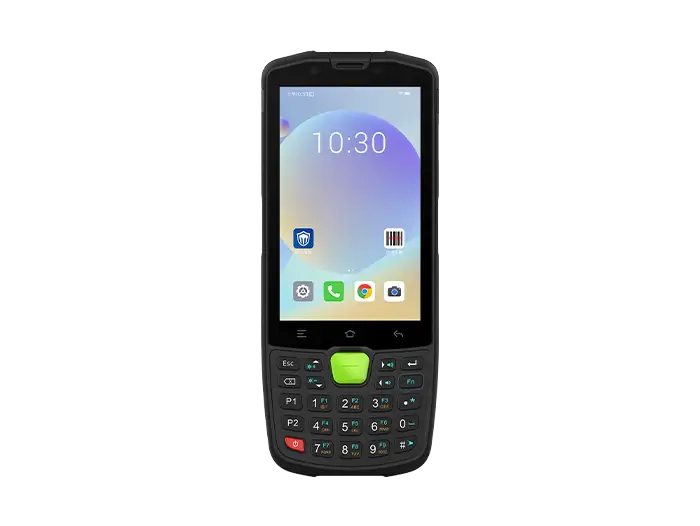
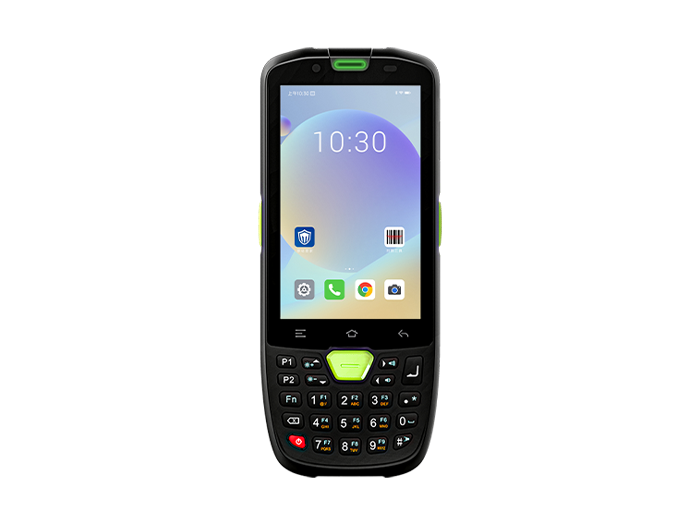
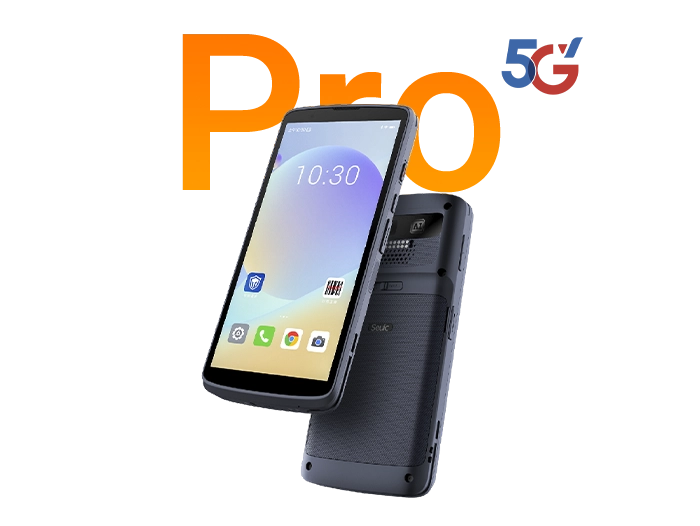
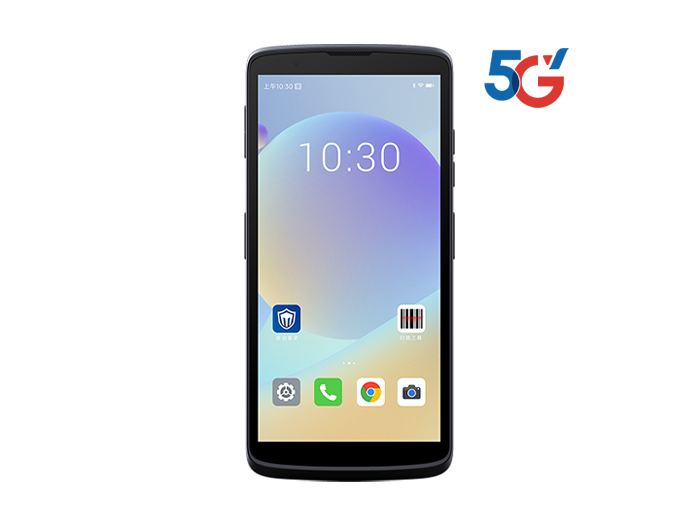
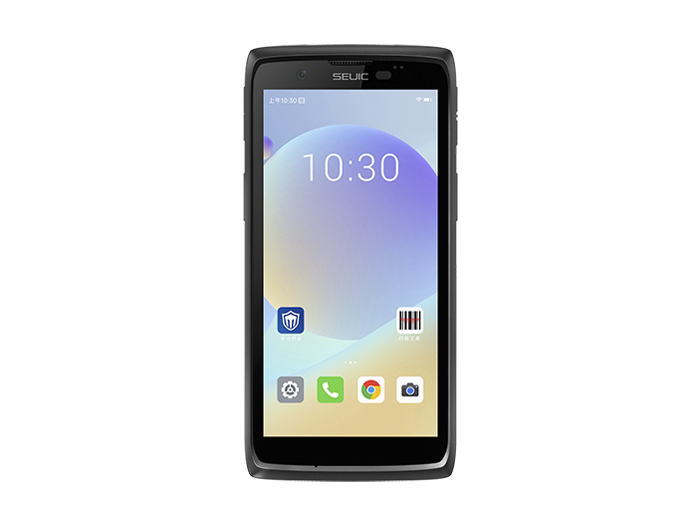
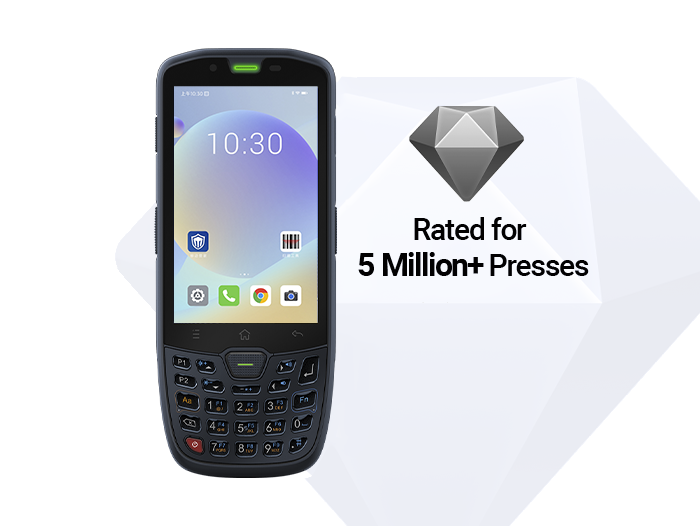
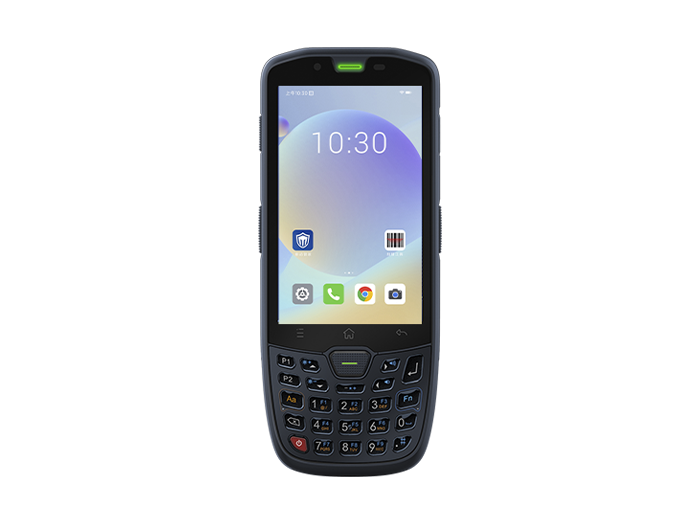
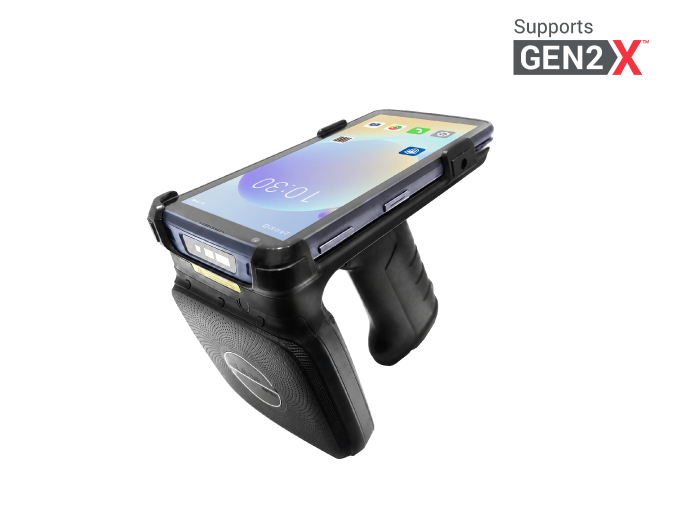
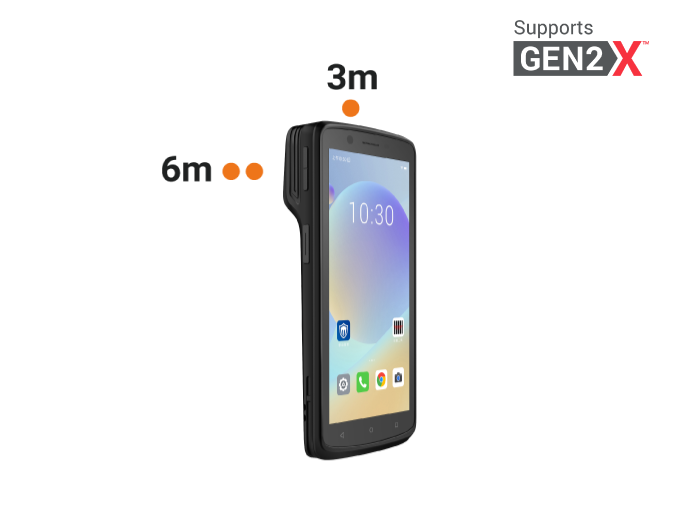
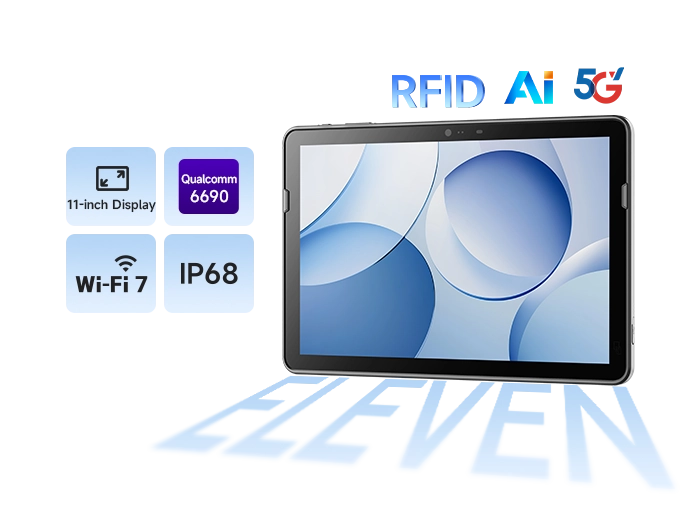
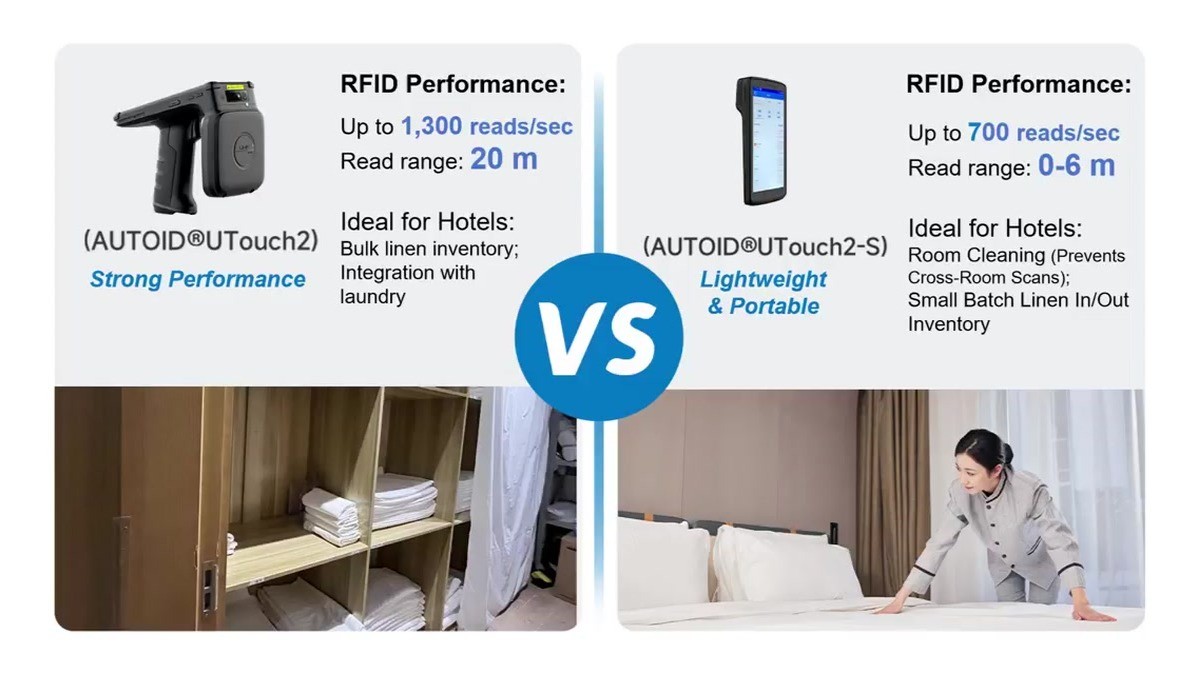
A handheld terminal with integrated UHF weighs roughly a third of a kilogram. A gun with its battery is often two to three times that, held away from the body rather than close to it. After ninety minutes the difference stops being a specification and becomes a complaint.
The number itself is not the point. The point is what the weight does to behaviour. A device that is light enough to stay in a pocket or a hand all day gets used all day — a count here, a lookup there, a stock check while serving a customer. A device that lives in a cupboard gets used when someone schedules an inventory. The first produces continuous data. The second produces a monthly snapshot that is already wrong by the time the report is printed.
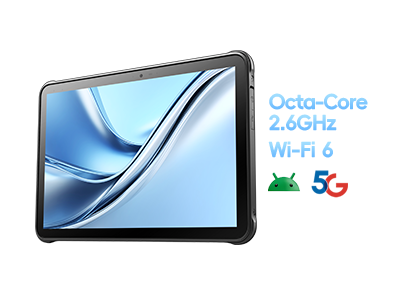
Most retailers who move from annual to continuous stock accuracy do not get there by buying a better gun. They get there by putting a good-enough reader into the hands of people who already carry a device.
So which one?
Ask three questions about the actual work, not the technology.
How many tags in a single session? Above a few tens of thousands, in long aisles, the gun earns its place.
How far from the tags does the operator stand? If the answer is mostly arm's length, range is not your constraint — precision is.
What else does that person do with their hands in the same hour? If the answer is "quite a lot", a second specialised device will be resented, left behind, and eventually blamed for a project that was actually defeated by ergonomics.
The industry has spent twenty years improving how far RFID can read. The more interesting engineering question, for the places RFID is now going, is how precisely it can read close up — and how little the reader weighs while doing it.