





Handheld DPM Scanner vs Fixed Barcode Reader: Production Line Guide
On production lines for automotive parts, 3C electronics, new energy batteries, and medical devices, Direct Part Mark (DPM) codes are becoming the "data entry point" for traceability systems. But many factories get stuck on the same question during selection: should we buy handheld or fixed-mount readers? This article doesn't just throw specs at you. Starting from real production line conditions, it helps you think through the "handheld DPM scanner vs fixed industrial barcode reader" decision once and for all.
1. Why DPM Codes Can't Be Handled by "Ordinary Scanners"
DPM codes aren't sticker labels. They're permanent marks created directly on metal, plastic, or composite surfaces through laser etching, dot peening, or chemical etching. This creates four inherent challenges:
Extremely low contrast: Shallow laser engraving on anodized surfaces — the grayscale difference between the mark dots and the background may be only 5–10 levels. Ordinary sensors simply give up.
Mirror-like reflection: Stainless steel, aluminum parts, polished alloys — hit them with light and they overexpose, turning the image into a white blur.
Curved surface distortion: Codes on cylindrical, curved, or irregularly shaped parts experience perspective deformation at the edges. Flat-surface algorithms can't decode them.
Oil contamination and damage: Cutting fluids, rust preventatives, and handling impacts leave codes "missing pieces," compounded by workshop dust and vibration.
Ordinary retail barcode scanners are optimized for paper labels. Against these "difficult codes," their first-pass read rate often drops below 80%. DPM applications require industrial-grade readers with dedicated optics (multi-color illumination, polarization, dark-field) and AI reconstruction algorithms.
2. Handheld DPM Scanner: You're Buying "Person Goes to Part" Flexibility
The core value of a handheld device comes down to one sentence: the person moves; the part stays still.
Typical fit scenarios:
Incoming inspection, first-article verification, spot checks, rework stations — parts are randomly placed, positions are not fixed
Large castings, heavy mechanical parts, workpieces that can't go on a conveyor — the operator walks to them
High-mix, low-volume lines with frequent changeovers — you don't want to lock a fixed reader to every station
Warehouse inventory, material handoffs — occasional DPM codes that need a quick supplemental scan
Its advantage is extremely light deployment: power on, connect Bluetooth/Wi-Fi, pull the trigger. No PLC trigger, no mounting bracket, no industrial bus required. The operator can adjust angles by wrist — tilt to avoid reflections, flip to read curved codes.
The trade-off is clear: read consistency depends on operator skill. Under high-speed continuous takt times, manual handheld operation becomes a bottleneck. 100% full-inspection closed-loop is not achievable.
3. Fixed-Mount Industrial Reader: You're Buying "Stationary Optics That Don't Wait"
A fixed-mount reader is "a pair of eyes welded to the production line": triggered by a photoelectric sensor, it reads automatically as workpieces pass through the field of view, sending data directly to MES/PLC. It suits a different world:
High-speed conveyor lines: SMT pick-and-place, cell/PACK lines, automotive assembly lines — belt speeds can reach several meters per second
Mandatory every-piece-read traceability: IATF 16949, FDA UDI, AS9132 compliance
Highly reflective / micro-codes / yin-yang codes / curved laser marks: Lock parameters with fixed polarized light, low-angle dark field, and fixed focal length
Automated stations requiring reject linkage, audible/visual alarms, and duplicate code verification
The real selling point of a fixed reader isn't "whether it can read" — it's consistency: light position unchanged, trigger unchanged, algorithm parameters unchanged. First-pass read rate can be stabilized at 99.9% levels. The tighter the production line takt time, the more irreplaceable it becomes.
4. Decision Matrix: 5 Variables Determine Direction
Don't start with budget assumptions. Answer these 5 questions first:
| Variable | Favors Handheld | Favors Fixed |
| 1. Is the workpiece moving? | Static on bench / picked up by hand | Continuously flowing on conveyor |
| 2. Is the code position fixed? | Different faces, different heights | Always passes through the same field of view |
| 3. Takt time requirement | Spot check / rework / sub-second insensitive | <1 second per piece, no manual intervention allowed |
| 4. Code difficulty | Medium DPM + mixed labels | Low contrast / reflective / micro / oil-contaminated |
| 5. Traceability granularity | Sampling collection | 100% full inspection with serial number binding |
Quick rule of thumb: Person goes to part → handheld. Part goes to light → fixed.
5. Hybrid Architecture: The Ultimate Answer for Most Production Lines
Real factories rarely choose just one. The mature approach is:
Deploy fixed-mount industrial readers at mainline critical stations to ensure takt time, full inspection, and traceability closure
Equip incoming inspection, spot checks, rework, and exception re-scan stations with handheld DPM scanners for flexibility and fail-safe coverage
Both feed data into the same MES/traceability platform — fixed readers handle "normal operations," handhelds handle "exceptions"
This way, you neither sacrifice automation efficiency nor stall the entire line when a device alarms, a code is missing, or a re-scan is needed. For 3C, new energy, and automotive parts industries, this is often the lowest total cost of ownership (TCO) solution.
6. Recommended Devices: Two Reference Options by Scenario
After discussing architecture, let's return to specific conditions. The "one specific problem" each production stage needs to solve is actually different.
If you're stuck on incoming inspection always missing scans, inconsistent supplier code quality, or spot-check operators running back and forth: what you need is a wireless handheld device that "picks up and reads dirty codes" — not another fixed camera.
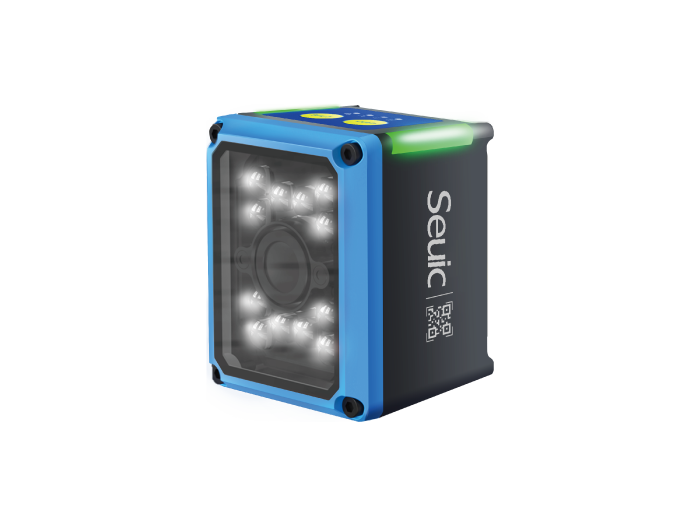
If you're stuck on SMT/cell/assembly mainline takt time falling behind, changeover parameter adjustment requiring an engineer, or micro/reflective codes breaking the chain: what you need is a fixed vision reader that "installs and barely needs attention" — AI handles the optical tuning itself.
Following these two directions, the two models below serve as reference baselines:
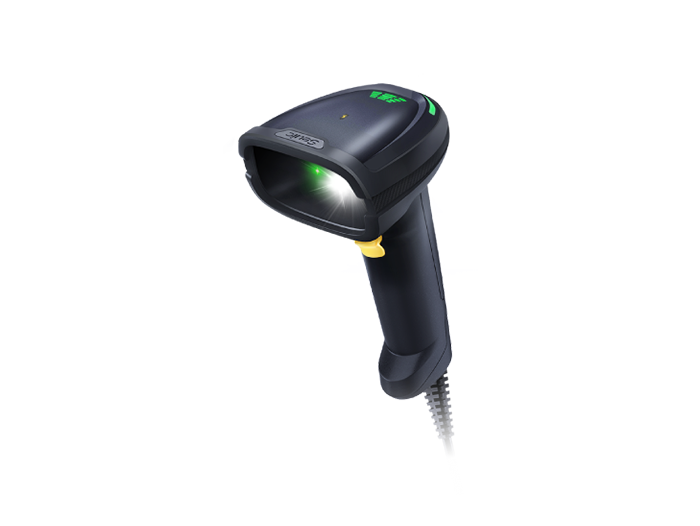
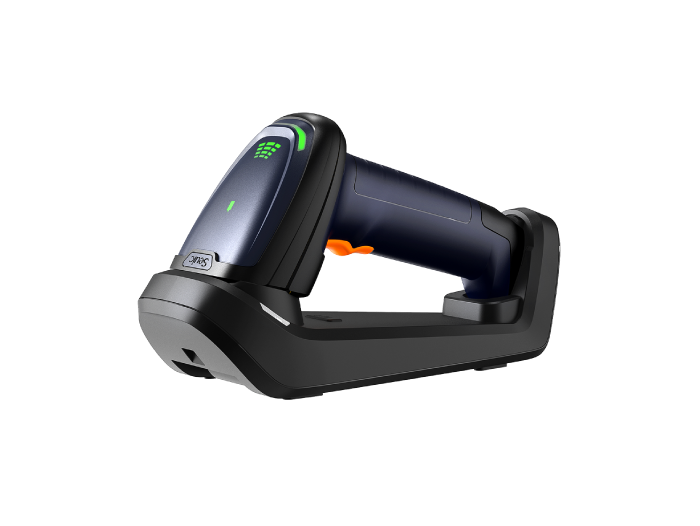
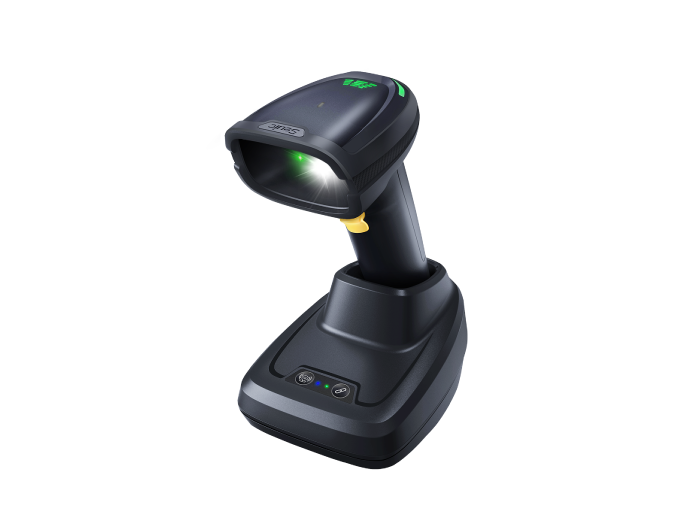
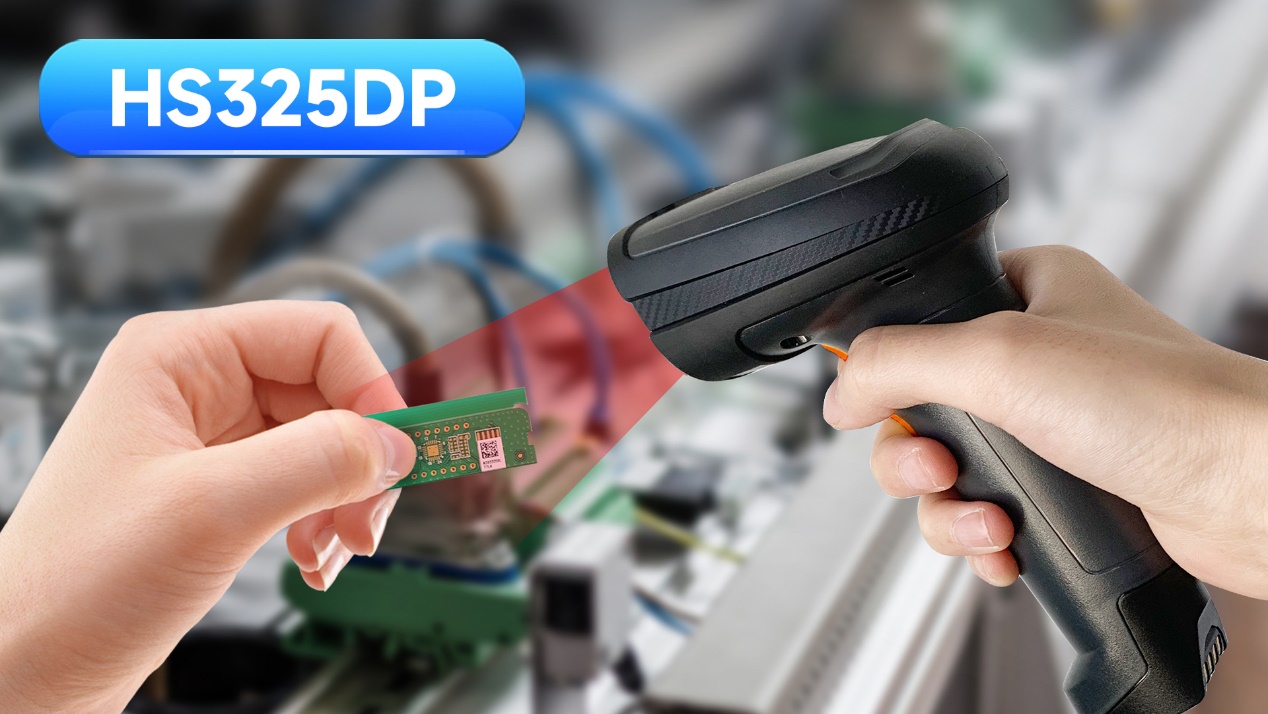
6.1 Handheld Reference: SEUIC HS325DP (AI-Powered Industrial Wireless DPM Scanner)
Designed for "mobile production line collection," here are its key features:
Millisecond-level AI decoding + 99.99% first-pass read rate: Dual-core processor with dedicated AI image reconstruction algorithm performs real-time noise reduction, edge enhancement, and missing-part compensation on distorted, perforated, and curved DPM codes. On automotive assembly stations, operators don't need to repeatedly change angles and re-scan, avoiding takt time slowdowns.
Red/blue/white tri-color intelligent illumination: Automatically switches light color based on material — red for dark ink substrates, blue for metal reflections, white for flat surfaces. During incoming inspection, no need to change guns for black oil boards, aluminum parts, or galvanized components.
Global shutter CMOS + dedicated DPM lens: 1280×1080 resolution suppresses handheld shake distortion. Response time at ~0.03 seconds per code.
Industrial wireless and durability: 100-meter open-space low-latency transmission, 1.8-meter drop resistance, IP54 protection, full-battery capacity for ~100,000 continuous scans — suitable for workshop spot checks, rework, and cross-station workflows.
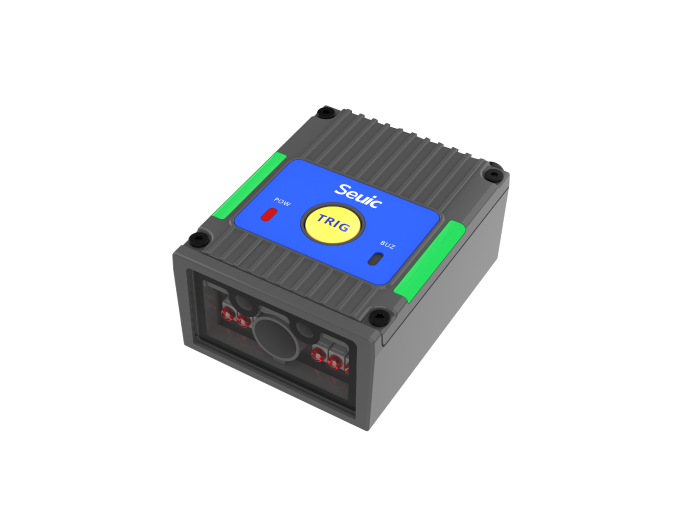
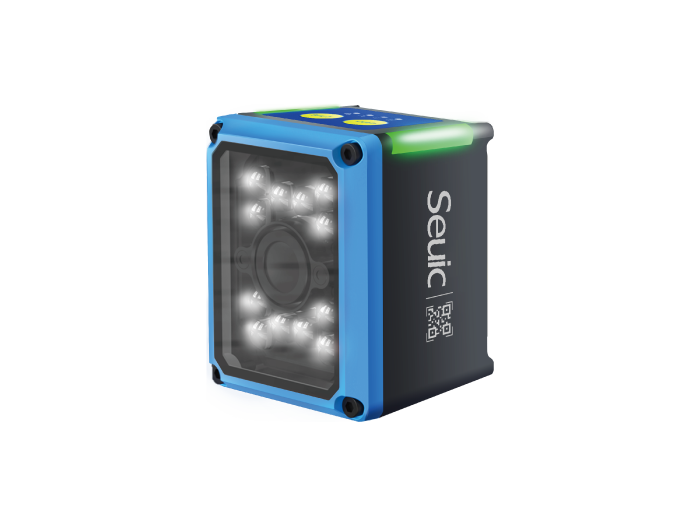
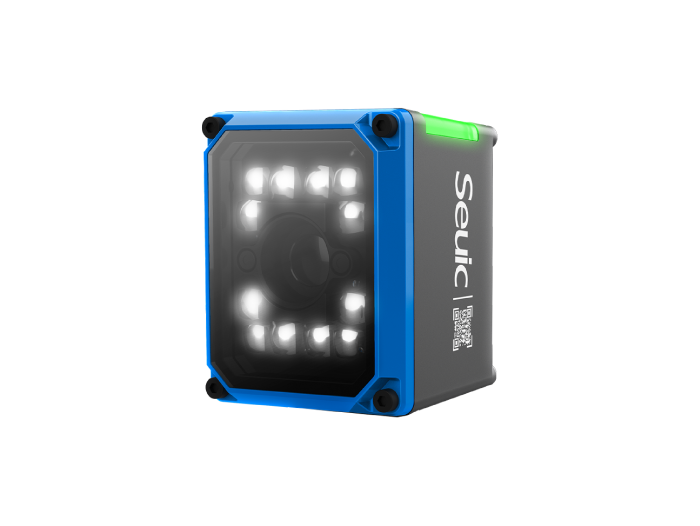
6.2 Fixed-Mount Reference: SEUIC X4 AI (1-Second Self-Tuning Industrial Vision Reader)
Designed for "high-speed production line automatic reading":
1-second automatic parameter tuning: Next-generation AI chip compresses deployment from "engineer adjusting for half a day" to "read on power-up." High-mix, low-volume changeovers don't require line stops for setup.
AI low-quality code reconstruction: Handles blurry, distorted, low-contrast, yin-yang, and curved metal reflective codes. Ultra-small 1×1mm codes are stably identified at 1m/s belt speed.
Polarized optics design: Specifically suppresses mirror highlights on stainless steel, aluminum parts, and solder pads — extracting concave etched codes from overexposed backgrounds.
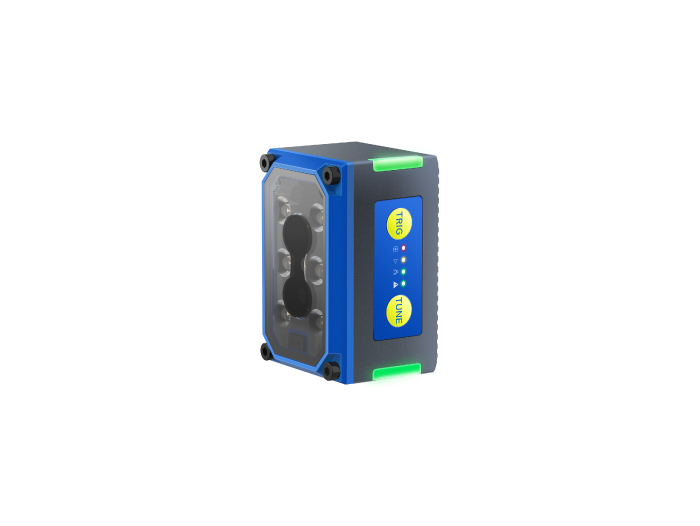
Production-line compact form factor: 61×49×46mm dimensions — fits into tight spaces like drilling machines and exposure units. IP67 protection handles dust and oil. Status indicator lights let operators know "read or not" at a glance.
Case validation:, On Gotion High-Tech's lithium battery production line, it was deployed for full-process traceability, solving laser-mark reflection + low contrast + line vibration. Overall reading efficiency improved by approximately 200%, with hardware costs reduced by roughly 50% compared to similar solutions.
Selection action suggestion: First benchmark the two device categories above against your actual conditions — handheld manages "exceptions at the operator's side," fixed manages "certainty on the main line."
7. PoC Validation: Test with Real Dirty Codes, Not Clean Samples
Spec sheets talk, but the production line only recognizes first-pass read rate. During PoC, lock in on four things:
Use on-site parts, not clean samples: Go straight for post-reflow PCBs, cutting-fluid-coated gears, and shallow-engraved anodized parts
Run at real takt time: For fixed readers, continuously pass 500–1000 pieces at line speed. For handhelds, measure first-scan success rate following actual operator movements
Track three data points: First-pass read rate, re-scan rate, miss rate — and distinguish between "code quality issue" and "device issue"
Test system integration: Fixed readers via PLC/MES callback, handhelds via wireless transmission — identify where data breaks occur
Only devices that maintain 99%+ stability on dirty codes deserve a place in your traceability system.
Choosing a DPM reader isn't really about "handheld vs fixed." It's about understanding how your production line moves first: person goes to part → handheld makes more sense. Part goes to light → fixed is the way to go. For most factories, the optimal solution is fixed readers holding the main line and handhelds covering exceptions. Run a PoC on your hardest-to-read dirty codes first, then talk procurement — when the underlying traceability data is clean, the digital layer above won't leak.
Want to see how the HS325DP and X4 AI perform on your actual products? Contact SEUIC to request a free demo unit for testing.
Related News
-
Rugged Mobile Computer for Field Service: Selection & Deployment Guide
Product Updates | 2026.11.17Learn More
-

MES Workstation Data Capture: Industrial Handheld PDA Selection & Deployment Guide
Product Updates | 2026.11.17Learn More
-
Swappable Battery PDA: SEUIC AUTOID Q9 Pro Sortation Power Solution
Product Updates | 2026.11.17Learn More
-

Real-Time WIP Tracking: SEUIC CRUISE2 5G Solution
Product Updates | 2026.11.17Learn More