




Laser vs. CCD vs. 2D Imager: Which Handheld Bar Scanner Is Right for You?
In today's fast-paced business environment — whether you're managing a busy warehouse, running an efficient retail store, or tracking pharmaceutical inventory in a hospital — the handheld bar scanner is an indispensable tool. Yet faced with a dizzying array of options — laser scanners, CCD scanners, and 2D imager scanners — many managers find themselves asking, "Which one should I choose?"
Pick the wrong scanner, and you'll face sluggish scan speeds, frustrated employees, and — worst case — data errors that ripple through your entire supply chain. This article cuts through the noise, breaking down how each of the three mainstream scanning technologies works, where they shine, where they fall short, and which scenarios they're best suited for — so you can make the right investment decision the first time.
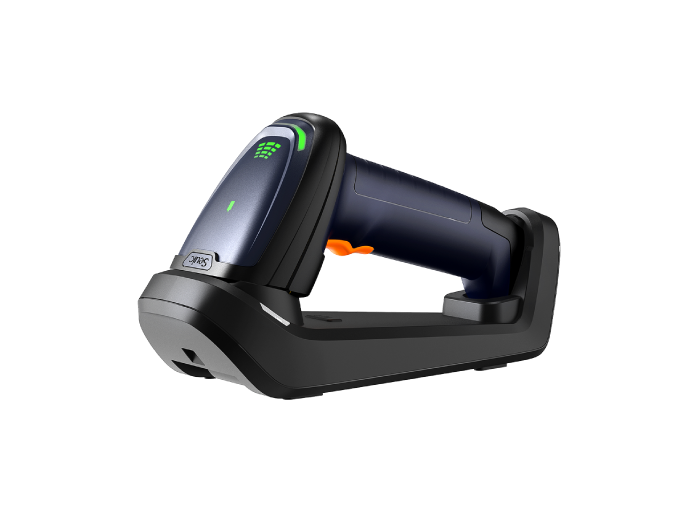
1. What Is a Laser Scanner? (The Workhorse of Speed)
How It Works:
A laser scanner reads barcodes by emitting a rapidly oscillating laser beam. Think of it as a high-speed "light ruler" — it measures the intensity and timing of reflected light to decode the information encoded in black-and-white stripes.
Pros:
Fast scan speed: This is the laser scanner's biggest strength. It scans at extremely high frequencies, making it ideal for high-volume, continuous scanning applications.
Long scan range: Compared to CCD scanners, laser scanners typically offer much greater working distance — some models can read barcodes several meters away.
Mature technology, low cost: As one of the earliest scanning technologies to hit the market, laser scanners are cheap to manufacture. Entry-level models are highly cost-competitive.
Cons:
Cannot read screen barcodes: This is a dealbreaker for many applications. Because phone and computer screens emit their own light, the laser beam creates intense glare on the display, making decoding impossible.
Demanding on barcode quality: Worn, creased, blurry, or low-contrast barcodes significantly reduce read success rates with laser scanners.
Mechanical parts are vulnerable: The internal oscillating mirror is a precision mechanical component. Frequent drops or vibration can knock it out of alignment or damage it, shortening the device's lifespan.
Best Use Cases:
Large warehouses and distribution centers: Where you need to scan high volumes of paper labels at long range, fast.
Supermarket checkout counters: Traditional product barcodes are mostly paper-based, with high scan volume and demanding speed requirements.
Production lines: For fast identification of fixed, high-quality barcodes.
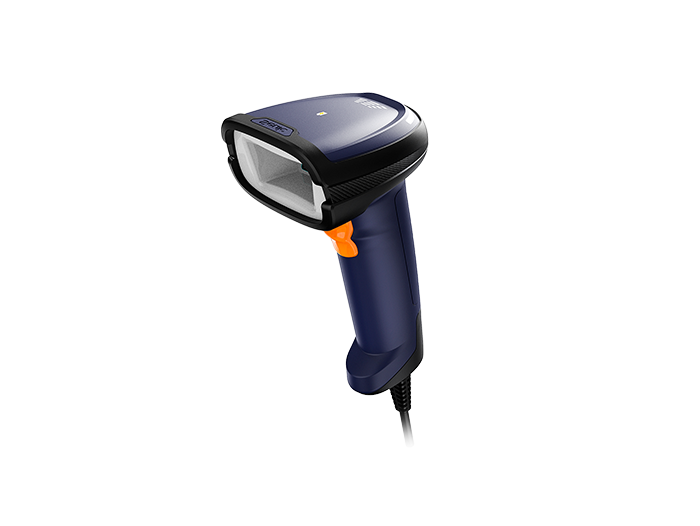
2. What Is a CCD / Linear Imager Scanner? (The Durable Budget King)
How It Works:
A CCD (Charge-Coupled Device) scanner — also called a linear imager scanner — uses a row of tiny photosensitive elements (pixels) to "photograph" the barcode. Like a miniature camera, it captures the entire barcode image in a single shot, then decodes it using software algorithms.
Pros:
No moving parts, extremely durable: Without the oscillating mirror found in laser scanners, CCD scanners are more resistant to drops and vibration — making them a great fit for tough industrial environments.
Can read damaged barcodes: Thanks to image capture technology, CCD scanners often outperform laser scanners on creased, smudged, or poorly printed barcodes.
Budget-friendly: Like laser scanners, CCD scanners are relatively inexpensive to manufacture.
Cons:
Short scan range: This is the CCD scanner's most obvious weakness. You typically need to hold the scan head right against — or very close to — the barcode to get a successful read. Not suitable for long-range scanning.
Limited scan width: Due to the physical size of the sensor array, CCD scanners struggle with extra-wide barcodes.
Cannot read screen barcodes: Same limitation as laser scanners — traditional CCD scanners cannot effectively read barcodes displayed on phone or computer screens.
Best Use Cases:
Retail stores (especially clothing boutiques and convenience stores): Where you need to scan product tags up close at the counter, with reasonable durability requirements.
Hospital pharmacies and nurse stations: Relatively quiet environments with close-range scanning, but high demands on device stability and durability.
Small warehouses or archives: For scanning documents or nearby shelf labels.
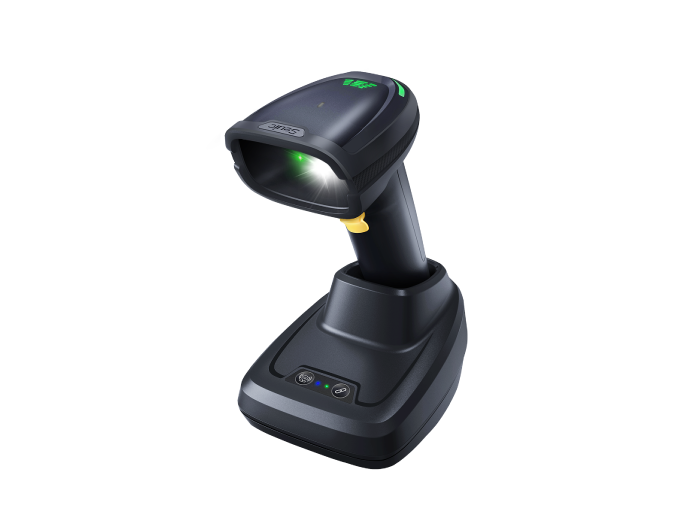
3. What Is a 2D Imager Scanner? (The Future-Proof All-Rounder)
How It Works:
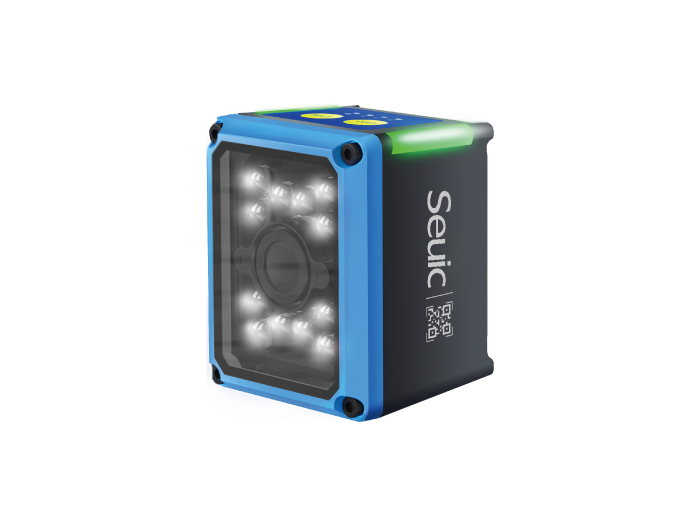
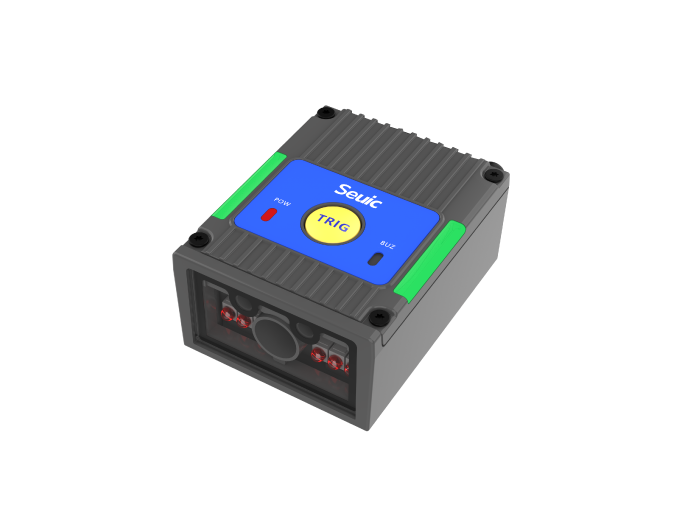
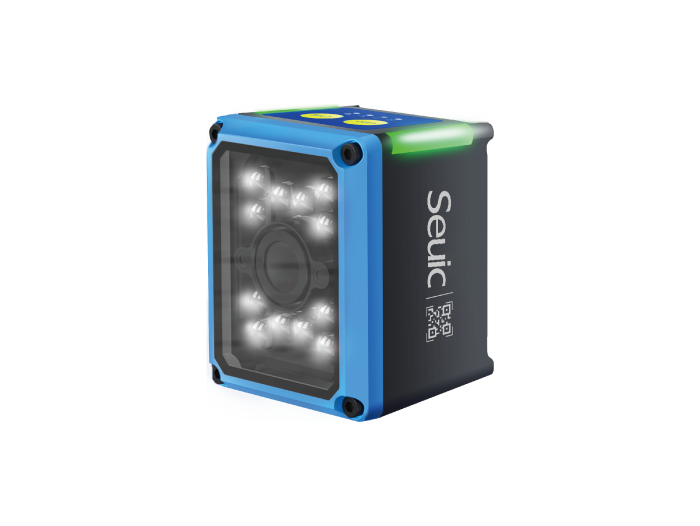
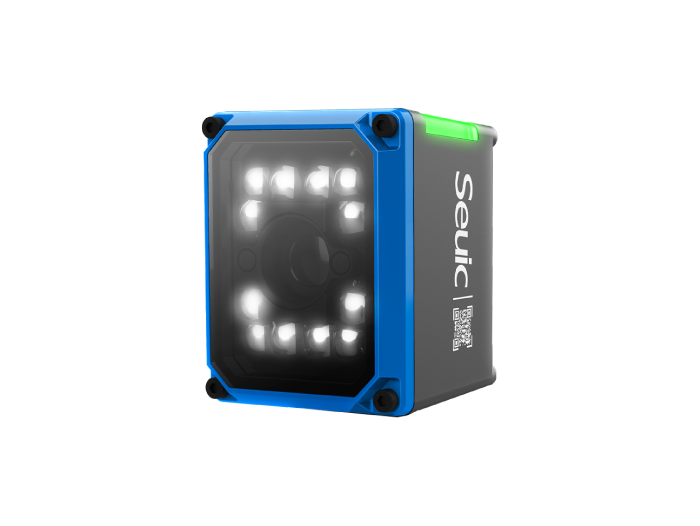
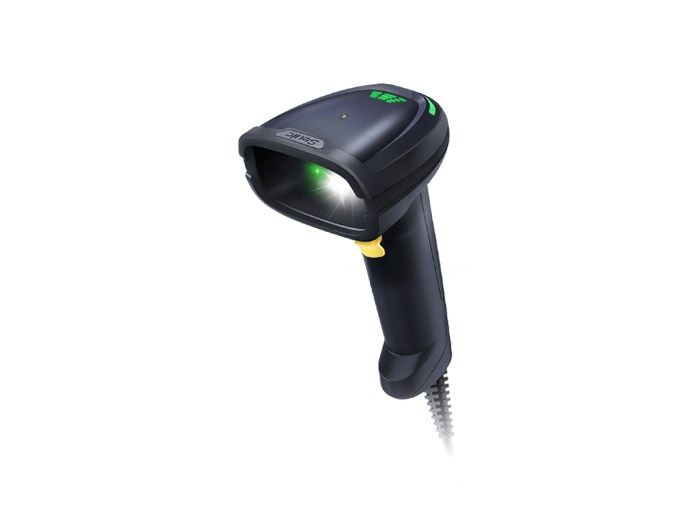
A 2D imager scanner is the culmination of scanning technology. It houses a built-in camera (similar to a smartphone's rear camera) that takes a picture of the barcode, then uses powerful image processing algorithms to decode it. It can read not only traditional 1D barcodes, but also 2D codes like QR codes and Data Matrix codes — and even scan barcodes directly off phone screens.
Pros:
Universal reading capability: It can read virtually any type of barcode — 1D, 2D, screen codes, damaged codes, color codes, you name it. This is its single biggest competitive advantage.
Great user experience: No need for precise aiming. Simply place the barcode within the camera's field of view, and it reads effortlessly. Very operator-friendly.
Future-proof: With QR codes becoming ubiquitous in payments, traceability, marketing, and more, 2D imagers are the inevitable choice going forward.
Built tough: Solid-state design with no moving parts means excellent durability.
Cons:
Higher cost: Due to the complex hardware and software involved, 2D imager scanners typically cost two to three times more than laser or CCD scanners.
Relatively higher power consumption: Image processing and the illumination light consume more power — though this is rarely a concern for most plug-in or large-battery devices.
Best Use Cases:
E-commerce and courier sorting centers: Where you need to handle both paper waybills and electronic shipping labels, along with an increasing number of QR codes.
Modern hospitals: For scanning QR codes on patient wristbands and Data Matrix codes on pharmaceutical packaging, enabling precise closed-loop management.
Government enforcement and field inspection: Officers need to scan QR codes on IDs and driver's licenses, or check equipment nameplates bearing QR codes.
Any location that accepts mobile payments: Restaurants, convenience stores, shopping malls, and more.
4. The Ultimate Showdown: How to Choose
To help you decide at a glance, here's a comparison table with each metric rated in words:
| Feature | Laser Scanner | CCD / Linear Imager Scanner | 2D Imager Scanner |
| Scan Speed | Excellent | Fair | Good |
| Scan Range | Excellent | Poor | Good (varies by model) |
| Durability | Fair | Good | Good |
| Damaged Code Reading | Poor | Good | Excellent |
| Screen Code Reading | Not supported | Not supported | Excellent |
| 2D Code Reading | Not supported | Not supported | Excellent |
| Cost | Low | Low | Medium-High |
Your Decision Roadmap:
If you only scan paper-based, good-quality 1D barcodes and need maximum speed at the lowest cost → Go with a laser scanner.
If you work primarily at close range in a harsh environment (dust, moisture) with a tight budge → Choose a CCD scanner.
If you want to future-proof your operation and solve every scanning challenge with one device — paper barcodes, screen codes, QR codes — or if your workflows already involve 2D codes → Pick a 2D imager scanner without hesitation.
While laser and CCD scanners still have their place in specific scenarios, the technology tide is irreversibly shifting toward 2D imager scanners. As QR codes become more widespread and costs continue to come down, 2D imagers are moving from "premium upgrade" to "standard equipment." For business managers, choosing a 2D imager handheld bar scanner isn't just about solving today's scanning problems — it's about paving the way for future digital transformation. It works seamlessly with both legacy and new systems, simplifies employee training, and significantly boosts overall operational efficiency. That's an investment that pays for itself.
Founded in 2002, Seuic Technologies Co., Ltd. is committed to mastering core technologies, continuously improving innovation capabilities, and delivering outstanding branded products including mobile computers, RFID readers, tablets, barcode scanners, and fixed-mount readers. With highly reliable products and efficient service, our solutions are widely applied across manufacturing, retail, logistics, healthcare, and more. We provide frontline workers with more durable real-time data collection tools, helping you improve operational efficiency and take productivity to new heights.
Related News
-
Passive vs Active RFID Tags: Core Differences & When to Use Each
Product Updates | 2026.10.10Learn More
-
2D Barcode Scanner Buying Guide: Decoding, Environment & Lifecycle
Product Updates | 2026.10.10Learn More
-
What Is a 2D Barcode Scanner? Definition, How It Works & Supported Symbologies
Product Updates | 2026.10.09Learn More
-
How to Choose a Rugged Android Tablet? Ditch Spec Stacking, Use Scenario Tables
Product Updates | 2026.10.09Learn More