


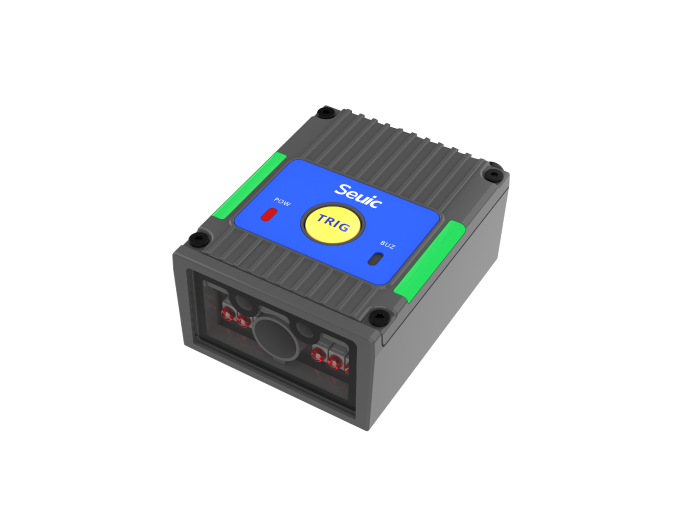
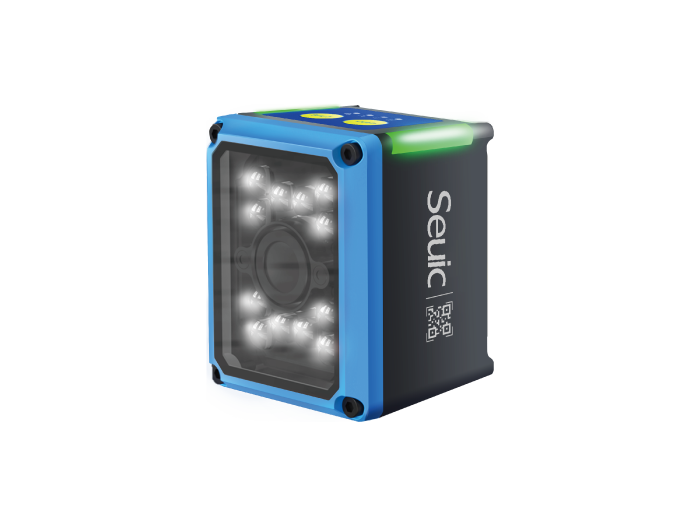
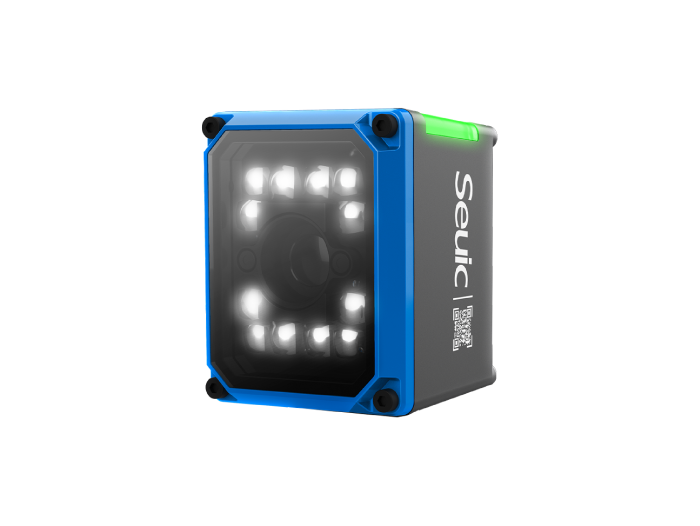
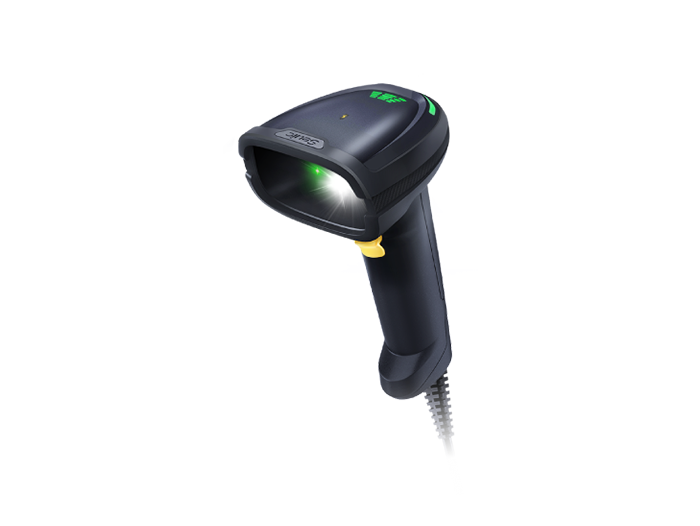


Lithium Battery DPM Scanner: HS305DP Solves Low-Contrast Codes on Dark Cells
On lithium battery production lines, cell casings are often dark gray, graphite black, or anodized dark colors. The DPM code laser-marked onto these surfaces looks like it's barely there. Ordinary barcode scanners overexpose on the first try and throw an error on the second. Production lines end up with repeated rescans and manual code entry — and the traceability chain keeps breaking.
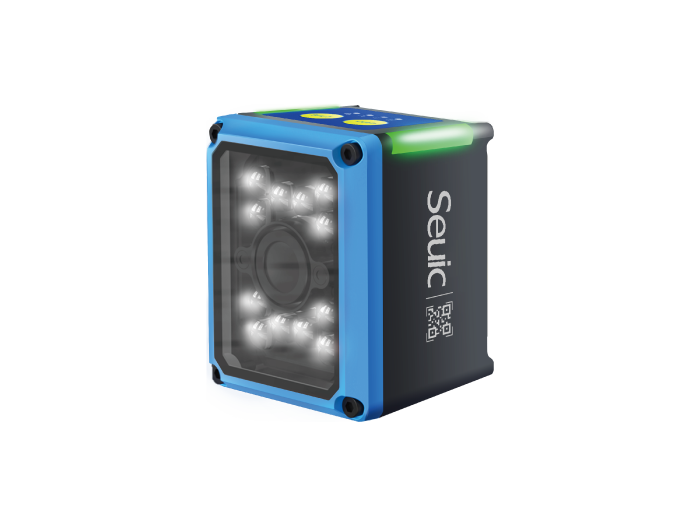
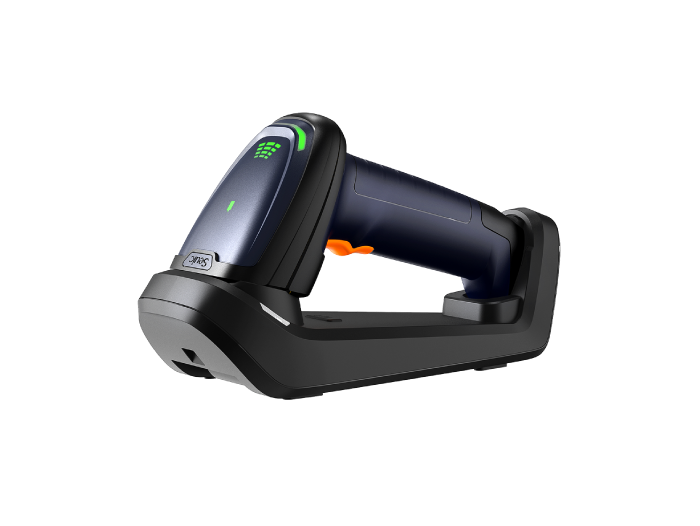
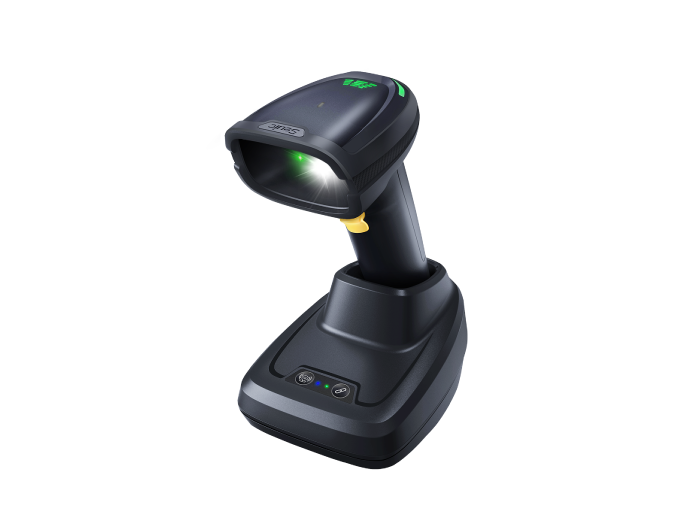
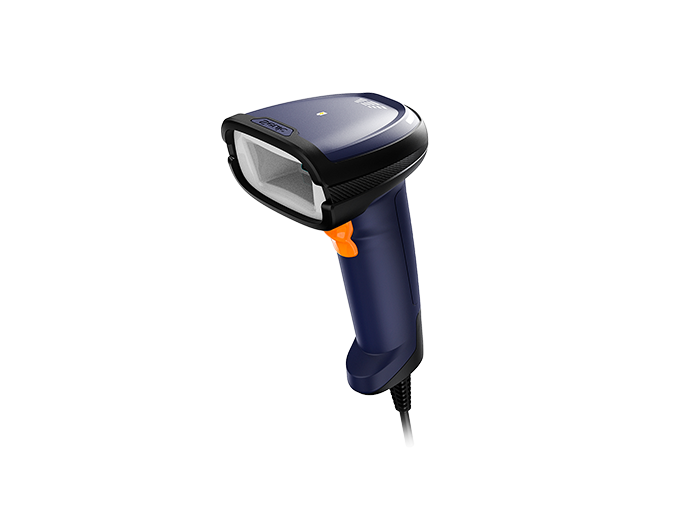
The SEUIC HS305DP AI-powered industrial wired scanner takes a straightforward approach: first, use tri-color light to "bring the code out," then use AI to "decode it." Against low-contrast codes on graphite cells, reflective aluminum casings, and curved micro-codes, it achieves a first-pass read in milliseconds with a claimed 99.99% success rate — keeping lithium battery traceability from getting stuck at "can't read."
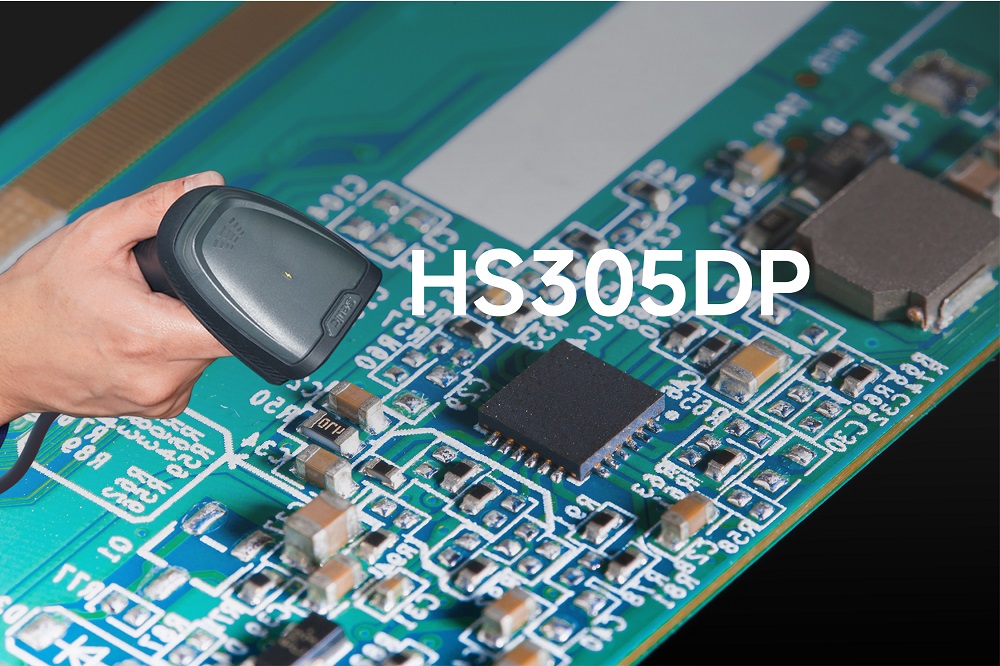
1. The Problem: Why Ordinary Scanners Fail on Dark Graphite Cells
From electrode sheets to winding, assembly, and PACK, every lithium battery cell must be bound to batch, process, and yield data. But on-site scanning routinely encounters these issues:
Too little contrast: The laser-etched code and the graphite-black background are nearly the same color. Even up close, it's hard for the human eye to distinguish. Ordinary cameras capture nothing but gray blobs.
Reflective aluminum casings/pouches: Shiny metal surfaces overexpose under direct light — the code gets washed out by glare.
Surface distortion: Codes on cylindrical cells and soft-pouch corners are deformed. Traditional algorithms designed for flat surfaces fail on the first try.
Oil and dust contamination: Electrolyte residue and electrode powder smear the code edges, leaving partial missing elements.
Fast line speeds: Materials fly past the station. Ordinary devices produce motion blur and missed reads, creating gaps in MES data.
The result: QC keeps rescanning, warehouse staff manually enter serial numbers, production supervisors chase anomalies, and the traceability system has "cells with no data." For automotive, energy storage, and 3C lithium battery customers, this isn't a minor inconvenience — traceability is a compliance and recall management necessity.
2. How the SEUIC HS305DP Solves It: Three Things Done Right at Once
2.1 Red/Blue/White Tri-Color Illumination — Auto Switching Solves "Seeing It First"
The HS305DP integrates smart tri-color diffuse illumination. Instead of manual lamp switching, it automatically matches the light source to the material and background:
Red light: Applied to graphite, dark coatings, and low-contrast backgrounds — sharpens the boundary between code and surface, making shallow marks "float up."
Blue light: Suppresses mirror-like reflections from aluminum casings, copper foil, and shiny metal surfaces — eliminates overexposed white patches.
White light: Adds detail to fine engraving and small Data Matrix codes — serves as a fallback for complex backgrounds.
Operators don't need to understand optics. Pick it up, aim, and scan — the light source decision shifts from "experienced worker's instinct" to "device decides automatically."
Real-world example: At the same workstation, one cell is bright aluminum, the next is graphite black. The HS305DP auto-switches from blue to red — no line stoppage, no parameter adjustment.
2.2 Dual-Core + AI Decoding — Turning "Blurry Codes" Back Into Original Data
Good lighting alone isn't enough. The code itself may be distorted, missing elements, or covered by oil. The HS305DP's hardware combination:
Dual-core processor + global shutter CMOS (1280×1080): 60 fps capture — no motion blur at high line speeds
AI decoding algorithm: Deep learning model extracts code features from subtle grayscale variations, automatically compensates for surface distortion, and repairs partial damage
DPM-specific lens: Reads 5mil 2D codes and 3mil 1D codes — cylindrical and dot-peened marks included
In plain terms: traditional algorithms only recognize codes that are "clearly black and white." The AI algorithm says, "I can roughly reconstruct the structure even if it's degraded." Worn, reflective, or stretched codes still decode in milliseconds, with a claimed 99.99% first-pass accuracy.
2.3 Industrial-Grade Deployment — Built for the Factory Floor
Beyond reading accuracy, factories care about staying power:
Plug and play: USB/RS232/COM interfaces — connect directly to industrial PCs and MES terminals without complex setup
Ergonomic + detachable cable: Comfortable grip; replace the cable, not the scanner
IP54 protection: Resists dust and electrolyte splashes
Drop resistant: 1.8m drops and 2,000 tumbles tested — survives workshop knocks
Wide-angle reading: ±60° pitch, ±55° skew — reads without perfect alignment, fitting tight workstations
For production supervisors, this means fewer maintenance calls, less line downtime, and less training. For QC, it means spot checks no longer depend on luck.
3. Across the Lithium Battery Traceability Chain — From Cell to PACK
Cell stage: Low-contrast laser marks on graphite and aluminum casings → red/blue light switching + AI enhancement
Electrode stage: Micro-codes on copper/aluminum foil, laminated codes → high-frame-rate capture prevents motion blur
Module/PACK stage: Mixed scanning of paper labels + metal DPM codes → auto-type recognition, no scanner swap needed
Outbound traceability: Bind batch, work order, and equipment ID — data writes back to WMS/MES in real time
One HS305DP covers multiple process steps — avoiding fragmented procurement of "one scanner per station."
4. Frequently Asked Questions (FAQ)
Q1: Can the HS305DP really read codes reliably on dark graphite cells?
Yes. Handling low-contrast codes is one of its core strengths. The built-in red/blue/white tri-color illumination automatically selects the optimal light source to enhance the contrast between code and background. Meanwhile, the AI decoding algorithm extracts code features from subtle grayscale variations — even shallow marks barely visible to the human eye achieve a 99.99% first-pass read rate.
Q2: Aluminum cell casings cause severe glare that overexposes ordinary scanners. How does the HS305DP handle this?
The HS305DP is specifically designed with a blue light source to suppress mirror-like metal reflections. When it detects highly reflective materials like aluminum casings or copper foil, it automatically switches to blue illumination mode, eliminating overexposed white patches and keeping the code pattern clearly visible for stable decoding.
Q3: What exactly does the "AI decoding algorithm" do? How is it different from traditional scanners?
Traditional scanners rely on fixed black-and-white thresholds to identify code elements. Once the code is worn, contaminated, or deformed, decoding fails. The HS305DP's AI algorithm is trained on extensive datasets of defective codes. It automatically compensates for surface distortion, repairs partial damage, and enhances weak signals. Simply put: traditional algorithms only recognize "perfect" codes; the AI algorithm can "understand" real-world codes that are damaged, blurry, or incomplete.
Q4: Is the scanner difficult to install? Does it require professional IT support?
No. The HS305DP features a plug-and-play detachable cable design supporting USB, RS232, COM, and other interfaces. Connect it directly to an industrial PC or MES terminal and it's ready to go. Light source switching and decoding modes are handled automatically — no manual tuning needed. Frontline operators can pick it up and use it immediately.
Q5: Which lithium battery production stages is the HS305DP suitable for?
It covers multiple critical stages: dark-shell and aluminum-casing code reading at the cell stage, micro-code reading at the electrode stage, mixed code scanning (paper labels + metal DPM codes) at the module/PACK stage, and batch traceability during outbound operations. One scanner spans most process steps from electrode to finished product, reducing equipment variety and maintenance costs.
If you're responsible for traceability, quality, or equipment deployment on a lithium battery line, the evaluation criterion is simple:
Not "Can it read a perfect code?" — but "On dark, reflective, oily, curved bad codes, can it read on the first pass without misses?"
The SEUIC HS305DP's answer: tri-color illumination solves optical interference, AI algorithms solve image quality, and industrial design solves production line durability — transforming lithium battery DPM code reading from "manual fallback" into "systematic closed-loop automation."
Being slowed down by graphite cells, reflective aluminum codes, or low-contrast DPM marks? Contact SEUIC to request a free demo unit for testing.
Founded in 2002, SEUIC Technology Co., Ltd. has always focused on mastering core technologies, continuously improving innovation capabilities, and building excellent branded products including mobile computers, UHF RFID readers, tablets, barcode scanners, and fixed-mount readers. With highly reliable products and efficient service, our solutions are widely used in manufacturing, retail, logistics, healthcare, and other industries. We provide frontline workers with more durable real-time data collection tools, helping you improve operational efficiency and take productivity to new heights.
Related News

-
Inventory Alert & Auto Replenishment: AUTOID UTouch 2-20 RFID Solution
Product Updates | 2026.11.05Learn More
-

High-Bay Barcode Scanning: SEUIC CRUISE2 Lets You Stop Climbing Shelves
Product Updates | 2026.11.05Learn More
-
Double Efficiency High-Bay Inventory: Normal vs Ultra-Long Range UHF RFID Handheld
Product Updates | 2026.11.04Learn More
-
India RFID Supplier Selection: Industrial Procurement & Audit Guide
Product Updates | 2026.11.04Learn More