




Industrial Tablet Selection: 9-Dimension Matrix for Industry Scenarios
The most expensive mistake in industrial tablet selection isn't paying too much — it's buying the wrong device for the wrong environment.
Two tablets can both be labeled "rugged Android," but one works perfectly on a production line QC station while the other freezes in a cold storage sorting area or becomes unreadable under direct sunlight during outdoor inspections.
True rugged Android tablet selection isn't about comparing spec sheets. It's about reordering specification priorities according to your industry's actual operational weight.

1. The 9-Dimension Selection Matrix
Before diving into vendor comparisons, establish a common evaluation framework:
| Dimension | What It Covers |
| Screen Size & Brightness | 7-8" for handheld single-person use / 10-11" balancing portability and blueprint viewing / 12"+ for vehicle-mounted control |
| Touch Mode | Glove support, wet hand operation, oil resistance, active stylus for signatures |
| Ingress Protection | IP54 for basic workshop dust → IP65 for dust and moisture → IP68 for washdown and cold storage condensation |
| Drop & Shock | 1.2m concrete drop resistance, MIL-STD-810H military certification |
| Operating Temperature | Standard 0-40°C vs. industrial -20°C to 50°C (critical for cold chain and northern outdoor use) |
| Data Capture | 1D/2D barcode scanning, UHF RFID, NFC, OCR, AI vision |
| Connectivity | Wi-Fi 6/7, 5G, Bluetooth, GNSS positioning, seamless AP roaming |
| Power Architecture | Removable battery, hot-swap, no-battery direct power mode, multi-shift endurance |
| Lifecycle & MDM | Android version maintenance cycle, EMM/MDM mass deployment, 8-year usable lifespan |
2. Industry Weight Matrix
Different industries assign completely different priorities to these nine dimensions. The table below maps priority levels as High / Medium / Low / Critical:
| Industry Scenario | Screen | Scan/RFID | Ruggedness | Wide Temp | Network Roaming | Battery Hot-Swap | Stylus/Wet Touch | Lifecycle |
| Smart Manufacturing / QC Inspection | High (10-11") | High (Scan + UHF) | High | Medium | Medium | Medium | Medium (Annotation) | High |
| Retail Stores / Chains | Medium (10-11") | High (NFC + Scan) | Medium | Low | High (In-store roaming) | Medium | High (E-signature) | High |
| Warehousing / 3PL / Sorting | Medium (10-11") | Critical (RFID + Scan) | High | Medium (Cold storage = High) | High (Low-latency roaming) | High (Hot-swap) | Low | High |
| Courier / Last-Mile Delivery | Medium (8-10") | High (Scan) | High | Medium | Critical (5G switching) | High | Low | Medium |
| Healthcare / Nursing / Pharmacy | Medium (10-11") | Medium (NFC + Scan) | High (Disinfectant-resistant) | Low | High (Ward roaming) | Medium | Critical (E-signature) | High (Compliance) |
| Utility / Water / Gas Inspection | High (Outdoor visibility) | Medium (RFID asset) | Critical | Critical | High (Remote areas) | Critical | Medium (Gloves) | High |
| Government / Law Enforcement / Field Service | Medium (10") | Medium (NFC + ID) | Critical | High | Critical | High | Medium | High |
How to read this table:
Manufacturing prioritizes scan accuracy + large screen for blueprints + 8-year lifecycle first
Retail emphasizes NFC payments/loyalty + in-store Wi-Fi roaming + electronic signature
Logistics/Sorting focuses on UHF RFID bulk reading + hot-swap uninterrupted power + seamless AP roaming
Inspection demands wide temperature range, glove touch, sunlight-readable display, and offline positioning
There is no "higher is better" in specs — only "does the weight match the use case?"
3. From Scenario Pain Points to the Right Hardware
Returning to those common field scenarios, the requirements become very specific:
Production line QC needs to view engineering drawings under bright light, scan damaged barcodes, and annotate defects on images with a stylus
Warehouse staff working 10-hour shifts need a battery that never dies, and when a handheld scanner is too slow, UHF RFID bulk reading takes over
Retail supervisors touring stores need seamless AP roaming, NFC at the checkout counter, and centralized application push from the back end
Nurses verifying medication at bedside need a disinfectant-resistant body, wet-hand touch capability, and signature retention
Meter readers in sub-zero cold storage or under scorching utility poles need a readable screen and a device that won't shut down from temperature extremes
Mapping these weights back to hardware, the ideal profile looks like this:
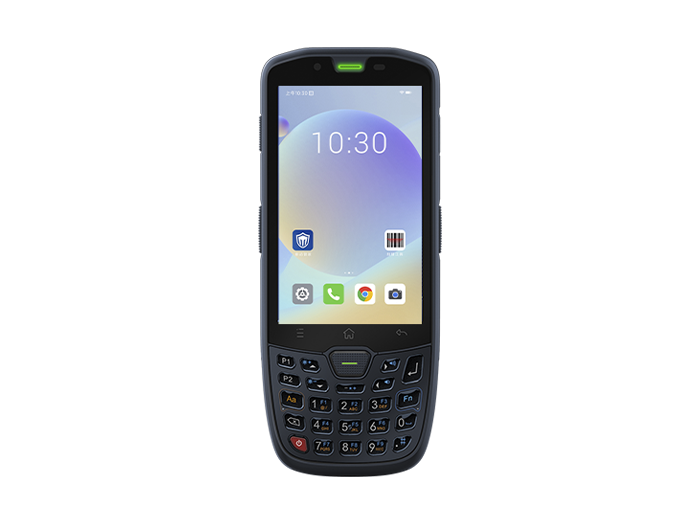
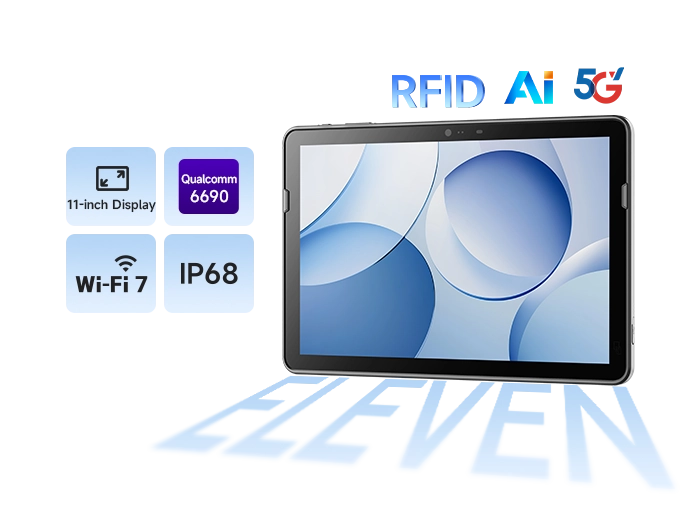
11-inch large screen but thin and lightweight + IP68 protection + wide temperature range + professional scanning and UHF RFID + next-gen low-latency Wi-Fi + removable hot-swappable battery + long-cycle Android support + compatible with unified device management platforms.
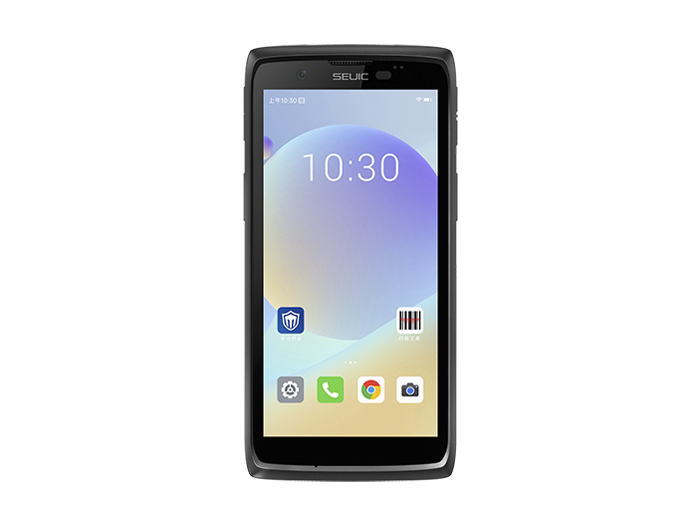
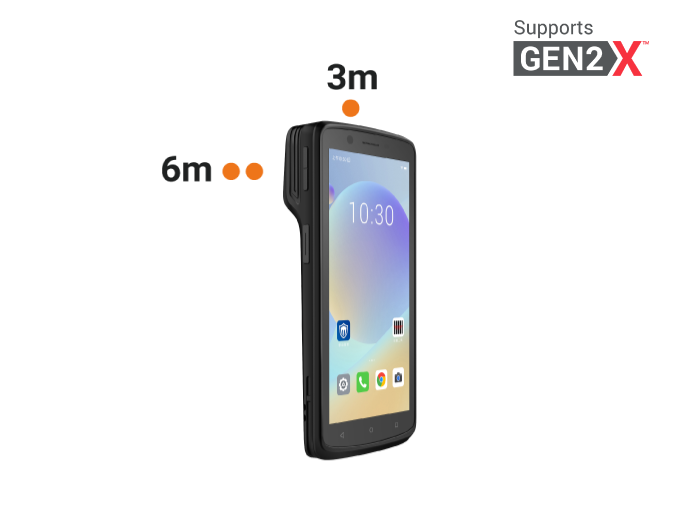
Following this thread, the SEUIC AUTOID Pad Air 11 sits precisely at this intersection. It doesn't max out every spec — it systematically resolves the real friction points that industrial sites actually encounter.
3.1 Core Processing: Edge Computing + Professional Data Capture
Qualcomm QCM6690 octa-core 2.9GHz with 6 TOPS on-device AI — runs MES and QC models without lag
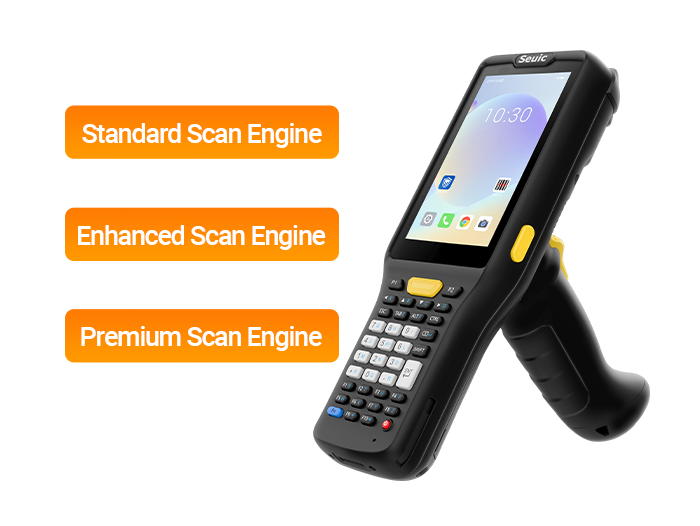
Built-in million-pixel-class 2D scan engine — reads wrinkled, dirty, and on-screen barcodes
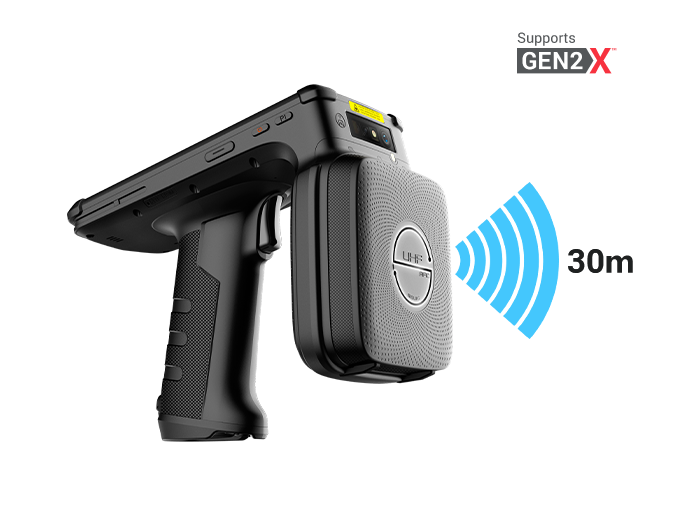
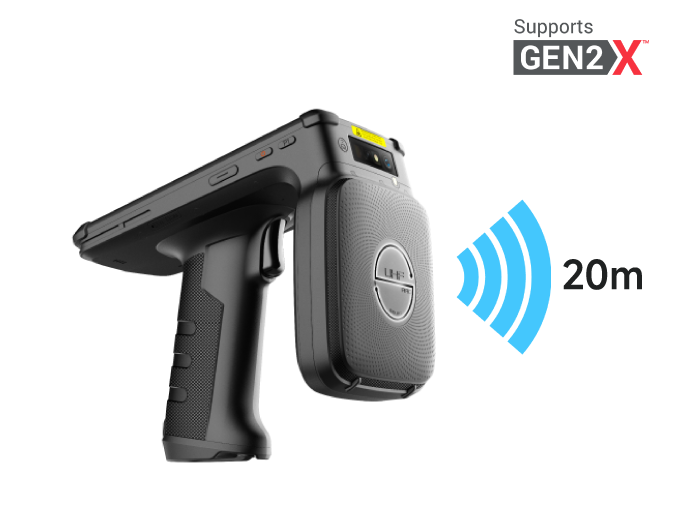
Optional UHF RFID module — warehouse asset counting shifts from "scan one by one" to "read an entire pallet at once"
3.2 Connectivity: Wi-Fi 7 Solves Roaming Anxiety
For AP-dense environments like retail shelves, sorting lines, and hospital wards, Wi-Fi 7's MLO (Multi-Link Operation) aggregates multiple bands to push roaming latency down to milliseconds. Even with dozens of concurrent devices, data streams remain stable for real-time inventory and QC data uploads.
3.3 Human Interface: Large Screen Without Sacrificing Portability
11" FHD anti-glare display — 17% more viewable area than a 10" screen. Engineering drawings and full-page manifests no longer require constant zooming
Thinnest point at 8.5mm, total weight approximately 730g
Supports glove and wet-hand operation
Corning Gorilla Glass 5 for scratch resistance
3.4 Power & Lifecycle: Don't Let Batteries and Replacement Cycles Wreck Your TCO
10,000mAh removable battery with hot-swap support — change batteries without shutting down
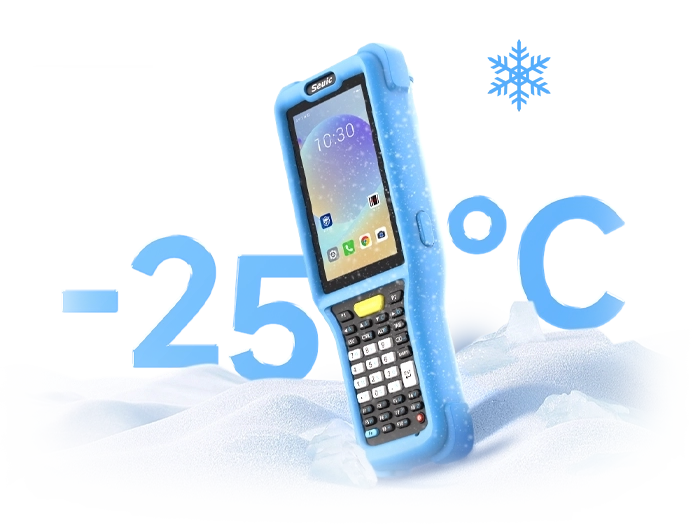
Operating temperature range: -20°C to 50°C
1.2m drop resistance, IP68 protection
8-year product lifecycle with ongoing Android upgrades
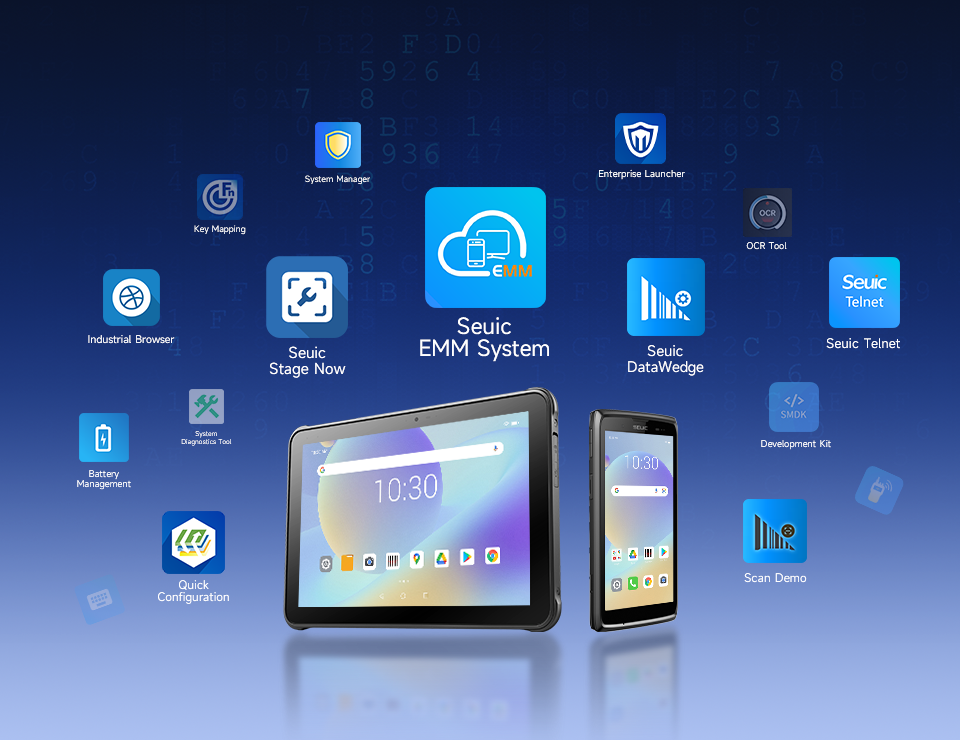
Compatible with SeuicEMM for batch device management, application deployment, and content control — ideal for thousand-unit deployments
4. Procurement Action: Don't Demo on a Conference Room Desk
Office Wi-Fi at full strength, 25°C air conditioning, pristine test barcodes — that's not your site.
Real acceptance testing means taking the device to the actual pain points:
Production line: Scan oil-stained barcodes + operate the screen with work gloves + test AP roaming across the shop floor
Warehouse: 30 minutes of cold storage condensation cycling + UHF reading of tags on metal shelving
Retail store: 20 devices running simultaneously during peak hours + NFC payment simulation
Field inspection: Outdoor screen readability under direct sun + concrete floor drop test (with protective case)
IT: Walk through MDM bulk registration and remote wipe procedures
Run a small-scale pilot for two weeks before discussing thousand-unit procurement. A trial period reveals more truth than any spec sheet.
A rugged Android tablet buying guide follows simple logic: list your industry weights first, reverse-engineer the spec matrix, and validate with an on-site pilot. Don't pay for protection you'll never use, and don't save pennies on lifecycle support only to lose dollars on premature replacements.
Reorder the nine dimensions by your industry's actual priorities, and your device will shift from "it boots up" to "it never lets you down."
What industry and what site conditions are you working with? Feel free to contact SEUIC to request a free demo unit for testing.
Related News
-
India RFID Supplier Selection: Industrial Procurement & Audit Guide
Product Updates | 2026.11.04Learn More
-
RFID Inventory for Beverages & Fresh Food: Handheld Reader Selection Guide
Product Updates | 2026.11.04Learn More
-

RFID Manufacturer Selection: China vs India Sourcing Decision Guide
Product Updates | 2026.11.04Learn More
-
Industrial RFID Company Selection: 5 Vendors Scenario Comparison Guide
Product Updates | 2026.11.04Learn More