




Long Range RFID Reader: See Further, Read Accurately for True Asset Visibility
If you manage a factory, a distribution center, a retail chain, or a team of field inspectors, you've likely experienced this frustration: workers walking miles with barcode scanners, only to end up with mismatched inventory counts. High-value assets show "in stock" on the system but vanish when you need them most. A forklift carrying a pallet passes through the dock door, and the system records nothing.
The root cause isn't bad barcodes. What you really need is a tool that can identify assets "at a glance" from a distance — and that's exactly what a Long Range RFID Reader delivers.
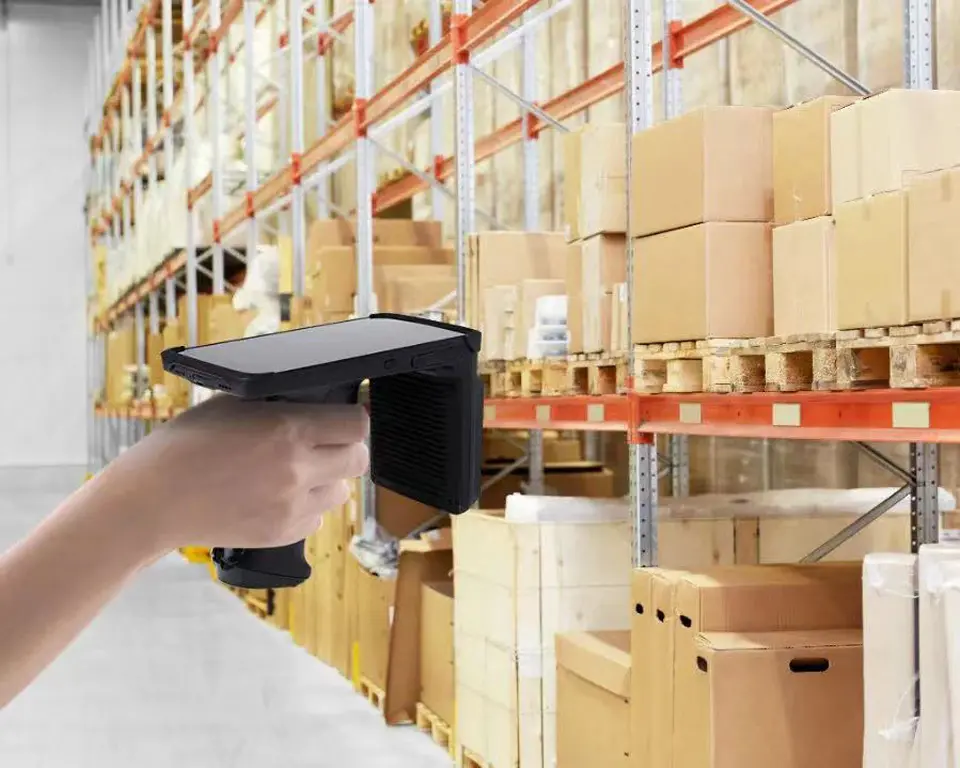
1. Why Asset Tracking Needs "Long Range" RFID
Traditional High-Frequency (HF) RFID typically reads at just a few centimeters. In contrast, UHF Long Range RFID Readers operate in the 860–960 MHz band, achieving read distances of 10 meters or even 15+ meters — without requiring line-of-sight alignment. This leap in physical range doesn't just mean "reading farther." It fundamentally changes how operations work:
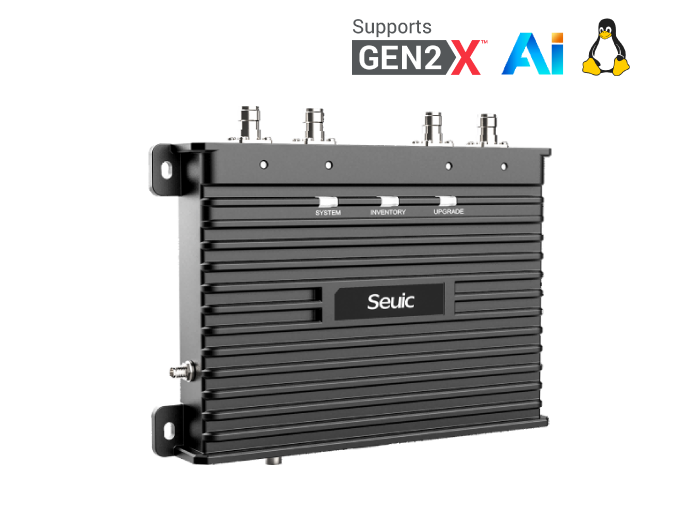
Automated Gate and Yard Management: Fixed long-range readers installed at logistics park entrances and factory loading docks automatically identify trailers, pallets, and containers as they pass through — no manual intervention required. Receiving accuracy can approach 99%.
Inventory Shrinks from Hours to Minutes: Handheld long-range readers can capture hundreds of tags in a single sweep from several meters away. Warehouse inspections no longer require walking up to every item.
Eliminating "Blind Spots" and "Dead Zones": Standard short-range readers often leave coverage gaps where assets seem to disappear. Long-range readers, with their wider coverage radius, make continuous, seamless tracking possible.
Real-Time Location Visibility: Deploying multiple long-range readers creates overlapping coverage zones. Combined with software, asset location can be narrowed down to a few feet — enabling geo-fencing, automated inventory reconciliation, and workflow-triggered events.
For hospital equipment departments, electric/gas utility field inspectors, 3PL warehouses, and retail supply chains, "long range" means fewer people, faster throughput, and lower error rates.
In short: short-range RFID solves the "identification" problem. Long Range RFID solves the "visibility" problem.
2. Deployment Risks and Validation Methods: Don't Let Your Project Fail in the Field
Many RFID projects fail not because the hardware is bad, but because the site survey was skipped. UHF radio waves are reflected by metal, absorbed by liquids, and interfered with by broadband noise generated by Variable Frequency Drives (VFDs) and conveyor motors. Skipping an on-site assessment is the #1 reason RFID projects fail. The cost of retrofitting after deployment is typically 2–3 times the cost of upfront planning.
Before introducing any Long Range RFID Reader, validate using this framework:
2.1 RF Environment Baseline Survey
Walk the site with a spectrum analyzer tuned to the 860–960 MHz band. Mark the locations of motors, VFDs, Wi-Fi hotspots, and other RFID readers. Identify the noise floor.
2.2 Read Zone Design
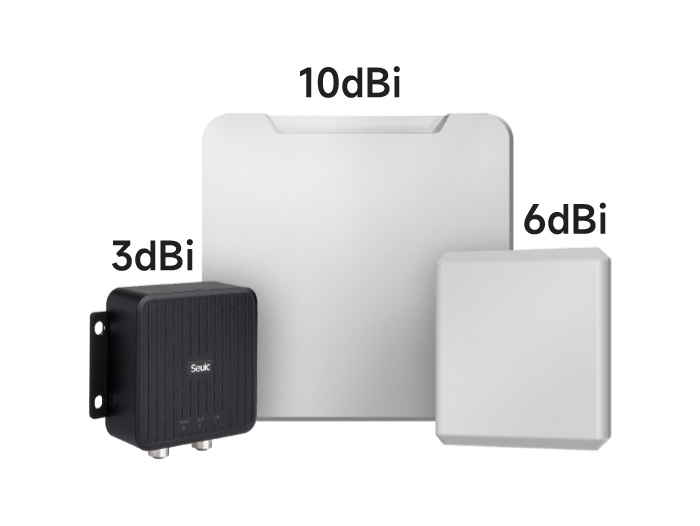
Define three things: where to read, where NOT to read, and how fast items pass through. Control "over-read" (reading tags outside the intended zone) through antenna selection (gain, beam width, polarization), power tuning, and RSSI threshold filtering.
2.3 Tag and Real-World Item Testing
A tag's performance on a real item can differ dramatically from its performance in free space. A tag that reads at 8 meters in open air may only reach 2 meters when attached to metal or placed near liquid. Use on-metal tags for metal surfaces. Position tags carefully around liquids.
2.4 Meaningful Proof of Concept (POC)
An effective POC must include:
Testing at real throughput volumes (not waving a tag manually)
Coverage of edge cases: overloaded pallets, wet items, simultaneous multi-tag reads
Duration of at least two weeks, spanning multiple shifts to capture variables
Key metrics: sustained read rate above 99% (below 95%, data becomes unreliable), over-read rate, and read latency
2.5 Phased Rollout
Start with a small pilot (2–4 weeks) → Expand to 1–3 months → Full deployment (3–12 months) → Continuous optimization. Simultaneously validate data flow integration with ERP and WMS. Confirm that procedures exist to handle exceptions (tags not read, unknown tags detected, network outages) with someone responsible and a fallback process.
Security Note: Long range also means a larger attack surface. Eavesdropping, cloning, and signal jamming are more critical concerns in UHF long-range systems. Always enable authentication and encrypted transmission. Use tamper-evident tags for high-value assets. Conduct regular vulnerability audits.
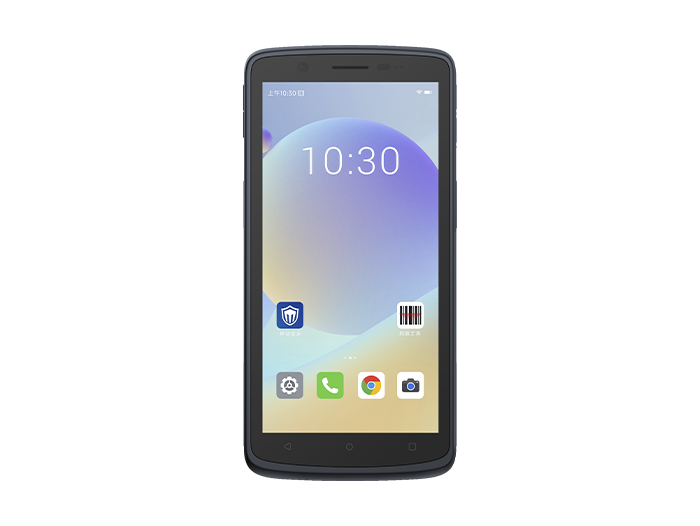
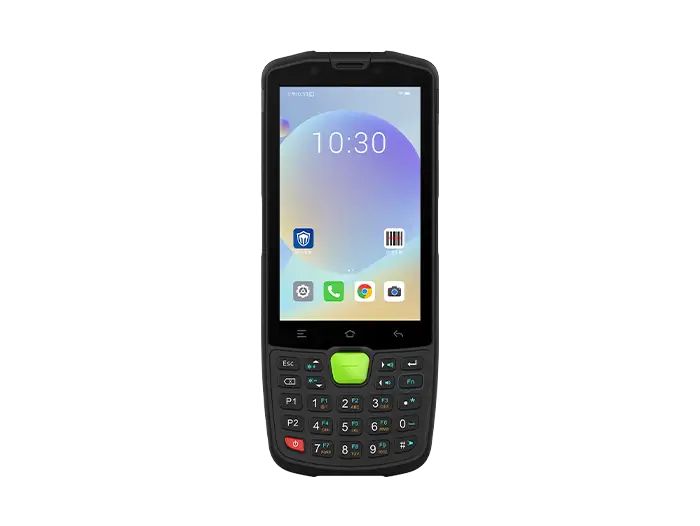
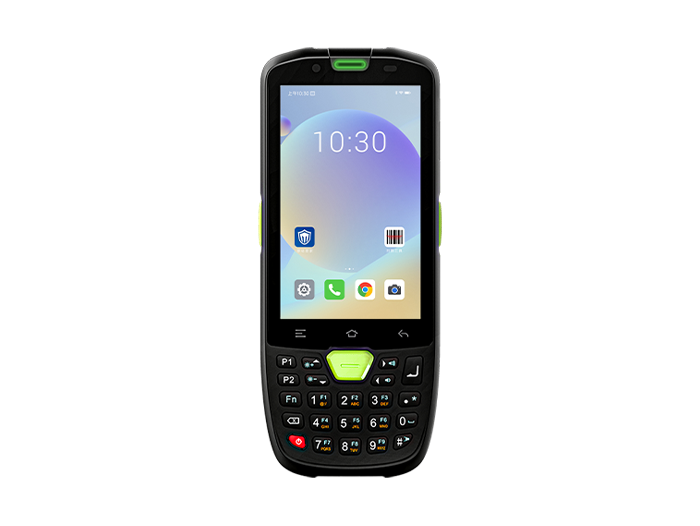
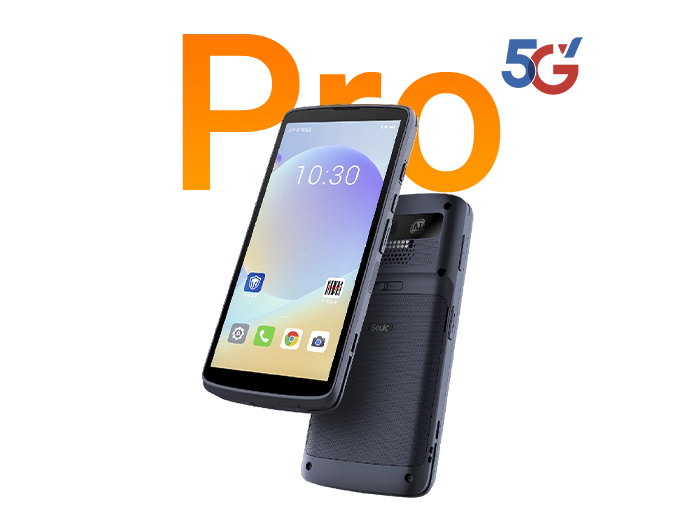
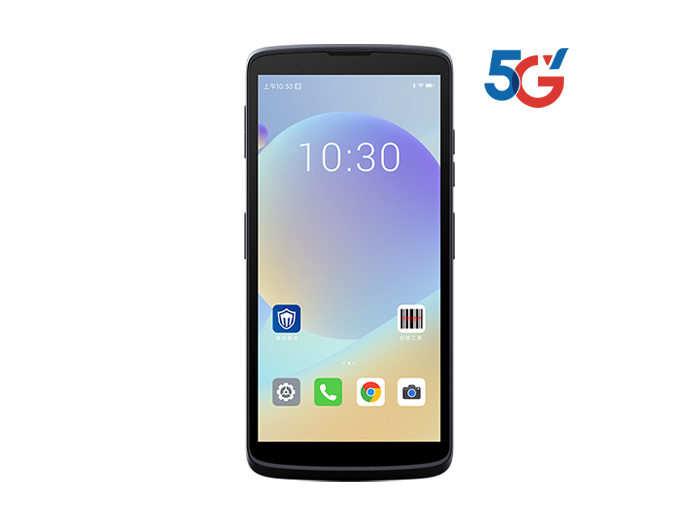
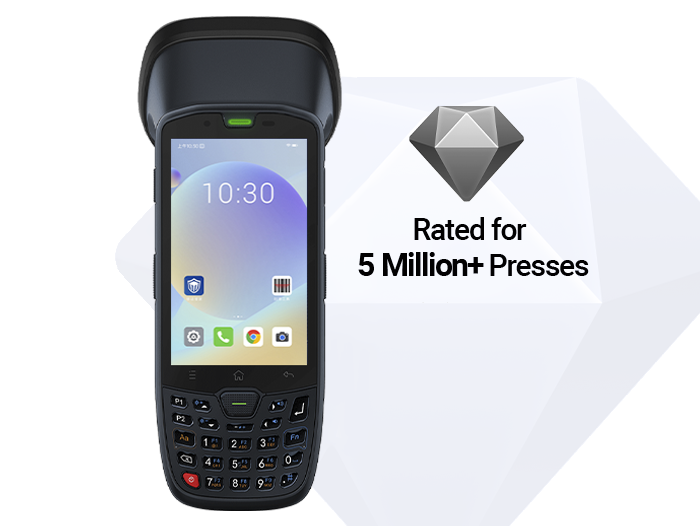
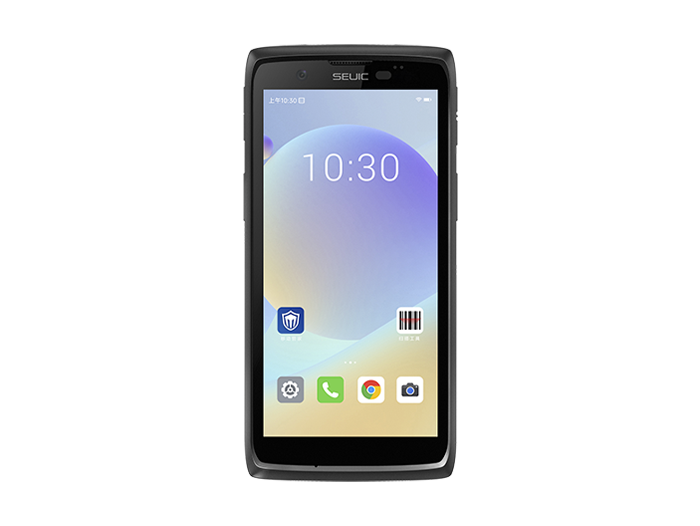
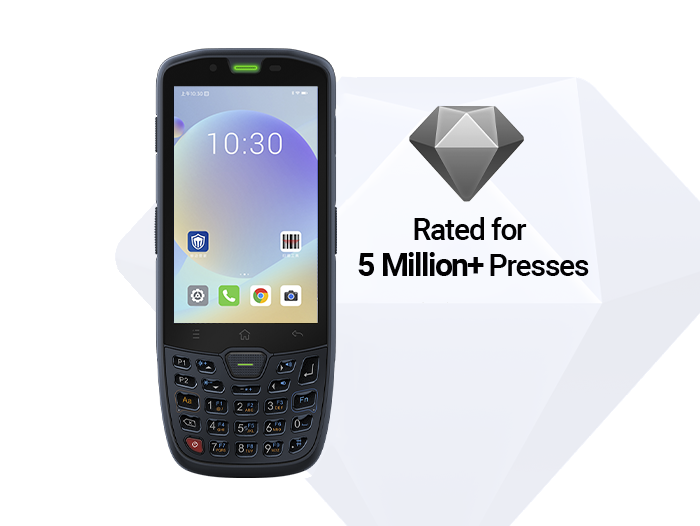
3. Recommended Product: Seuic AUTOID UTouch 2-20
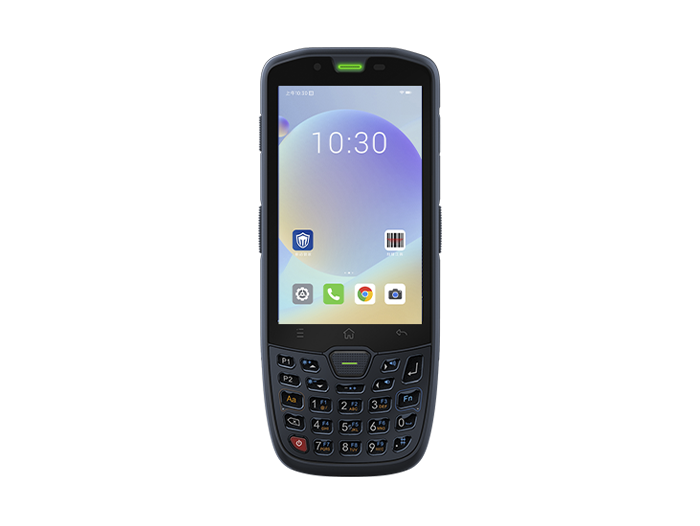
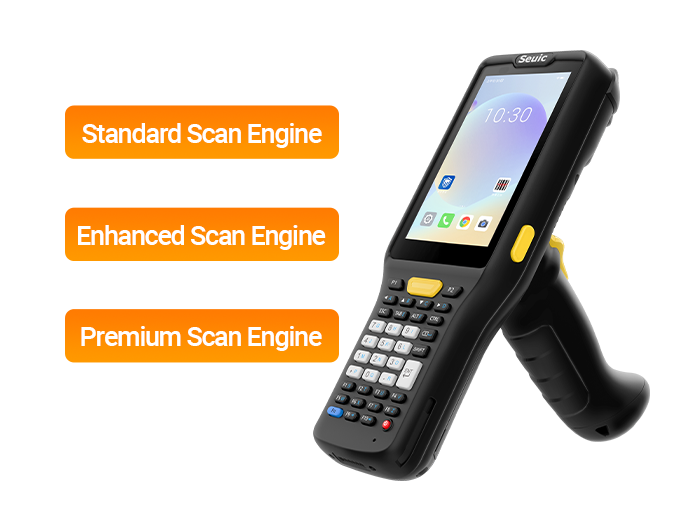
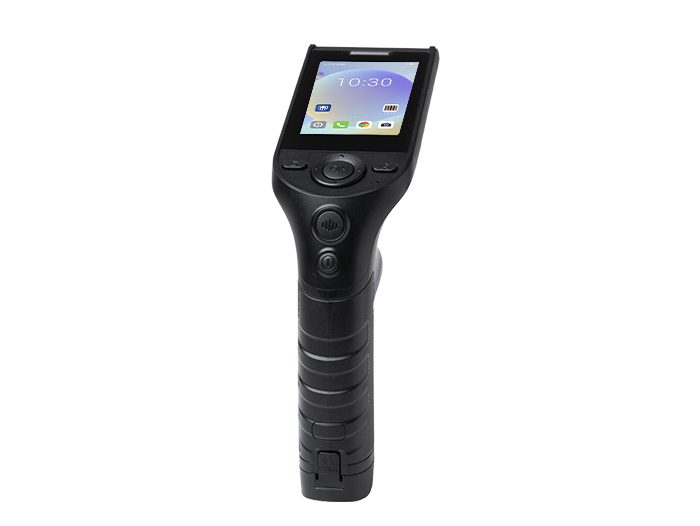
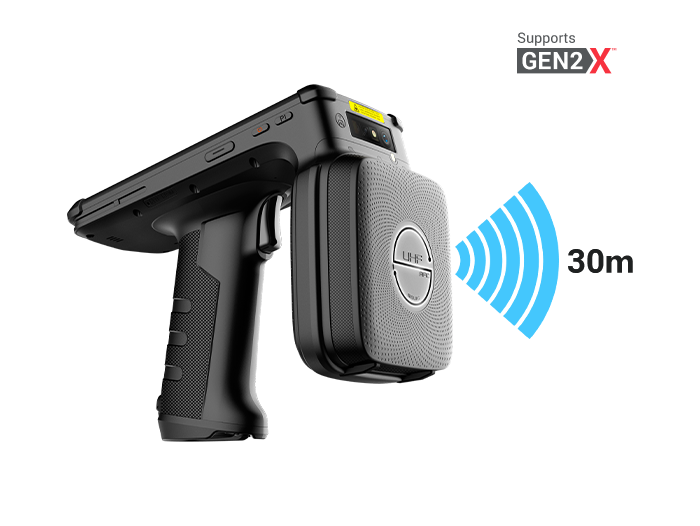
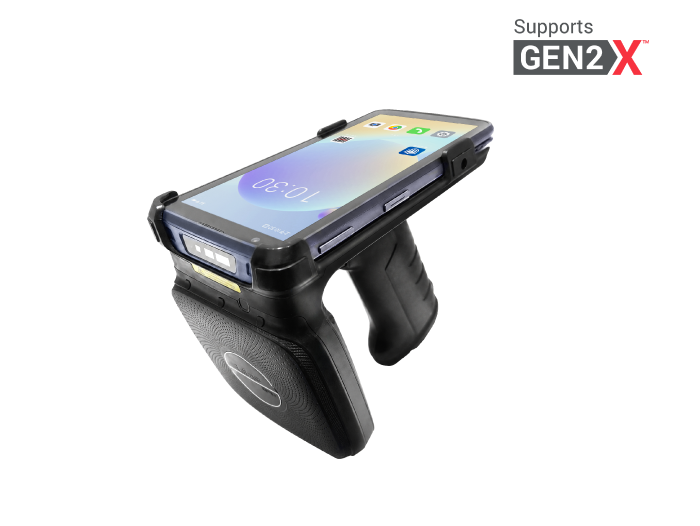
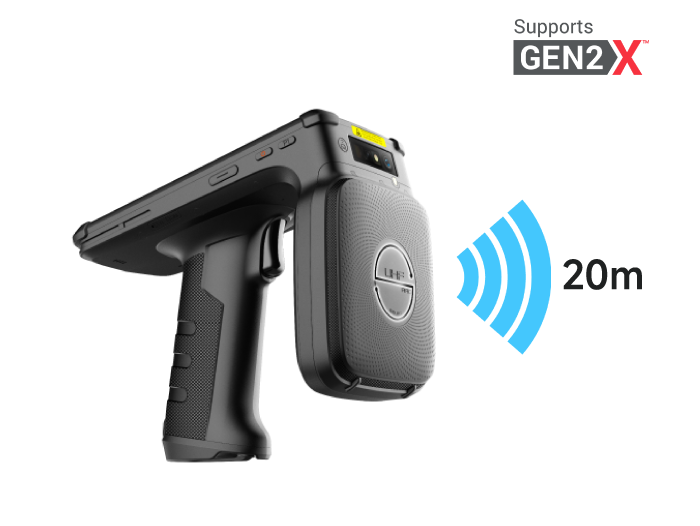
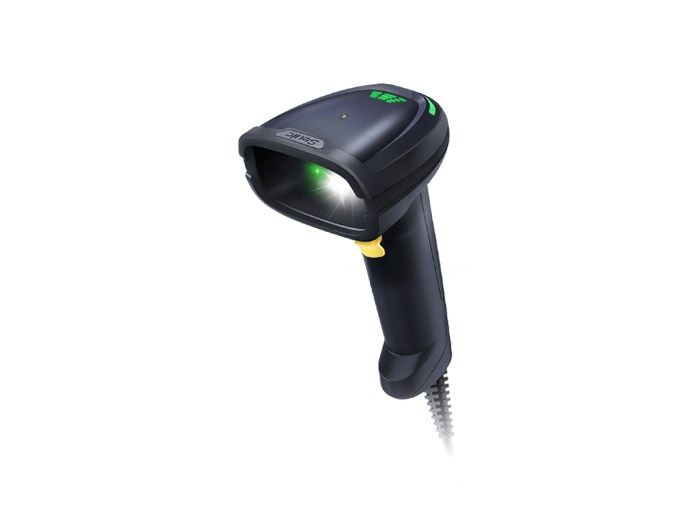
For scenarios requiring mobile inventory, outdoor inspection, store receiving, or hospital equipment rounds — where you need to "read as you walk" — fixed long-range readers aren't the right fit. You need an industrial-grade handheld Long Range RFID Reader. The Seuic AUTOID UTouch 2-20 is a strong contender in this category.
Key Specifications:
| Feature | Specification |
| UHF Read Range | ≥10m (tested with Impinj H47 tags); up to 20m with certain tags |
| Bulk Read Speed | Up to 1,300 tags/sec — captures massive quantities in seconds |
| Precision Reading | Supports 5–10 cm close-range pinpoint reading — "point and read" on dense shelves to avoid over-read |
| Battery | 11,700mAh dual swappable batteries (host 5,000 + handle 6,700); QC 3.0 fast charge; supports 24-hour continuous operation |
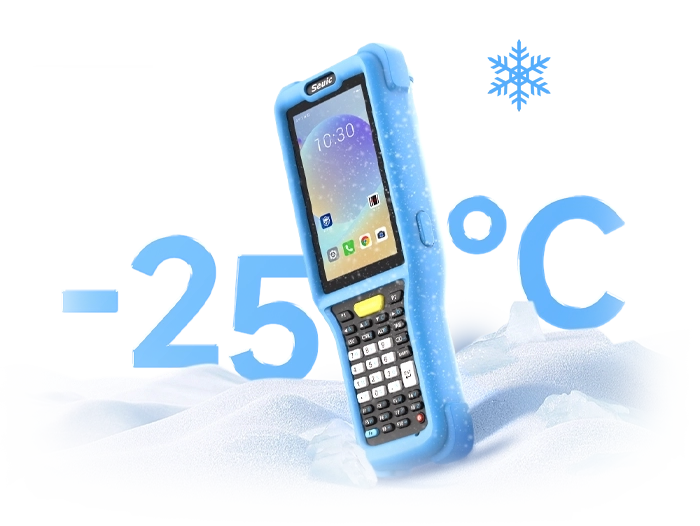
| Protection Rating | IP67 sealed + 2m drop resistance; operating temp -20°C to +50°C; humidity 5%–95% |
| System | Android 14 (upgradable to 18); octa-core 2.0 GHz; 4GB+64GB storage (optional 8GB+128GB) |
| Positioning | GPS + GLONASS + BeiDou; 5–10m accuracy in open sky; outdoor inspection trails are traceable |
| Multi-Function Capture | 2D imaging scan engine; HF/NFC (ISO 15693, ISO 14443A/B); 13MP rear camera; PSAM card expansion |
| Connectivity | Wi-Fi 6 ready (802.11ax); 4G LTE; Bluetooth |
4. Why It's Right for Your Team
Factories and Warehouses: With 1,300 tags/sec bulk read speed and 10–20 meter range, warehouse staff can inventory entire rows of racks from the aisle entrance. Single-operation efficiency outperforms industry averages by 10x.
Hospitals and Pharmaceuticals: IP67 + 2m drop industrial protection, combined with NFC and UHF dual-mode, streamlines asset handoffs between nurse stations, pharmacies, and equipment departments. GPS tracking makes field-deployed medical equipment traceable.
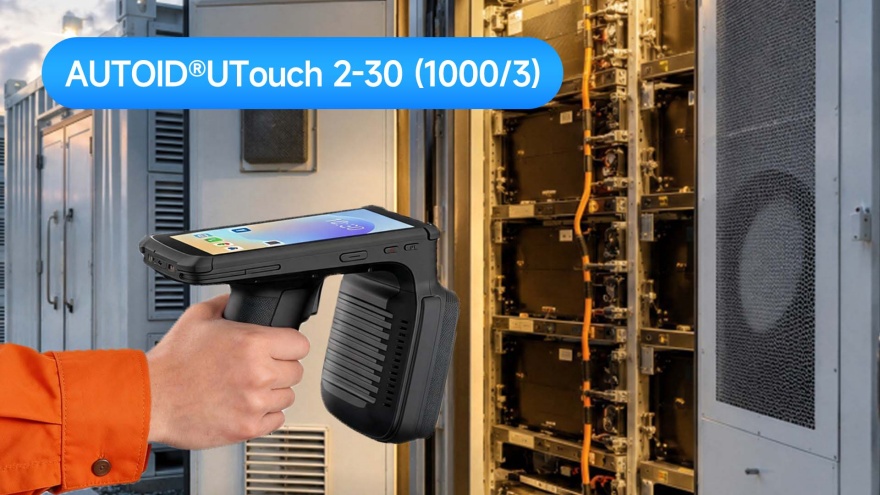
Public Utility Outdoor Inspection: The 11,700mAh dual battery handles extended fieldwork. Reliable cold start at -20°C. GPS/BeiDou positioning automatically logs inspection trails.
Retail and Supermarkets: The 5–10 cm close-range precision reading mode is ideal for jewelry counters and high-value dense shelf scenarios — "point and read" avoids reading neighboring tags.
3PL and E-Commerce Fulfillment: Circular polarization antenna + 33 dBm full output maintains stable read rates in challenging environments with metal shelving and liquid packaging. Wi-Fi 6 backhaul ensures zero-latency data sync with WMS/ERP.
A Long Range RFID Reader isn't a magic wand — it's the bridge that takes asset tracking from "human-visible" to "system-automated visible." The 10–20 meter read capability of UHF technology eliminates blind spots, compresses inventory time, and frees up manpower. But only when we invest in solid site surveys, real-world tag testing, and meaningful POC validation before deployment does that long-range advantage truly translate into 99%+ read rates and measurable ROI.
For enterprises that need mobile, outdoor, multi-scenario operations, the Seuic AUTOID UTouch 2-20 — with its 20-meter range, 1,300 tags/sec bulk read, IP67 industrial protection, and 24-hour battery life — offers a cost-effective, "out-of-the-box" option.
Founded in 2002, Seuic has always focused on solving real pain points in on-site operations, insisting on independent R&D and innovation, and specializing in building highly durable, adaptable, and stable industrial-grade data capture devices suited for manufacturing, retail, logistics, healthcare, public utilities, and other complex scenarios. Leveraging a full local R&D, production, and service chain, we can quickly respond to customer customization needs and provide efficient after-sales support — filling the gaps left by imported equipment. With reliable product quality, exceptional value, and comprehensive local service, we continue to empower digital transformation across industries, contributing to high-quality development of the real economy while achieving steady corporate growth.
Related News
-
Passive vs Active RFID Tags: Core Differences & When to Use Each
Product Updates | 2026.10.10Learn More
-
2D Barcode Scanner Buying Guide: Decoding, Environment & Lifecycle
Product Updates | 2026.10.10Learn More
-
What Is a 2D Barcode Scanner? Definition, How It Works & Supported Symbologies
Product Updates | 2026.10.09Learn More
-
How to Choose a Rugged Android Tablet? Ditch Spec Stacking, Use Scenario Tables
Product Updates | 2026.10.09Learn More