




What Is a Handheld Bar Scanner? Types, Components & Use Cases Explained
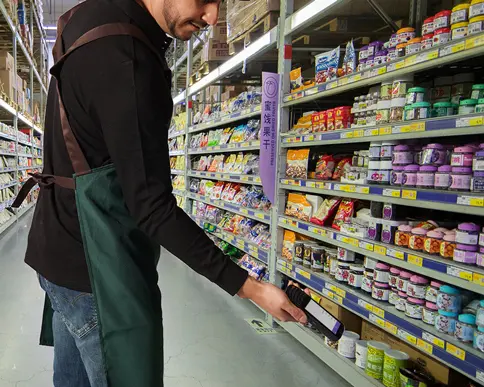
At retail checkouts, logistics sorting lines, factory floors, hospital wards, and outdoor inspection sites, you'll almost always see this device: an operator picks it up, presses a button over a barcode, and data streams into the system instantly. That's a Handheld Bar Scanner. For plant managers, warehouse managers, store managers, QC personnel, and field inspection officers, it serves as the "data entry point" that powers inventory accuracy, production traceability, and daily operational efficiency.
However, when it's time to make a purchasing decision, buyers are often confused by terms like "laser scanner," "CCD red-light scanner," and "imager-based 2D scanner."
Different scanning technologies directly determine what types of codes the device can read, how far it can read them, and how harsh an environment it can handle. This article starts with the definition and core components, breaks down the technical differences among the three mainstream types, and provides a quick-use-case overview across multiple industries — helping decision-makers build a clear selection framework.
1. Definition and Core Components
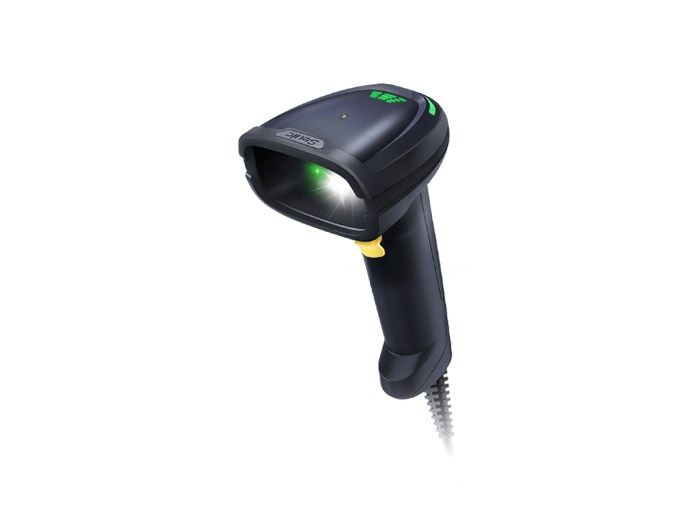
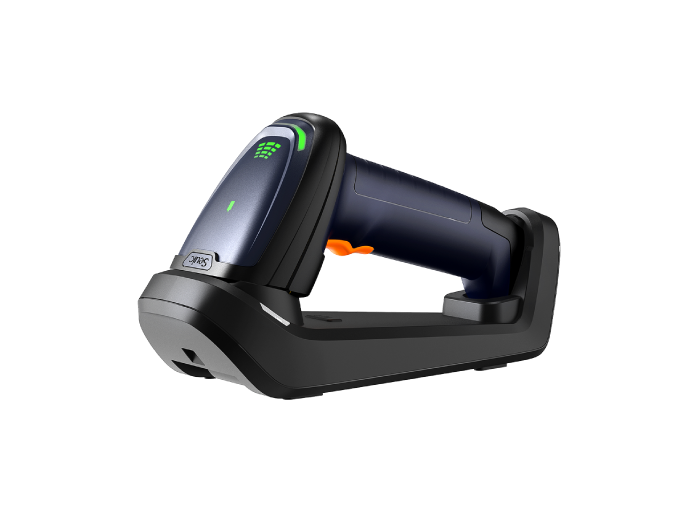
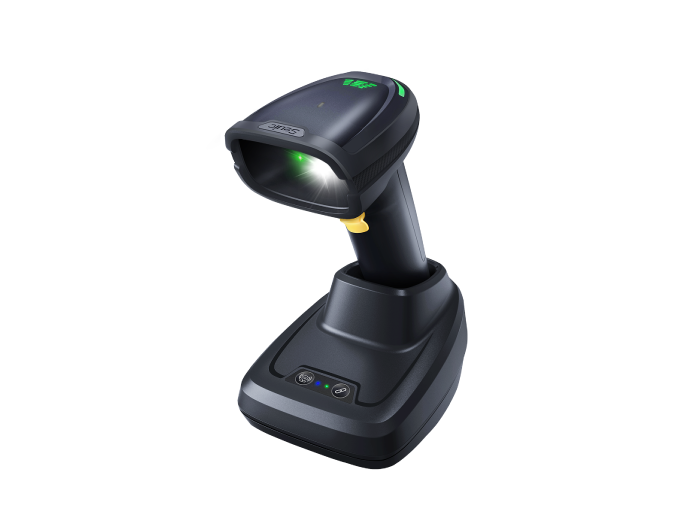
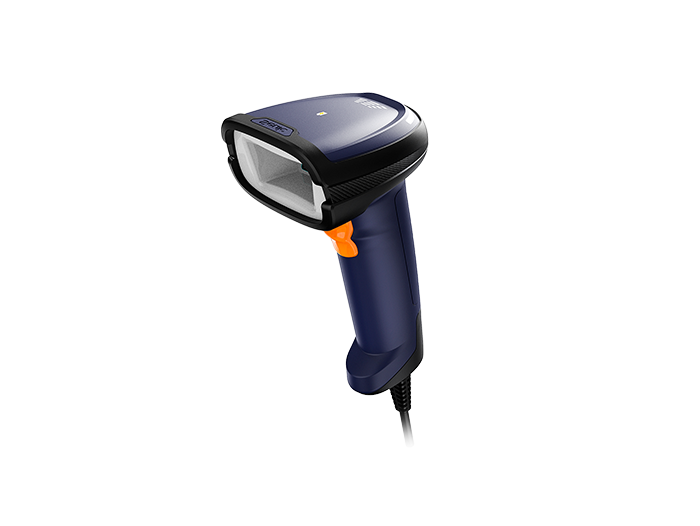
A handheld bar scanner is a portable data capture device that uses an optical sensor and a decoding chip to quickly identify 1D and 2D barcodes, converting the information into a digital signal and transmitting it to a computer, POS system, or host system.
From a hardware perspective, a typical handheld scanner consists of three core components:
Scan Engine (Optical Sensor): Responsible for "seeing" the barcode. Laser scanners rely on a laser diode emitting a beam; CCD and imager scanners use LED illumination combined with a charge-coupled device or CMOS image sensor to "take a picture."
Decoder Board / Decoding Chip: Responsible for "understanding" the barcode — converting the optical signal into digital data. Performance directly impacts scan speed and recognition rate.
Interface Circuit: Responsible for "transmitting" data. Supports USB and RS-232 for wired connections, and Bluetooth and Wi-Fi for wireless connections.
Key performance indicators for modern handheld scanners include: scan speed (typically 100–500 scans per second), recognition rate (generally above 99.5%), industrial-grade devices with IP54 or higher protection rating, ability to withstand 1.5-meter drops, and wireless models with 8–12 hours of battery life.
2. Three Main Types: Laser, CCD, and Imager
Based on scan engine technology, handheld bar scanners fall into three categories: laser, CCD, and imager. Each has its strengths — there is no absolute "better" or "worse."
2.1 Laser Scanner: The Long-Range 1D Speedster
Uses a laser diode to emit an extremely fine beam, reflected by a high-speed oscillating mirror to create a scan line that "cuts across" the barcode.
Advantages: Long scan range (standard retail: 0.25–0.6 m; industrial models can reach several meters), fast speed (200–500 scans/sec), can read barcodes through glass or plastic packaging.
Limitations: Can only read 1D barcodes — cannot read 2D codes or screen codes. Weak tolerance for damaged or poorly printed barcodes.
2.2 CCD Scanner: The Affordable Short-Range Specialist
Uses LEDs to illuminate the barcode and a charge-coupled device to "capture the image in one shot" for decoding.
Advantages: Simple construction, no moving parts, good shock resistance, low cost. Can read 1D
barcodes displayed on screens. Some tolerance for lightly smudged or damaged codes.
Limitations: Very short working distance (a few centimeters up to about 10 cm). Can only read 1D barcodes. Cannot read codes wider than the imaging array.
2.3 Imager Scanner: The Versatile All-Rounder
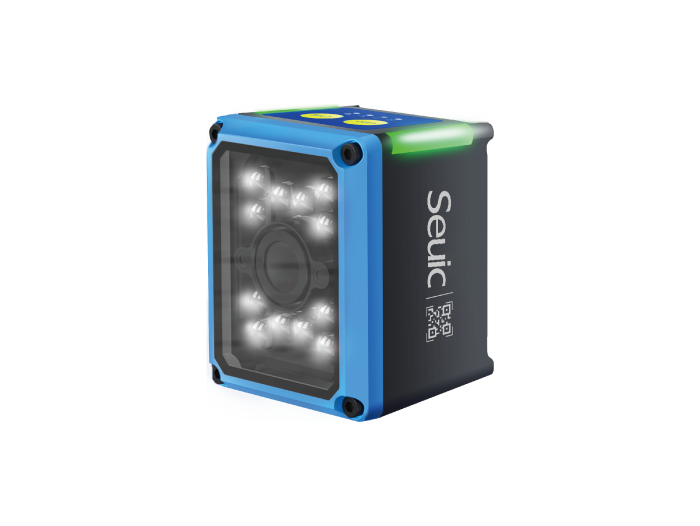
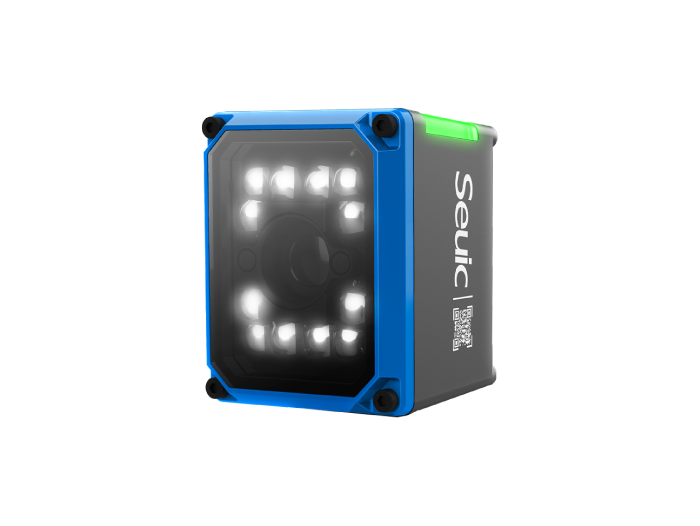
Essentially a precision mini-camera that captures a full image of the barcode and uses powerful decoding software to recognize it.
Advantages: Reads both 1D and 2D codes flawlessly. Excellent at reading phone screen codes. Greater depth of field and stronger tolerance for damaged, wrinkled, or reflective barcodes. High-end models can reach several meters.
Limitations: Relatively higher cost. May be slightly less effective than specialized laser models on extremely damaged barcodes.
Comparison Table
| Dimension | Laser Scanner | CCD Scanner | Imager Scanner |
| Barcode types supported | 1D only | 1D only | 1D + 2D |
| Typical working distance | Long (up to tens of meters) | Short (≤10 cm) | Medium to long (high-end up to tens of meters) |
| Screen code reading | Not supported | Partially supported | Supported |
| Damaged code tolerance | Weak | Medium | Strong |
| Relative cost | Medium | Low | Higher |
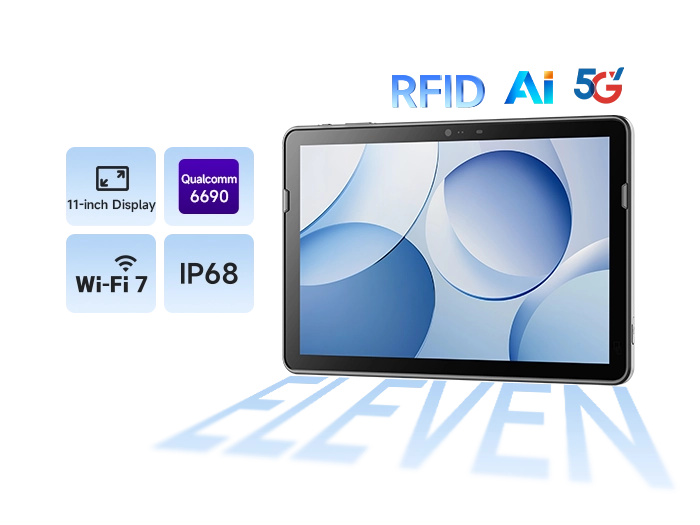
Beyond scanning technology, connection type (wired/wireless) and form factor (pure scanner, handheld terminal with screen, wearable) are also important classification dimensions. For warehouse managers and 3PL operators, wireless Bluetooth models have become mainstream because they eliminate cables, offer mobility, and provide real-time data transmission.
3. Use Case Overview
3.1 Manufacturing & Factory Management
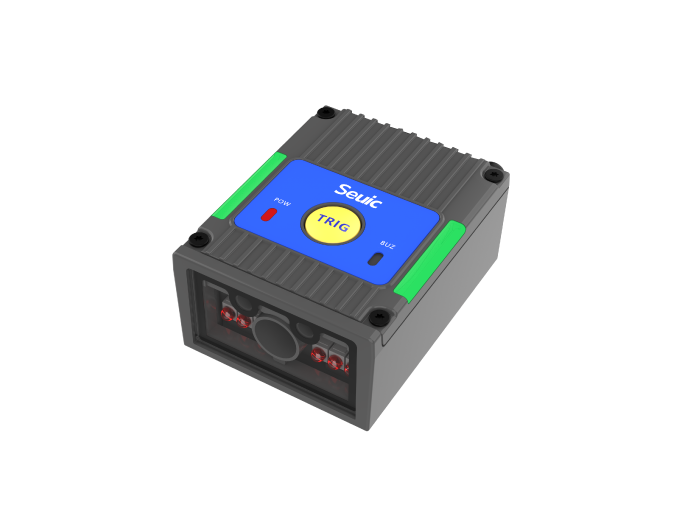
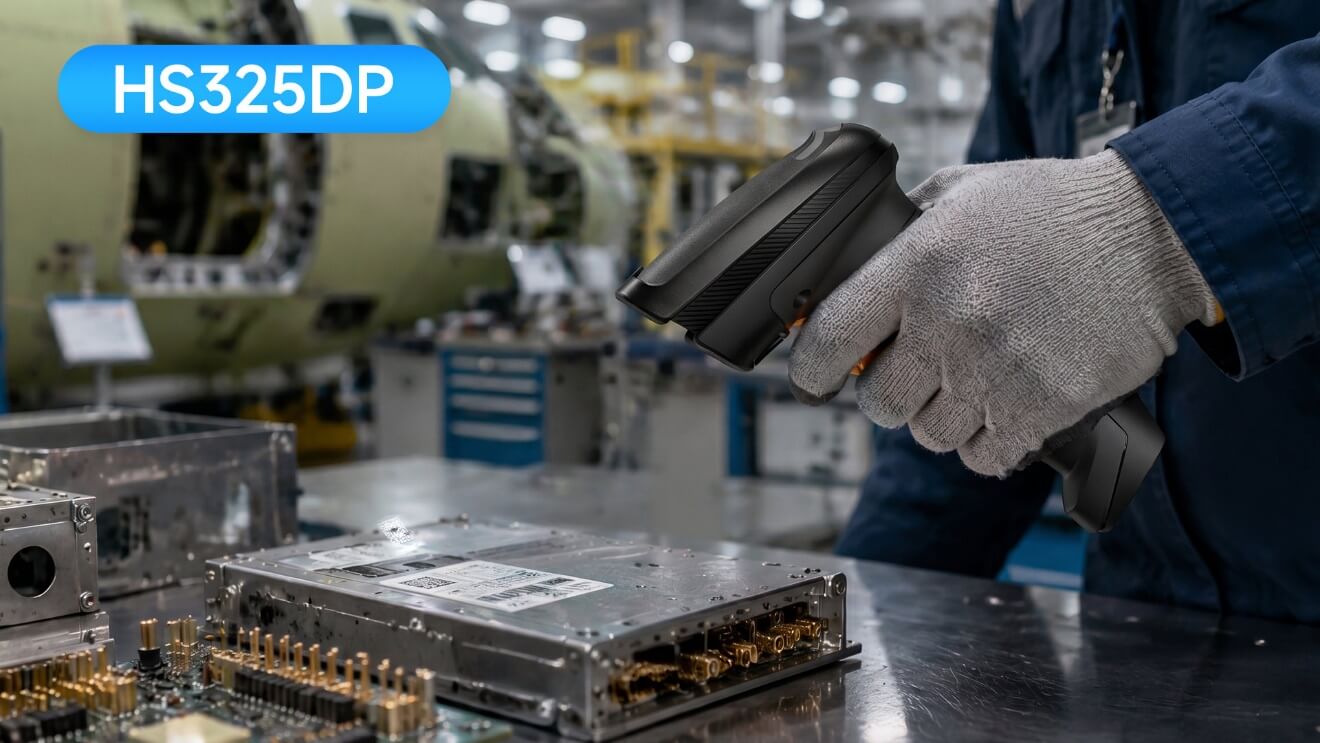
Incoming inspection, work-in-process tracking, finished goods traceability, asset management. Precision manufacturing such as automotive parts often uses fixed-mount readers with IP65 protection or industrial-grade handheld terminals.
3.2 Warehousing & Logistics / 3PL
Full-chain scanning from receiving, putaway, picking, to shipping — data synced to WMS in real time. Fixed scanners on sorting lines read package labels at high speed. Data from a major e-commerce warehouse shows that switching to industrial-grade scanners improved sorting efficiency by approximately 40% and reduced error rates to below 0.03%.
3.3 Retail Chains & Supermarkets
Checkout (3–5 items per second), inventory counting, price tag verification, mobile payment code recognition. Retail is the largest application segment for handheld scanners, accounting for roughly 40% of market share.
3.4 Healthcare & Pharmaceuticals
Patient identity verification (scanning wristbands), medication/supply management (dual-person verification), vaccine traceability. Medical-grade devices typically feature antimicrobial housings that withstand disinfectant wipes.
3.5 Public Utilities & Outdoor Inspection
Field data collection for gas, water, and electric utilities. Industrial-grade models are dustproof, drop-resistant, and tolerate high temperatures. Government agencies also use mobile handheld terminals with barcode scanning for on-site compliance inspections.
3.6 Courier & Delivery
End-to-end parcel tracking from pickup to delivery. Scanning confirms delivery status at drop-off, enabling rapid traceability of exception items.
4. Key Selection Considerations
We recommend evaluating from these five dimensions:
Barcode type: Only need 1D? Go with laser or CCD. Need 2D (including screen codes)? You must choose a 2D imager.
Scan distance: Long range, wide area? Laser or high-end imager. Short-range fixed station? CCD or imager.
Environment: Outdoor glare, dust, moisture? Industrial-grade protection (IP65/IP67). Indoor standard environment? Commercial grade is sufficient.
Mobility needs: Fixed workstation? Wired USB. Large warehouse inventory and mobile operations? Wireless Bluetooth/Wi-Fi.
Barcode quality: Codes may be smudged, wrinkled, or reflective? An imager offers stronger tolerance.
A handheld bar scanner may seem like a simple "scan and go" device, but behind it lies a deep integration of optical engineering, decoding algorithms, wireless communication, and industry-specific workflows. There is no absolute winner among laser, CCD, and imager technologies — only the right match for your use case. For plant managers, warehouse managers, store managers, QC personnel, and field inspection officers, clarifying your barcode types, scan distance, environmental severity, and mobility needs is the key to moving from "buying a scanner" to "building an efficient data capture pipeline."
As a national-level "Specialized and New" Little Giant enterprise, Seuic has earned a reputation as a trusted partner in global digital transformation through reliable product quality and efficient service. Operating in over 40 countries and regions, with more than 60 localized service teams, we offer over 200 products and integrated solutions, serving more than 200,000 enterprise customers across smart manufacturing, logistics, healthcare, and other industries. Guided by the philosophy of "keeping every unit under control," Seuic continues to earn market trust.
Related News
-
Passive vs Active RFID Tags: Core Differences & When to Use Each
Product Updates | 2026.10.10Learn More
-
2D Barcode Scanner Buying Guide: Decoding, Environment & Lifecycle
Product Updates | 2026.10.10Learn More
-
What Is a 2D Barcode Scanner? Definition, How It Works & Supported Symbologies
Product Updates | 2026.10.09Learn More
-
How to Choose a Rugged Android Tablet? Ditch Spec Stacking, Use Scenario Tables
Product Updates | 2026.10.09Learn More