




What Is RFID? A Complete Guide to Radio Frequency Identification: Definition, Working Principle & Applications
In today's fast-paced world of supply chain management and smart operations, you've probably heard the term "RFID" thrown around. Whether it's on a factory floor, in a retailer's warehouse, at a hospital pharmacy, or inside a parcel sorting hub, this technology is quietly transforming how industries run.
If you're a plant manager, warehouse supervisor, retail store director, or logistics operations lead, you've likely felt the limits of traditional methods: inventory counts that eat up hours, asset tracking prone to errors, and manual barcode scanning that slows everything down. So what exactly is RFID? And could it be the answer to these pain points?
This article gives you a clear, practical introduction to RFID — what it is, how it works, the different types available, and how it stacks up against the barcode technology you already know. By the end, you'll have what you need to decide whether RFID fits your operation.
1. What Is RFID? Full Name and Basic Principle
Let's start with the core question: What is RFID?
RFID stands for Radio-Frequency Identification. It's a technology that uses radio waves to identify and track objects automatically — without physical contact or a direct line of sight.
A basic RFID system has three components:
Tag: Attached to the object being tracked. It stores a unique identifier (like a product ID, serial number, or production date).
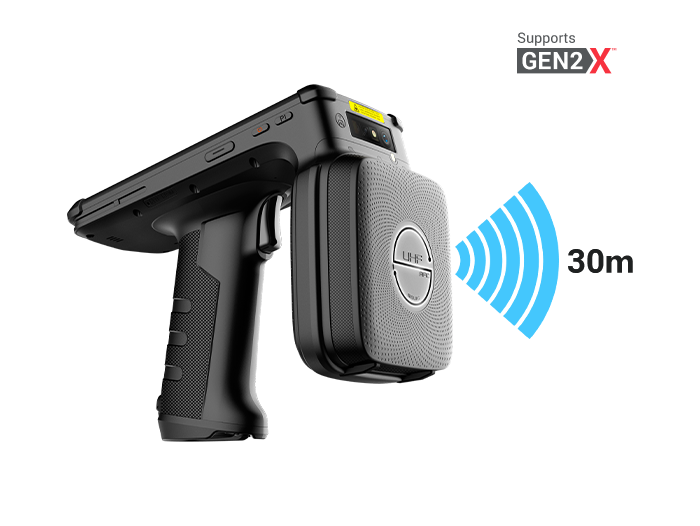
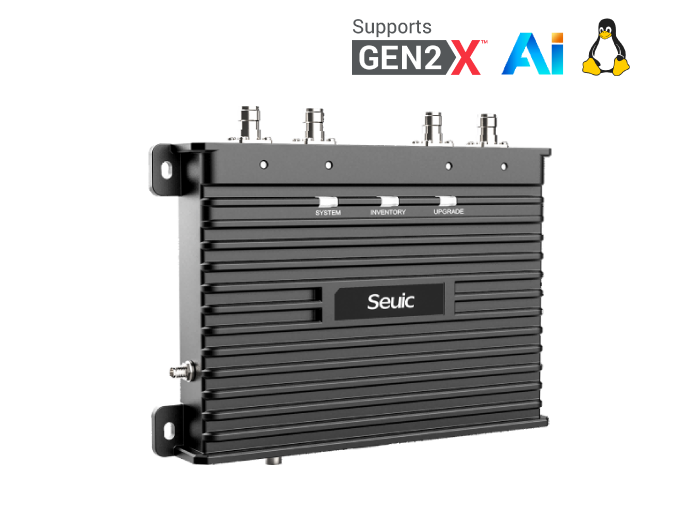
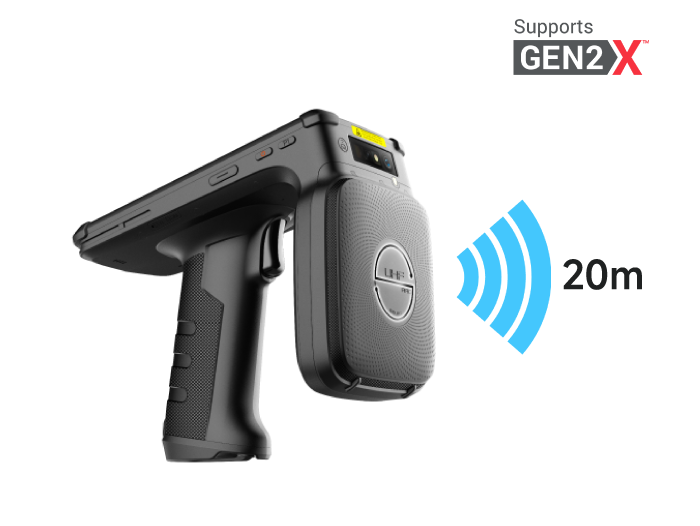
Reader: Sends out radio signals and receives responses from nearby tags, then decodes the data.
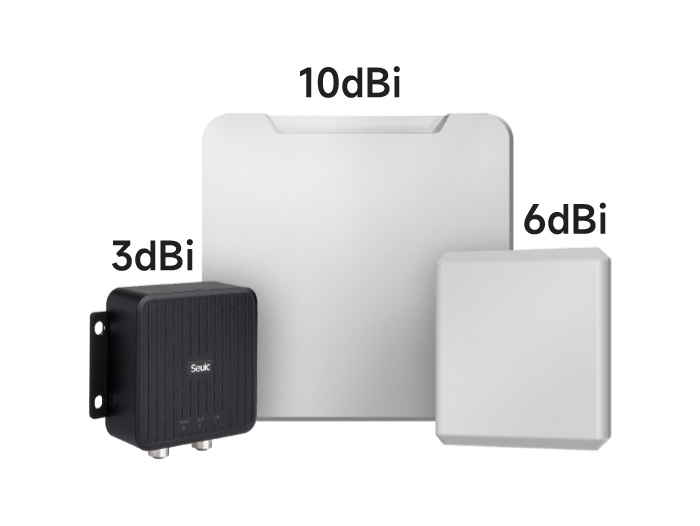
Antenna: Transmits and receives radio waves, bridging the reader and the tag.
Here's how it works in simple terms:
Activation: The reader continuously emits radio waves at a specific frequency through its antenna. When an RFID tag enters the signal range, its antenna picks up energy.
Response: For passive tags (the most common type), that harvested energy powers up the microchip inside, which then sends back stored information by modulating the reflected signal.
Decoding: The reader's antenna captures the return signal and passes it to the reader for decoding.
Data transfer: The decoded information is sent to a backend system (such as a WMS or ERP), completing the identification event.
All of this happens in a fraction of a second — no touching, no aiming, no line of sight required. That's the fundamental advantage RFID has over older identification methods.
2. RFID Frequencies and Common Types
Not all RFID is the same. Based on operating frequency, RFID systems fall into three main categories, each with distinct characteristics and use cases. Understanding these differences is key to choosing the right solution.
| Frequency Type | Operating Band | Read Range | Key Characteristics | Typical Applications |
| Low Frequency (LF) | 125–134 KHz | Short (<10 cm) | Strong penetration through materials, good interference resistance, slower data transfer, relatively higher cost | Animal tracking, access control cards, car immobilizer keys |
| High Frequency (HF) | 13.56 MHz | Medium (<1 m) | Faster than LF, globally standardized (NFC is a subset), moderate read range | Library book management, contactless payments, ID cards, ticketing systems |
| Ultra-High Frequency (UHF) | 860–960 MHz | Long (>1 m, up to 10m+) | Fast data transfer, bulk reading capability, lower tag cost, sensitive to liquids and metals | Warehousing & logistics, retail inventory, garment tags, production line tracking, supply chain traceability |
For factory, warehouse, retail, and logistics managers, UHF RFID is the most relevant category. Its long-range, high-speed bulk reading capability is what makes large-scale operational efficiency possible. Picture this: pushing a cart loaded with merchandise through a reader portal and having every single item counted in under a second. That's the power of UHF RFID.
3. RFID vs. Barcodes: A Revolution in Efficiency
Many managers naturally compare RFID to barcode. Both technologies identify items, but they differ dramatically in capability and user experience. Here's a side-by-side comparison:
| Dimension | RFID (Especially UHF) | Barcode |
| Reading method | Non-contact, no line of sight required, works in darkness | Requires direct line of sight and adequate lighting |
| Read range | Long — can read from several meters or more | Short — typically requires close proximity |
| Read speed | Very fast — hundreds of tags per second | Slow — one scan at a time |
| Bulk processing | Yes — reads entire cases and pallets in one pass | No — must scan each item individually |
| Data capacity | Large — can store detailed info (batch, expiry, etc.) | Small — typically just an ID number |
| Durability | High — resistant to moisture, dust, and abrasion | Low — easily smudged, torn, or folded, becoming unreadable |
| Rewritability | Some tags can be rewritten with new data | Not rewritable — printed once and fixed |
| Cost | Relatively higher (but declining steadily) | Very low |
In summary: Barcodes are a "one-to-one" identification tool. RFID is a "one-to-many" identification enabler. Barcodes support manual workflows. RFID is the foundation for automation and intelligent operations.
For a warehouse manager handling tens of thousands of items daily, the efficiency gains from RFID are transformative. It doesn't just cut counting time dramatically — it eliminates human error and delivers real-time inventory visibility, so you always know exactly where every item is. For a retail store manager, RFID makes it possible to count the entire store in minutes, prevent stockouts and shrinkage, and optimize replenishment decisions.
So back to the original question: What is RFID?
It's more than just a technical term. It's a powerful tool that can significantly boost operational efficiency, reduce costs, and strengthen your competitive edge. From production line tracking on the factory floor, to automated sorting in distribution centers, to smart inventory in retail stores — RFID is reshaping how businesses manage assets and goods.
Yes, deploying an RFID system requires upfront investment, system integration, and alignment with existing processes. But the long-term payoff — greater accuracy, faster throughput, and deeper data insights — is compelling for any organization looking to stay ahead.
Take a moment to look at your current operations. Which areas are bogged down by poor visibility or slow, error-prone counting? RFID might just be the answer you've been looking for. And if you'd like an industry expert to assess your needs and design a tailored solution, feel free to contact SEUIC.
Related News
-
2D Barcode Scanner for Automotive DPM Traceability
Product Updates | 2026.09.20Learn More
-
Portable Barcode Scanner for High-Rack Warehouses
Product Updates | 2026.09.20Learn More
-
RFID Tracking System Buying Guide: 10 Must-Evaluate Selection Factors
Product Updates | 2026.09.18Learn More
-
RFID Tracking vs Barcode: The Ultimate Asset Tracking Selection Guide
Product Updates | 2026.09.18Learn More