




11-Inch Rugged Android Tablet: One Device for Inventory, Sorting & Dispatch
In warehouses and distribution centers, frontline workers often need to view full-page inventory lists, scan barcodes or RFID tags, check picking routes, and transmit data in real time. Small-screen PDAs are portable, but reading multi-column tables, batch info, and route maps is a strain on the eyes. Consumer-grade tablets have large enough screens but can't handle drops, water, or extreme temperatures — making them unsuitable for forklifts, dock bays, cold storage, and outdoor patrols. That's where the 11-inch rugged Android tablet fills the gap: it offers a readable area close to A4 size, combined with a rugged body, industrial scanning, and professional ports — ideal for high-frequency mobile operations like inventory counting, transfer sorting, and vehicle dispatching.
Typical Pain Points of Small-Screen PDAs and Consumer Tablets
Small-screen PDA: Convenient for one-handed operation, but when viewing full WMS pages with SKUs, batch numbers, serial numbers, and bin location paths, the font is tiny and error rates are high.
Consumer tablet: Good display, but no dedicated scan button, no glove mode, high repair cost after drops, and difficult enterprise-level batch management.
Industrial rugged Android tablet: With IP65/IP67 dust/water resistance, MIL-STD-810H drop certification, bright display, and built-in barcode/RFID modules, it serves as a unified terminal across warehouses, dock bays, cold storage, branch offices, and vehicle-mounted environments.
1. Inventory Counting: Large Screen for Viewing + Fast Scanning to Reduce Errors
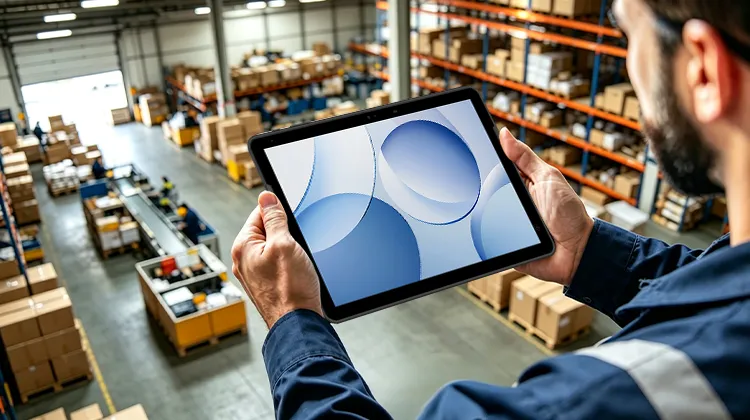
Cycle counting is the most fundamental warehouse task and directly impacts outbound accuracy. With an 11-inch rugged Android tablet, warehouse staff can view the full "bin location – SKU – batch – quantity – status" grid on one screen without flipping pages repeatedly.
Key application points:
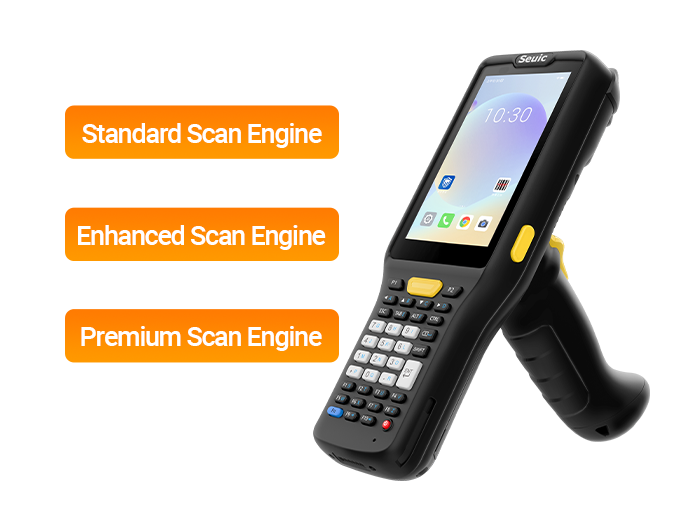
Barcode/QR code scanning: Built-in dedicated scan engine or optional pistol grip handle, supports 1D/2D barcodes, works with wet hands and gloves.
RFID/UHF counting: Batch reading of tags on apparel, pharmaceuticals, and assets — walk past a shelf and capture multiple items in one pass. Ideal for retail chains, hospital supplies, and utility meter asset registers.
Batch and expiry date management: For pharmaceuticals, food, baby products, and supermarket perishables, the system validates FIFO/FEFO and automatically locks abnormal batches.
Offline caching: In basements, cold storage, or Wi-Fi dead zones, data is stored locally first and incrementally synced to WMS when the network recovers — no missed counts.
Instant discrepancy handling: Overages and shortages can be photographed, noted, and submitted for supervisor approval immediately — no more post-processing in Excel.
2. Cross-Dock Sorting: Visual Dispatching Dashboard for Multi-Dock Operations
Cross-dock operations emphasize "minimal storage, fast transfer." Transit hubs need to bind arrivals, destinations, routes, dock doors, and sorting tasks in real time — a small screen can barely handle the multidimensional information.
How the rugged Android tablet delivers:
Sort upon arrival: After scanning incoming goods, the system automatically assigns a dock door based on destination city, customer, and delivery deadline. The 11-inch screen can display "arrival detail – recommended dock – exception items" side by side.
Sorting route confirmation: Sorters view a warehouse floor plan with the shortest walking path. The system aggregates picks by order, eliminating backtracking.
RFID gate coordination: UHF RFID portals at outbound lanes send real-time pass-through records to the tablet. Unauthorized or mis-sorted packages trigger immediate alerts.
Exception interception: For ambiguous addresses, weight anomalies, or temperature violations, the tablet pops up a warning and suggests rerouting — reducing returns after loading.
Multi-shift rotation: Hot-swappable battery design ensures 24/7 operation. Stable touch performance even on hot dock bays and rainy loading areas.
For courier, supermarket distribution, and e-commerce fulfillment centers, this large-screen rugged terminal can unify the four nodes of "receiving – sorting – consolidation – loading," eliminating the need to switch devices at each stage.
3. Vehicle Dispatching and Route Planning: Closed Loop from Warehouse to In-Transit
Warehouse efficiency isn't just about internal operations — it's also about on-time departure. An 11-inch rugged Android tablet can serve as a warehouse dispatch station or be mounted as a vehicle terminal.
Core capabilities:
TMS/route optimization integration: Import order priority, weight limits, and delivery windows; the system generates the optimal route. The large screen makes it intuitive to compare "recommended route – alternative – tolls – traffic – weather."
Location and geofencing: Hybrid GNSS + 4G/5G + Wi-Fi positioning. Automatic alerts when a vehicle leaves the designated delivery zone — ideal for express feeder lines, gas/water field service, and government patrols.
Proof-of-delivery chain: Drivers/workers scan for handover, collect signatures, take photos, and capture RFID receipts — all in one device, reducing lost-package disputes.
Dynamic reassignment: When sudden cancellations, urgent orders, or cross-city transfers arise, dispatchers rearrange routes on the tablet — drivers don't need to return to the office for new paperwork.
Field extension: Power utilities, water/gas companies, hospital equipment departments, and law enforcement can use the same terminal for inspection routes, photo uploads, and electronic forms — lowering multi-device procurement costs.
4. Selection Tips: Buy "True Rugged," Not Just a Big Screen
If you're deploying in warehouses and cross-dock environments, evaluate a rugged Android tablet against this checklist:
Protection rating: IP65 or IP67 minimum. For condensation-prone cold storage or frequent outdoor rain exposure, pay attention to sealed enclosures and heated screen options.
Drop resistance: 1.2–1.5 m multi-angle drops meeting MIL-STD-810H. Silicone bumpers are recommended for forklift vibration.
Display and touch: 11 inches or larger, 800–1000 nits brightness, supports glove mode, wet-finger operation, and passive stylus.
Scanning and identification: Hardware scan engine is preferred over camera-only. UHF RFID and NFC are optional add-ons.
Battery strategy: Hot-swappable second battery for shift-to-shift operation without shutdown. Vehicle-mounted scenarios support DC wide-voltage power input.
Connectivity: Dual-band Wi-Fi, Bluetooth 5.x, 4G/5G, GNSS. Seamless roaming across multiple warehouses without session loss.
System and management: Long-term Android security patches, Google Mobile Services or equivalent domestic push services, MDM/EMM for remote lock, app whitelisting, and unauthorized app restriction.
Industry expansion: Serial ports, USB-C, HDMI, docking station, fingerprint/face login — meeting pharmaceutical regulation, quality inspection, and financial audit requirements.
5. SEUIC Recommendation: AUTOID Pad Air 11 in Warehouse Counting and Cross-Dock Sorting
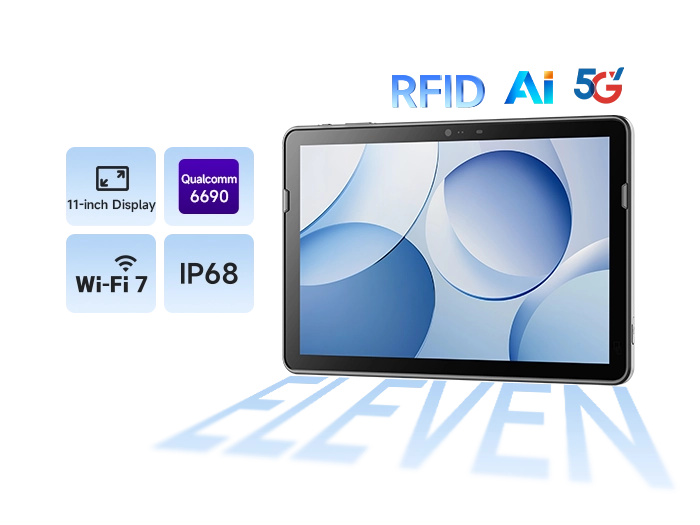
In warehouse counting, the biggest headache for staff is squinting at full-page inventory lists on small screens and flipping pages constantly. The SEUIC AUTOID Pad Air 11 features an 11-inch full HD anti-glare display with roughly 17% more visible area than a 10-inch screen. It can show "bin location – SKU – batch – quantity" in multiple columns on a single screen, reducing scrolling and misreads. With built-in UHF RFID and a professional barcode scan engine, it can batch-read tags on apparel, pharmaceuticals, and assets — walk past a shelf and capture multiple items in one go. Paired with offline caching, data is stored locally in basements or cold storage without network and automatically synced to WMS when connectivity returns, completely eliminating missed counts.
In cross-dock sorting, transit hubs need to bind arrivals, destinations, dock doors, and sorting tasks in real time. The Pad Air 11 leverages Wi-Fi 7 and 5G high-speed connections with average latency below 3 ms, displaying "arrival detail – recommended dock – exception items" side by side — sorters don't need to switch pages repeatedly. For packages with ambiguous addresses or weight anomalies, the tablet instantly pops up a warning and suggests rerouting, reducing returns after loading. The whole unit is rated IP68, survives 1.2 m drops, and features a 10,000 mAh removable battery with hot-swap support, ensuring continuous operation across forklift zones, dock bays, and cold storage through multiple shifts. It truly replaces the combination of "small PDA + consumer tablet + vehicle-mounted terminal" with a single device.
For enterprises that handle inventory counting, cross-dock sorting, and vehicle dispatching in parallel, an 11-inch rugged Android tablet can replace the multi-device combo of "small PDA + consumer tablet + vehicle terminal": the large screen reduces viewing errors, the rugged construction lowers device damage rates, and deep integration with barcode/RFID and WMS/TMS boosts overall throughput. Whether in manufacturing warehouses, retail chain distribution, 3PL, e-commerce fulfillment, or power/gas field operations, the core principle should be "match parameters to the scenario" rather than simply comparing prices.
If you are evaluating a warehouse mobile terminal replacement, feel free to contact SEUIC. We will provide a model and configuration list based on your inventory volume, sorting throughput, and vehicle network requirements. You can also request a demo unit for a pilot trial before full warehouse rollout.
Related News
-
Portable Barcode Scanner Vendor Evaluation Guide: Support, Lifecycle & Fleet Management
Product Updates | 2026.10.08Learn More
-
Rugged Android Tablet for Retail Stores: Inventory Management, Assisted Selling & Store Inspections
Product Updates | 2026.09.30Learn More
-
Barcode Scanner vs Handheld Terminal: Selection Guide for PCB Factory Digital Transformation
Product Updates | 2026.09.29Learn More
-
RFID Handheld Reader Selection: High-Bay Needs Range, Pallet Needs Speed
Product Updates | 2026.09.29Learn More