





2026 Long Range RFID Reader Ultimate Selection Checklist
Choosing the right long range RFID reader is a critical investment for many businesses. Whether you manage a busy warehouse, operate a large retail store, or oversee hospital asset tracking, the wrong device doesn't just waste money — it can directly impact the efficiency and accuracy of your entire operation.
With so many products and specifications on the market, how do you make a smart choice? Instead of getting lost in a sea of technical jargon, follow this easy-to-use step-by-step checklist to systematically evaluate your needs and make every dollar count.
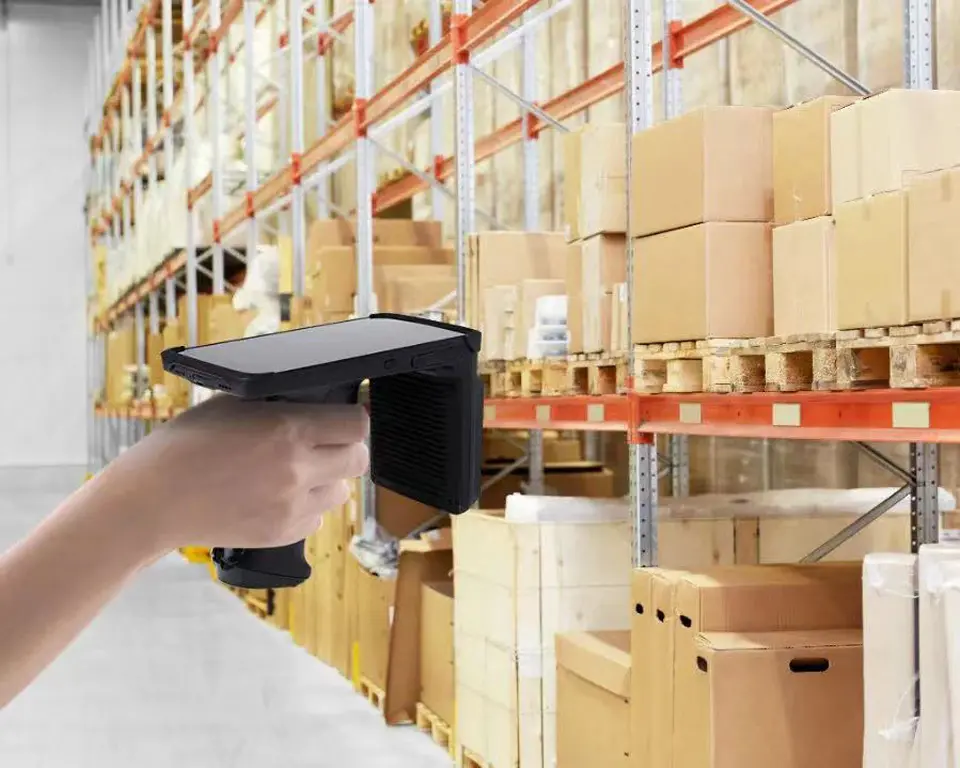
1. Define Exactly How Far "Long Range" Needs to Be — and How Fast Items Move
This is the most basic — and most overlooked — step. "Long range" is relative. You need to quantify your requirements precisely:
Read Distance: Does your application require 1 meter, 3 meters, or 10+ meters of read range?
Tag Movement Speed: Are tags passing through in a stationary state, or moving at high speed?
Packages on a conveyor belt: Tags move quickly. You need a reader with high read rates and strong multi-tag identification capability.
Inventory on static shelves: Movement speed isn't a concern, but read angle coverage is critical.
Action Item: Before purchasing, use a tape measure to determine the actual read distance you need. Estimate the maximum tag movement speed with a stopwatch. These two data points are the foundation of any conversation with a technology supplier.
2. Determine Tag Type (Passive vs. Active) and Tag Size
Readers and tags are a paired system. Choose the wrong tag, and even the best reader won't perform.
2.1 Passive Tags
Characteristics: No internal battery. Powered by the reader's electromagnetic waves. Extremely low cost, long lifespan.
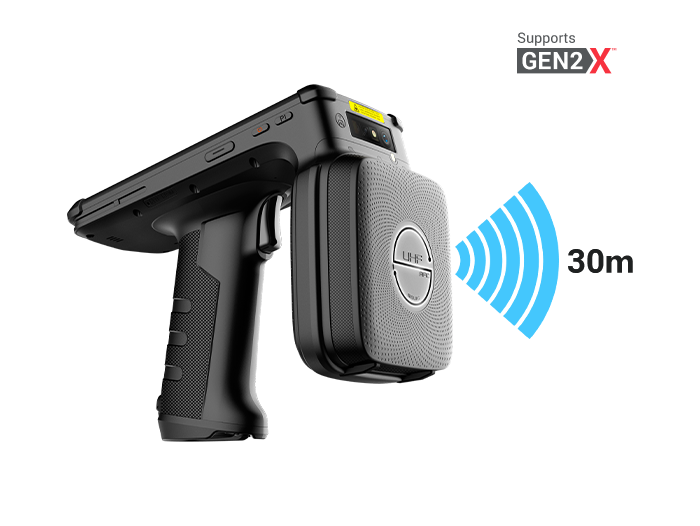
Best For: The vast majority of applications — retail apparel, library books, supply chain management, asset management, and more. UHF passive tags are currently the mainstream solution for long-range reading, achieving effective distances of 10+ meters.
2.2 Active Tags
Characteristics: Built-in battery. Actively transmit signals. Ultra-long read range (100+ meters possible), but higher cost, larger size, and batteries need replacement.
Best For: Real-Time Locating Systems (RTLS), high-value asset tracking, vehicle management, and other scenarios requiring extreme distance and real-time data.
Tag size also matters. A larger antenna means longer read range and better performance — but not every item can accommodate a large tag. For example, tracking a small surgical instrument requires a miniature tag, which sacrifices some read distance.
Action Item: First, determine your budget and item characteristics to choose the tag type. Then, confirm with your supplier that the reader you want is fully compatible with the tag model you plan to use.
3. Select the Interface (Connection Method) and Power Solution
How the reader connects to your existing system and how it gets power are key factors determining deployment cost and convenience.
3.1 Interface Options
Ethernet: The most common method, ideal for fixed readers. Fast data transfer, easy integration into networked systems.
Serial Port (RS232/RS485): Often used in industrial environments to connect PLCs or legacy equipment. Extremely stable.
Wireless (Wi-Fi / Bluetooth / 4G / 5G): Suitable for handheld or mobile readers. Wi-Fi for LAN access, Bluetooth for connecting to phones or tablets, 4G/5G for remote outdoor inspection.
3.2 Power Options
PoE (Power over Ethernet) — Highly Recommended: One cable handles both data and power. Simple installation, low cost. Ideal for ceilings, walls, and other locations where running a separate power outlet is difficult.
DC Adapter: The traditional method requiring a dedicated power outlet. Fine when an outlet is readily available.
Action Item: Plan the reader's installation location. If the location has both a network port and a power outlet, either option works. If wiring is inconvenient, prioritize a PoE-powered reader.
3.3 Assess Environmental Tolerance (Temperature, Humidity, Dust, Water)
What kind of environment will your reader work in? This directly affects device lifespan and stability.
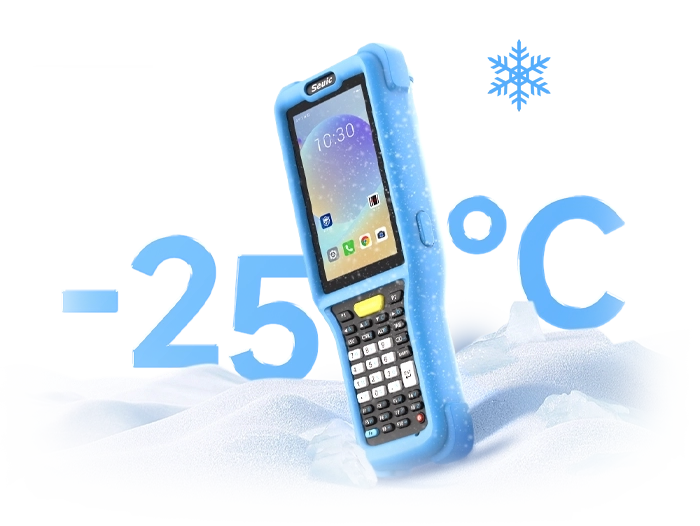
Temperature: Standard consumer-grade devices may operate at 0–40°C. But if installed in a freezer (-20°C or lower) or a hot workshop (50°C+), you must choose industrial-grade wide-temperature equipment.
Humidity: In humid southern regions or seafood processing plants, moisture resistance is essential.
3.4 Ingress Protection (IP Rating)
IP54: Basic dust and splash protection. Suitable for most indoor environments.
IP65/IP67: Fully dust-tight, can withstand low-pressure water jets or brief immersion. Suitable for outdoors, dusty factories, or locations requiring frequent washdowns (e.g., slaughterhouses, food processing plants).
Action Item: Record the extreme temperature and humidity levels at the installation site. Identify whether dust, oil, moisture, or other contaminants are present. Share this information with your supplier and ask them to recommend products with the appropriate IP rating and industrial certification.
4. Request Samples for POC (Proof of Concept) Testing — Validate Before Bulk Purchase
This is the most important step in the entire process — and the one that saves you the most money. No specification sheet can replace real-world testing.
4.1 Why POC Is Essential
Theory vs. Reality: A vendor's claimed "10-meter read range" is typically measured in an ideal lab environment. Your site may have metal interference, multipath reflection, electromagnetic noise, and other issues that significantly reduce actual range.
Tag Compatibility: Only by testing your chosen tags on your actual items can you determine the true read rate and miss rate.
Software Integration: Will the reader successfully interface with your WMS or ERP system? Only a live integration test can uncover potential problems.
4.2 How to Run a POC
Request samples: Ask 2-3 shortlisted suppliers for demo units.
Set up a simulated environment: In your actual workspace, use your own items and tags to run mock operations (e.g., inbound scanning, inventory counting, sorting).
Record key metrics:
Read Rate: The percentage of tags successfully read at normal operating speed. Target should be close to 100%.
Miss Rate: The percentage of tags that fail to be read. Lower is better.
Time to First Read: How long after a tag enters the field before it is first detected.
Compare results: Compare the performance of different brands under identical conditions. Choose the best-performing, most stable model.
Action Item: Make "successfully pass POC testing" a mandatory condition before signing any bulk purchase contract.
Choosing a long range RFID reader is not a simple "buy it and done" process. It's a technical decision that requires systematic thinking and validation. By following this step-by-step checklist — from defining distance and speed, to matching tags, selecting interfaces, assessing the environment, and finally conducting on-site testing — you'll not only find the best device for your needs but also avoid costly trial and error, ensuring your RFID project starts on the right track from day one.
Founded in 2002, SEUIC Technologies Co., Ltd. is committed to mastering core technologies, continuously improving innovation capabilities, and delivering outstanding branded products including mobile computers, RFID readers, tablets, barcode scanners, and fixed-mount readers. With highly reliable products and efficient service, our solutions are widely applied across manufacturing, retail, logistics, healthcare, and more. We provide frontline workers with more durable real-time data collection tools, helping you improve operational efficiency and take productivity to new heights.
Related News
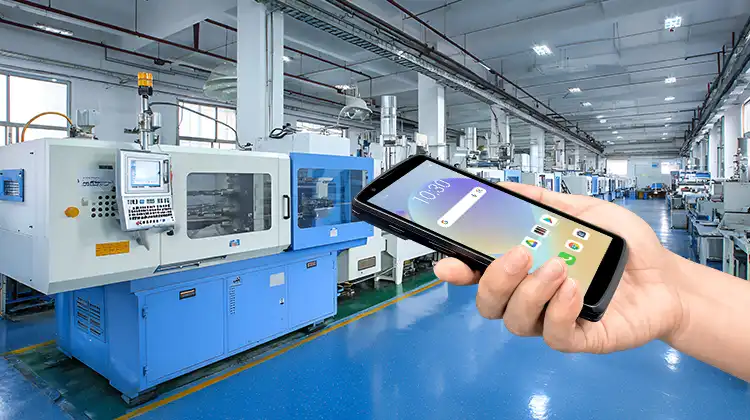
-

Rugged Android Tablet for Quality Inspection & Process Guidance
Product Updates | 2026.10.12Learn More
-
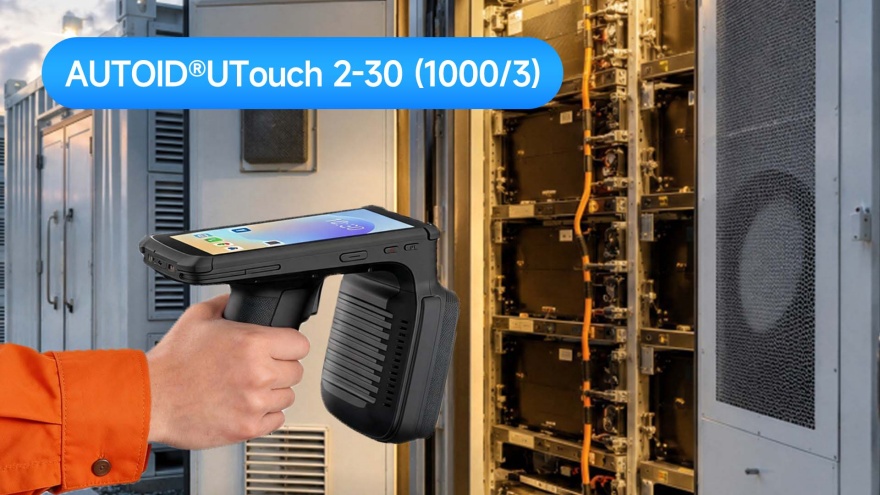
Types of RFID Tags: Passive, Active & Semi-Passive Explained
Product Updates | 2026.10.12Learn More
-
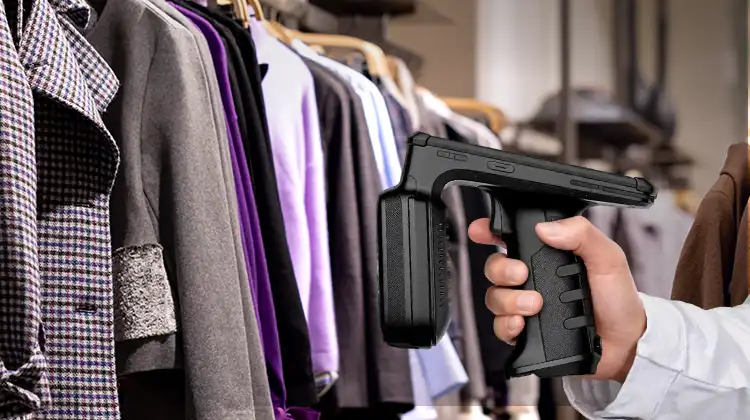
Passive vs Active RFID Tags: Core Differences & When to Use Each
Product Updates | 2026.10.10Learn More
-
2D Barcode Scanner Buying Guide: Decoding, Environment & Lifecycle
Product Updates | 2026.10.10Learn More