




2026 UHF RFID Reader Selection Guide: 7 Key Factors + 5-Step PoC
For plant managers, warehouse supervisors, retail operations directors, hospital supply chain managers, and utility field workers, the question is no longer "Should we adopt UHF RFID?" but rather "How do we select the right reader without having to scrap the project mid-deployment?"
A wrong selection decision can lead to subpar read rates, costly redeployment, or even bringing an entire automation project to a halt. This guide starts with the fundamentals of how UHF RFID works, systematically breaks down form factor selection, key specifications, and the proof-of-concept (PoC) process, and provides actionable recommendations based on Seuic's UHF RFID reader product line.
The bottom line: Choosing a UHF RFID reader isn't about buying the most expensive or the longest-range model. It's about defining your read scenario (fixed-point or mobile inventory) → matching the form factor → verifying 7 key specifications → and then locking down read rate, false read rate, and environmental interference through a PoC.
1. Understanding UHF RFID: How It Works and Why It Matters
UHF RFID operates in the 860-960 MHz frequency band using far-field backscatter mechanism. The reader transmits a continuous wave RF signal. Passive tags harvest energy from this signal to power their chip, then modulate their EPC data back to the reader by switching antenna impedance.
This is the fundamental physical mechanism that distinguishes UHF from HF (13.56 MHz) near-field inductive coupling:
Read Range: UHF passive tags typically achieve 0.5-12 meters; battery-assisted passive (BAP) can reach 15-30 meters. HF typically does not exceed 1 meter.
Throughput: The UHF EPC Gen2 protocol uses slotted Aloha anti-collision, singulating hundreds of tags per second. HF manages only 1-10 tags/second.
Tag Cost: UHF inlays scale to $0.05-$0.30/tag; HF/NFC ranges from $0.30-$2.00/tag.
Global Standards: EPC Gen2 / ISO 18000-63 (also known as ISO 18000-6C), with the RAIN RFID Alliance driving ecosystem interoperability.
Regional frequency compliance is the first step and must be configured before PoC:
| Region | Frequency Band | Max Power |
| China | 920-925 MHz | 2W |
| North America | 902-928 MHz | 4W (FCC Part 15, frequency hopping) |
| Europe | 865.6-867.6 MHz | 2W (ETSI, LBT) |
| Japan | 916-921 MHz | 1W |
Using the wrong frequency band constitutes illegal interference in the local jurisdiction. Modern UHF tag chips generally support the full 860-960 MHz range, but reader power and frequency hopping patterns must be configured according to local regulations.
Why UHF matters for your business: In logistics, item-level retail tracking, industrial asset inventory, and similar scenarios, UHF is the only technology that simultaneously meets three criteria: tag cost under $0.30, read range over 1 meter, and hundreds of tags per second. Factory
receiving/shipping, warehouse inventory, retail shelf counting, hospital linen management, and utility inspection — these are all fundamentally "high-volume, contactless, fast identification" scenarios, which is UHF's home turf.
2. Fixed vs. Handheld: Form Factor Decision Tree
UHF RFID scanners come in three main form factors, each corresponding to a completely different operational logic.
2.1 Fixed Readers (Portal / Integrated)
Installed at stationary points such as doorways, conveyor belts, loading docks, and smart shelves. Typically equipped with multiple antenna ports (2/4/8/16 ports). These are the backbone of high-throughput automated tracking systems.
Typical Read Range: 7-15 meters or more
Best For: Automated dock receiving/shipping, conveyor sorting, entry/exit asset registration
Key Advantage: No human intervention required, 24/7 continuous operation
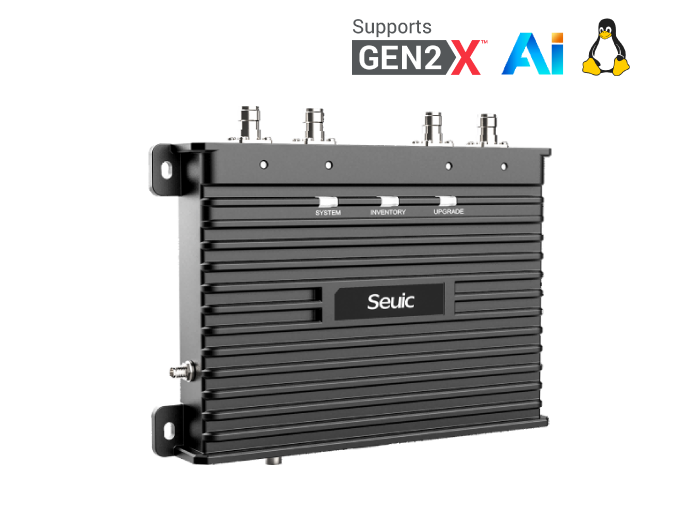
Recommended Seuic Product: AUTOID UF40 (Linux AI fixed reader, smart networking)
2.2 Handheld Readers
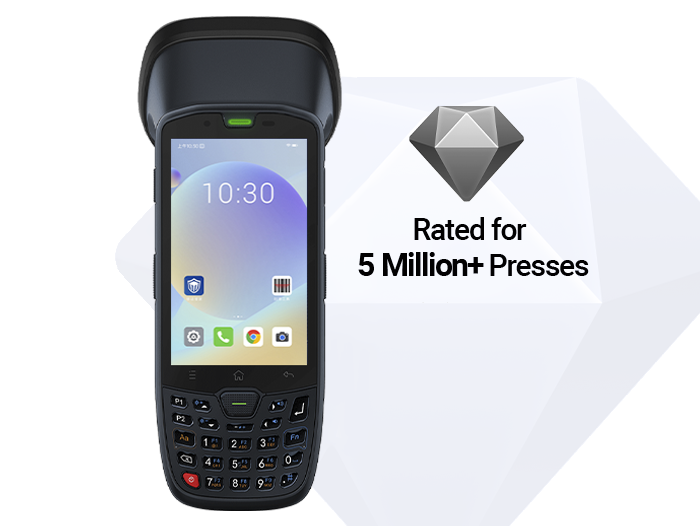
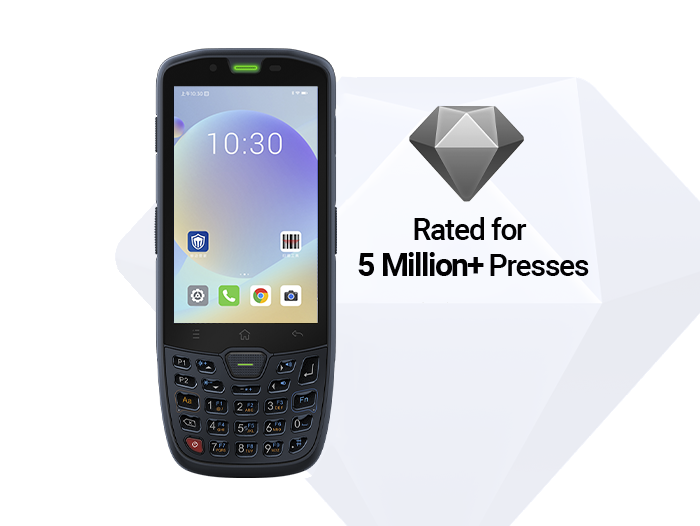
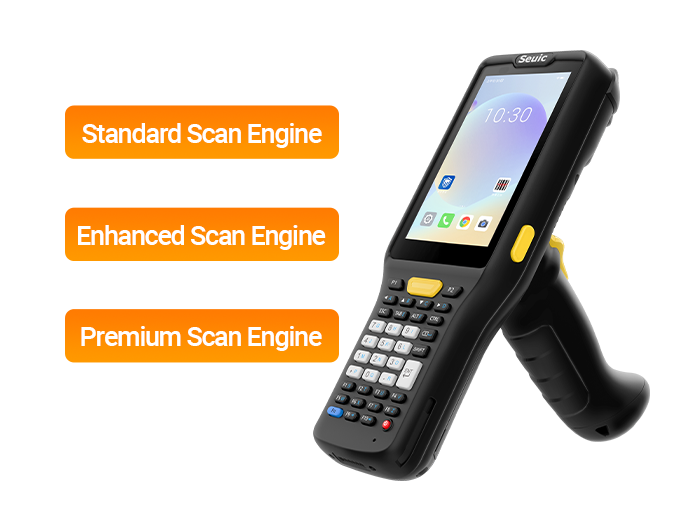
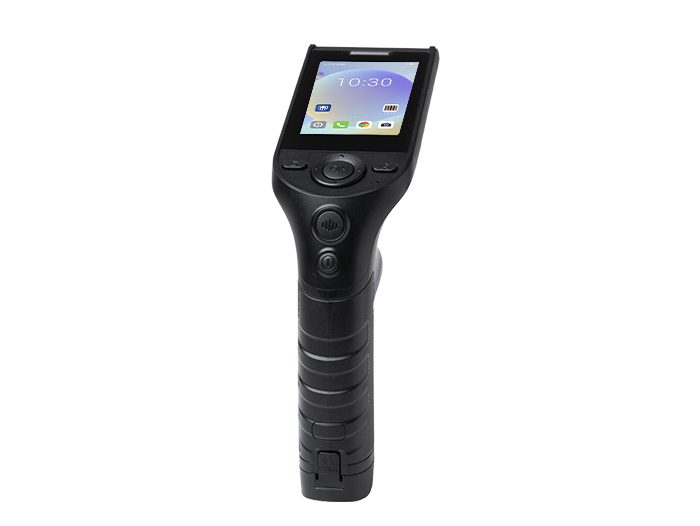
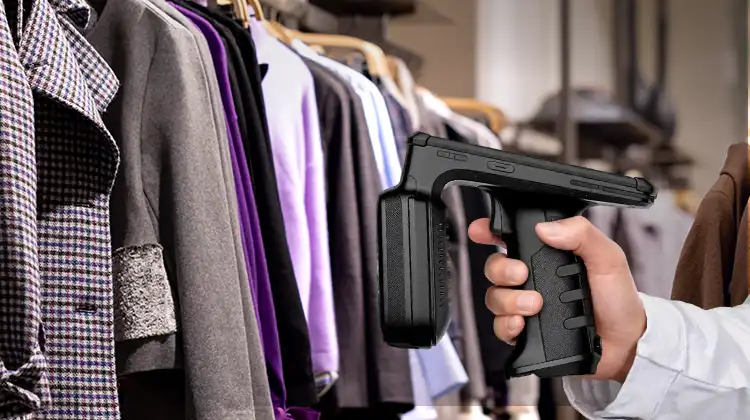
Integrates reader, antenna, and mobile computer (Android/OpenHarmony) into one device. Designed for mobile inventory, cycle counting, and asset location verification.
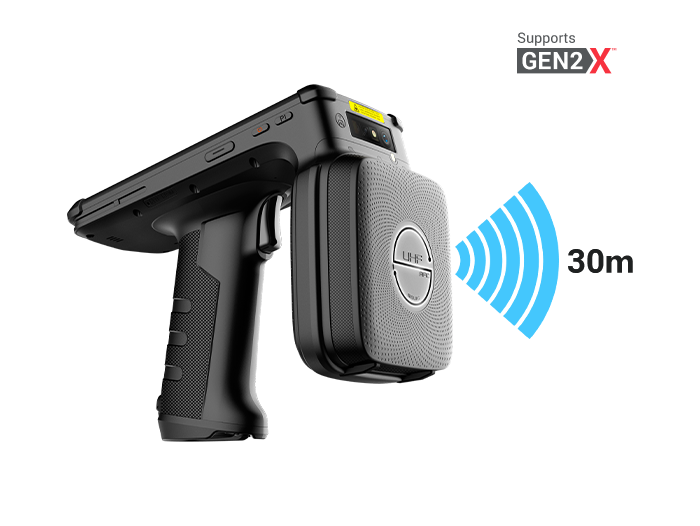
Typical Read Range: 1-5 meters (special models up to 30 meters)
Best For: Warehouse cycle counting, retail shelf inventory, hospital supply inspection, utility field meter reading/inspection
Key Advantage: Flexible, instant feedback, single-person operation
Recommended Seuic Products:
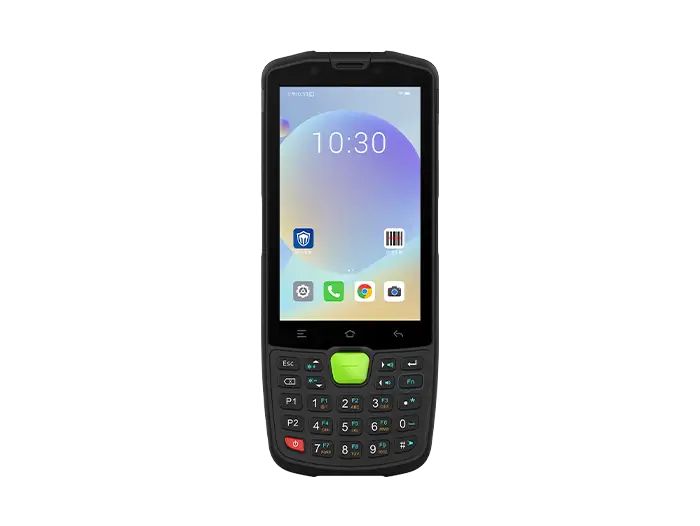
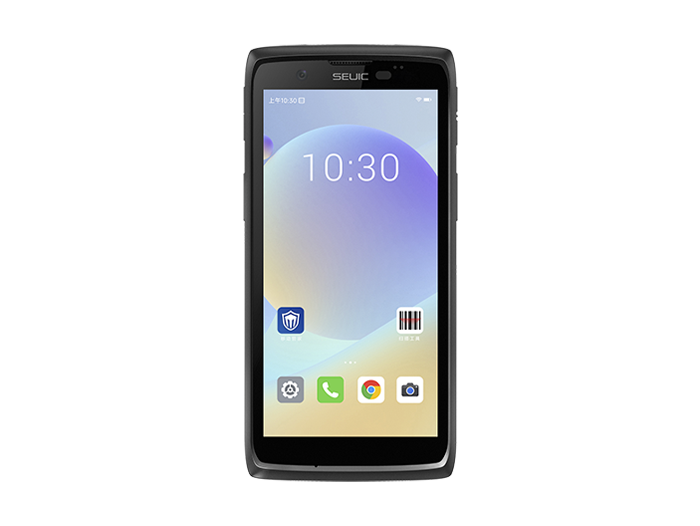
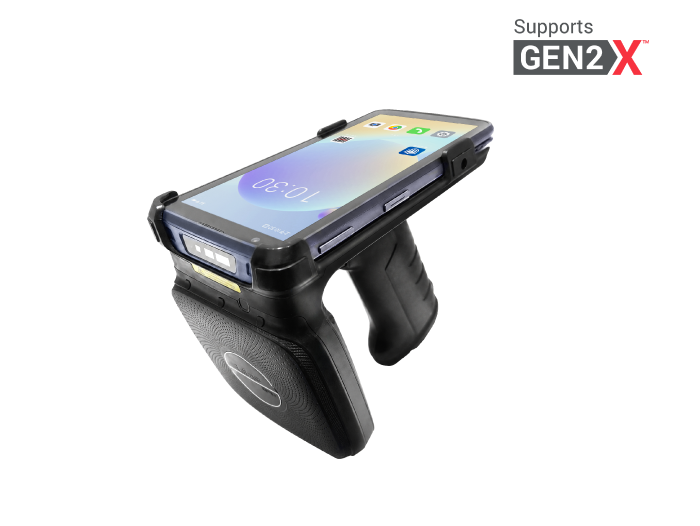
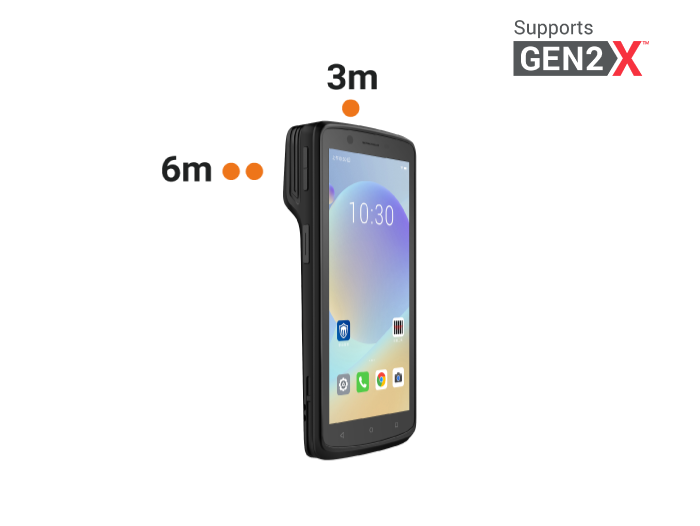
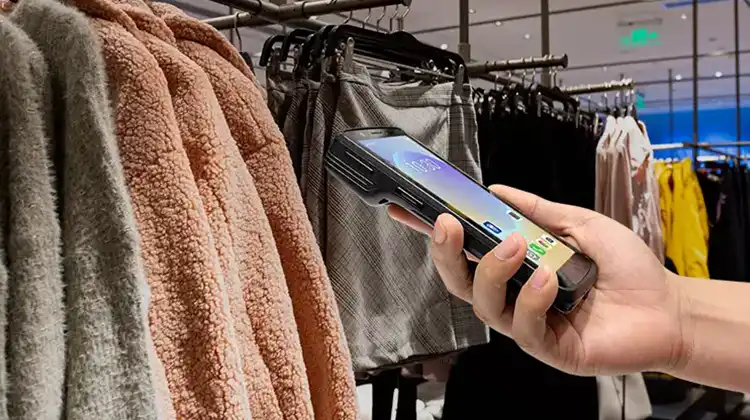
AUTOID UTouch 2-S6+3: Lightweight dual-range reading (vertical 0-3m, standard 0-6m), IP67, 1.8m drop resistance — ideal for retail, transportation, healthcare
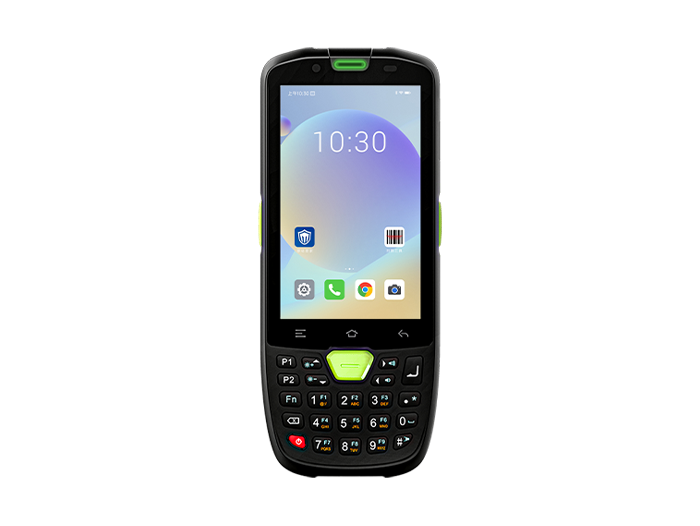
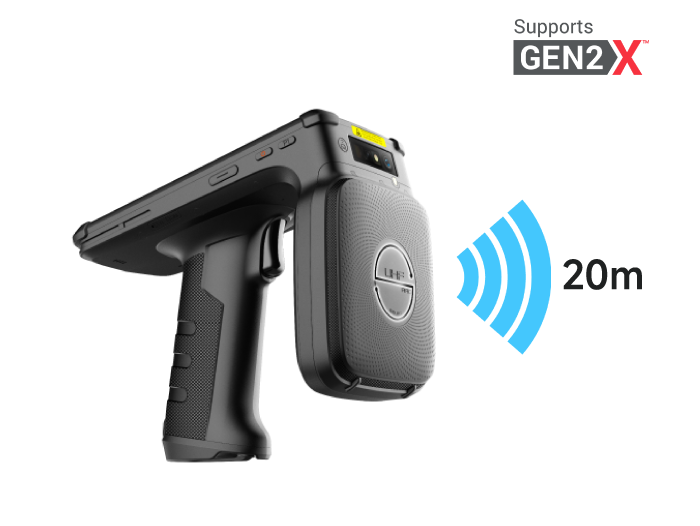
AUTOID UTouch 2-20: 11,700mAh swappable battery, up to 20m read range, 2m drop resistance, IP67 — ideal for harsh industrial environments
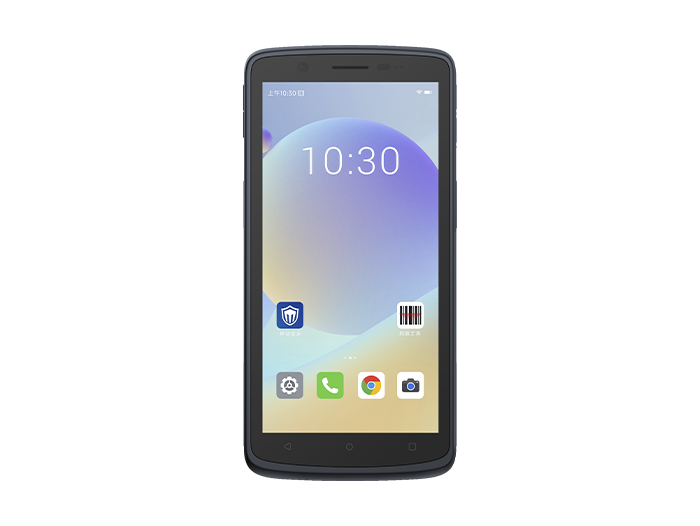
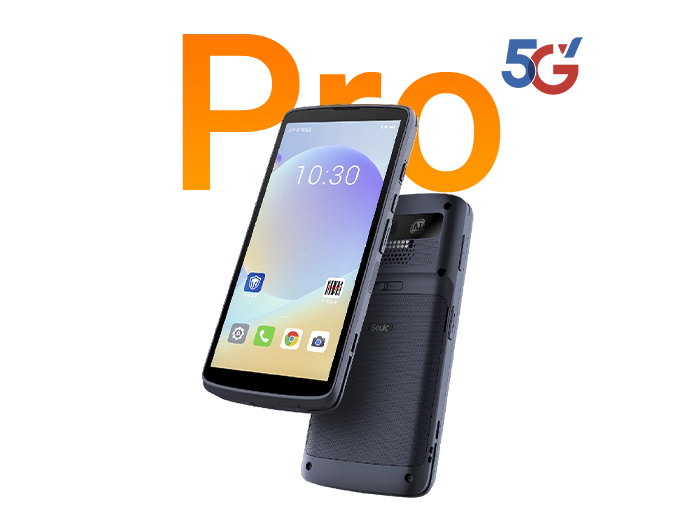
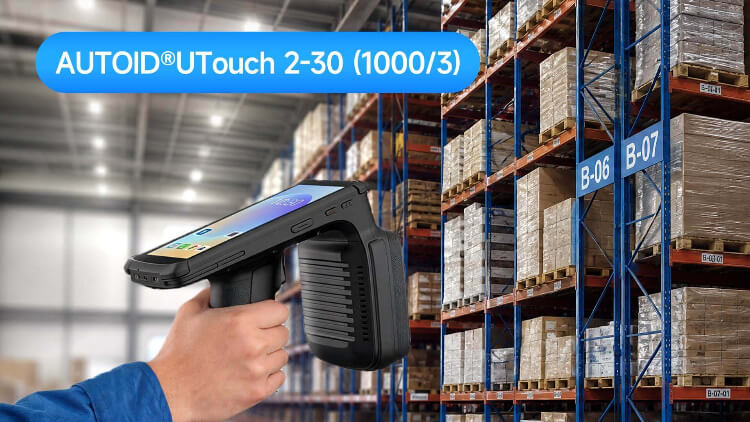
AUTOID UTouch 2-30: 5G high-speed, 6.0" display, dual swappable large-capacity batteries, flexible barcode/RFID switching, IP67
2.3 Decision Split
Automated production line / entry-exit → Fixed reader
People carrying devices to inventory → Handheld reader
3. 7 Key Specifications That Actually Determine Project Success
Many buyers fixate on "read range" alone — only to discover blind spots during on-site testing. The following 7 specifications must be verified one by one:
3.1 Read Range and Antenna Configuration
Read range is not a single number. It is a function of reader power × tag sensitivity × antenna gain × polarization × environment.
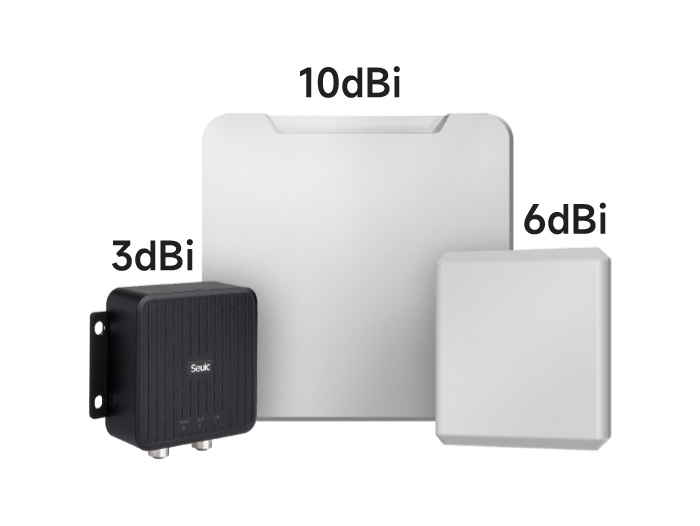
Antenna Gain (dBi): Higher gain means stronger directionality and longer range
Polarization: Circular polarization panel antennas suit scenarios with mixed tag orientations; linear polarization delivers longer effective range when tag orientation is consistent
Typical Scenario Reference:
Handheld + apparel tags: 2-5m
Fixed + directional antenna + free-space tags: 8-12m
On-metal tags on metal assets: 1-5m
Tags on liquid containers: 0.5-2m
Windshield tags (reading through glass): 5-10m
3.2 Output Power and Regional Compliance
UHF reader output power is typically adjustable, up to approximately 30 dBm (1 watt). Higher power yields longer range, but must comply with local regulatory limits and avoid adjacent channel interference.
3.3 Anti-Collision Capability
This is UHF's core competitive advantage. The EPC Gen2 protocol's slotted Aloha algorithm can singulate hundreds of tags per second. Buyers must verify the device's actual read rate in full-load scenarios — especially in retail inventory, linen management, and other "dense tag" environments.
3.4 Environmental Adaptability and Ingress Protection
Industrial sites, outdoor environments, and medical cleaning areas have vastly different durability requirements:
IP Rating: Industrial applications should specify IP65 or higher (all Seuic UTouch series are IP67)
Drop Resistance: Warehousing/industrial recommends 1.5-2m drop resistance (UTouch 2-20: 2m, UTouch 2-S6+3: 1.8m)
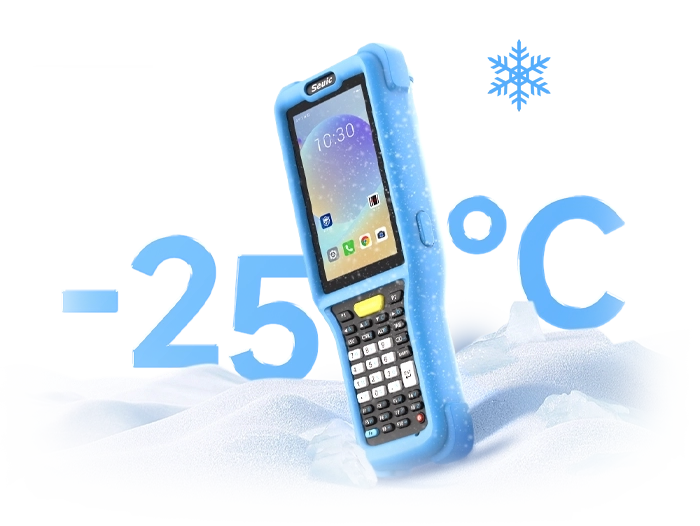
Temperature Range: Outdoor/cold storage scenarios require special attention
3.5 Connectivity and Integration Interfaces
A powerful reader is worthless if it cannot communicate with your existing enterprise infrastructure:
Wired: Ethernet (PoE recommended — power + data over one cable), RS232/RS485, USB
Wireless: Wi-Fi, Bluetooth (common on handheld and integrated devices)
Industrial Interfaces: GPIO for triggers, PLC linkage
Protocol Layer: LLRP, REST API, MQTT — these determine ease of integration with WMS/ERP/MES systems
3.6 Battery Life (Handheld)
Seuic UTouch 2-20: 11,700mAh swappable battery
UTouch 2-30: Dual swappable large-capacity battery design, supports hot swap
Buyers should assess: Can a single full charge cover an entire shift? Does the battery support hot swapping?
3.7 Standards Compliance and Security
Air Interface: Must comply with EPC Gen2 / ISO 18000-63
Certifications: FCC (US), CE (Europe), and other mandatory regional certifications
Security: Firmware signing, TLS transport encryption, tag access password policies
4. How to Run a Successful PoC: 5-Step Process
The goal of a PoC is not to "prove RFID works," but to "lock down the read rate above an acceptable threshold in a real environment."
4.1 Define PoC Boundaries
Clarify 5 things:
Region and regulatory frequency band (e.g., China 920-925 MHz)
Target read distance
Item material (metal? liquid? mixed?)
Throughput speed (conveyor belt speed? forklift travel speed?)
Required interfaces (PoE/serial/GPIO/REST)
4.2 Tag-Reader Pairing Test
Different tags perform dramatically differently on different materials:
Metal assets → Must use on-metal tags
Near liquids → Adjust antenna angle, add isolation material, or switch to near-field antenna
Apparel/paper packaging → Standard inlays suffice
4.3 Deploy Minimum Viable Point on Site
Set up 1 portal or 1 aisle as a minimum deployment in the actual working environment, simulating real operational rhythm.
4.4 Measure Three Core Metrics
| Metric | Acceptable Threshold | Description |
| Read Rate | ≥99% (varies by scenario) | Tags successfully identified / total tags |
| False Read Rate | Approaching 0 | Cross-read from adjacent aisles/channels |
| Singulation Speed | Matches production line takt | Tags processed per second |
4.5 Tune and Report
Adjust antenna position, polarization direction, power levels
Introduce filtering rules (filter by EPC prefix + deduplication window)
Output PoC report: read rate, false read rate, coverage, ROI calculation
Seuic Case Validation: Fairfield by Marriott deployed Seuic UTouch 2-20 and UTouch 2-S6+3 for linen management. Batch tag reading replaced manual counting, improving handover and inventory efficiency by 5x+. ExxonMobil Shanghai Technology Center adopted the UTouch 2-S6+3 for contactless employee shuttle bus check-in, achieving 100% on-time rate and reducing empty seats by 30%+. Both cases underwent rigorous scenario-based PoC.
5. Seuic UHF RFID Reader Recommendations
Based on the selection logic outlined above, Seuic's product matrix covers the vast majority of scenario requirements:
5.1 Fixed Reader Recommendations
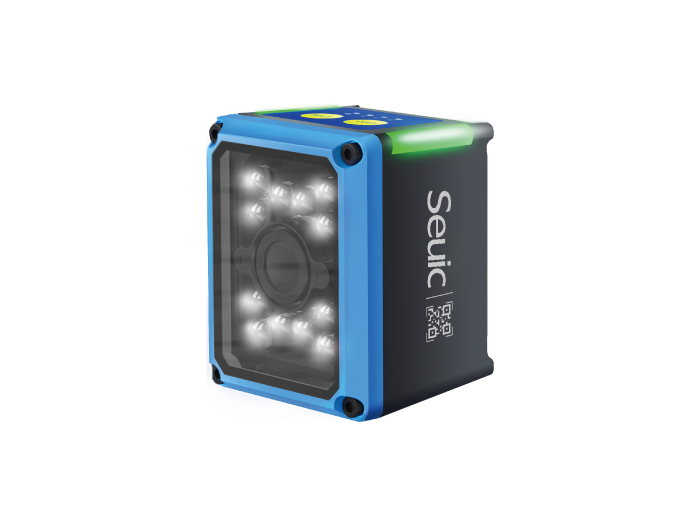
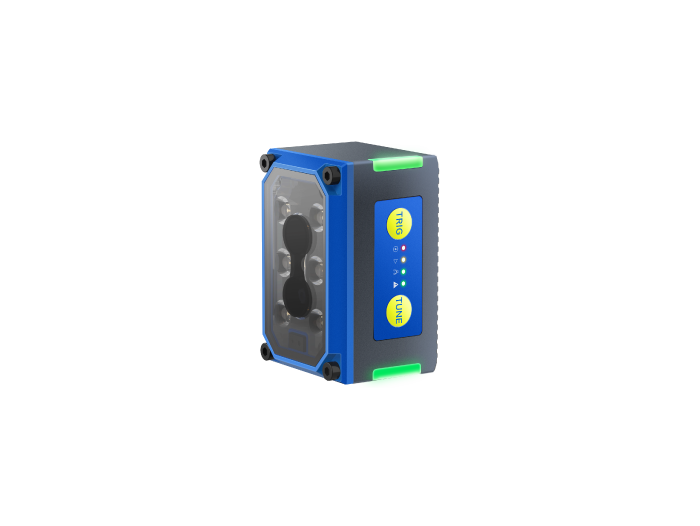
AUTOID UF40 — Linux AI Fixed Reader
Industry-first smart commissioning, simplifying multi-device deployment
Ideal for large warehouse portals and smart manufacturing production line nodes
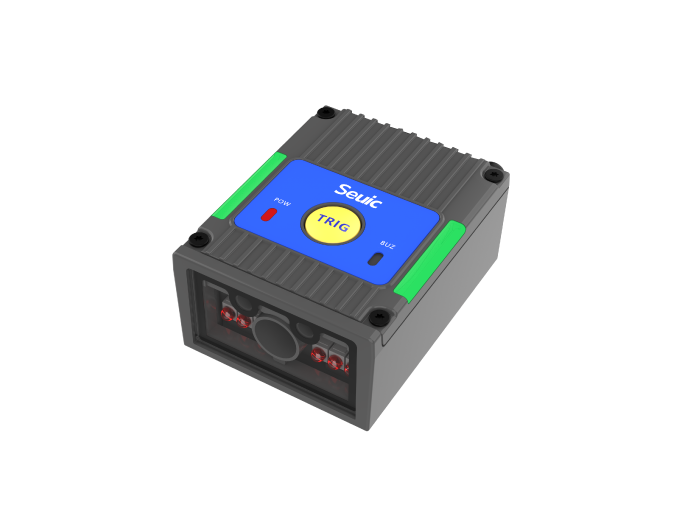
AUTOID UF2 — Low-Power Integrated UHF Reader
Integrated antenna with advanced signal processing, available in 0-2m / 4m / 7m variants
Ideal for space-constrained embedded scenarios, smart cabinets, and POS integration
5.2 Handheld Reader Recommendations
AUTOID UTouch 2-20 — Industrial Long-Range Flagship
Up to 20m read range, 11,700mAh swappable battery, 2m drop resistance, IP67
Best for: Outdoor inspection, large warehousing, harsh industrial environments
AUTOID UTouch 2-S6+3 — Lightweight Dual-Range All-Rounder
Dual-range reading (vertical 0-3m, standard 0-6m), supports NFC, barcode, image capture, IP67, 1.8m drop resistance
Best for: Retail inventory, transportation (shuttle/ticketing), healthcare (linen/supplies)
AUTOID UTouch 2-30 — 5G High-Speed Dual-Mode
6.0" display, dual swappable large-capacity batteries, flexible barcode/RFID switching, IP67, 5G high-speed network
Best for: Large logistics hubs, mobile operations requiring high-speed data backhaul
Selecting a UHF RFID scanner is essentially about matching the right form factor, the right specifications, and a PoC-validated configuration to your actual item materials and operational rhythm. Get this foundation right, and subsequent WMS/ERP integration, data collection, and automated tracking will follow naturally.
Seuic has always focused on solving real pain points in on-site operations, insisting on independent R&D and innovation, and specializing in building highly durable, adaptable, and stable industrial-grade data capture devices suited for manufacturing, retail, logistics, healthcare, public utilities, and other complex scenarios. Leveraging a full local R&D, production, and service chain, we can quickly respond to customer customization needs and provide efficient after-sales support — filling the gaps left by imported equipment. With reliable product quality, exceptional value, and comprehensive local service, we continue to empower digital transformation across industries, contributing to high-quality development of the real economy while achieving steady corporate growth.
Related News
-
2D Barcode Scanner Buying Guide: Decoding, Environment & Lifecycle
Product Updates | 2026.10.10Learn More
-
What Is a 2D Barcode Scanner? Definition, How It Works & Supported Symbologies
Product Updates | 2026.10.09Learn More
-
How to Choose a Rugged Android Tablet? Ditch Spec Stacking, Use Scenario Tables
Product Updates | 2026.10.09Learn More
-
What Is an RFID Tag? Structure, Working Principle & Common Uses
Product Updates | 2026.10.08Learn More