






Struggling with Multi-Process Barcode Reading on Lithium Battery Lines? HS325DP Boosts Scan Efficiency by 50%
On a lithium battery smart manufacturing line, the barcodes used at each process — from mixing, winding, and stacking to assembly, electrolyte filling, formation/sorting, and PACK packaging — differ dramatically in marking method, barcode type, size, and substrate material. This variety is the core challenge of industrial barcode scanning.
To enable full-lifecycle quality traceability, lithium battery manufacturers assign different barcode systems tailored to each process: laser-engraved DPM codes, inkjet-printed QR codes, adhesive label Code 128 barcodes, and more. Barcode sizes vary widely, substrates differ, and surface conditions are complex. Traditional scanners lack the adaptability to handle such diversity, resulting in frequent missed reads, incorrect reads, and scan lag — slowing down production line takt time and causing data gaps, traceability failures, and throughput losses.
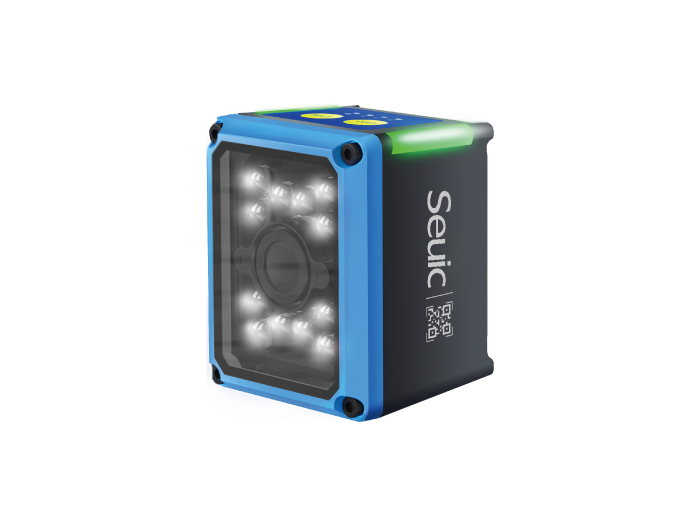
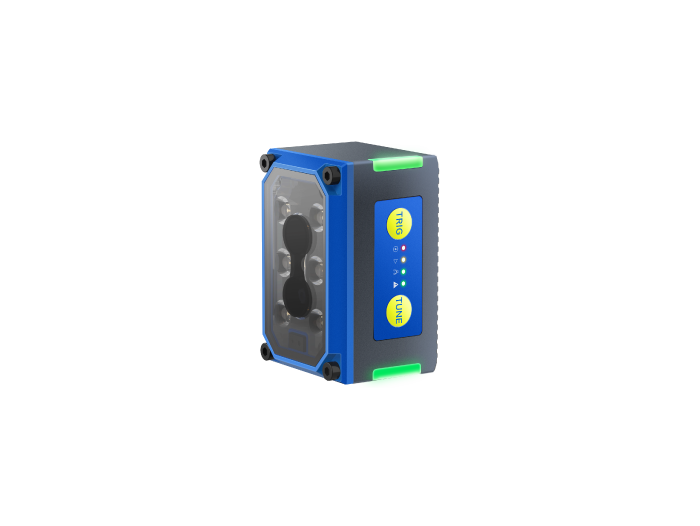
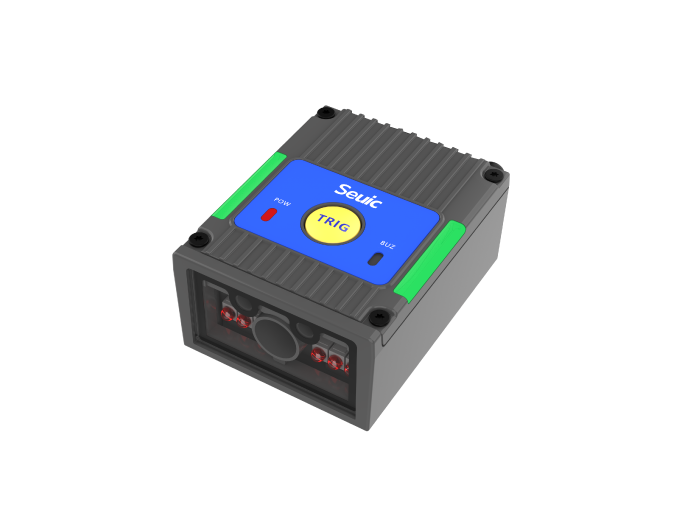
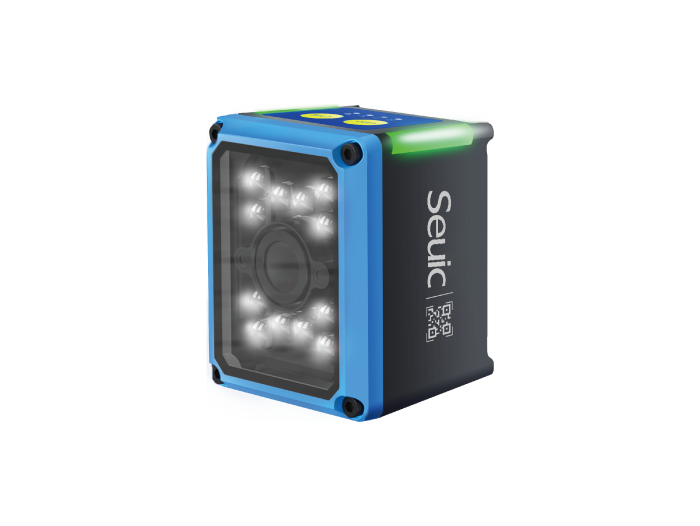
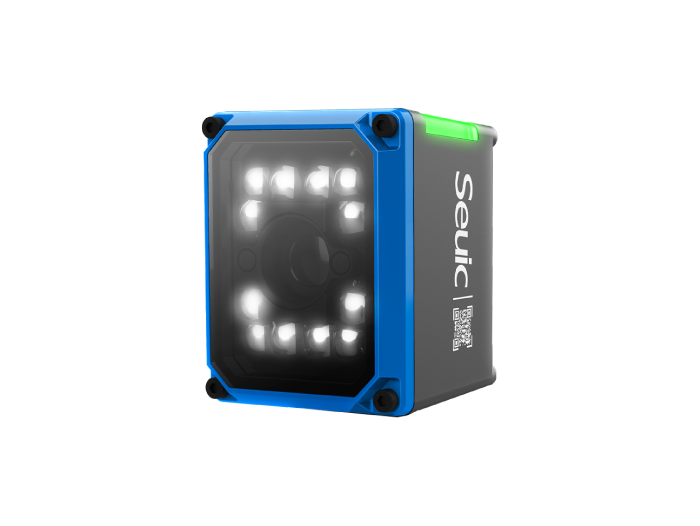
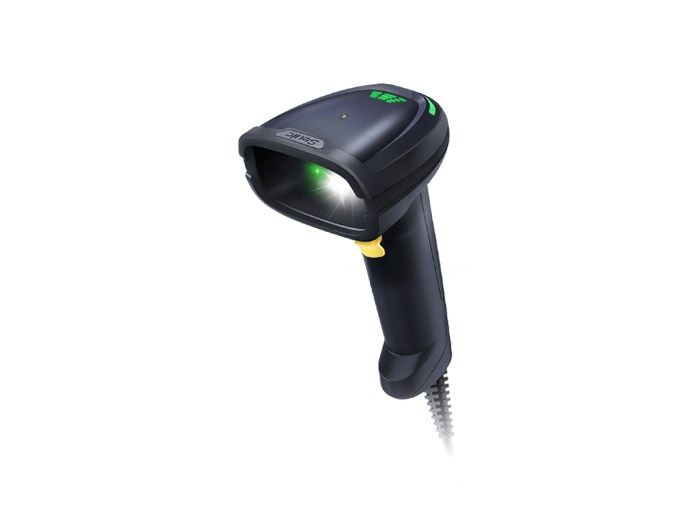
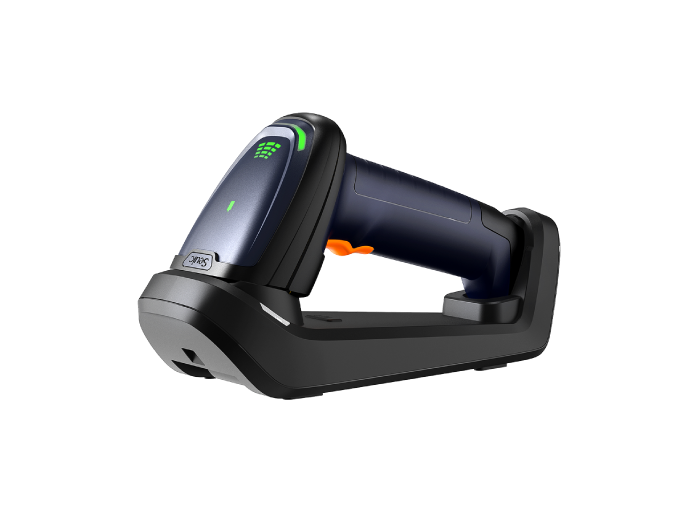
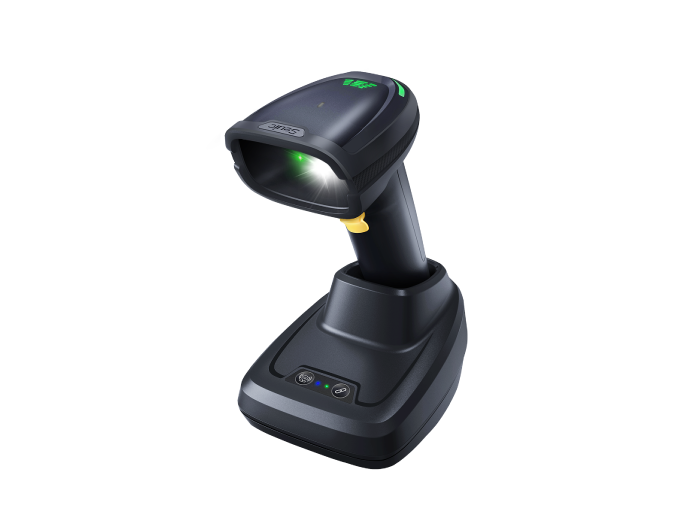
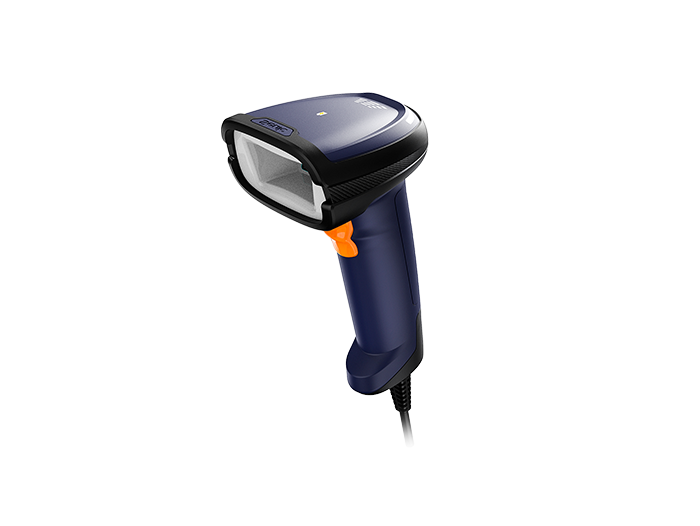
The Seuic HS325DP AI-adaptive industrial wireless scanner is purpose-built for exactly this challenge. Powered by AI algorithms, adaptive tri-color illumination, and ultra-high sensitivity, it delivers one-stop compatibility across all lithium battery processes — regardless of barcode type, size, or surface condition.
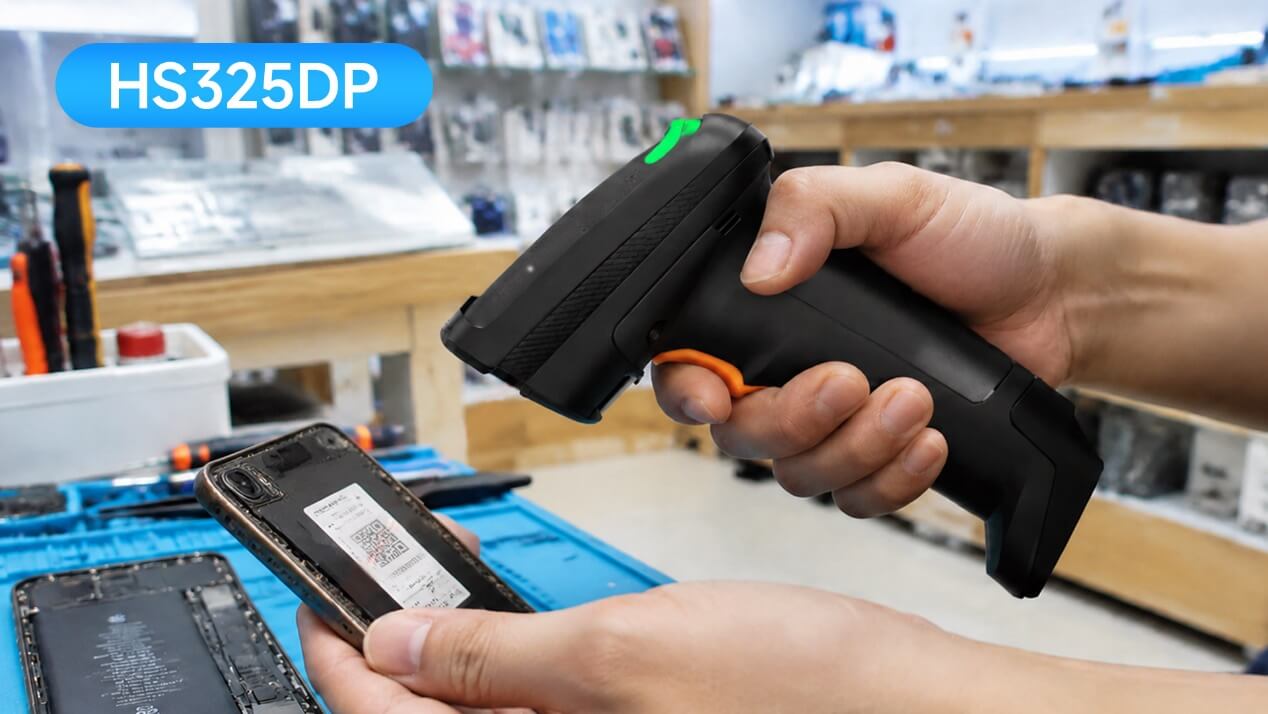
1. Barcode Variations Across Lithium Battery Processes — And the Core Reading Challenges
Lithium battery production involves numerous processes, with vastly different environments and product forms between front-end, middle, and back-end stages. Each process uses barcodes with unique fabrication methods, appearance, and carrier materials — placing extreme demands on scanner read capability, environmental adaptability, and response speed. Traditional scanners simply cannot cover all scenarios.
Front-end processes — mixing, winding, stacking — involve slurry and bare cells. Barcodes here are typically pre-printed tape labels or micro inkjet codes. They tend to be small, high-density, and printed on smooth, reflective bare cell surfaces. Slurry residue can also stain or blur the codes.
Middle-stage processes — assembly, electrolyte filling, drying — involve battery casings made of aluminum alloy, stainless steel, or plastic. Laser-engraved DPM codes are common, but engraving depth varies, contrast is extremely low, and curved surfaces cause distortion. Some cells develop oxidation or oil contamination, further complicating reads.
Back-end processes — formation/sorting, PACK packaging, warehousing/logistics — typically use label-based QR codes or Code 128 barcodes. Sizes vary dramatically, and labels may be wrinkled, faded, or placed on cluttered backgrounds. Tray-packed cells often have inconsistent code positions.
Beyond the barcodes themselves, the high-speed automation of lithium battery lines demands rapid scan response. Older scanners with outdated algorithms require manual angle adjustments, light source switching, and repeated retries — not only inefficient but also a bottleneck that can halt the line entirely. Meanwhile, having to deploy different scanners for different processes increases procurement, maintenance, and training costs — working against standardization and digital management.
Bottom line: the lithium battery industry urgently needs an AI-powered industrial scanner that is fully adaptive across all processes — highly sensitive, fast-responding, and easy to maintain — capable of stable reading across multiple barcode types, sizes, and surface conditions.
2. Seuic HS325DP AI Scanner: Core Advantages for Multi-Process Lithium Battery Reading
The Seuic HS325DP is an AI-enabled industrial wireless scanner developed specifically for complex industrial scenarios. Powered by a dual-core processor and a next-generation AI decoding algorithm, it directly tackles the core challenges of lithium battery lines: mixed barcode types, varying sizes, harsh conditions, and hard-to-read codes — all without manual tuning.
2.1 AI Algorithm Delivers Millisecond-Level Accuracy on Hard-to-Read Codes
The device features an upgraded AI image preprocessing and intelligent recognition algorithm with powerful error correction and image optimization capabilities. It rapidly locates and restores blurred, worn, distorted, and low-contrast barcodes. For the most common lithium battery line challenges — metal curved-surface DPM codes, oil-obscured codes, faint laser codes, and high-density micro barcodes — it achieves millisecond-level decoding. This eliminates the lag, missed reads, and failures typical of older devices, perfectly matching barcode recognition needs across all front-end, middle, and back-end processes.
2.2 Tri-Color Intelligent Illumination — Auto-Adapts to Any Substrate and Background
This is the standout feature that makes the HS325DP uniquely suited to lithium battery lines with their diverse process conditions. The device is equipped with blue, red, and white intelligent illumination sources that automatically switch based on barcode substrate material, background color, and surface condition — no manual intervention required.
Blue diffuse light: targets reflective metal curved surfaces like aluminum alloy and stainless steel — solving the problem of unreadable laser-engraved codes on cell casings.
Red diffuse light: handles dark-background barcodes — ideal for dark-colored sealing tapes and aged/discolored labels.
White spot light: precisely reads fine engraved codes on flat metal surfaces and micro inkjet codes — covering bare cells, precision components, and other small barcodes.
One scanner, all processes — truly adaptive.
2.3 Ultra-High Sensitivity — Compatible with All Sizes and Types of Industrial Barcodes
The HS325DP delivers industry-leading read sensitivity. It accurately reads micron-level high-density elongated barcodes and micro-engraved codes from front-end processes, as well as large-format logistics traceability barcodes from back-end PACK processes. It is fully compatible with QR codes, Code 128, DPM codes, and all other barcode types commonly used across the lithium battery industry. For non-standard barcodes with inconsistent engraving quality, the device automatically adapts — dramatically improving first-pass read rates on poor-quality codes and eliminating the need for manual rescanning and device adjustment.
2.4 Ergonomic Industrial Design — Built for Long Shifts on the Production Line
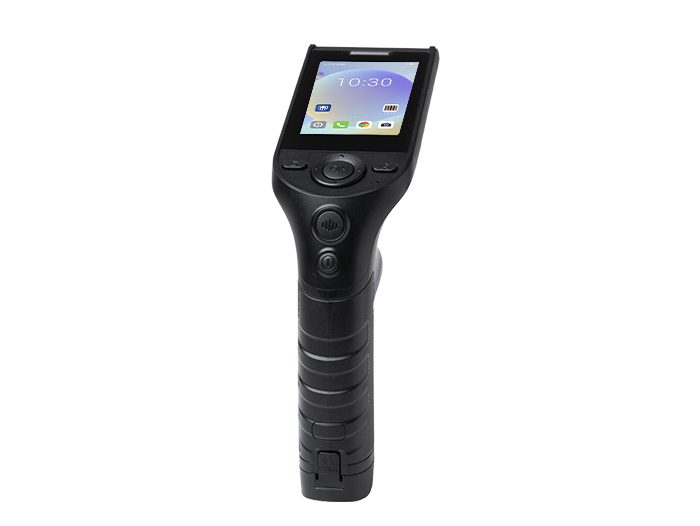
The HS325DP features a patented ergonomic design that is lightweight and comfortable for extended handheld use — ideal for high-frequency, high-intensity scanning on lithium battery lines. A visual human-machine interface is built into the top cover, featuring a tri-color status indicator array and a hidden battery gauge:
Green: High battery, successful decode
Red: Low battery, decode failure
Yellow: Medium battery, communication error
Operators can quickly diagnose scan issues at a glance, reducing line downtime and lowering maintenance complexity.
3. Seuic's Track Record: Quality Foundation for Lithium Battery Scanning Solutions
Seuic is a benchmark enterprise in China's industrial auto-ID and smart manufacturing sector. With decades of expertise in industrial scanning, data traceability, and intelligent recognition, Seuic specializes in full-scenario smart identification solutions for new energy, automotive manufacturing, electronics, logistics, warehousing, and other high-end manufacturing fields.
The company operates a complete R&D, production, and testing system. Core algorithms and hardware are independently developed, with multiple patented technologies. All products undergo rigorous industrial-grade testing to ensure reliable performance in high-temperature, oily, reflective, and high-takt environments typical of complex industrial production.
Backed by deep technical R&D strength, Seuic continuously iterates its AI decoding algorithms with dedicated optimization for the lithium battery industry — precisely addressing pain points across the full production workflow. The company also provides comprehensive project deployment and after-sales support, offering customized scanning solutions tailored to each facility's layout and process characteristics. Seuic has become a long-term partner for many leading new energy vehicle manufacturers and lithium battery producers.
4. Case Study: Helping Li Auto Solve DPM Code Reading on Critical Components
Li Auto, a leading Chinese NEV manufacturer, operates highly automated smart manufacturing bases. At its critical component assembly stations, parts are made from aluminum alloy, stainless steel, plastic, and other materials — with surfaces subject to oxidation, oil contamination, and reflections. Laser-engraved and etched barcodes from different suppliers vary widely in quality, with a high proportion of low-contrast and worn DPM codes. Traditional scanners struggled — frequent lag and failed reads disrupted line takt time and compromised component lifecycle traceability.
To solve this, Li Auto deployed the Seuic HS325DP AI smart scanner across all critical component assembly stations. The device's AI algorithm reliably decodes low-quality, high-difficulty DPM codes. The tri-color intelligent illumination automatically adapts to different substrate materials and background colors — no manual switching required. Millisecond response keeps pace with the high-speed production line.
Results after deployment:
50% faster scanning on the production line — Dramatic improvement in first-pass read rate on challenging DPM codes — eliminating rescanning and manual intervention
One scanner handles all component barcode types — 10% reduction in equipment management costs
Complete elimination of scanning bottlenecks, ensuring continuous, stable automated production
Significant improvement in completeness and accuracy of component traceability data — enabling closed-loop quality management
This case fully validates the HS325DP's stability and practicality in complex NEV smart manufacturing environments — and confirms its suitability for multi-process differentiated reading needs across lithium battery and new energy vehicle industries.
Lithium battery production lines involve complex processes, widely varying barcodes, harsh conditions, and demanding takt times. Traditional scanners — with poor compatibility, low efficiency, and high maintenance costs — cannot meet the traceability and production demands of modern smart manufacturing.
The Seuic HS325DP AI industrial wireless scanner, powered by AI algorithms, adaptive tri-color illumination, and ultra-high sensitivity, solves the barcode reading challenge across all lithium battery processes — regardless of barcode type, size, or surface condition. It delivers efficiency, stability, and versatility in one package. Backed by Seuic's deep industry expertise and proven deployment capabilities, it provides lithium battery manufacturers with a stable, worry-free, and cost-effective smart scanning solution — the preferred adaptive AI scanner for lithium battery smart manufacturing lines.
Founded in 2002, Seuic Technologies Co., Ltd. is committed to mastering core technologies, continuously improving innovation capabilities, and delivering outstanding branded products including mobile computers, RFID readers, tablets, barcode scanners, and fixed-mount readers. With highly reliable products and efficient service, our solutions are widely applied across manufacturing, retail, logistics, healthcare, and more. We provide frontline workers with more durable real-time data collection tools, helping you improve operational efficiency and take productivity to new heights.
Related News

-
What is a Barcode Scanner? Working Principle, Types & Industry Applications
Product Updates | 2026.10.23Learn More
-
DPM Scanner Selection: Handheld vs Fixed Industrial Reader Comparison Guide
Product Updates | 2026.10.22Learn More
-
2D Barcode Scanner Selection Guide for Warehouse: Receiving & Cycle Count
Product Updates | 2026.10.22Learn More
-
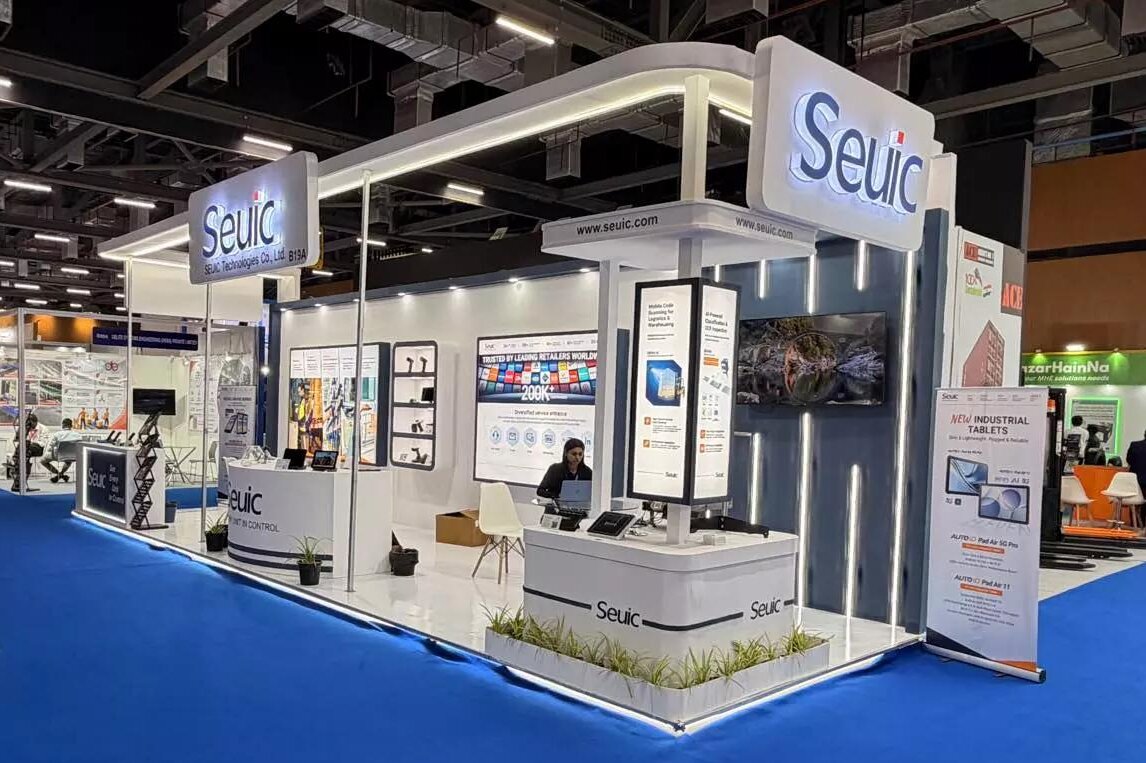
IWE Chennai 2026 Recap: Connecting Data to Smarter Operations
News & Events | 2026.10.22Learn More