





DPM Scanner Selection: Handheld vs Fixed Industrial Reader Comparison Guide
Direct Part Marking (DPM) places codes directly onto metal, plastic, or composite surfaces, commonly using laser etching, chemical etching, dot peening, or inkjet marking. Unlike paper labels, DPM codes lack consistent contrast and often suffer from low contrast, curved surfaces, oil/dirt contamination, and mirror-like reflections. So the first step in selecting a device is not "handheld or fixed?" — it's determining: Is the product moving? Can a person reach it? Does traceability require 100% inspection?
1. Handheld 2D Scanner for DPM: When Is a Handheld the Right Choice?
The core value of a handheld DPM scanner is manual flexibility. When parts don't move at a fixed rhythm, code positions vary, or the operator needs to tilt the part to find the right angle, a handheld device is the natural fit.
Typical scenarios include:
Shop floor inspection and rework: Single-part processing, random positioning — installing a fixed reader is impractical
Incoming inspection / outgoing sampling: Non-continuous cycles — the operator simply picks up the part and scans once
Warehouse inventory and material handover: Primarily standard 1D/2D labels, with occasional metal DPM codes to supplement
Large castings / heavy machinery parts: Too large to move to a fixed station — the operator must walk up and scan
High-mix, low-volume production: Lines change frequently — devices shouldn't be permanently mounted to one station
The advantages of a handheld solution are fast deployment, low cost, and no dependency on PLC triggers. The operator can tilt the device to avoid glare or adjust the angle for curved codes. However, not just any "2D scanner" can read laser-etched metal codes — ordinary retail scanners optimized for paper labels will largely fail on low-contrast engraved codes.
Rule of thumb: Whenever "people move, products stay still," a handheld is the more practical choice.
2. Fixed Industrial Reader for DPM: When Must You Use a Fixed Reader?
Fixed industrial readers are installed above production lines, fixtures, or automation equipment. Triggered by photoelectric sensors, they read codes as products pass by, transmitting data directly to the MES or PLC.
They are suited for scenarios with very clear boundaries:
High-speed conveyor continuous reading: Automotive parts assembly, lithium battery cell/PACK lines, SMT pick-and-place lines
DPM capture on moving products: Belt speeds may reach several meters per second — handhelds can't keep up
Highly reflective metal engraved codes: Requires polarized light, low-angle illumination, and multi-spectrum lighting to suppress glare
Micro-codes / curved codes / oil-covered codes: Relies on fixed optical setup and algorithmic tuning for consistency
Full traceability, not sampling: Every unit must be bound to a serial number — no "missed scans" allowed
The advantage of a fixed reader isn't just "whether it can read" — it's consistency: fixed light position, fixed trigger timing, locked decode parameters. Read rates can be configured toward a 99.9% target. On tight-cycle lines, a fixed reader prevents manual scanning from becoming a bottleneck.
Rule of thumb: Whenever "products move, people don't touch them," prioritize a fixed reader.
3. Core Differences: Handheld vs Fixed Comparison Table
| Dimension | Handheld 2D DPM Scanner | Fixed Industrial Reader |
| Installation | Handheld by operator | Fixed mount on line or fixture |
| Trigger | Trigger button or auto-sense | Photoelectric sensor / PLC trigger |
| Suitable cycle | Static or low-frequency manual station | High-speed continuous automation |
| Reading target | Standard labels + moderate DPM | Low contrast / reflective / micro / curved DPM |
| Angle tolerance | Compensated by eye + wrist | Fixed field of view, requires light/focus adjustment |
| Data upload | Manual entry or Bluetooth/Wi-Fi | Ethernet / industrial bus direct to MES |
| Consistency | Affected by operator skill | Stable and repeatable |
| Deployment cost | Low, ready to use out of box | Higher, requires bracket and communication setup |
| Maintenance | Battery, drop damage | Lens cleaning, light source degradation |
The fundamental difference is architectural: a handheld buys you "mobile collection flexibility," while a fixed reader buys you "automated traceability stability."
4. When to Use Which: Decision Framework
Don't choose by "which is more expensive." Align each of the following five conditions:
4.1 Is the product moving?
Flowing on a conveyor → Fixed reader
Static on a workbench, picked up by hand → Handheld
4.2 Is the code position fixed?
Always passes through the same field of view → Fixed reader
Code is on different sides or heights of the workpiece → Handheld is more practical
4.3 Cycle time requirement?
Less than a few seconds per piece, no manual intervention allowed → Fixed reader
Sampling, rework, inventory → Handheld
4.4 Code quality?
Laser-etched metal, anodized low contrast, oily curved surfaces → Fixed reader's lighting and algorithms are more stable
Ordinary engraved parts, static close-range → Handheld DPM gun can cover
4.5 Traceability granularity?
100% SN binding, PLC decision interface → Fixed reader
Sampling inspection, inventory reconciliation → Handheld
A common practice on site is to use both: fixed readers on the main line for full inspection, and handhelds for rework stations and warehouse supplemental scanning. There is one often-overlooked aspect in DPM projects: the fallback logic when a code cannot be read (rescan, reject, manual entry) should be decided before the nominal read rate is finalized.
5. Scenario Deployment: How to Match Products to Each Type
Having covered the general logic, when it comes to specific devices, you don't need to pit handheld and fixed against each other. Most factories run "fixed station on the line + manual supplemental capture off the line" in parallel — the difference is which is primary and which is secondary.
For mobile/manual collection: Look at handheld DPM scanners
If your pain points center on shop floor inspection, assembly station rescanning, incoming sampling, or warehouse metal parts inventory — the code may not be extremely difficult, but the operator needs to walk around with the device — focus on:
Whether it has a true DPM decoding engine, not just a regular 2D gun with a "supports metal codes" sticker
Multi-color illumination (red/white/blue) to handle glare and low contrast
Wireless battery life, drop resistance, and IP rating suitable for the shop floor
Ergonomic design for long shifts with frequent trigger presses
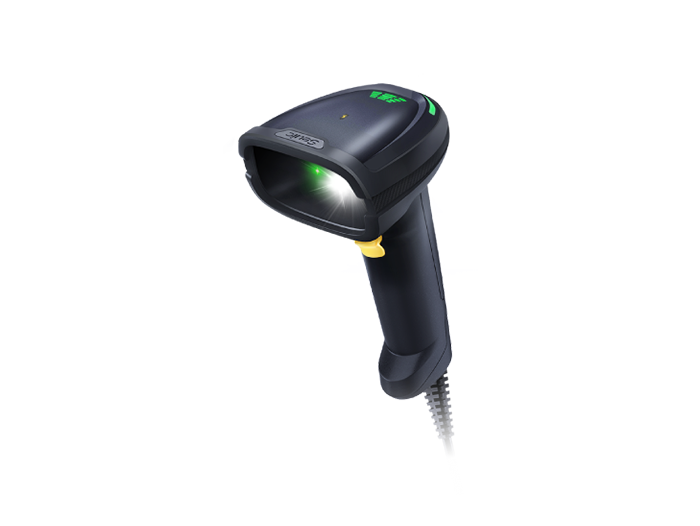
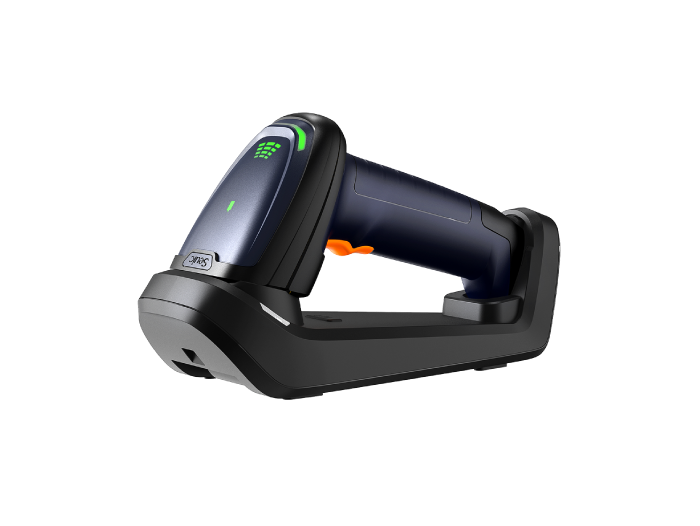
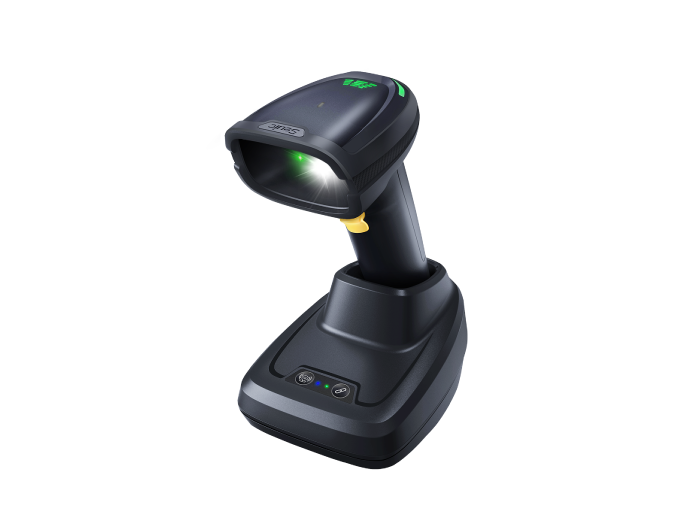
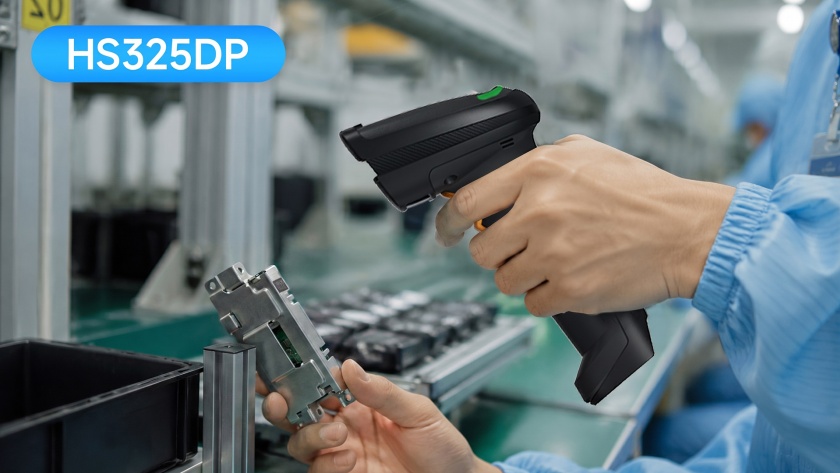
Take the SEUIC HS325DP as an example. It is positioned as an AI-powered industrial wireless handheld scanner, targeting mobile scenarios like automotive parts assembly, consumer electronics traceability, and manufacturing line workstation capture. It features a 1280×1080 CMOS sensor, adjustable red/white/blue diffused illumination, DPM decoding algorithms, wireless transmission, IP54 rating, and drop resistance. The value of this configuration is not "to replace a fixed reader" — it's to make reading engraved codes at manual stations reliable instead of hit-or-miss.
Applicability: Many manual stations, variable code positions, relaxed cycle time → Evaluate handheld DPM solutions.
For fixed production line stations: Look at fixed industrial readers
If your primary need is on lithium battery/PACK lines, SMT, engine assembly, or automated sorting — products pass at high speed, require automatic reading every time, and data goes into the MES — then the question is not "is the handheld strong enough?" but rather a fixed-reader architecture issue.
Key selection criteria for fixed readers:
Frame rate and global shutter to keep up with line speed
Support for auto-tuning / AI decoding to reduce on-site setup effort
Lighting scheme that suppresses metal glare
Communication protocols (TCP/IP, Profinet, EtherNet/IP) for direct PLC connection
Protection rating and MTBF for 7x24 operation
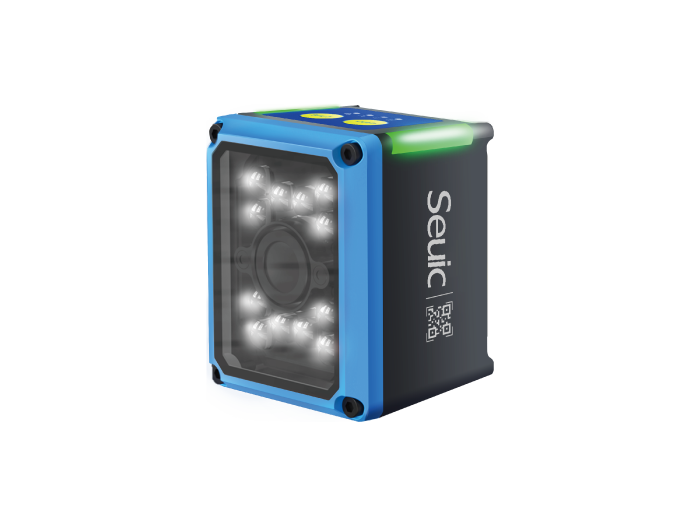
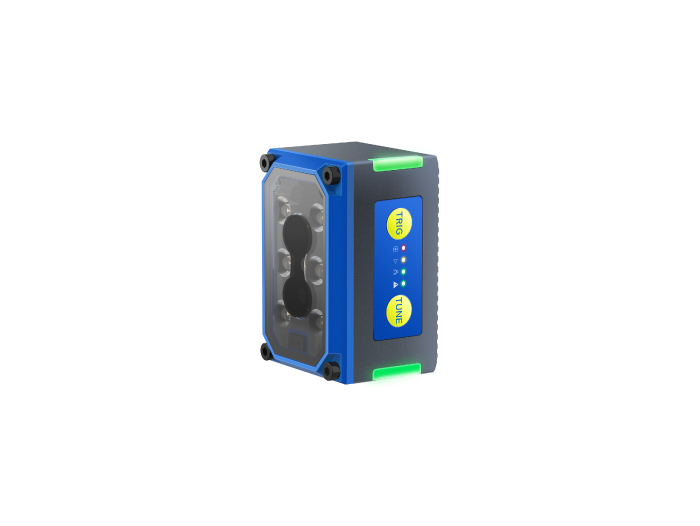
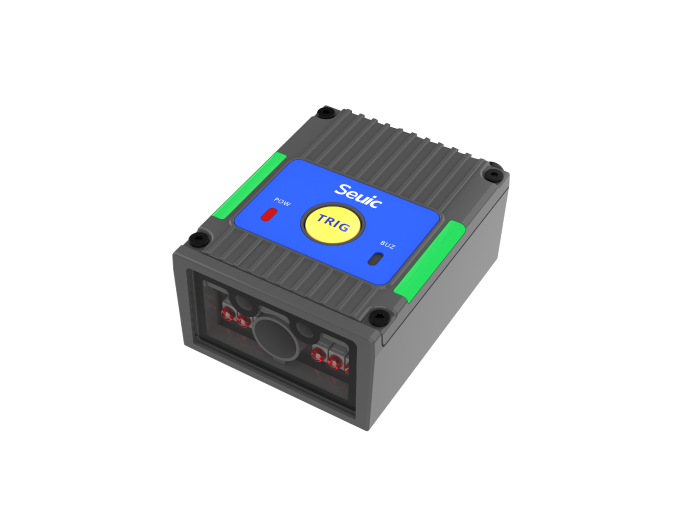
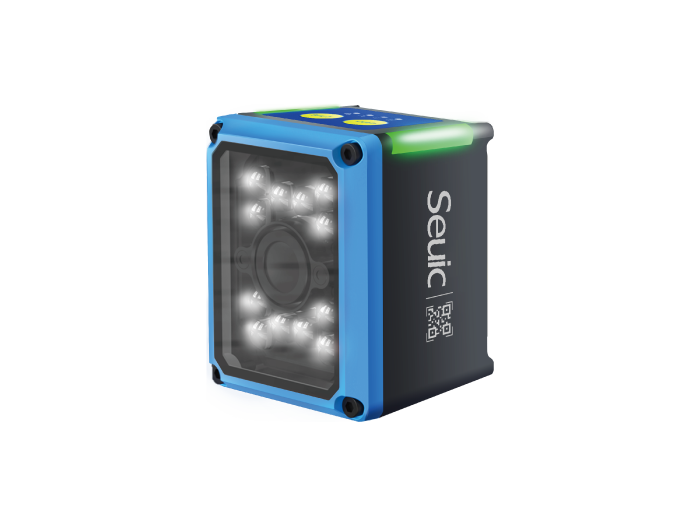
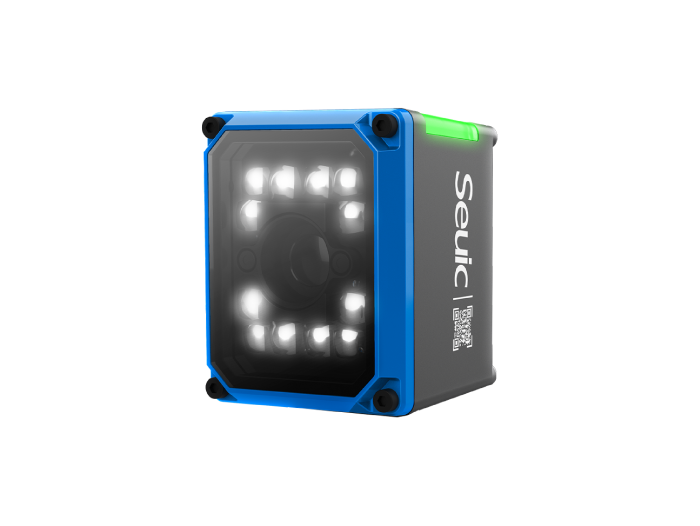
Take the SEUIC X4 AI as an example. It is a fixed industrial vision reader with a 1.3MP global shutter CMOS sensor, featuring AI-based auto-tuning, sub-second deployment, dynamic reading up to approximately 3 m/s, IP67 body, and industrial Ethernet protocols. In the Qingdao Guoxuan lithium battery line case, it was used to solve glare and low contrast issues on aluminum shell engraved codes. The value of this device is turning "code reading" into a silent step on the line — no dedicated operator needed.
Applicability: Continuous line motion, full traceability, fixed code position → Fixed reader as the primary solution.
Combination Recommendations
Automotive assembly plant: Fixed readers (X4AI class) on assembly lines, handheld HS325DP for rework area supplemental scanning
3C electronics: Fixed readers on SMT lines for PCB engraved codes, handhelds for repair stations
Lithium battery/PACK: Fixed readers for full electrode/cell capture, handheld for module manual sampling
Warehouse / aftermarket / inspection: Handheld only — no need for fixed readers
The order of DPM reading selection is always: marking process → surface condition → line cycle time → manual involvement → traceability requirements → finally, handheld or fixed.
Code moves, full capture required, data goes into system → Fixed industrial reader
People move, code positions scattered, sampling/inventory/rework → Handheld 2D DPM scanner
Most factories use fixed readers for the main line and handhelds as supplements
Laser-etched codes, MIL-spec part markings, and highly reflective metal codes on production lines — the real challenge lies in matching lighting and algorithms, not simply "buying a more expensive device." Testing with actual workpiece samples on-site is far more reliable than reading spec sheets.
If you are evaluating a production line (e.g., automotive assembly, lithium battery cells, 3C PCBs), feel free to send code sample photos, line speed, and code position variation to SEUIC. We will arrange one-on-one expert service to customize a solution for you.
Related News
-
IWE Chennai 2026 Recap: Connecting Data to Smarter Operations
News & Events | 2026.10.22Learn More
-
Rugged Android Tablet vs PDA: Field Worker Selection Guide
Product Updates | 2026.10.21Learn More
-
Industrial PDA Protection Rating Guide: IP67 & MIL-STD-810 Explained
Product Updates | 2026.10.21Learn More
-
Rugged Tablet OS Selection: Android vs Windows Comparison Guide
Product Updates | 2026.10.20Learn More