







Automotive DPM Scanning: Laser Code Reading for Engines & Transmissions
In automotive manufacturing, traceability is no longer a back-office paperwork exercise — it is embedded directly into the production line. Engine blocks, cylinder heads, transmission housings, crankshafts, gearbox casings, and other components are permanently marked using Direct Part Marking (DPM), ensuring these identifiers survive high temperatures, oil, wash cycles, and years of field use.
Yet the very permanence that makes DPM valuable also makes it notoriously difficult to read.
A laser-etched Data Matrix code on a cast iron or aluminum alloy block is nothing like a printed label. The code consists of microscopic melted, oxidized, or abraded surface features. Under normal shop floor lighting, the grayscale difference between the code elements and the metal background may be only a few levels. Add machining marks, rust-preventive oil, coolant, and curved casting surfaces, and many ordinary retail or logistics scanners simply return "no read."
For a plant manager or quality supervisor, every failed read means one of three outcomes: the operator slows the line to rescan, someone manually keys in the serial number, or a gap appears in the traceability record — a gap that will be questioned during the next audit.
That is why automotive traceability projects often fail on consumer-grade scanners long before the code itself becomes the issue.
1. Why an Industrial-Grade DPM Scanner Is Essential
Reading laser-etched codes on metal surfaces is fundamentally an imaging challenge — not a "point-and-shoot" problem.
Reflectivity must be controlled optically
Polished or machined metal surfaces produce specular reflection. Light hits the surface and bounces directly back into the sensor, causing overexposure. A capable industrial DPM Scanner does not simply "shine brighter" — it employs controlled illumination schemes, typically with red/white/blue multi-color sources or polarized lighting, so that the etched grooves appear darker relative to the surrounding metal.
On an engine block, blue light or angled diffuse illumination often outperforms standard red light by suppressing hotspots on curved surfaces.
Low contrast demands HDR + decoding intelligence
When the Print Contrast Signal (PCS) is very low, the sensor must capture faint edges without blowing out bright areas. Global-shutter industrial sensors, multi-frame exposure, and image filtering techniques can turn a "barely visible" mark into a decodable image.
After imaging, traditional rule-based decoders may still fail on incomplete dot patterns. AI-assisted decoding helps reconstruct distorted, partially worn, or oil-covered symbols instead of rejecting them outright.
Curved surfaces cause geometric distortion
Transmission housings and shaft areas are not flat. Data Matrix codes stamped onto fillets or raised bosses deform at the edges. Industrial DPM algorithms apply perspective correction and contour detection rather than assuming a flat label.
Shop floor contamination is the norm
Cutting fluid, grease, fingerprints, powder, and scratches are not exceptions in an automotive plant — they are the baseline. The reader must tolerate partial occlusion and still output the correct serial number.
Traceability requires system integration
A scan result that stays on the scanner screen is useless for an audit. Industrial DPM scanners typically support RS232, USB virtual COM, Ethernet, Profinet, Modbus TCP, or PLC I/O so that results flow directly into the MES.
2. Matching the Right DPM Scanner to Different Automotive Workstations
There is no such thing as a "best universal DPM scanner." There is only the right choice for a given workstation architecture.
Fixed Production Line Stations → Fixed-Mount Industrial Vision Reader
When parts arrive at a fixture, conveyor position, press exit, test station, or final inspection point, a fixed-mount reader is typically the most stable choice:
No operator aiming variability
Consistent distance and angle
Triggered by photoelectric sensor or encoder
Millisecond decoding to keep pace with line speed
Data pushed automatically to MES/PLC
On engine block machining lines, transmission assembly stations, or final inspection gates, fixed-mount readers are preferred because read rates do not depend on operator skill.
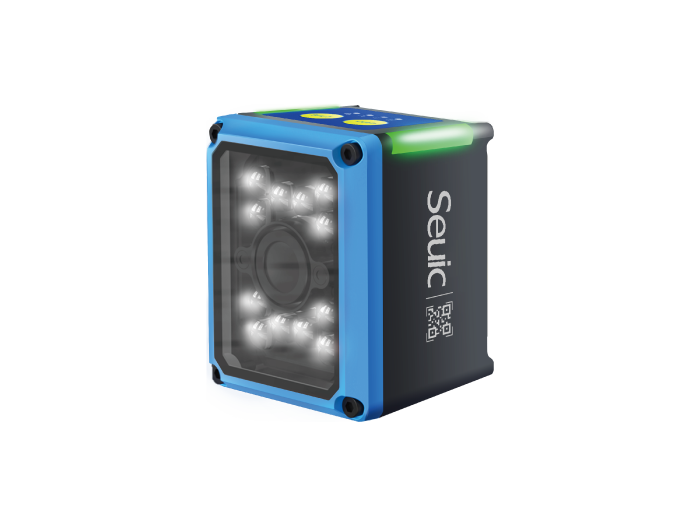
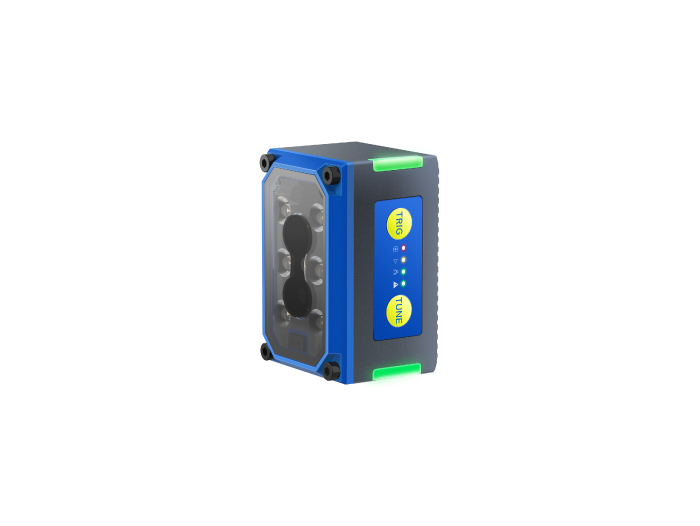
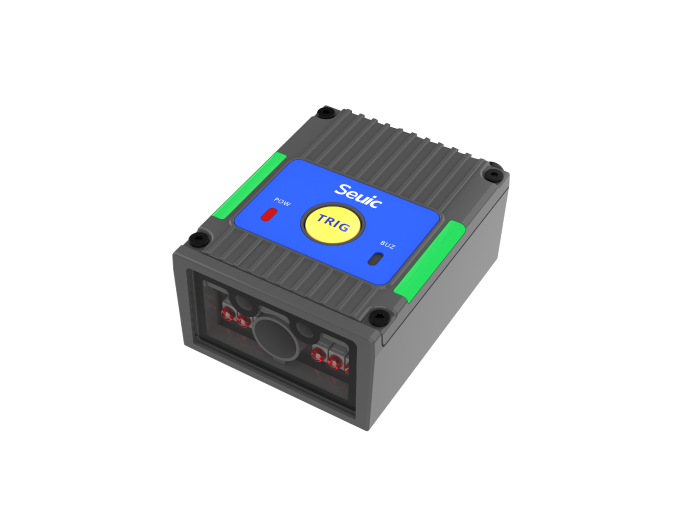
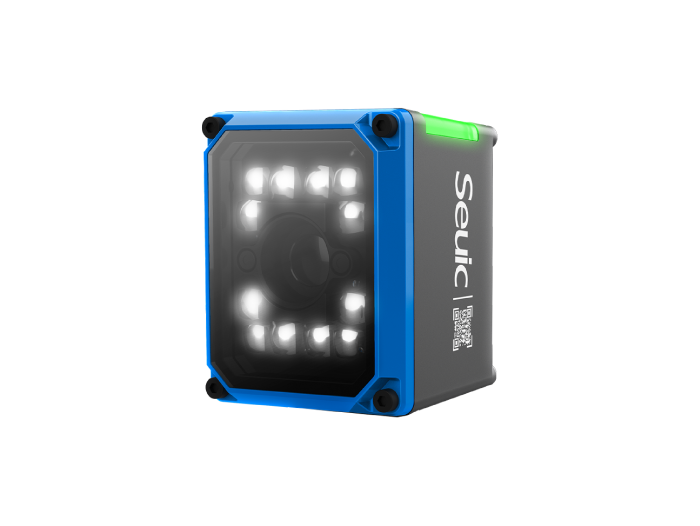
A representative solution for this scenario is a compact fixed-mount vision reader with an AI decoding chip, global-shutter CMOS sensor, autofocus, multi-color illumination, and industrial Ethernet interfaces. For example, the SEUIC X4 AI fixed-mount reader is built for exactly this pattern: 1.3 MP global shutter, octa-core AI processing, automatic parameter deployment, support for Data Matrix/QR DPM codes, IP67, and protocols including Profinet, EtherNet/IP, and Modbus TCP.
It is suited for stations where parts are repeatedly positioned — "install once, read continuously."
Typical installation points:
Engine block marking verification
Machining station pass/fail judgment
Transmission housing serial number capture before assembly
Final inspection traceability checkpoint
Mobile Assembly Stations → Wireless Handheld DPM Scanner
A fixed-mount reader cannot follow an operator walking around a vehicle frame, reaching into a fixture cell, or scanning returned parts in a rework area.
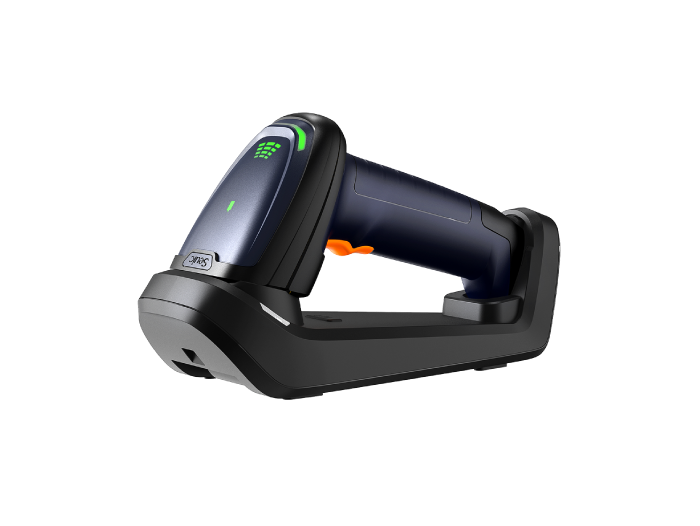
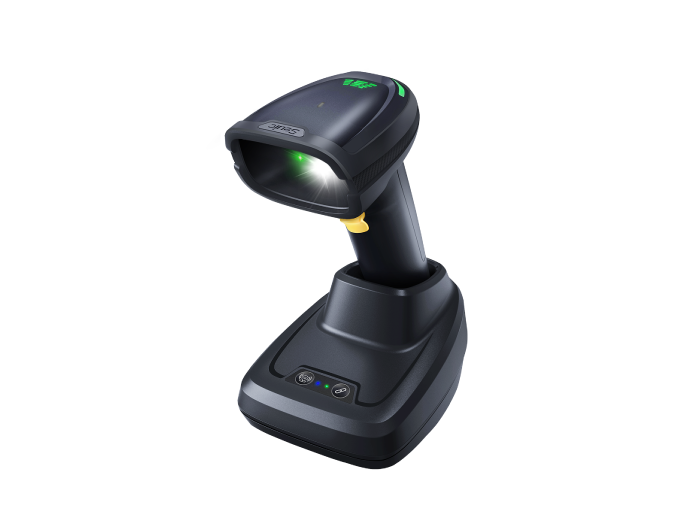
In assembly areas — especially engine final assembly, transmission assembly, brake/line system installation, or mixed-model production lines — a wireless handheld DPM scanner is often the better choice. As the operator moves, the scanner is not dragged by cables through oil and brackets.
Key requirements for such stations include:
Reliable DPM decoding, not just paper labels
Multi-color illumination for aluminum, steel, anodized parts, etc.
Removable battery for shift change
Wireless range covering the workstation area
Onboard batch storage when Wi-Fi drops
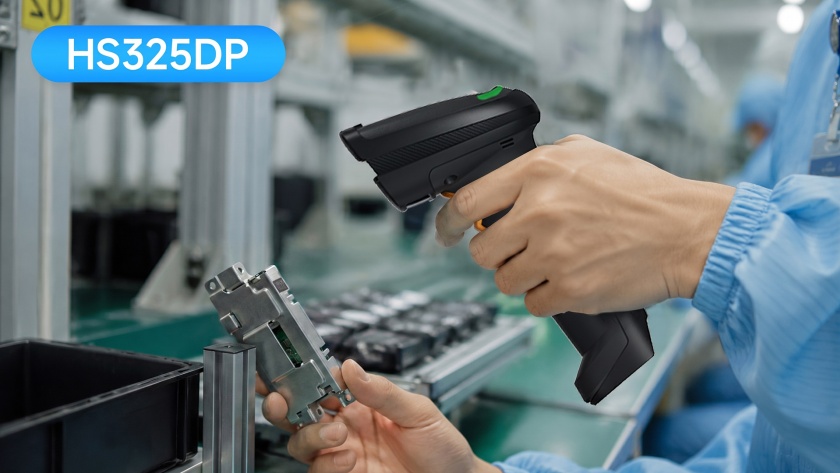
The SEUIC HS325DP wireless scanner fits this need: dual-core AI decoding engine, red/white/blue adjustable illumination, 3150 mAh removable battery, approximately 100 m open-area wireless range, IP54, and support for RS232/USB/wireless modes. It is designed for mobile automotive assembly scanning, not fixed automation.
Applicable scenarios:
Engine assembly stations
Transmission assembly cells
Chassis/subassembly scanning points
Rework/return part traceability
Warranty analysis on returned parts
High-Volume Tethered Stations → Wired Handheld DPM Scanner
Some stations do not need wireless freedom. They need simplicity, low cost, zero battery management, and continuous connection.
Examples include:
Incoming inspection benches
Line-side material sorting areas
Packaging/shipment audit points
Quality sampling stations
Rework benches with fixed terminals
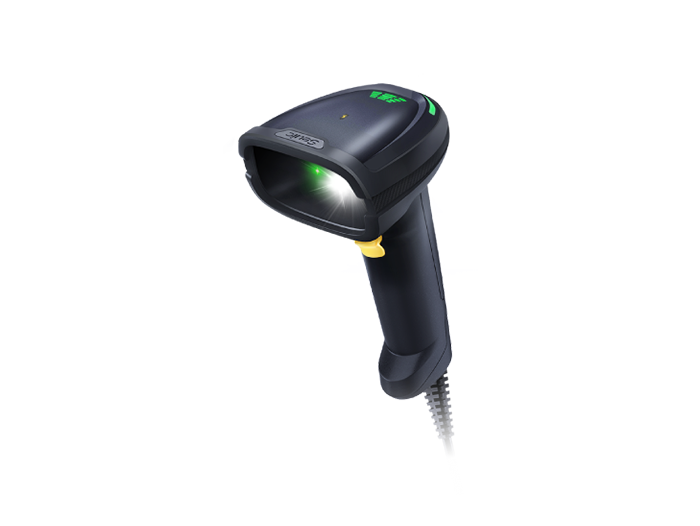
In these cases, a wired industrial DPM handheld scanner is typically the most cost-effective choice. It still needs the same optical capability — AI decoding, DPM-specific lens, multi-color illumination — but eliminates the wireless RF module and battery swap workflow.
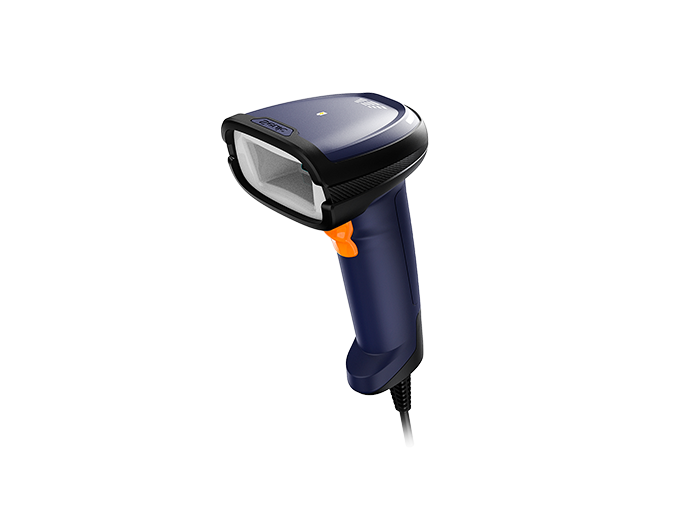
The SEUIC HS305DP is the wired sibling in the same family: dual-core AI processing, red/white/blue diffuse illumination, 60 fps image capture, IP54, USB/RS232 output, and ergonomic handheld shape.
Best suited for:
Operators stationed at a fixed bench
Cable movement does not create obstacles
Plug-and-play connection to PC/MES terminal
Zero tolerance for battery-related downtime
3. Selection and PoC Guide: How to Avoid Buying the Wrong DPM Scanner
Before purchasing in volume, run a small proof-of-concept (PoC). DPM performance depends on actual samples — metal surface finishing matters far more than spec sheet numbers.
Step 1: Collect real production parts
Do not test with clean demo samples. Use actual production parts:
Raw machined surfaces
Anodized / black oxide treated surfaces
Washed but still oily surfaces
Slightly scratched or worn surfaces
Castings from different batches
If both engine block and transmission housing lines exist, include both sample types.
Step 2: Define "pass" criteria quantitatively
Do not accept "it reads." Clearly define:
First-pass read rate target (typically 99%+ for automotive lines)
Number of consecutive reads per sample, e.g., 200–500
Maximum allowed manual rescans
Rules for read failure (alarm, reject, or manual entry)
Step 3: Match device form factor to workstation type
| Station Type | Recommended Form Factor |
| Fixed fixture / conveyor | Fixed-mount vision reader |
| Operator walking/moving | Wireless handheld DPM scanner |
| Bench QC / incoming inspection | Wired handheld DPM scanner |
Step 4: Confirm system integration early
Check with IT/MES team on output format:
Serial number only
Serial number + station + timestamp
OK/NOK signal to PLC
Trigger mode: manual / sensor / encoder
If the scanner cannot send a "read failure" signal to the line controller, traceability is incomplete.
Step 5: Test under worst-case conditions, not best
On bright aluminum, use blue light to suppress glare
On dark anodized steel, use white light
Cover laser dot-peen marks with oil film
Test on curved surfaces of housing bosses
Test under high ambient light near open stations
Step 6: Pilot first, then scale
Run 1–2 units on a real workstation for 1–2 weeks. Measure:
Read rate per shift
Operator complaints
Rescan time
MES data mismatch count
Only scale to all line stations after the pilot passes.
The success of automotive parts traceability hinges on the scanning point. Engine blocks and transmission housings are precisely where cheap scanners fail most often: laser-etched marks, metal glare, low contrast, oil, and curved surfaces degrade image quality before decoding even begins.
The right approach is not "buy a stronger barcode gun" — it is matching an industrial DPM architecture to the workstation type: fixed-mount readers for fixed stations, wireless handheld scanners for mobile assembly, and wired handheld scanners for high-volume tethered stations.
If you are planning a pilot project for engine block or transmission housing traceability, start with real production samples, define first-pass read rate targets, and test under oil and glare — not in a demo room.
Which workstation do you need to address first — machining line, assembly cell, or incoming inspection? Contact SEUIC and we will arrange one-on-one expert service, tailor a solution for your needs, and offer a free product trial.
Related News

-
Double Efficiency High-Bay Inventory: Normal vs Ultra-Long Range UHF RFID Handheld
Product Updates | 2026.11.04Learn More
-

India RFID Supplier Selection: Industrial Procurement & Audit Guide
Product Updates | 2026.11.04Learn More
-
RFID Inventory for Beverages & Fresh Food: Handheld Reader Selection Guide
Product Updates | 2026.11.04Learn More
-

RFID Manufacturer Selection: China vs India Sourcing Decision Guide
Product Updates | 2026.11.04Learn More