




Can't Read Reflective DPM Codes in Forging Workshops? Seuic AUTOID 10 Breaks Through
Ever had one of those moments?
In the forging workshop, freshly forged parts still radiating heat. A worker on the production line holds a scanner up to the DPM code on a metal part — and tries again, and again. The screen just keeps saying "no read."
After a dozen attempts, they give up and manually type in the serial number.
In automotive parts forging shops, this scene plays out every single day.
This article dives into a problem that plagues many: heavily reflective, low-contrast DPM codes on forged surfaces, and the frustratingly low read rates of standard PDAs. More importantly, here's what you can actually do about it.
1. Why Can't Standard PDAs "See" Codes in Forging Workshops?
Let's be clear — the issue isn't that the device is bad. It's that forged parts are inherently difficult to read:
Laser-engraved DPM codes on metal surfaces naturally have low contrast
Scale, oil, and cutting fluid often coat the surface, obscuring the code
Metallic reflections turn the code area into a mirror — standard cameras blow out and go white
Oil mist and metal dust in the air further degrade image quality
The result? Standard consumer-grade PDAs or low-end industrial handhelds often struggle to achieve even a 50% read rate on these challenging codes.
Workers end up re-scanning repeatedly or entering data manually — leading to production line downtime, delayed reporting, and broken traceability chains.
And here's the kicker: automotive parts follow the IATF 16949 quality management system. Any gap in process traceability is a real compliance risk — there's no way around it.
2. The Solution: Seuic AUTOID 10 Industrial Mobile Computer
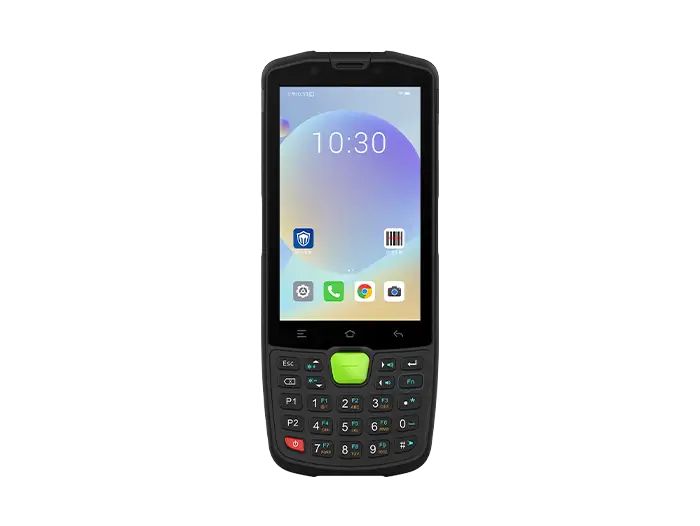
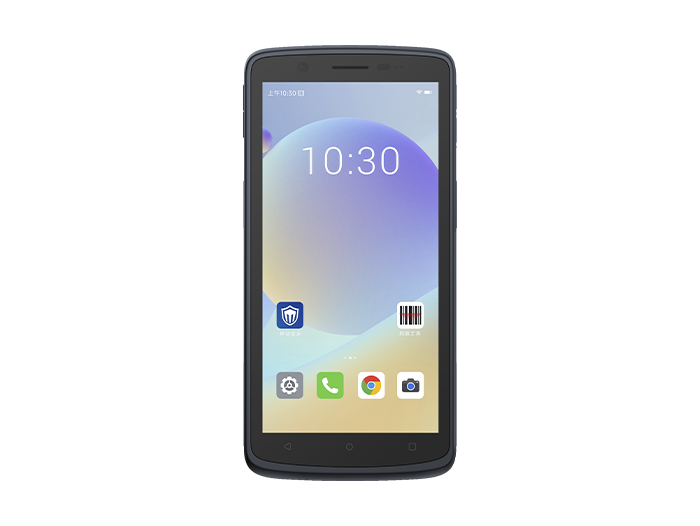
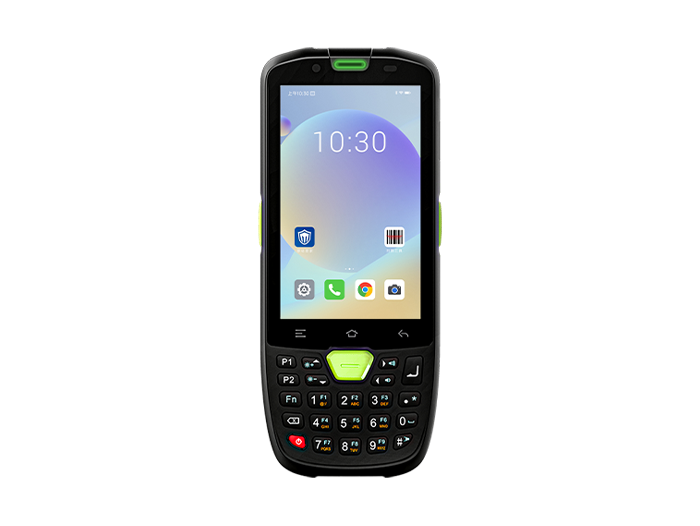
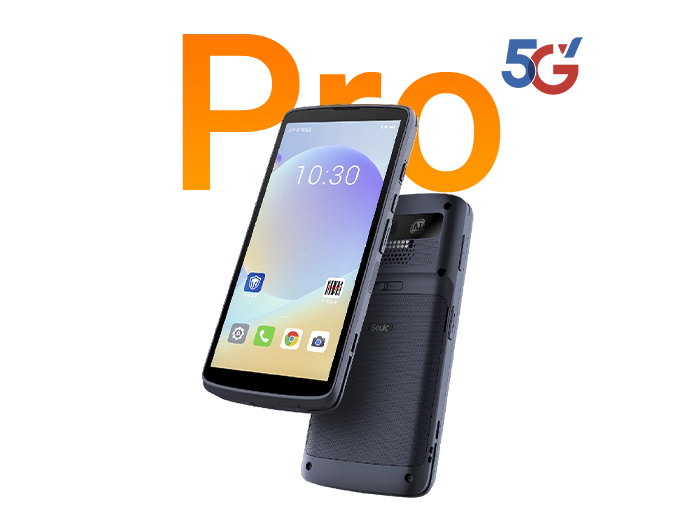
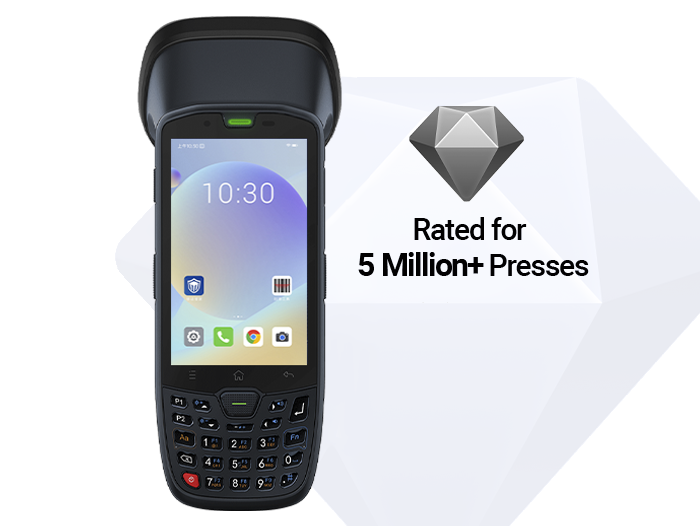
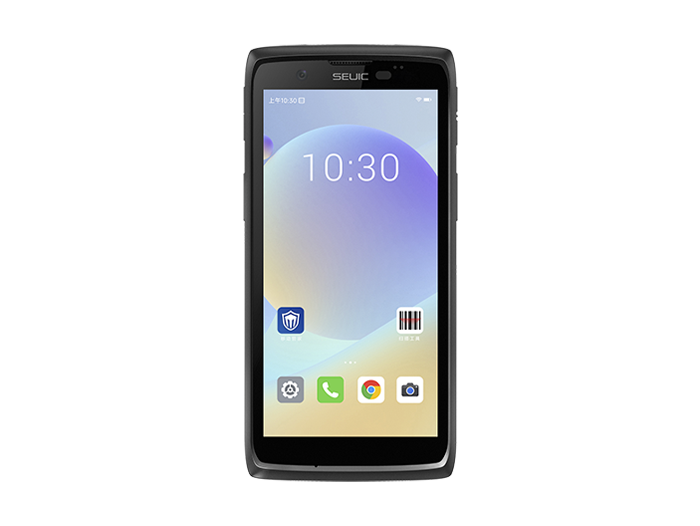
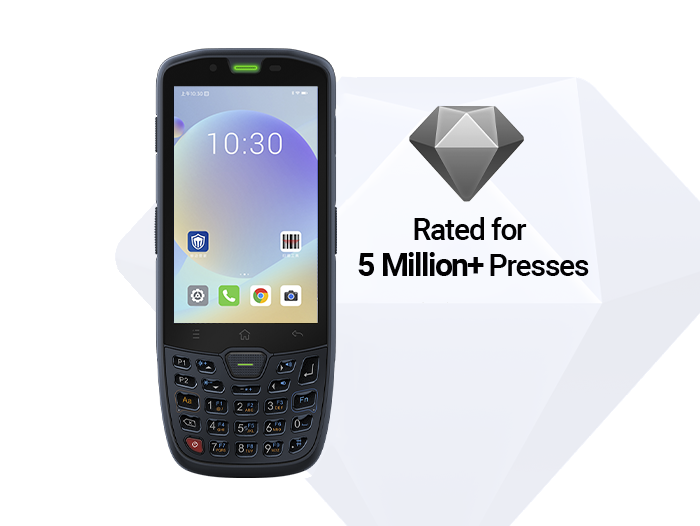
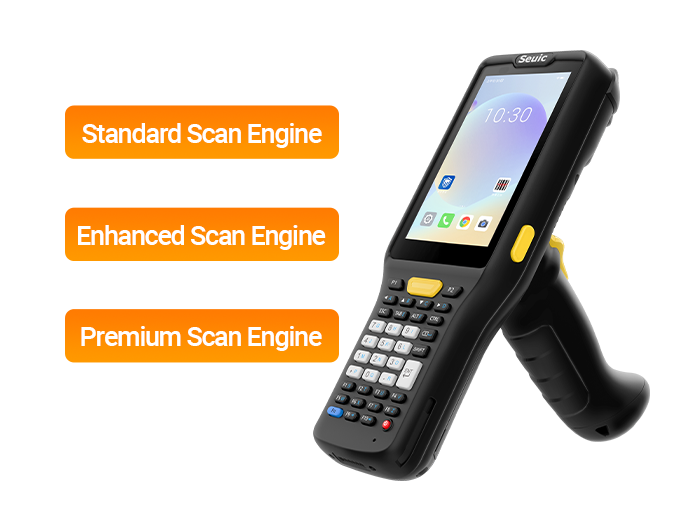
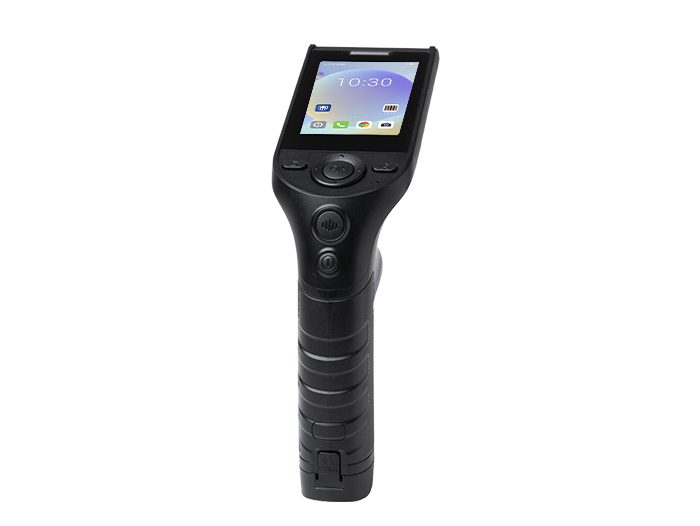
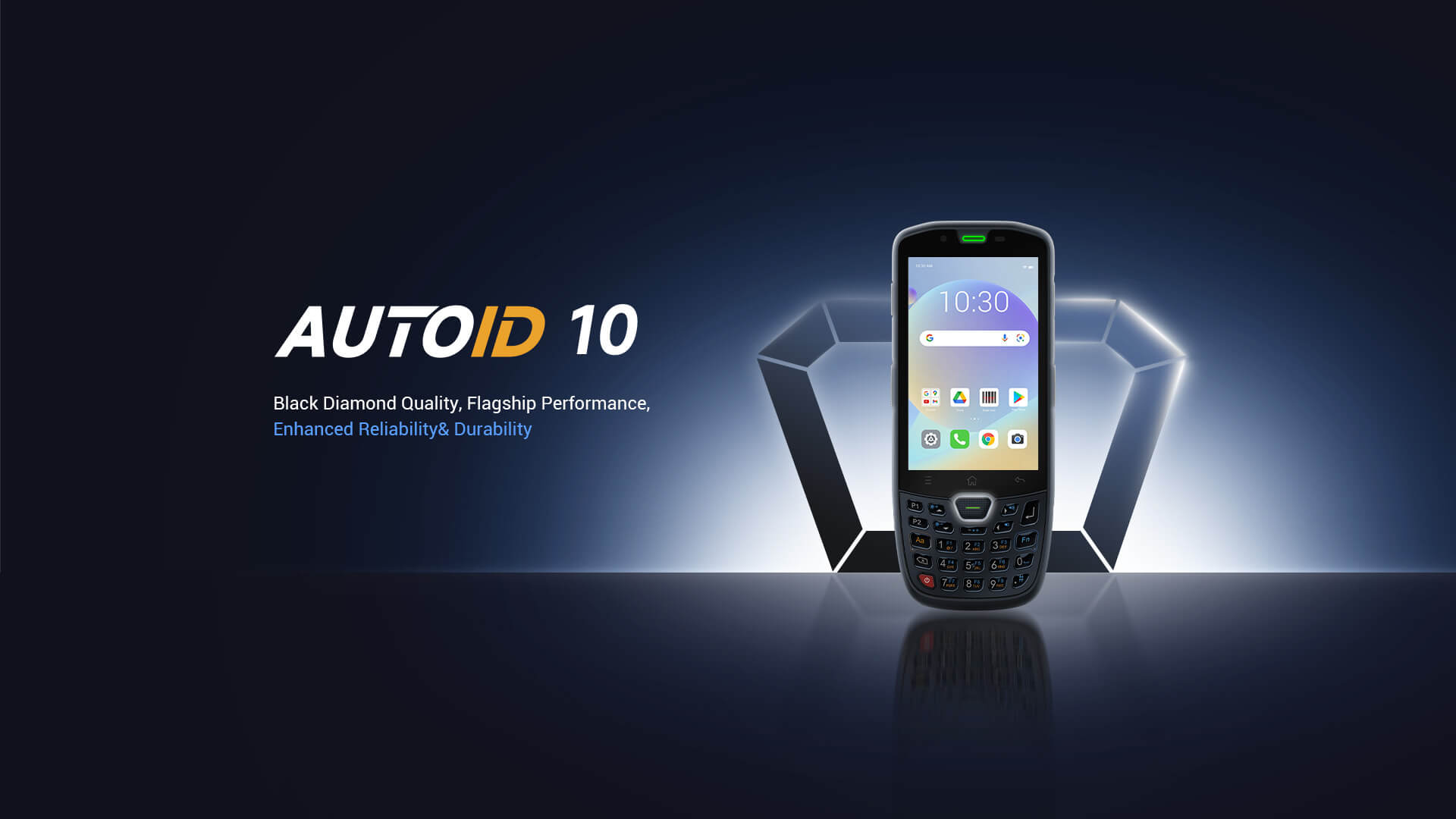
The Seuic AUTOID 10 Handheld Mobile Computer is built specifically for these high-difficulty industrial identification scenarios.
It combines AI-powered next-generation scanning technology (2-3x improvement in decoding performance) with AI + OCR (2x faster recognition speed), purpose-optimized for oily barcodes, worn labels, and reflective metal surfaces. It easily handles high-density, low-contrast, worn, stained, reflective, and metal DPM codes. With 4.4m/s high-speed motion scanning and a front-facing scan indicator light, it reads fast and gives clear feedback.
In plain English: the codes that other devices can't read? This one gets them in a single pass.
What Makes It So Good at Reflective DPM Codes?
2.1 AI-Powered Next-Gen Scanning — Automatically Compensates for Reflection and Low Contrast
When facing mirror-like reflections and low-contrast codes, the AI algorithm automatically adjusts exposure, enhances contrast, and removes image noise — all in real time. The front-facing scan indicator provides clear visual feedback on read status. Workers don't need to twist and tilt at awkward angles trying over and over. Just point and scan.
In real-world tests, laser-engraved DPM codes covered in oil film under strong reflective light are read reliably and consistently.
2.2 4.4m/s High-Speed Motion Scanning — Zero Wait at Stations
With a motion scanning speed of 4.4m/s (compared to the industry average of 2.0m/s), it far outpaces manual scanning pace. Save 2 seconds per station — over a thousand scans per day, that's nearly an hour reclaimed. Peak production periods are no longer bottlenecked by slow equipment.
2.3 13MP Autofocus Camera + Flash — Clear Images Even in Low Light
The rear 13MP autofocus camera with LED flash delivers balanced white light. The front 5MP fixed-focus camera handles basic captures. Night shift production inspections, low-light shipping documentation, weld and forged part detail recording — both the code and workpiece condition are captured clearly. Traceability now comes with visual proof.
2.4 IP67 + 2m Drop + Glove/Wet-Hand Operation — Built for the Forging Floor
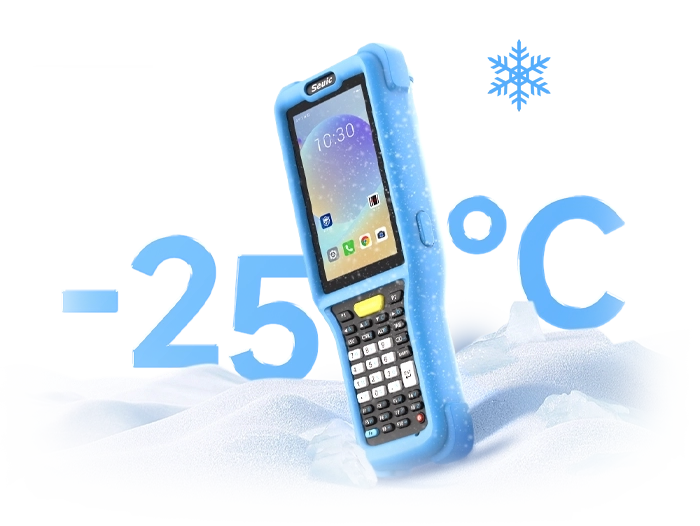
In environments thick with oil, metal dust, and cutting fluid, the AUTOID 10 features IP67 dust/water ingress protection, passes 2-meter concrete drop tests, and has undergone over 60 rigorous CNAS lab tests (salt spray, high/low temperature, vibration, etc.) plus MIL-STD-810G military standard certification.
The 4.0-inch high-brightness IPS display (400 nits, sunlight-readable) supports wet-finger and thick-glove operation. Workers wearing heavy protective gloves can tap accurately — no need to remove gloves and risk injury.
2.5 Full Performance + Extended Battery Life — Runs Double Shifts Without Charging
Qualcomm octa-core 2.0GHz processor (11nm process, 70% performance improvement over previous gen) + Adreno 610 GPU (110% graphics performance boost) + 1.15 TOPS AI computing power. Runs Android 14 (with upgrade path), 4GB LPDDR4 + 64GB UFS 2.1 high-speed storage. Five simultaneous apps respond 30% faster — large MES software loads without lag.
With Wi-Fi 6 Ready (2-3x network capacity utilization, latency as low as 3-4ms in complex environments) + Bluetooth 5.1 + Global 4G LTE + GPS/BeiDou/GLONASS/Galileo quad-mode positioning, data transmission stays stable and connected.
The 5360mAh removable battery with hot-swap technology (built-in 50mAh backup battery — swap batteries without shutting down or losing data) combined with AI power-saving technology delivers over 25% energy savings, supporting up to 16 hours of continuous operation — covering double or even triple shifts without mid-shift charging.
2.6 Full Battery Lifecycle Protection — Longer Life, Lower Costs
Full battery lifecycle monitoring + smart charge management (supports 18W fast charging) prevents overcharge, over-discharge, and overheating. The battery compartment features an auto-lock mechanism to keep the battery secure even under extreme drops or rolling conditions. The device weighs just 268g with an ergonomic golden-ratio design — comfortable one-handed operation. Backed by a 5+ year lifecycle commitment, it directly lowers total cost of ownership.
3. Real-World Deployment: 5 Ways the AUTOID 10 Works in Forging Workshops
Production Reporting: Scan work order codes to select processes, enter completion/pass/fail counts, and report to MES in real time.
What it solves: Batch-level reporting goes real-time — no more post-shift manual data entry.
Work-in-Progress Tracking: Scan batch codes or routing card codes on semi-finished parts to record movement paths.
What it solves: Builds a batch-level traceability chain — meeting IATF 16949 requirements.
Raw Material Management: Scan incoming materials for putaway and bin location binding; scan material codes at feeding to prevent errors.
What it solves: Error-proof material feeding — eliminates wrong or mixed materials.
Equipment Inspection: Scan equipment/die codes for step-by-step checks with photo documentation; automatic die life alerts.
What it solves: Digitized inspections with automated overdue reminders.
Finished Goods Putaway & Shipping: Bind finished goods to bin locations; scan serial numbers at shipping to tie to customer orders.
What it solves: Closed-loop traceability through to shipment — delivery backed by documented proof.
For forging workshops, the AUTOID 10's value goes beyond "it can read the codes." It turns automotive-grade full-chain traceability from a buzzword into reality: every batch of forged parts — from exiting the furnace, through heat treatment, machining, inspection, to shipping — is tracked via DPM codes reported to MES in real time. The result is an unbreakable, tamper-proof batch traceability chain.
4. Bonus: It Also Excels in Electronics Manufacturing
Beyond automotive parts, the AUTOID 10 performs equally well in electronics manufacturing. The pain points in electronics factories are similar yet distinct:
PCBs and chips use varied marking methods — often encountering low-contrast codes, yin-yang codes, and hole-background codes
Station takt times are measured in seconds — any scanning delay holds up the line
ESD-safe and cleanroom environments, occasionally exposed to liquid splashes
Traceability requirements go down to the serial number level — every product must be trackable
How the AUTOID 10 works in electronics manufacturing:
Station data capture: SN + process + operator + timestamp transmitted directly to MES
Error-proof material feeding: Scan material code + station code against BOM
Material inventory: Scan reel labels to update ERP in real time
Finished goods putaway/shipping: Box code + bin location binding, shipping photo documentation
Equipment inspection: NFC tap or scan equipment code + photo
AI-powered scanning (2-3x decoding improvement) + AI + OCR (2x recognition speed) keeps pace with sub-second station cycles. The 13MP autofocus camera with LED flash handles PCB quality inspection photos and cleanroom documentation. One terminal — two major manufacturing sectors covered.
5. Managing Hundreds of Devices? Seuic EMM Has You Covered
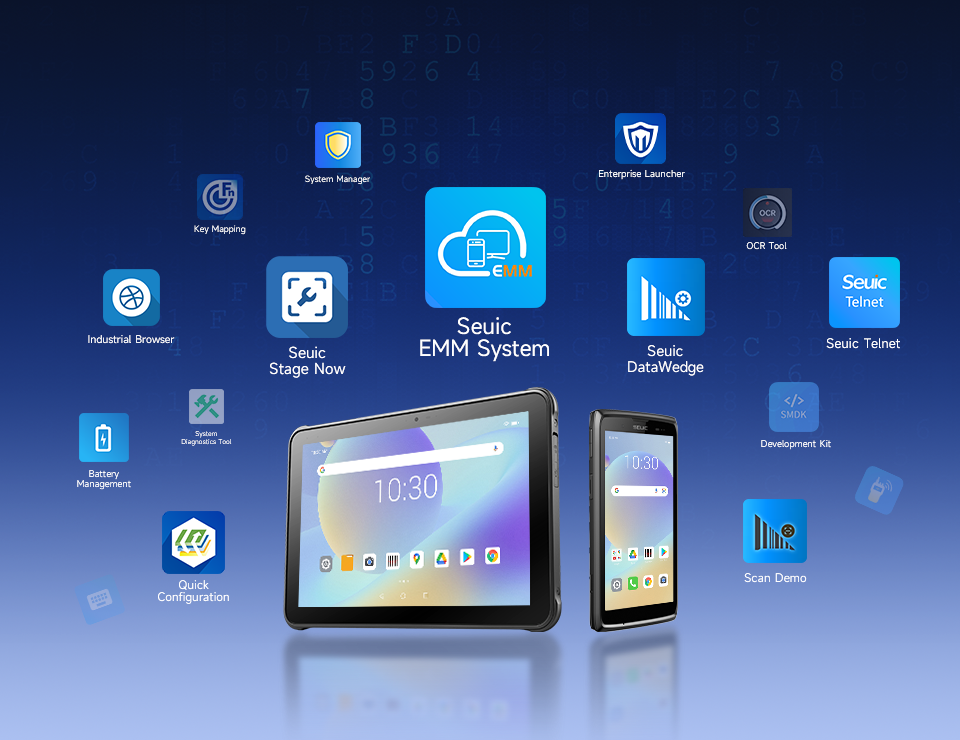
For large-scale deployments, the AUTOID 10 integrates with Seuic's EMM (Enterprise Mobility Management) solution — combining MDM + MAM + MCM in one platform. Bulk deployment, status monitoring, configuration push, role-based permissions, geofencing, remote diagnostics, and data wipe — all included. New device provisioning, entertainment controls, asset anti-theft, and remote troubleshooting are handled in one place. Cut management costs in half while doubling operational efficiency.
6. FAQ
Q: Can the AUTOID 10 really read DPM codes covered in oil or with heavy reflection?
A: Yes. The AI-powered next-gen scanning technology is purpose-optimized for oily, worn, and reflective metal surfaces. Decoding performance improves 2-3x, easily handling high-density, low-contrast, reflective, and metal DPM codes.
Q: Can operators wear heavy work gloves while using it?
A: Yes. The 4.0-inch IPS display supports wet-finger and thick-glove operation, designed for heavily protected environments like forging and machining shops.
Q: Does it meet IATF 16949 automotive-grade traceability requirements?
A: Yes. Batch/shift-level reporting combined with serial-number traceability creates a closed-loop chain from raw materials through to finished goods shipment.
Q: Can the same device work in both automotive and electronics workshops?
A: Absolutely. With IP67 + 2m drop resistance + over 60 CNAS rigorous tests + MIL-STD-810G military standard certification, it adapts to oily, dusty, cleanroom, and ESD-safe environments — one terminal, two major scenarios.
Founded in 2002, Seuic Technologies Co., Ltd. is committed to mastering core technologies, continuously improving innovation capabilities, and delivering outstanding branded products including mobile computers, RFID readers, tablets, barcode scanners, and fixed-mount readers. With highly reliable products and efficient service, our solutions are widely applied across manufacturing, retail, logistics, healthcare, and more. We provide frontline workers with more durable real-time data collection tools, helping you improve operational efficiency and take productivity to new heights.
Related News
-
Portable Barcode Scanner for High-Rack Warehouses
Product Updates | 2026.09.20Learn More
-
RFID Tracking System Buying Guide: 10 Must-Evaluate Selection Factors
Product Updates | 2026.09.18Learn More
-
RFID Tracking vs Barcode: The Ultimate Asset Tracking Selection Guide
Product Updates | 2026.09.18Learn More
-
RFID Tracking in Supply Chain: An End-to-End Visibility Solution from Factory to Customer
Product Updates | 2026.09.15Learn More