






DPM Scanner vs Ordinary Scanner: Why Reading Codes on Metal Curved Surfaces Fails
Here's the most counterintuitive moment on a production line: a QR code printed on a paper label — any ordinary scanner reads it instantly. But laser-etch that same code directly onto an aluminum housing, a steel part, a cylindrical battery cell, or a phone mid-frame, and the same scanner starts hunting for focus, flashing white, and dropping reads.
The problem isn't that the scanner is cheap. It's that the entire optical and decoding architecture of an ordinary 2D imager was never designed for Direct Part Marking (DPM). Understanding this mismatch is the key to knowing when you need a dedicated DPM device.
1. Four Physical Reasons Why Ordinary 2D Imagers Fail
Mirror Reflection Wipes Out the Code Points
An ordinary imager uses a single-direction illumination source, assuming the code surface is matte paper. A polished metal surface reflects that light directly back into the lens like a mirror, creating a bright overexposed patch that washes out the laser-etched pits. The code is still there — but the image contains no extractable edges.
Curved Surfaces Cause Geometric Distortion and Focal Plane Failure
A Data Matrix code on a cylinder, an arc, or a stamped part is not a flat grid. One side of the code stretches, the other compresses. Perspective distortion throws off module spacing. A standard decoder, expecting a planar orthogonal grid, performs global threshold segmentation — and the edges simply collapse.
Low Contrast Exceeds Threshold Capabilities
DPM codes are often the same color as the base material — anodized gray, steel gray, aluminum gray. The grayscale difference may be only 5 to 10 levels. Ordinary devices have limited dynamic range. After global binarization, the code and background blend together. It's not that the image is "blurry" — it's that the threshold layer itself cannot separate them.
Surface Texture Noise Masquerades as Code Structure
Machining marks, grinding lines, dot-peen shadows, and cutting fluid residue generate numerous false edges in the image. Traditional algorithms lack the ability to distinguish background texture from code structure. When milling marks are mistaken for code lines, decoding naturally fails.
2. What DPM Scanners Changed: Not "Higher Resolution" — A Complete Imaging Chain Redesign
A DPM device doesn't just boost the resolution of an ordinary scanner. It rebuilds the imaging chain at three levels:
Illumination engineering: Uses multi-wavelength (red/blue/white), multi-angle, diffuse dome lighting, dark-field low-angle light, and polarizing filters to turn "reflection" from an uncontrollable variable into a controllable one — separating pit shadows from bright metal surfaces.
Optical distortion compensation: Employs deep-depth-of-field lenses plus surface correction algorithms that map stretched cylindrical code points back to a standard grid before decoding.
Algorithm upgrade from thresholding to understanding: AI/deep learning models perform surface denoising, distortion restoration, and missing code point inference before decoding — reconstructing blurred, oily, and dot-peen damaged codes structurally.
When selecting equipment by use case, the logic is:
Manual spot checks, repair stations, incoming inspection → Handheld DPM scanner
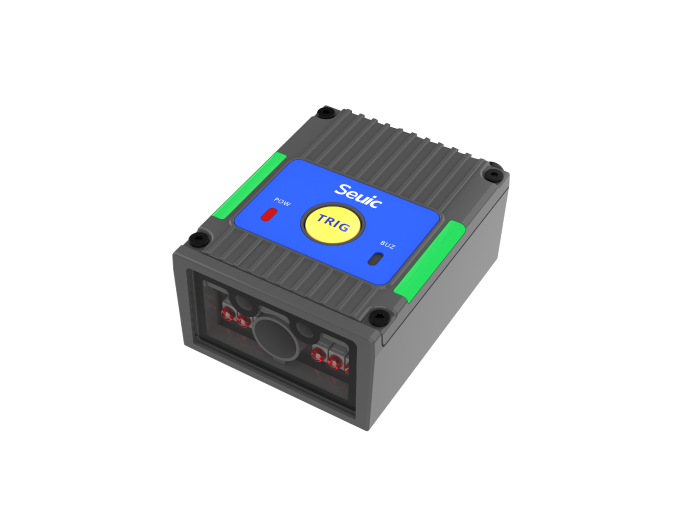
Fixed stations, high-speed lines, automatic traceability binding → Fixed-mount DPM vision code reader
Mixed label codes and DPM codes → Ordinary PDA handles labels, DPM device handles part marks — no compromise
3. Selection Boundaries and PoC Hard Metrics
Don't choose by price. Draw boundaries using these criteria first:
Code process: Laser engraving / dot peening / chemical etching / inkjet? Dot-peen codes need low-angle dark-field light; laser-engraved curved codes need blue light + distortion compensation.
Material and curvature: Flat aluminum plates, mirror-polished stainless steel, φ20mm cylindrical cells — each requires a completely different optical approach.
Code density and distance: A 2.0mil microcode versus a 10mil code demands vastly different lens resolution and working distance.
Line cycle time: Static handheld can tolerate 200ms; a 3m/s production line requires a fixed-mount reader with global shutter and trigger synchronization.
Five must-test metrics in a PoC:
First-pass read rate (target ≥ 99%)
Stability under different lighting conditions and across shifts
Angular tolerance for curved surfaces (straight-on vs. angled)
Read rate on samples with oil contamination or light wear
Changeover tuning time (traditional parameter adjustment vs. AI self-adaptation)
Buying equipment without testing real samples is the most common pitfall in DPM projects. Always run a validation test with 20–50 actual defect samples first.
4. Scenario-Based Recommendations: From "Can't Read" to "Instant Read"
Going back to those pain points — reflective aluminum battery cells, dot-peen automotive parts, curved micro-codes on 3C mid-frames, high-speed line passages — when an ordinary imager's first-pass read rate stalls at 60–80% in a PoC, it's time to bring in dedicated DPM equipment.
4.1 Handheld Scenarios: Manual Stations, Incoming Inspection, After-Sales Repair
Suitable for: Warehouse spot checks, equipment maintenance, supplier incoming inspection, non-fixed workstations.
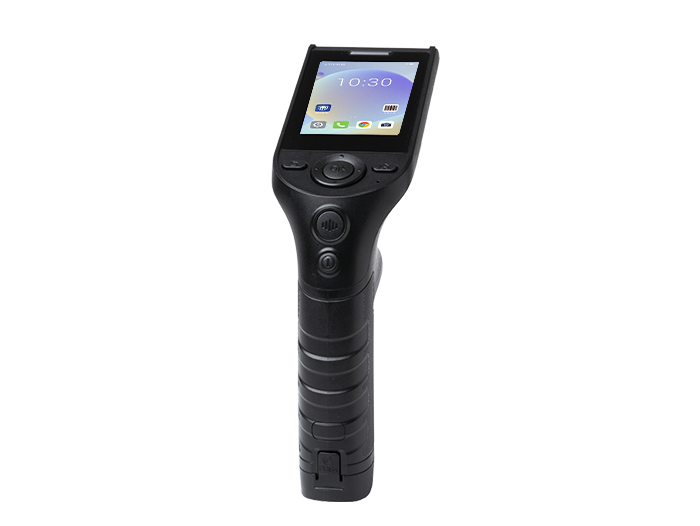
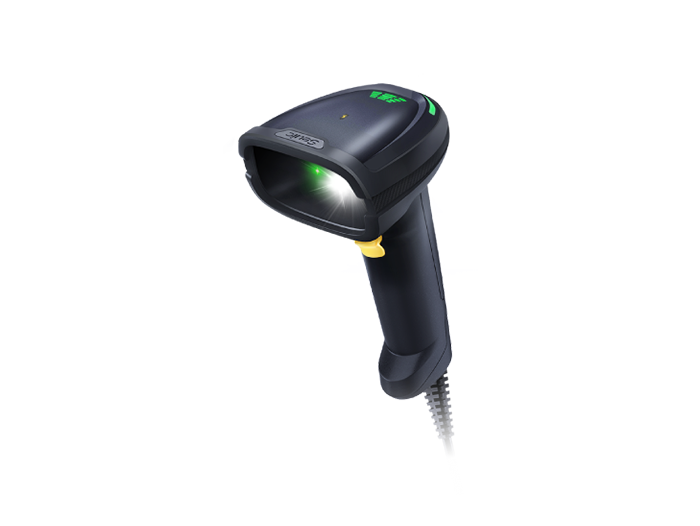
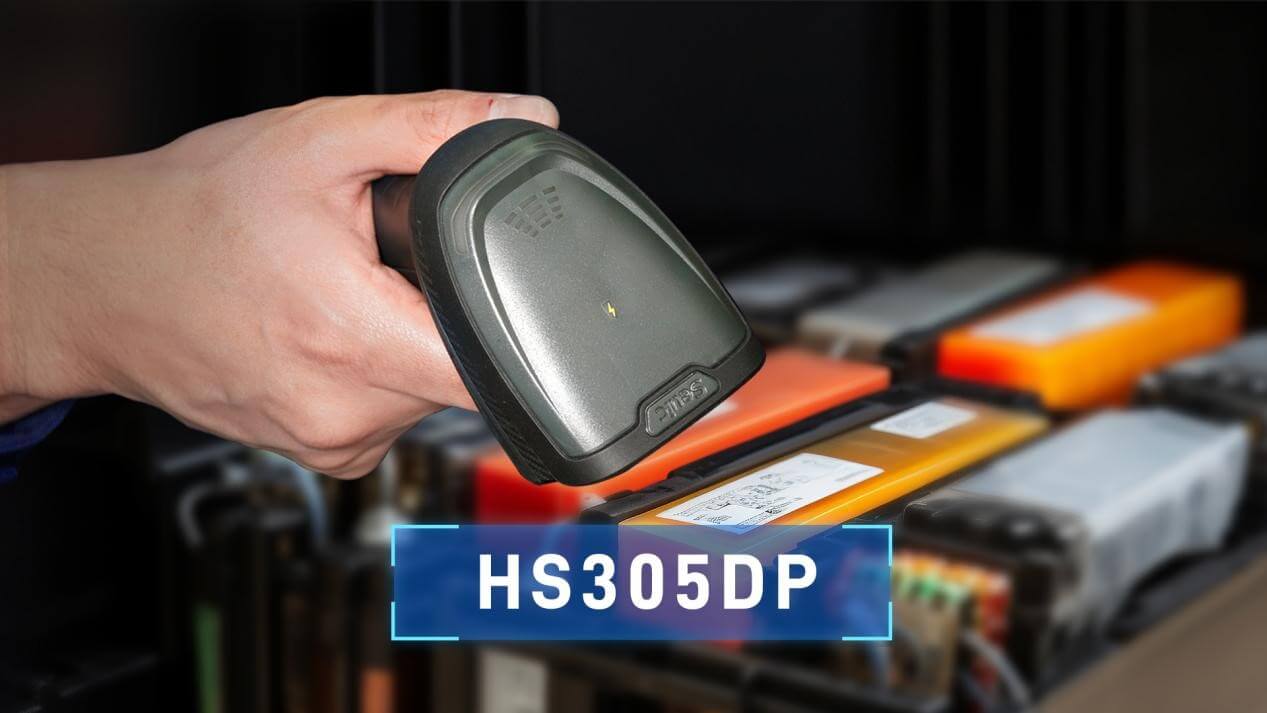
These scenarios need a device that "any operator can pick up and read" — no light adjustment, no parameter setup. The SEUIC HS305DP wired AI DPM scanner is designed for exactly this:
AI distortion restoration: Dual-core processor runs a deep learning model that geometrically restores curved, dot-peen damaged, and oil-obscured codes before decoding — no need to repeatedly adjust the angle.
Red/blue/white tri-color smart illumination: Blue light suppresses metal curved surface reflections; red light enhances dark backgrounds; white light captures dot-peen details. Automatically adapts to different materials, eliminating mirror glare.
Millisecond response and industrial ergonomics: Designed for tiny high-density DPM codes. Plug-and-play, ideal for lithium battery, automotive parts, and 3C electronics production line spot checks. Achieves a 99.99% first-pass read rate.
4.2 Fixed-Mount Scenarios: Automated Line Passage, Full Traceability
Suitable for: PACK lines, welding stations, PCB pass-through, high-speed food packaging lines.
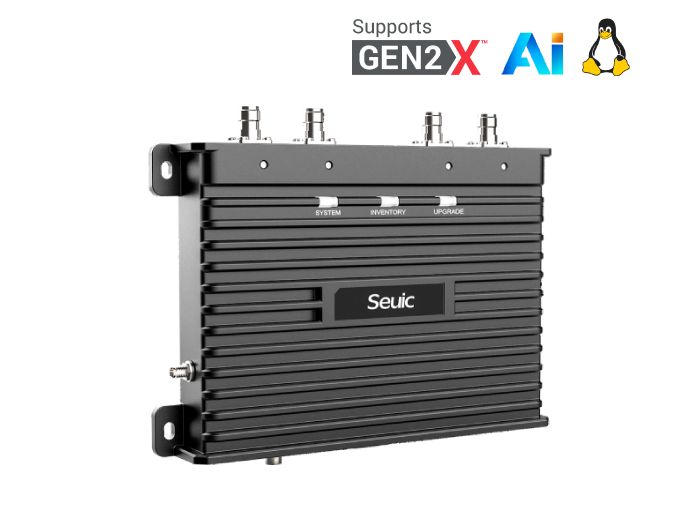
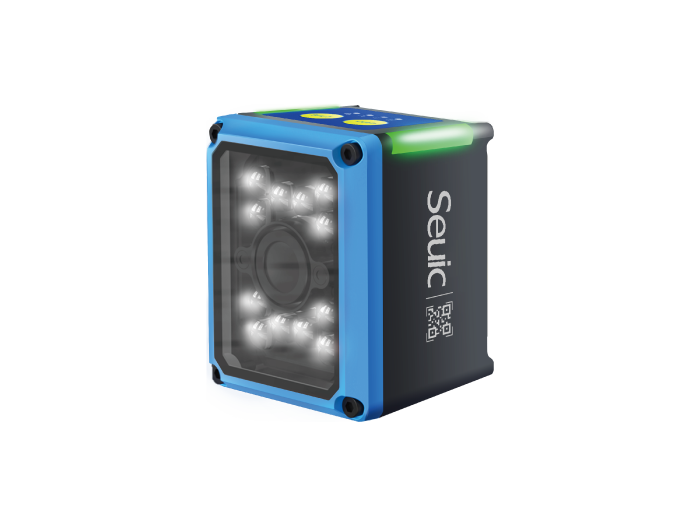
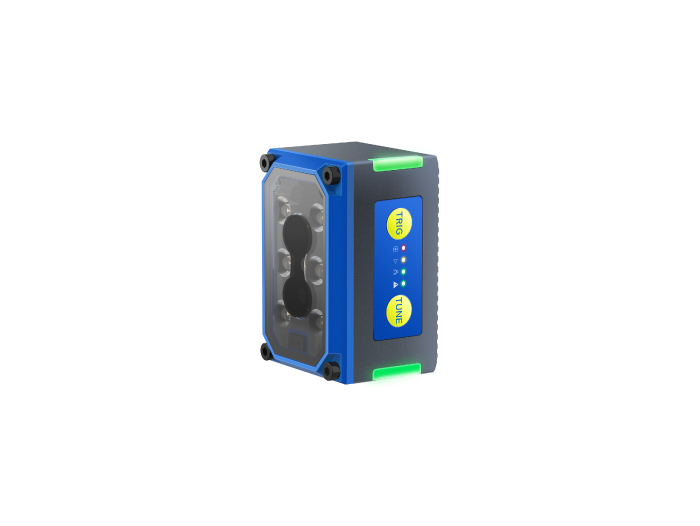
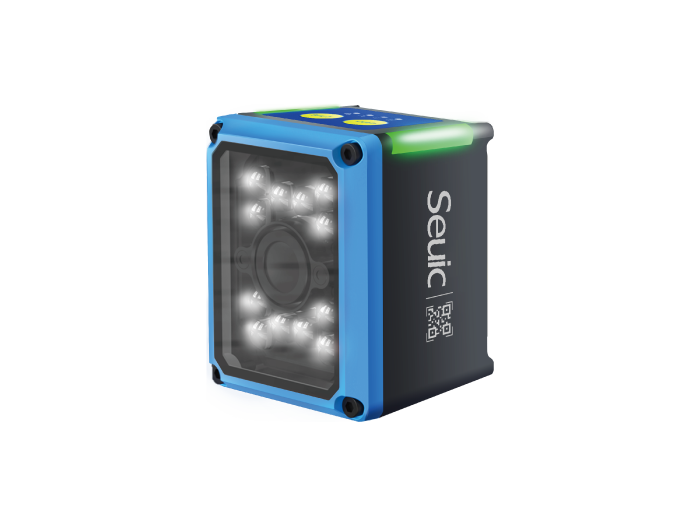
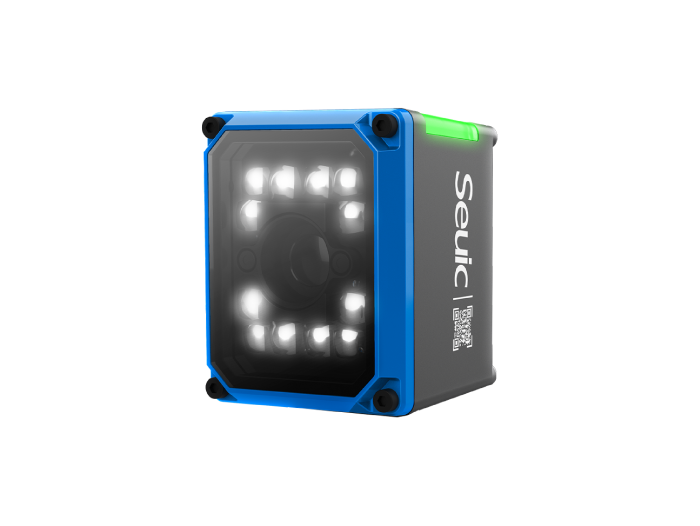
These scenarios need a device that "runs without human intervention, never stops the line, and handles fast changeovers." The SEUIC X4 AI fixed-mount vision code reader is a strong reference:
Auto-tuning in 1 second: The next-generation AI chip automatically senses light, distance, and code quality on power-up — compressing the traditional "focus → exposure → select symbology → tune image" workflow into two steps: power on, read.
Strong tolerance for poor-quality codes: Blurred, uneven, low-contrast, and jittery laser-engraved codes are handled by the AI decoding engine through structural reconstruction — not brute-force brightness boosting.
Production line integration and high-speed throughput: Supports industrial protocols, global shutter, dynamic reading, and IP67 protection. Embeds directly into roller conveyors and belt lines, turning "scanning" into an invisible process step.
Remember this rule when selecting equipment: handheld solves "flexible reading"; fixed-mount solves "stable reading." Both coexist in a smart factory.
Ordinary 2D imagers aren't bad — they're misapplied. They serve printed labels, not metal part marks. Curved surfaces, reflections, low contrast, and surface noise — any one of these can tank the first-pass read rate. When all four stack up, you need a DPM approach: controlled lighting, distortion compensation, and AI decoding.
Test samples first, then divide the workload between handheld and fixed-mount devices. That's how you keep the traceability chain from breaking on the factory floor.
Working on production line traceability upgrades? Contact SEUIC to request a free demo unit for testing.
Related News
-
Handheld DPM Scanner vs Fixed Barcode Reader: Production Line Guide
Product Updates | 2026.11.17Learn More
-

Rugged Mobile Computer for Field Service: Selection & Deployment Guide
Product Updates | 2026.11.17Learn More
-

MES Workstation Data Capture: Industrial Handheld PDA Selection & Deployment Guide
Product Updates | 2026.11.17Learn More
-

Swappable Battery PDA: SEUIC AUTOID Q9 Pro Sortation Power Solution
Product Updates | 2026.11.17Learn More