











EV Battery DPM Reader: Five Hard Capabilities for Cell Shell Selection Guide
In electric vehicle battery manufacturing, traceability isn't a back-office reporting requirement — it's a safety system. From the moment a cell enters the production line, its identity must be accurately captured to support subsequent module assembly, laser welding, BMS pairing, end-of-line testing, and full pack certification. A single missed read can sever the lineage between a batch of cells and the finished pack, turning a routine warranty claim into weeks of investigation.
That identity is usually stored as a Direct Part Mark (DPM) — a Data Matrix or QR code directly etched onto the aluminum shell, steel can, or electrode tab. It won't peel off or fade like a label, but if the reader isn't purpose-built for it, it can be nearly impossible to read. This article starts from real production scenarios, breaks down why DPM codes on cell shells are so difficult to read, specifies the five core capabilities you must look for in a reader, and provides a practical workstation deployment strategy along with a PoC verification checklist.

1. Why Are DPM Codes on Cell Shells So Hard to Read?
A DPM code isn't a sticker — it's a physical modification of the surface, and every step of battery manufacturing works against clear imaging.
Metal reflection drowns the code area
Aluminum and steel shells act like mirrors under certain lighting. The laser-etched mark sits only a few gray levels above the surrounding metal. Ordinary diffuse illumination produces glare that washes out the quiet zone and module boundaries.
Curved and cylindrical surfaces distort geometry
Prismatic cells have edges and chamfers; cylindrical cells wrap the code around an arc. The same Data Matrix that decodes effortlessly on a flat surface gets stretched, compressed, and skewed on a real cell. Traditional planar assumption decoders fail at the edges.
Dot peen marks have depth — and noise
Pneumatic dot peening creates real tactile pits with good wear resistance, but depth varies with material hardness, anodized layer thickness, and marking pressure. On aluminum, dots may be shallow; on harder alloys, they may break the coating. The result is an inconsistent, low-contrast matrix.
Laser parameters produce insufficient contrast
Laser mark quality depends entirely on the engraving process. Small deviations in pulse energy, frequency, and fill pattern blur the code edges. Combined with batch-to-batch variations in surface treatment, a code that worked last week may fail this week.
Process contaminants
Electrolyte residue, anti-oxidation oil, fingerprints, and dry-room dust further reduce contrast. By the time the cell reaches the Pack line, the code may be partially obscured.
High speed and vibration
Modern lines transport cells at speeds above 1 m/s, paired with encoder positioning and mechanical vibration. Any motion blur or trigger timing error causes permanent data loss.
In practice, low read rates are rarely because "the reader is bad" — they stem from a mismatch between mark quality, optical configuration, and decoding intelligence.
2. Five Hard Capabilities an Industrial DPM Reader Must Have
Choosing an EV battery DPM reader isn't about the highest pixel count — it's about whether it can recover a valid signal from a poor-quality image. All five of the following are essential:
2.1 Multi-Spectrum Controllable Illumination
A single red LED is not enough. Reflective aluminum shells need short-wavelength blue light to suppress specular glare; dark or anodized surfaces need red or white light for penetration. The ideal reader adaptively switches illumination based on material and substrate color, preferably with polarized or dark-field oblique lighting to separate mark edges from mirror reflections.
2.2 High-Resolution Global Shutter Imaging
A global shutter captures the entire frame at once, eliminating motion distortion when cells pass at high speed. For dense Data Matrix codes below 2 mil, a 1.3 MP to 2 MP sensor with a dedicated DPM lens is the practical baseline. Higher-density codes may require a macro lens option.
2.3 AI-Based Decoding, Not Pure Pattern Matching
Traditional algorithms expect clean geometry. EV battery codes are rarely clean. An AI decoder trained on distorted, low-contrast, and partially damaged samples can reconstruct missing modules, correct curvature, and tolerate contrast differences of 5–10 gray levels. This is the single most effective lever for improving first-pass read rate.
2.4 Geometric Distortion Correction
Curved shells require real-time perspective and barrel distortion compensation. The reader must detect the code boundary, flatten it, and then decode — without operator intervention.
2.5 Industrial Ruggedness and Data Integrity
Dry rooms, electrolyte mist, electrostatic discharge, vibration, and 24/7 continuous operation demand IP-rated protection, wide temperature tolerance, ESD safeguards, and local caching with retry logic. When the network drops, scan events must not be lost.
A reader that possesses all five of these capabilities is the difference between "it reads in the demo" and "it consistently hits 99.9% on Line 3 at 2 AM."
3. Deploy by Workstation: Fixed-Mount Primary, Handheld Backup
A mature EV battery traceability layout is layered: the main flow is automated, and exceptions are handled precisely by human operators.
Incoming cell inspection and tray scanning
A fixed-mount reader is installed above the conveyor or at the tray positioning station, triggered by an encoder or sensor, capturing each cell individually. Trays reduce cycle time and eliminate manual entry.
Cell-to-module binding
When cells are loaded into fixtures, a fixed camera confirms orientation, polarity, and reads the code before welding. If the code is unreadable, the station rejects the cell — no gap flows downstream.
Laser welding and busbar stations
Codes near weld spatter and insulation rings are prone to partial occlusion. Compact fixed-mount readers can be embedded in tight spaces next to the welding head.
Module-to-pack association
Fixed-mount readers handle the moving line; handheld devices take over for rescans when modules are repositioned or shaded by brackets.
Rework, QA sampling, and warehouse
This is the domain of the handheld DPM scanner — flexible, mobile, able to reach angles that fixed optics cannot.
Architecture principle: Fixed readers control the line rhythm; handheld readers control exceptions. A mature line uses "fixed primary + handheld backup," not one or the other.
4. Selection and PoC Verification Checklist (Must-Do Before Purchasing)
Before finalizing a model, conduct structured validation. Bring real samples, not perfect ones.
Sample collection: Collect at least three batches of cells, including worst-case scenarios (low contrast, edge curvature, formation residue).
Marking process audit: Verify laser/dot peen parameters against ISO/IEC TR 29158 (DPM grading standard). Target Grade B or above — don't blame the reader for Grade C marks.
Surface condition: Test dry, oily, scratched, and blue-film-covered variants separately.
Illumination matrix: Try blue/red/white and polarized configurations for each shell material.
Speed test: Test at full line speed, not static bench speed.
Angle tolerance: Tilt the cell ±20°, offset the code position to simulate fixture drift.
Metrics to record:
First-pass read rate (target ≥ 99.9% for graded codes)
Decode time
Missed read rate under motion
Number of rescans per 1,000 cells
Data loss during simulated network outages
Integration check: PLC trigger, MES handshake, local cache, rejection logic.
Only sign off after the reader consistently achieves the target read rate across multiple batches — not just on the first tray.
5. Recommended Configurations: Two Form Factors for Production Scenarios
Once you've mapped out all workstations, the next step is matching hardware to the failure modes you actually encounter. Two form factors typically cover the full journey from cell to pack.
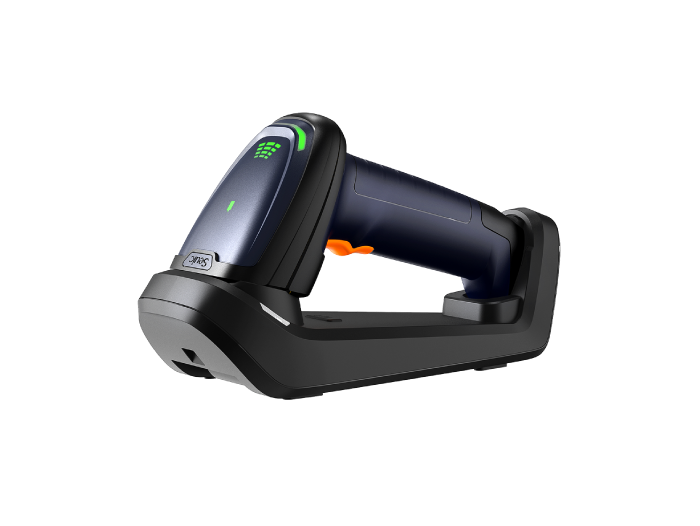
Handheld DPM Backup: When the Line Needs Human Intervention
Some cells will always escape the fixed camera's view — rework units, mis-indexed trays, codes blocked by busbars. At these moments, you need a scanner that an operator can pick up and trust instantly.
What a handheld device needs for this role:
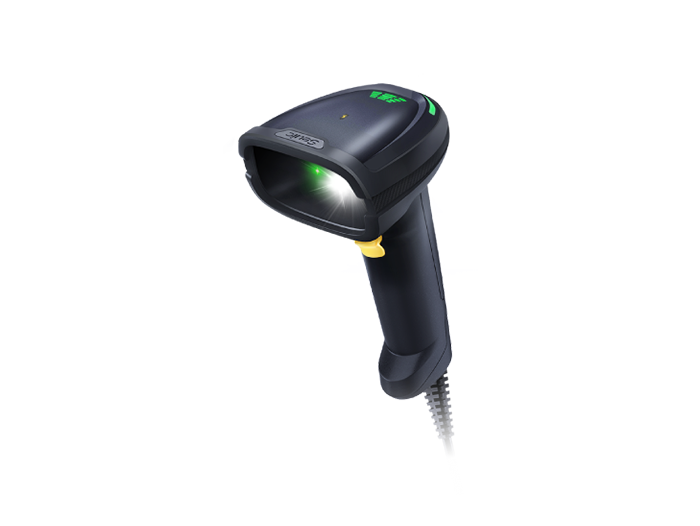
AI decoding for ugly codes — twisted, dot-peened pits, blurred laser edges, low-contrast marks — without repeated parameter adjustments
Adaptive tri-color illumination — blue light cuts aluminum glare, red light penetrates blue film, white light handles neutral surfaces
Rugged and ergonomic — IP-rated, drop-resistant, global shutter sensor, detachable cable for daily shop-floor wear
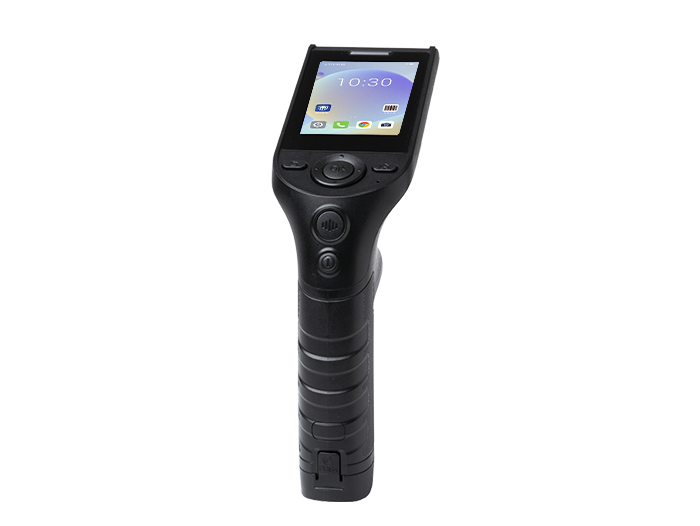
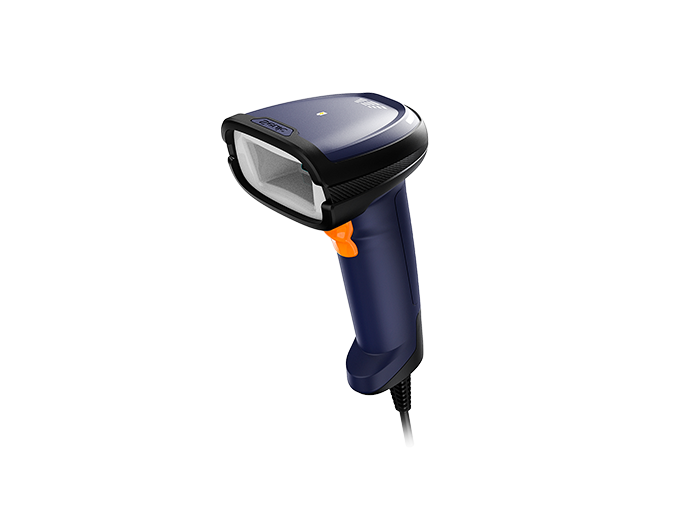
For example, the Seuic HS305DP AI wired DPM scanner is designed around exactly this need: a dual-core processor with AI algorithms, red/blue/white intelligent illumination, delivering stable performance on dot-peened, curved, and laser-marked cell shells. It acts as the "human backup" for the fixed system — fast for manual rescans, operator-friendly, and tolerant of marks that would stump a generic scanner.
Fixed-Mount Reader: When the Line Must Run Autonomously
On automated paths, priorities shift from ergonomics to zero-touch reliability. The reader must power on and work — no engineer recalibration needed every time the material batch changes.
What a fixed-mount reader needs for battery lines:
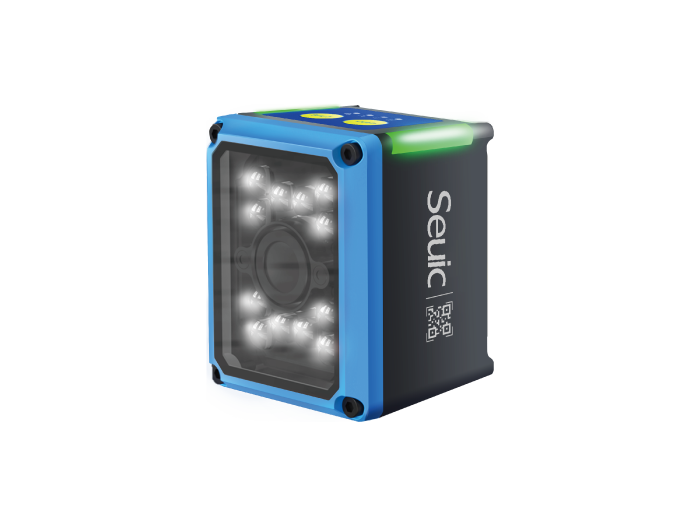
One-click auto-deployment—AI-driven parameter tuning replaces manual focus/exposure/gain steps
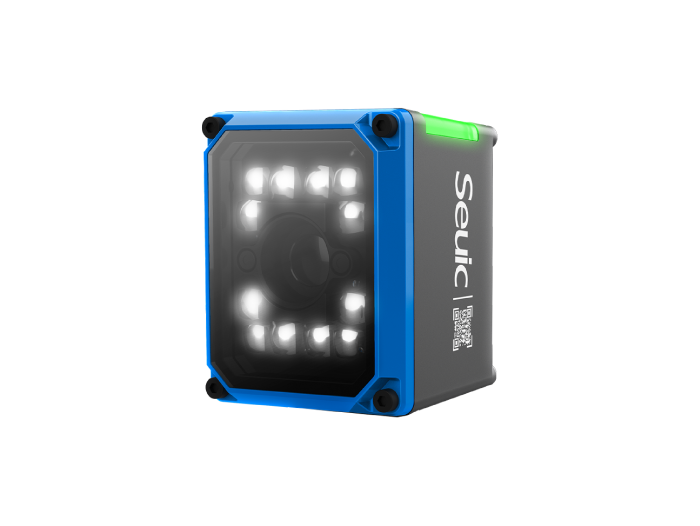
Powerful DPM decoding — handles Data Matrix codes with contrast below 10%, tiny, reflective, and curved
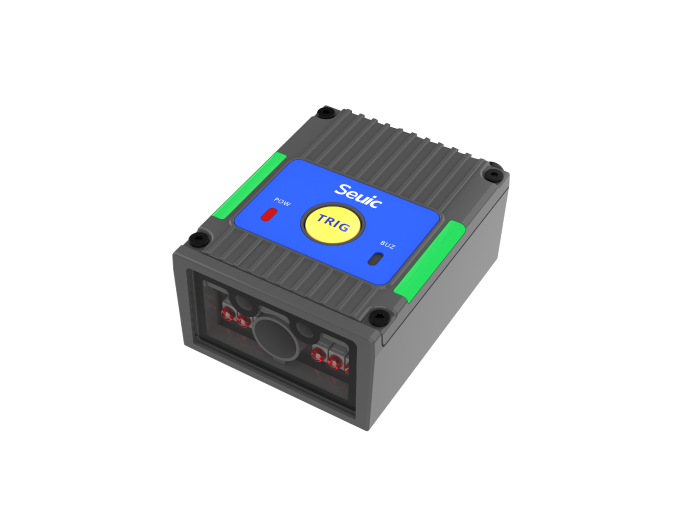
Compact industrial body — IP65/IP67 sealed, suitable for weld-side or fixture-side mounting
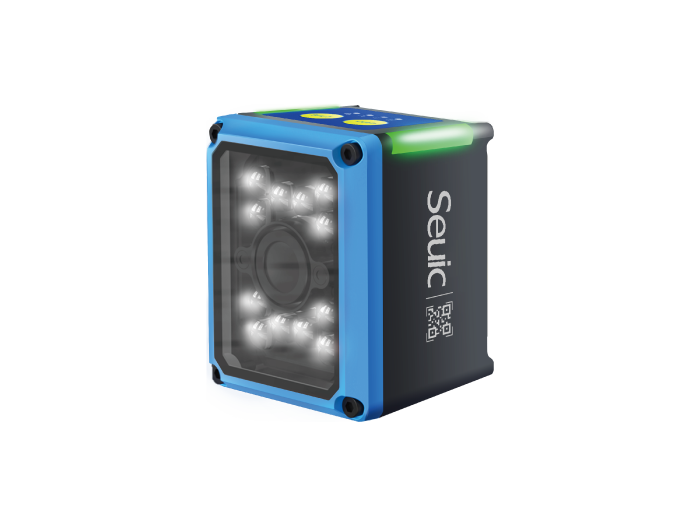
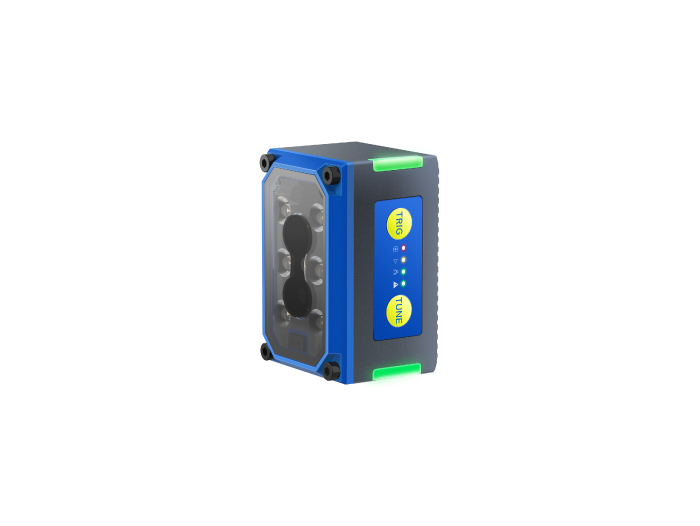
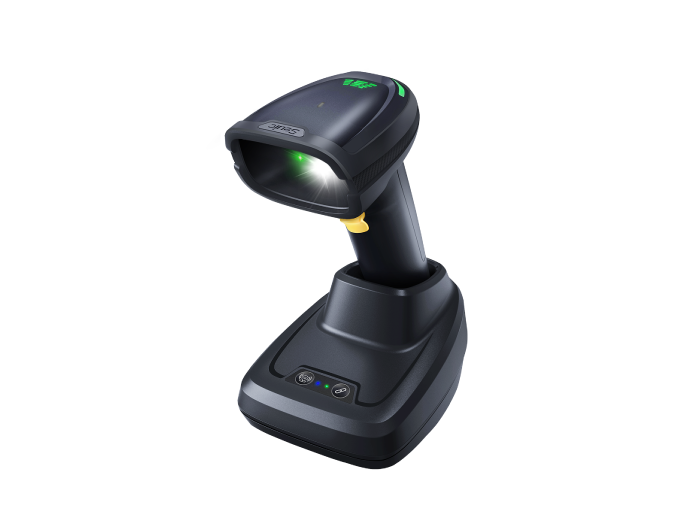
The Seuic X4 AI fixed-mount vision reader fits this role exactly: 1.3 MP global shutter, auto-tuning in about 1 second, intelligent red/blue illumination, and AI decoding optimized for low-quality DPM codes. In lithium battery production, this combination lets fixed stations handle reflective laser marks without frequent re-teaching — shifting the line's attention from reader maintenance to throughput.
The right approach is rarely "use only one type of reader." Instead, deploy fixed-mount readers at every critical station and keep a few handheld DPM scanners at rework, incoming inspection, and QA positions.
Quality problems in EV batteries are seldom because engineers neglected traceability — they happen because the very first link in the traceability chain is a code nobody can read. Dot-peen marks and laser engravings on cell shells are permanent, but only your scanning system can see them through glare, curvature, oil, and high speed.
Get the fundamentals right: control mark quality against DPM grading standards, illuminate the surface with the right light, deploy AI decoding capability, lock down the main line with industrial fixed-mount readers, and handle exceptions with handheld DPM scanners. When you do, the lineage from cell to module to pack stops being a topic for reports — it becomes something the line maintains itself, one clean read after another.
Related News

-

Double Efficiency High-Bay Inventory: Normal vs Ultra-Long Range UHF RFID Handheld
Product Updates | 2026.11.04Learn More
-

India RFID Supplier Selection: Industrial Procurement & Audit Guide
Product Updates | 2026.11.04Learn More
-
RFID Inventory for Beverages & Fresh Food: Handheld Reader Selection Guide
Product Updates | 2026.11.04Learn More
-

RFID Manufacturer Selection: China vs India Sourcing Decision Guide
Product Updates | 2026.11.04Learn More