




Fixed Vision Barcode Reader Selection: 5 Key Points for PCB Lines with the SEUIC X5
On PCB (Printed Circuit Board) production lines, fixed vision barcode readers serve as the core data collection devices for process traceability, quality control, and equipment integration. Unlike handheld scanners, fixed-mount readers are installed at specific positions on the line, automatically and continuously reading barcodes on PCBs passing by at high speed. Choose poorly, and you'll face anything from subpar read rates triggering constant line alarms, to mismatched field of view or incompatible communication protocols requiring a full project rework. This article walks through five key selection criteria for fixed vision barcode readers on PCB lines, mapped to the SEUIC X5 solution.
1. Key Point 1: Field of View — Does It Cover the Entire Board?
PCB boards vary widely in size, from phone motherboards to server backplanes. If your line runs mixed board types, the reader needs the right lens focal length and mounting position to cover the largest board — otherwise you'll be constantly adjusting.
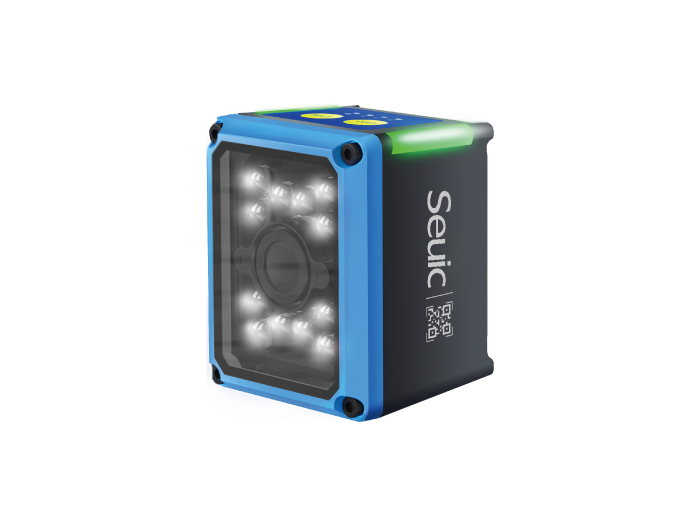
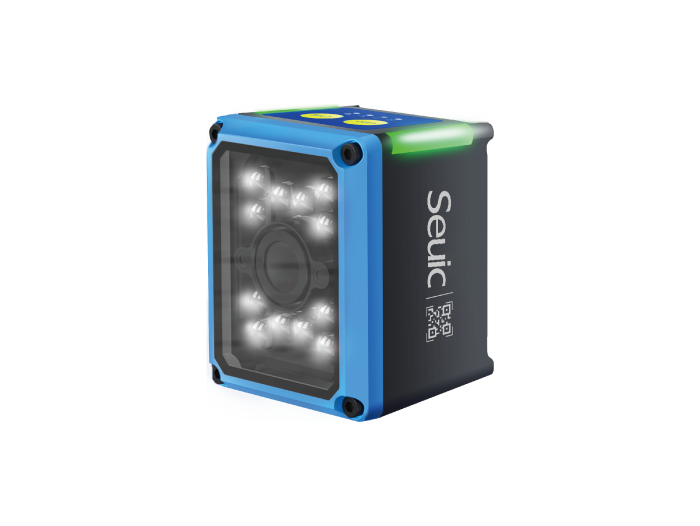
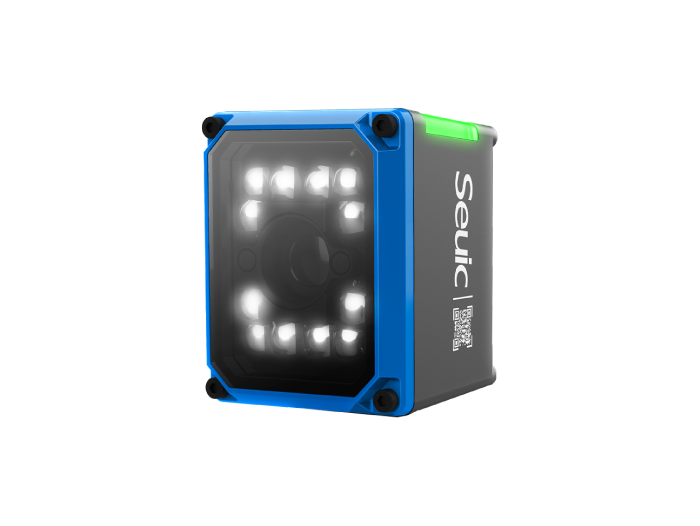
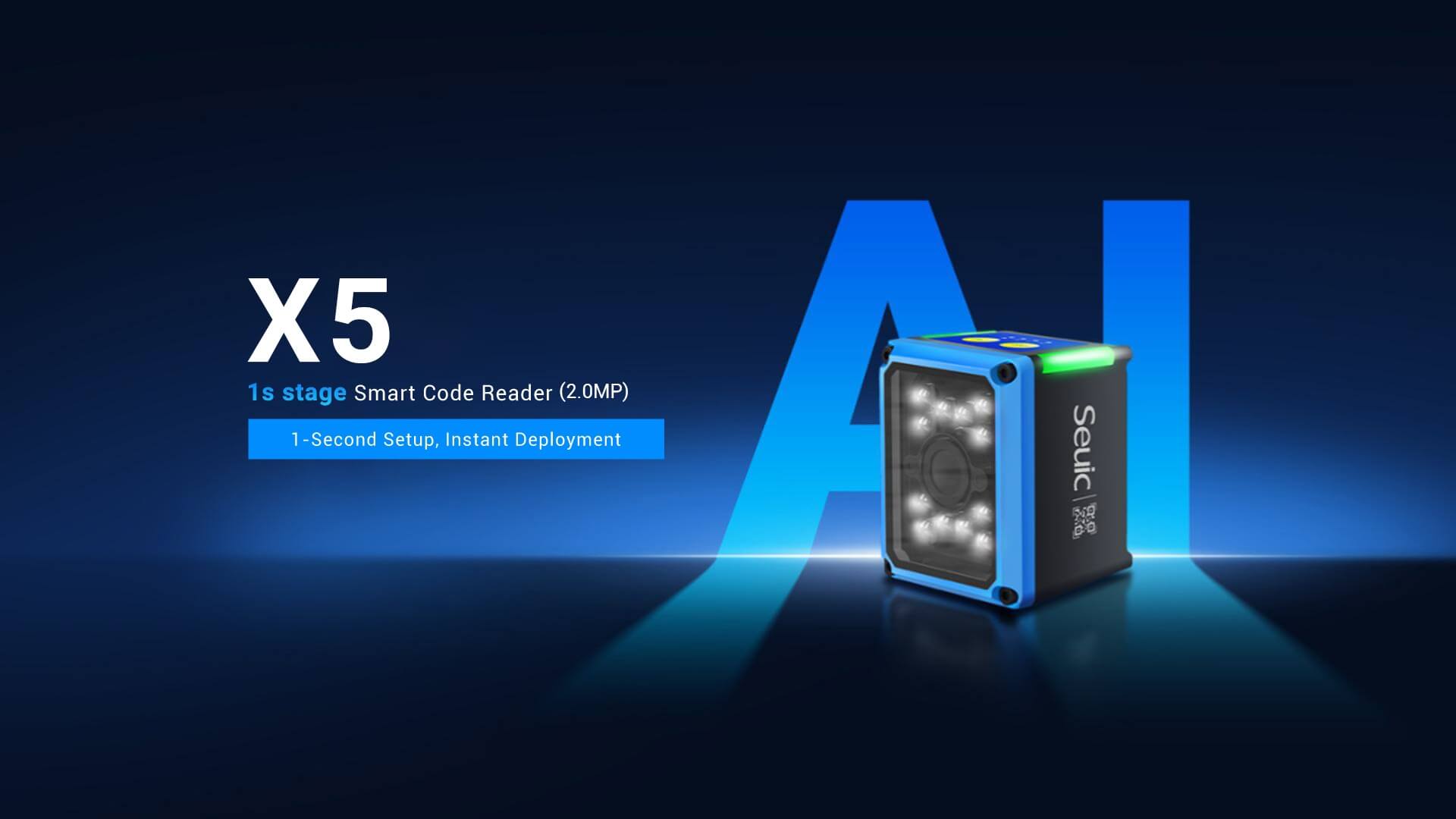
SEUIC X5 Match: The SEUIC X5 fixed vision barcode reader offers multiple lens options. The wide-field-of-view configuration accommodates different PCB sizes. Combined with AI auto-targeting and one-click learning, it minimizes repeat parameter tuning during mixed-production changeovers.
2. Key Point 2: Read Speed — Can It Keep Up with Line Takt?
PCB lines typically run on continuous conveyors. The reader must capture images and decode in milliseconds. If speed falls behind, missed reads occur, compromising traceability integrity.
SEUIC X5 Match: The SEUIC X5 features a 2MP global shutter CMOS sensor and an AI decoding chip. According to PCBA scenario documentation, it supports line speeds up to 3m/s. The global shutter eliminates motion blur from high-speed movement. The X5 triggers reliably at SMT track lines, before and after reflow ovens, and at depaneling stations.
3. Key Point 3: Batch Read Capacity — Can It Handle Multiple Codes Simultaneously?
PCB boards often carry multiple barcodes — edge codes, panel codes, component codes, and more. Traditional single-code readers require multiple triggers, which is inefficient and prone to missed reads.
SEUIC X5 Match: The SEUIC X5 leverages AI algorithms for multi-code localization and parallel decoding. For single-board multi-code and multi-panel scenarios, it captures one image and outputs all codes simultaneously. The X5 is well-suited for workstation-level multi-code reading and SMT loading/unloading/depaneling multi-code collection. When specifying your solution, align the reader's capability with your actual code volume.
4. Key Point 4: Focus and Depth of Field — Can It Adapt to Different Mounting Distances?
Production line installation space is limited. Readers may be mounted close or far from the target. If auto-focus range and depth of field are insufficient, out-of-focus barcodes will blur and fail to decode.
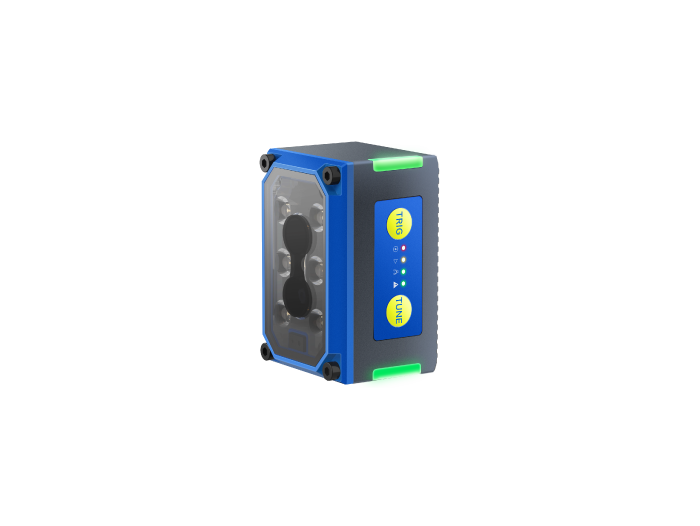
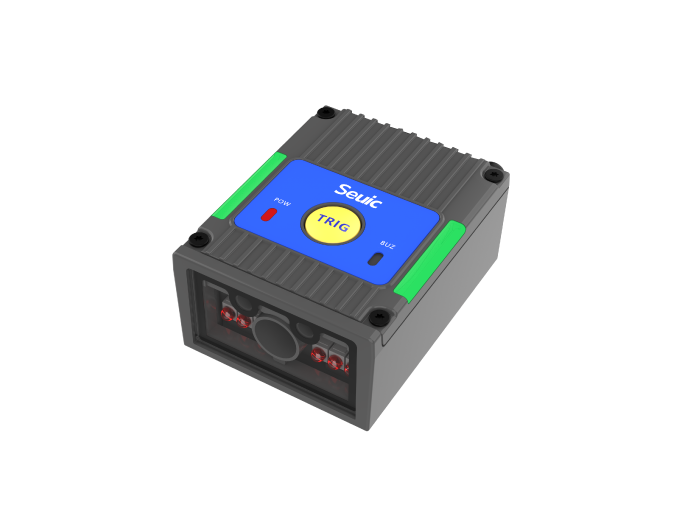
SEUIC X5 Match: The SEUIC X5 supports AI auto-targeting and auto-focus. One-click learning via the onboard button or host software completes field deployment in about 1 second. Standard detection distance is adjustable from approximately 60mm to 2000mm, covering most PCB workstation near-to-mid-range installations. The X5 has good tolerance for vertical and angled mounting, and a semi-polarization option helps reduce reflective blind spots.
5. Key Point 5: Communication and Integration — Seamless MES Connection
Fixed-mount readers must communicate in real time with production line PLCs and MES. Protocol compatibility directly determines deployment time and stability.
SEUIC X5 Match: The SEUIC X5 Ethernet port supports TCP/UDP, TCP Client/Server, FTP, Profinet, MELSEC, EtherNet/IP, ModBus TCP, Fins, and other major industrial protocols. It also provides RS232/RS485 and USB communication. In one automotive joint venture's SMT MES 2.0 project, the X5 replaced a multi-stage transmission setup with multi-channel communication, resolving data latency issues and reducing hardware costs versus overseas brands. On-site wiring uses 10–30VDC power and Ethernet for data transmission.
6. FAQ
Q1: PCB lines run fast. Can the X5 keep up?
A: The X5 is equipped with a global shutter 2MP CMOS sensor and an AI chip. In PCBA scenarios, it supports line speeds up to 3m/s. During selection, leave margin above your maximum line speed and conduct prototype testing.
Q2: My PCB has multiple barcodes. Do I need to trigger for each one?
A: No. The X5 supports AI multi-code localization and parallel decoding. Single-board and multi-panel codes are captured and output in a single image.
Q3: Installation space is tight. Can the X5 be mounted at a distance?
A: Yes. The X5 standard detection distance is approximately 60–2000mm, with auto-focus support.
Q4: Is integrating the X5 with my existing MES/PLC complicated?
A: No. The X5 natively supports Profinet, EtherNet/IP, ModBus TCP, MELSEC, Fins, TCP/UDP, and RS232/RS485, with proven multi-channel communication in SMT MES deployments. Before selection, confirm your PLC brand, barcode trigger method, and data format.
Q5: Can the X5 read laser-etched, low-contrast, reflective, or tiny codes?
A: The X5 is optimized for low-quality codes. It reads blurry, distorted, and low-contrast barcodes, including 0.6mm laser-etched QR codes on LCD screens. PCBA documentation indicates it can also read ultra-small codes under 1mm × 1mm, as well as reflective, stained, and perforated DPM codes. Actual samples should be tested with appropriate lighting and focus settings.
Selecting a fixed vision barcode reader for PCB lines comes down to matching line speed, board-size field of view, code volume, mounting distance, and MES protocol. The SEUIC X5 — with its 2MP global shutter, AI auto-tuning for 1-second deployment, 3m/s high-speed reading, parallel multi-code decoding, low-quality/small-code DPM recognition, and broad industrial protocol support — offers a cost-effective solution for SMT, reflow oven, depaneling, and mixed-flow PCB workstations. When selecting, bring actual sample boards to the site and run read-rate tests at your maximum line speed with your worst-quality codes.
Related News
-
Integrate Portable Barcode Scanners with WMS/ERP/MES — Data, Offline & Device Lifecycle Management
Product Updates | 2026.09.22Learn More
-
Portable Barcode Scanner Buying Guide
Product Updates | 2026.09.22Learn More
-
What Is RFID Meaning? Definition & Common Beginner Misconceptions
Product Updates | 2026.09.21Learn More
-
What Is RFID? A Complete Guide to Radio Frequency Identification: Definition, Working Principle & Applications
Product Updates | 2026.09.21Learn More