




Inventory Supplies Using a Hand-Held Computer: 5 Dimensions to Evaluate Suppliers
When rolling out an "Inventory Supplies Using a Hand-Held Computer" project, many companies focus on screen size, scan speed, and unit price. But what truly determines whether the project runs stably over the long term is rarely the specs of a single device — it's whether the supplier can tie together hardware, software, after-sales support, and lifecycle management. Problems like a factory going live only to find it can't read damaged barcodes, excessive repair turnaround during peak retail season, a hospital pharmacy unable to interface with its traceability system, or a utility unable to source replacement batteries a few years later — these aren't really cases of "buying the wrong machine." They're cases of "choosing the wrong partner."
This article is written for factory managers, production supervisors, QC staff, warehouse keepers, retail and supermarket operators, 3PL and e-commerce fulfillment teams, pharmaceutical warehouses and pharmacies, water/gas/electric meter readers, and government field enforcement personnel. It lays out 5 key dimensions for evaluating hand-held computer suppliers for inventory supplies management, helping you find a partner capable of long-term, stable collaboration.
1. Scenario Fit: Define Your Operating Environment First, Then Talk About Models
A hand-held computer is not a one-size-fits-all product — it's a tool that varies significantly by scenario. Defining your usage profile first gives you a benchmark for evaluating suppliers.
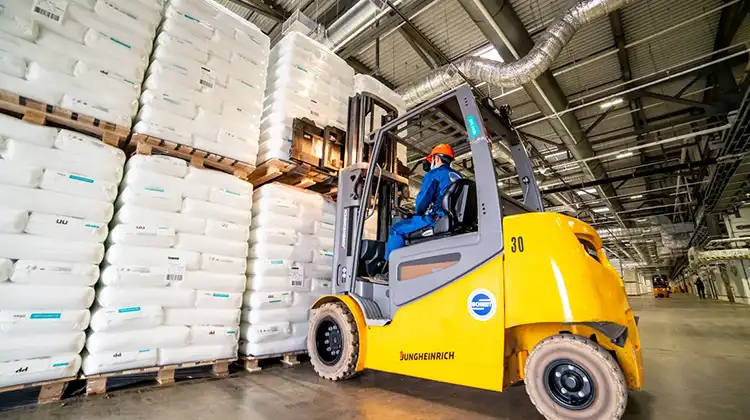
Factory / Production Line / QC: Focus on dust and water resistance near workstations, drop resistance, scan error tolerance, and MES/ERP integration. If metal DPM codes are involved, a dedicated imaging engine is required.
Warehousing / 3PL / E-Commerce Fulfillment: Key priorities are long-range scanning for high racks, Wi-Fi roaming, batch receiving and shipping, hot-swappable batteries, and bidirectional WMS synchronization.
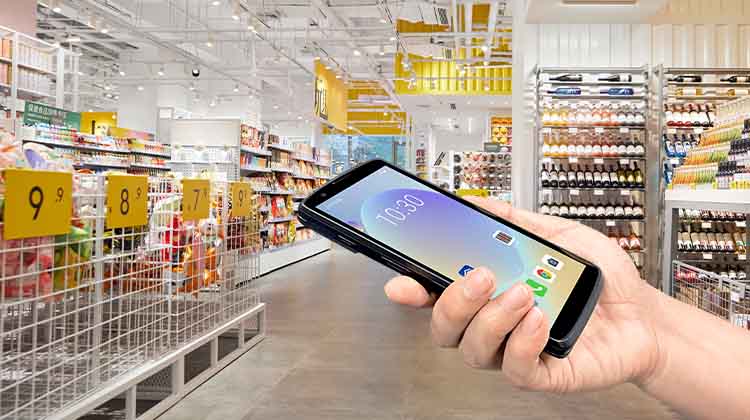
Retail / Supermarket / Apparel: Primary use cases are QR codes, price tag codes, and screen-displayed codes. Lightweight design, battery life, front-end/back-end inventory transfers, and in-store training costs are important considerations.
Pharmaceutical / Hospital / Pharmacy: Beyond drug traceability codes, batch numbers, expiry dates, and specimen label reading, also evaluate disinfectant tolerance of the housing, data privacy, and integration with LIS/HIS/traceability platforms.
Water/Gas/Electric / Public Utilities / Meter Reading / Patrol: Outdoor glare, wide temperature range, GPS positioning, long battery life, encrypted transmission, and asset ledger management are more critical.
Government / Law Enforcement / Field Operations: Evidence retention, permission management, positioning, offline caching, and remote device lock in case of loss are more important than peak scan performance.
When evaluating suppliers, ask them to provide a "recommended model + alternative model + unsuitable model" list based on your specific scenario. A proposal that only offers one flagship model without distinguishing between ambient-temperature warehouses, cold storage, outdoor environments, and clean rooms typically carries higher adaptation risk down the line.
2. Product Quality and Certifications: IP Rating, Drop Resistance, Core Components, Third-Party Reports
Device quality matters. Suppliers should be able to provide verifiable hardware reliability and compliance documents — not just sell you on marketing brochure specs.
2.1 Ingress Protection and Physical Durability
Look at the whole-device IP rating, not just the front panel: IP65 is generally acceptable for warehousing; IP67 is recommended for damp/washdown/outdoor environments; IP68 may be considered for submersion risk or heavy contamination.
Drop testing should specify height, landing surface material, number of faces/corners tested, and repetition count. Common industrial warehouse requirement: 1.2–1.8 meters onto concrete. Heavy-load warehouses may look at 2.4-meter ratings.
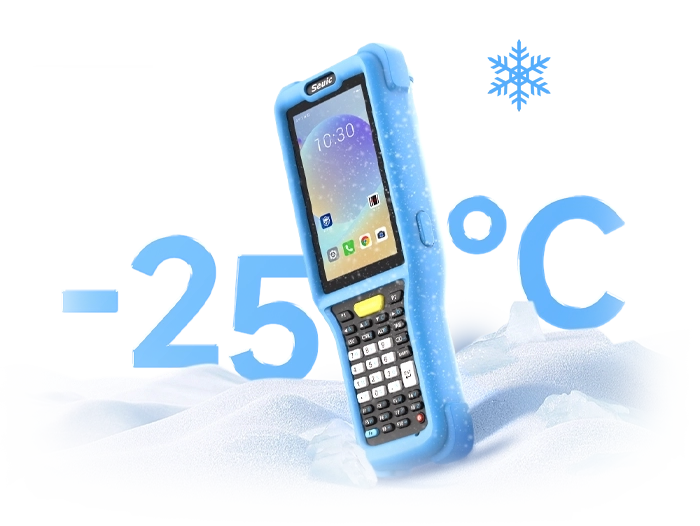
Tumble/roll cycles, operating temperature range, cold storage wide-temperature capability, anti-condensation, glove touch, and sunlight-readable display should all be listed in the technical spec sheet.
For military or special transport requirements, MIL-STD-810 series test documentation can be requested.
2.2 Core Component Traceability
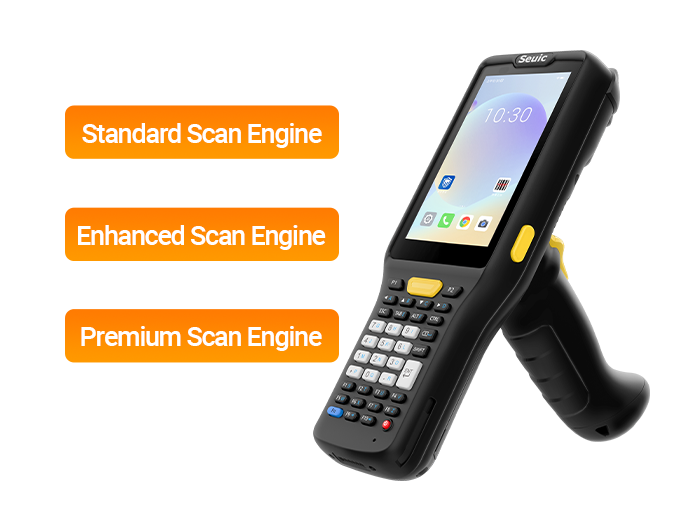
Scan engine: Require the specific model name — 1D/2D imager, laser, long-range, FlexRange, SE series, etc. — not vague claims like "HD scanning." Request sample testing on damaged codes, low-contrast codes, screen-displayed codes, and DPM codes.
Battery: Require stated capacity, cycle life, removability/hot-swap capability, low-temperature performance, and overcharge/overdischarge protection. For double-shift operations, prioritize replaceable batteries + spare packs + multi-slot charging cradles.
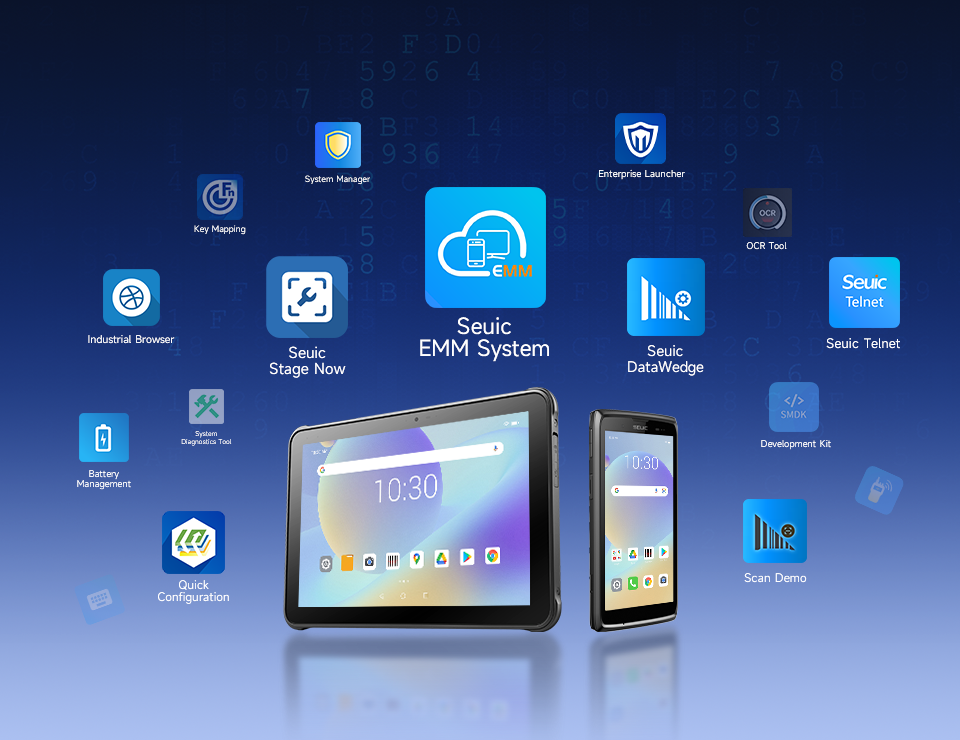
Wireless modules: Warehouses need dual-band Wi-Fi, Wi-Fi 6/6E, and seamless roaming. Field operations need 4G/5G, GPS, Bluetooth, and NFC. For metal-heavy environments, verify antenna and AP coverage in practice.
2.3 Compliance Certifications and Third-Party Reports
At minimum, request and verify:
CE, FCC, RoHS. For medical settings, add biocompatibility/disinfectant tolerance documentation. For exports, supplement certifications per destination country.
For domestic sales in China, verify network access license, model approval, and quality inspection reports. Explosion-proof environments absolutely require Ex certification — do not substitute standard PDAs for gas/petrochemical applications.
Ask suppliers to provide original test report numbers from third-party labs or accredited bodies — not just screenshots from brochures. For large-volume projects, include "reports subject to verification" in bid qualifications.
Practical tip: Create a "hard threshold table." For example: IP ≥ 65, drop ≥ 1.5 meters, scan success rate ≥ 99.5%, continuous operation ≥ 8 hours, third-party IP/drop reports provided. Eliminate any supplier that fails to meet these thresholds — this prevents relationship-based procurement from causing problems later.
3. Technical Support and SDK: Whether It Can Integrate with WMS/ERP Determines Project Feasibility
Buying a hand-held computer for inventory supplies management ultimately delivers value through system closure — not through the hardware itself. A supplier's technical support capability comes down to documentation, interfaces, and people.
3.1 SDK and Development Resources
A quality supplier should provide:
Android/iOS/Windows SDKs covering barcode broadcast, keyboard emulation, Intent/API, and sample code.
Scan parameter configuration tools allowing adjustment of symbologies, illumination, focus, error tolerance, and duplicate code filtering.
Demo applications that can directly interface with your WMS, ERP, traceability system, or proprietary web backend.
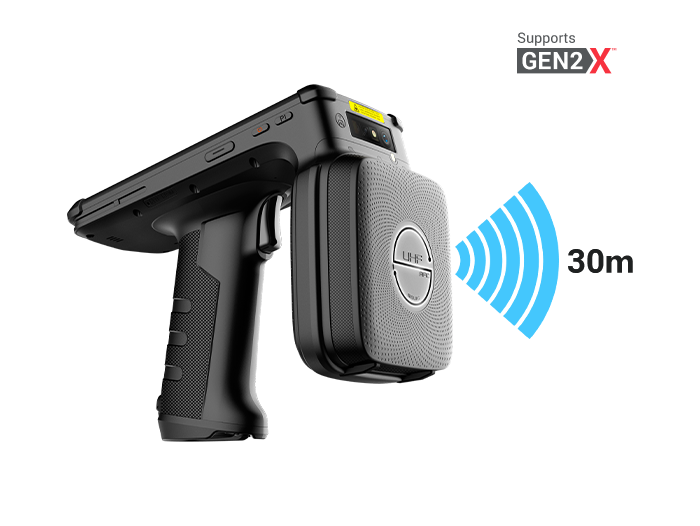
For RFID projects, additionally provide UHF/NFC read/write SDKs, tag filtering, and anti-metal/anti-liquid test routines.
3.2 API and System Upgrade Flexibility
Evaluate three questions:
Are REST/WebSocket/MQTT interfaces available for near-real-time inventory data upload?
Can firmware OTA, application distribution, device policies, and log collection be centrally managed via MDM/EMM?
When the OS is upgraded, are legacy interfaces backward compatible? Will secondary development fees apply?
If a supplier says "we'll just provide an app, you don't need the SDK" — but your WMS, retail middleware, hospital LIS, or government ledger system all require customization — you face a high probability of being locked in and dealing with inefficient rework.
3.3 Remote Assistance and On-Site Debugging
Require clarity on:
Average response time for remote desktop, log retrieval, and scan failure reproduction.
Whether on-site commissioning is provided for new warehouse launches, batch store deployments, or hospital department pilots.
Whether multi-site projects have regional technical support centers rather than only headquarters-based customer service.
4. After-Sales Service and Lifecycle: Warranty, Response, Spare Units, Long-Term Supply
When inventory supplies management operations go down, the impact hits receiving, material issuance, reconciliation, and customer service. A supplier's after-sales support is not an add-on — it's a core procurement criterion.
4.1 Warranty and Response SLA
Consider writing the following thresholds into contracts:
Full-device warranty ≥ 2 years. For high-frequency scanning, cold storage, or outdoor use, negotiate for 3 years.
Technical response times tiered by severity level — on-site, ship-for-repair, and remote support with separate SLAs. For continuous production or peak retail seasons, require initial handling within ≤ 48 hours.
Specify mean time to repair (MTTR), repair return rate, and spare unit delivery timeline. A two-week ship-for-repair turnaround is unacceptable for core warehouses.
4.2 Spare Units and Parts
Agree on a spare unit ratio based on total device count — e.g., 3–5 loaner units per 100 devices.
Ensure inventory availability for consumable components: batteries, charging cradles, scan heads, screen assemblies, grips, etc.
Require advance notice before discontinuing any model to avoid sudden supply gaps.
4.3 Lifecycle Supply Commitment
Inventory projects typically run for 5+ years. Require the supplier to commit to:
5–8 years of continuous device supply or same-model replacement to avoid mid-life model changes causing accessory confusion.
Android major version upgrade roadmap, security patch cadence, and migration plan before end-of-support.
Continued supply of batteries and common accessories for a defined period after device discontinuation.
Long-term availability of firmware, drivers, and SDK documentation for download — not dependent on individual employees remaining with the company.
For hospitals, government agencies, and utilities with long compliance cycles, this criterion matters more than the initial purchase discount.
5. Total Cost of Ownership and Pilot Validation: Let Data Replace Verbal Promises
Don't compare unit prices alone. TCO should include at minimum: device price, scan/RFID module differential, MDM licensing, SDK/custom development, WMS integration, training, batteries and accessories, repairs, spare units, and end-of-life recycling.
Recommend a 4–8 week pilot:
Select representative roles: warehouse receiving, production line material issuance, store inventory, pharmacy split-packaging, and meter reading/patrol — sample each.
Record metrics: first-pass scan rate, damaged code failure rate, Wi-Fi roaming disconnection count, battery runtime on full charge, average daily device faults per unit, and system sync latency.
Have the supplier participate in issue post-mortems to observe their speed in fixing firmware, adjusting SDKs, and replacing accessories.
Inventory Supplies Using a Hand-Held Computer — device specs determine "whether it can scan." Supplier capability determines "whether it stays stable three years from now." When evaluating, put product quality and certifications, SDK and technical support, after-sales response, and spare parts lifecycle into the same contract. Then validate with 4–8 weeks of real-scenario pilot testing. This significantly reduces rework rates for factory, warehouse, retail, pharmaceutical, and utility projects.
If you are currently tendering for hand-held terminals, feel free to contact Seuic for a demo unit trial.
Related News
-

Portable Barcode Scanner Buying Guide
Product Updates | 2026.09.22Learn More
-
What Is RFID Meaning? Definition & Common Beginner Misconceptions
Product Updates | 2026.09.21Learn More
-
What Is RFID? A Complete Guide to Radio Frequency Identification: Definition, Working Principle & Applications
Product Updates | 2026.09.21Learn More
-
2D Barcode Scanner for Automotive DPM Traceability
Product Updates | 2026.09.20Learn More