




Inventory Supplies Using a Hand-Held Computer: 8 Must-Check Metrics Before Buying
There are many models of hand-held computers, industrial PDAs, and barcode terminals on the market, and spec sheets get more confusing the longer you look. For warehouse managers, retail stores, 3PL providers, e-commerce fulfillment centers, hospital pharmacies, and utility meter readers, picking the wrong device usually leads to three outcomes: slow scanning, battery that can't last a full shift, and equipment failing within six months in cold storage, dusty environments, or after repeated drops. This article breaks down the "Inventory Supplies Using a Hand-Held Computer" scenario into 8 must-evaluate metrics, helping procurement and operations managers make decisions using a checklist-based approach.
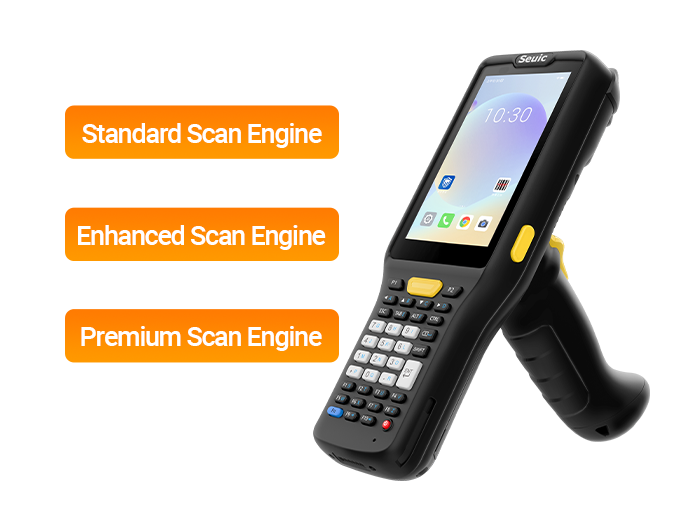
1. Scan Engine: First Determine 1D/2D Needs, Then Decide on Long-Range or RFID
The first step in inventory counting is "can it read." Most warehouses, factory floor materials, and retail store items only require 1D + 2D barcodes. If labels are damaged, reflective, or located on high shelves at long distances, look for a 2D imaging engine or a long-range laser/imager head.
Whether to add RFID depends on your inventory method:
Item-by-item / case-by-case verification: 1D/2D barcodes are sufficient.
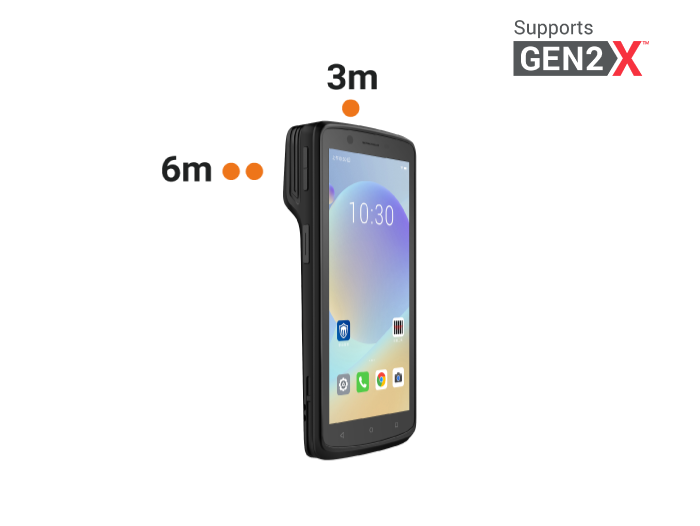
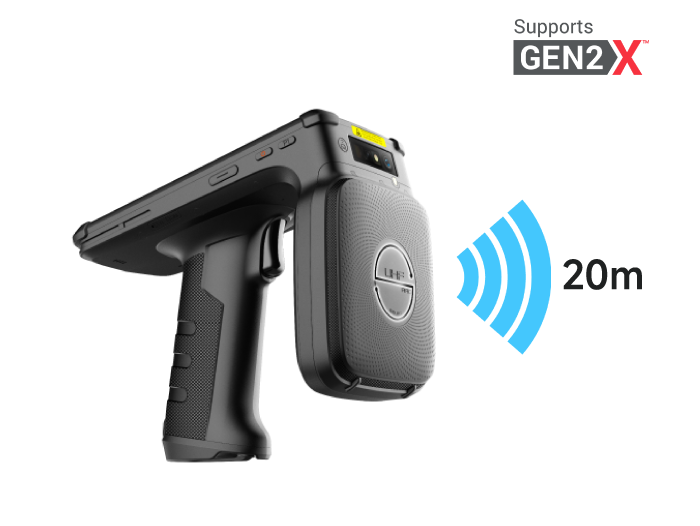
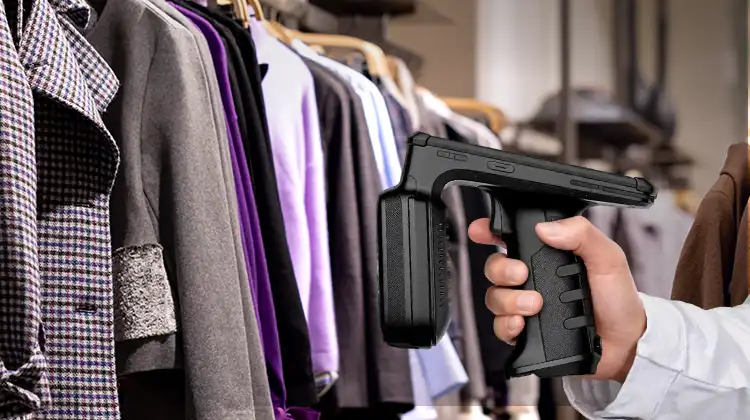
Bulk counting of garment warehouses, asset warehouses, totes, and pallets: UHF RFID is more efficient, reading multiple tags at once.
Pharmacy, medical records, equipment inspection identity verification: HF/NFC.
2. Battery and Hot-Swap: Calculate by Shift, Not by "Capacity Number"
Many spec sheets say "large battery," but what really matters for inventory is: how many hours can it run under full load (scanning + screen-on + Wi-Fi upload), does it reboot when swapping batteries, and is there a pool of spare batteries? Industry best practices for multi-shift warehouses typically recommend replaceable or hot-swappable batteries, with capacities ranging from 5,000mAh to 8,000-10,000mAh depending on the scenario.
Procurement tip: Tell the vendor your peak shift volume (receiving + shipping + cycle counting) in terms of "scans per hour," and ask for a real-world test with a demo unit — don't just look at the mAh number.
3. Ingress Protection and Drop Rating: IP65 Minimum, IP67 for Heavy Handling
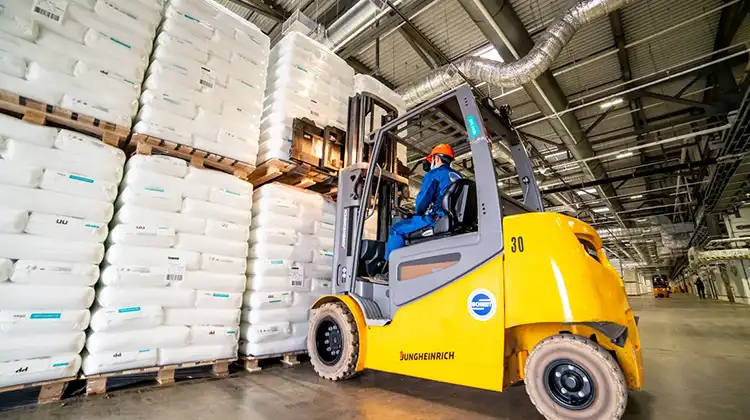
Warehouse dust, rain on loading docks, cold storage condensation, and workshop oil stains all shorten the lifespan of consumer-grade phones. General industrial PDA selection uses IP65 as the baseline. For frequent washdowns or brief immersion, look at IP67.
4. Operating Temperature and Cold Storage Adaptation: Don't Just Say "Industrial Grade"
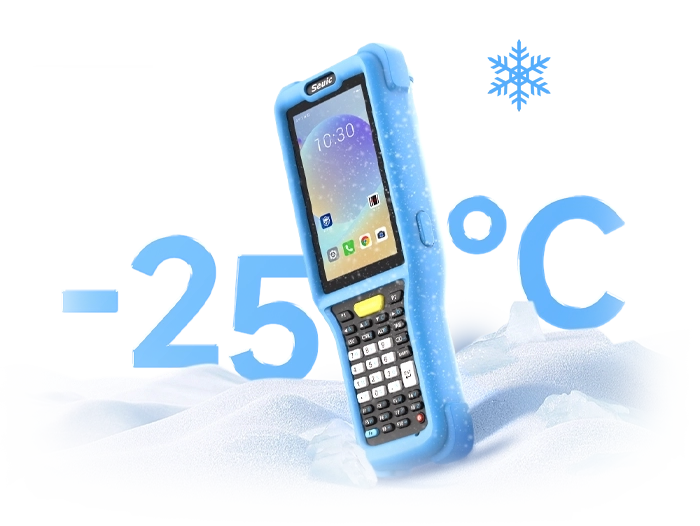
Ambient temperature warehouses, offices, pharmacies, and cold storage facilities have completely different requirements. For pharmaceutical cold chain and fresh food 3PL, your procurement spec should clearly state: boots up and scans at -25°C minimum, touchscreen works with gloves, battery discharge curve at low temperatures, and lens anti-fogging after condensation. If temperatures go below -25°C, confirm with the vendor separately for low-temperature batteries and screen materials.
5. Operating System and Lifecycle: Prioritize the Latest Supported Android — Don't Buy "Old Android"
An inventory device is not a disposable tool. WMS/ERP/MES applications, security patches, and scan SDKs all depend on the OS. For large 3PL providers and hospitals, the recommendation is to require: Android Enterprise Edition or MDM support, application whitelisting, and remote wipe to prevent workers from installing unauthorized apps.
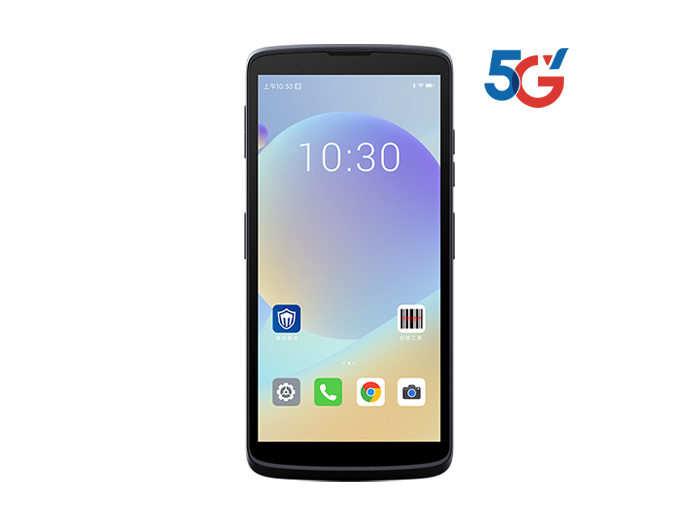
6. Wireless and Roaming: Wi-Fi Is the Main Line Indoors, 4G/5G Supplements Outdoors
For indoor inventory, prioritize dual-band Wi-Fi, 802.11ac/ax (Wi-Fi 5/6), fast roaming, and AP handoff that doesn't drop the WMS session.
7. Software Integration and SDK: Without Open APIs, Inventory Data Never Reaches the WMS
No matter how good the hardware is, if it can't integrate with WMS/ERP/MES/hospital HIS, it's equivalent to manual work. When selecting a device, ask the vendor to provide: scan broadcast method (HID/serial/intent), Android Studio SDK, demo app, MDM compatibility, OTA update capability, and log export.
8. Ergonomics and Accessories: Half of Inventory Efficiency Comes from "Feels Right in the Hand"
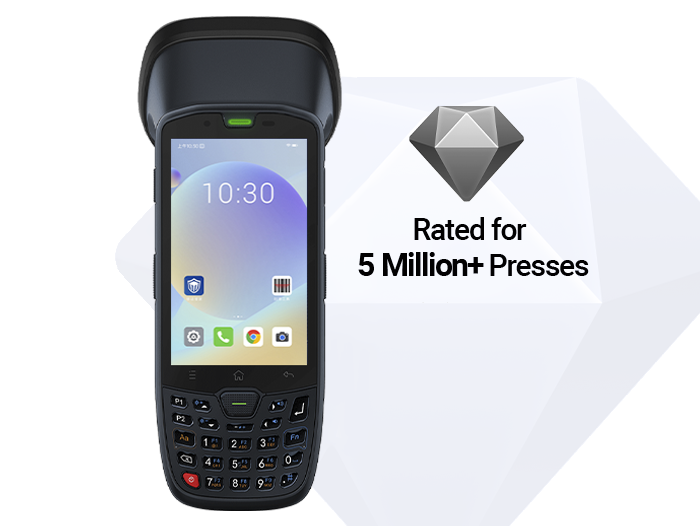
Use a pistol grip for long-range high-rack scanning, bare unit for retail stores, wrist strap + pistol grip for cold storage, and lightweight device for meter reading. If the role involves "holding and scanning all day," focus on testing the pistol grip weight balance and trigger button. If the role involves "walking and reviewing lists," test screen readability under bright light and in cold storage with fogging.
Industry Comparison: How the 8 Metrics Apply
Factory / Production / QC / Warehouse: 1D/2D item-by-item + batch traceability, Android 14 + SDK for MES integration, IP65, 1.5-1.8m drop, -20 to 50°C. For mixed lines with oil stains, consider IP67.
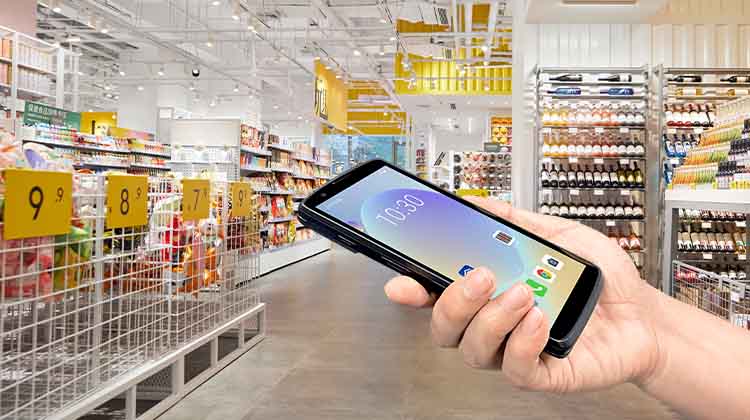
Retail / Supermarket / Apparel / Department Store: Store cycle counting prioritizes "fast scan + compact portable." For large apparel warehouses, add UHF RFID for bulk hangtag reading. NFC can assist with price tag and membership card functions.
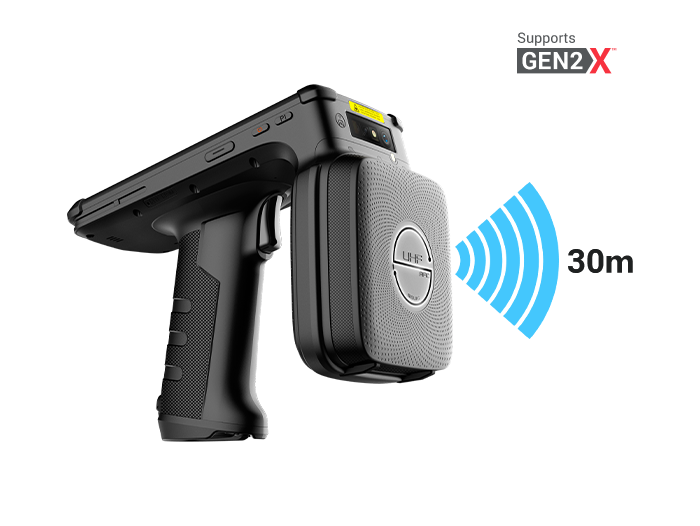
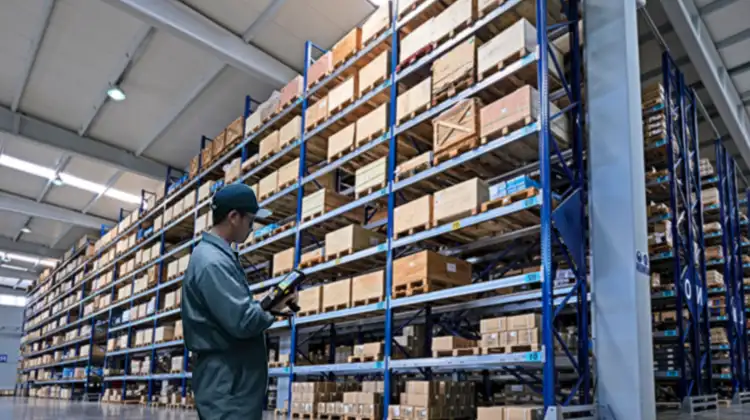
3PL / E-Commerce / Express Sortation: Long-range high-rack scanning is core — Q7 0-30m configuration reduces ladder climbing. Dual-band Wi-Fi + 4G backhaul, hot-swappable battery for double shifts. For sortation hubs, focus on continuous scanning speed and damaged code recognition.
Hospital / Pharmacy / Nursing: Pharmaceutical barcodes + HF/NFC are more stable. For bulk counting of high-value consumables, evaluate UHF. Clean environments prioritize system permissions, auditing, and MDM over extreme ruggedness.
Water/Gas/Electric / Public Utilities / Government Patrol: Primarily outdoor use — 4G/Beidou, IP65, 1.8m drop, low-temperature startup. Meter reading focuses on close-range barcode/NFC meter tags.
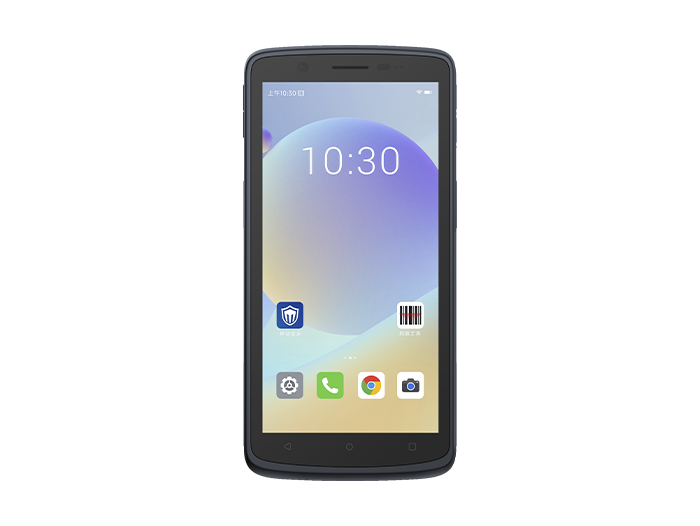
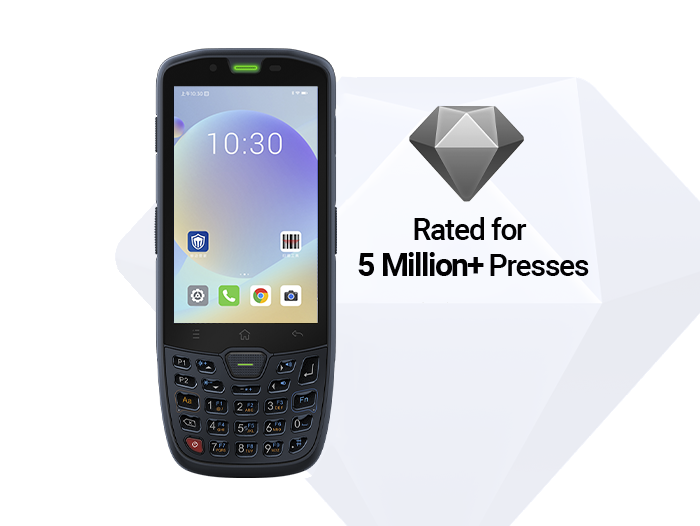
Product Recommendation: Why AUTOID Q7-(Grip) Deserves a Spot on Your Shortlist for Warehouse Inventory
From the perspective of "Inventory Supplies Using a Hand-Held Computer," several features of the AUTOID Q7-(Grip) are worth putting on your trial list:
Long-range inventory, less climbing: 0-30m scan range. Paired with a pistol grip for high racks, loading docks, and ASRS receiving — reduces ladder carrying and back-and-forth walking.
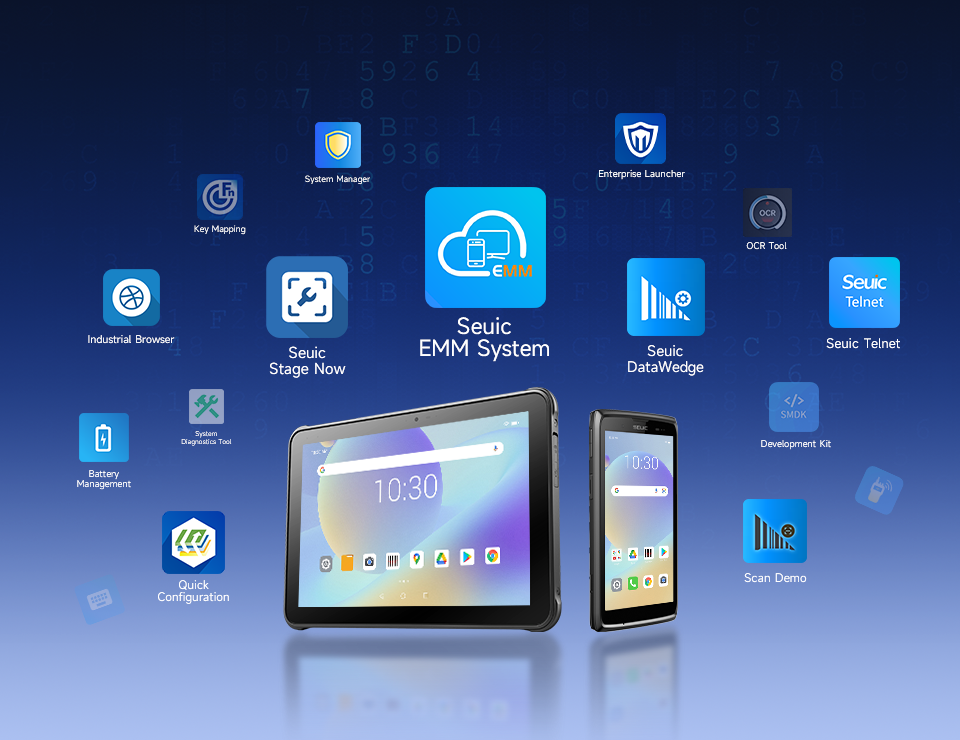
Newer OS, easier integration: Android 14 + Qualcomm octa-core + 4/64GB. Runs WMS inventory, photo evidence capture, and electronic signatures more smoothly.
Non-stop battery swap: 5,000mAh hot-swappable battery. Paired with multi-slot charger / whole-unit cradle — ideal for receiving + shipping + cycle counting in continuous operation.
Cold storage and ambient temperature versatility: -20 to 50°C, extending to -25°C cold chain. IP65 + 1.8m drop covers most warehouse bumps and knocks.
Stable network: Dual-band Wi-Fi, Wi-Fi Well, 4G, WPA3, with enterprise AP roaming. NFC / 13MP camera supplements anomaly photo capture during inventory.
Trial Checklist (for Vendors):
Print 100 real labels from your operation — 30% damaged, 30% small codes, 30% long-distance.
Test first-pass read rate at 10m, 20m, and 30m on the highest rack.
Run a full 8-hour shift of receiving + shipping + inventory on a full charge.
Boot and scan in a -18 to -25°C cold storage environment after 30 minutes.
Test WMS SDK integration with hot-swap — no dropped transactions.
When procuring for "Inventory Supplies Using a Hand-Held Computer," don't sort by unit price. Start by writing a checklist based on your scenario: barcode or RFID, single shift or double shift, ambient or cold storage, how high are your racks, and what WMS/ERP/HIS are you integrating. Check all 8 metrics — scan engine, hot-swappable battery, IP/drop rating, temperature range, Android version and patches, Wi-Fi/4G/5G, SDK/MDM, and pistol grip accessories — before comparing prices. Your repair rate and downtime will drop significantly.
If you're currently bidding on warehouse or factory inventory equipment, feel free to contact Seuic for a demo unit trial.
Related News
-
Portable Barcode Scanner Buying Guide
Product Updates | 2026.09.22Learn More
-
What Is RFID Meaning? Definition & Common Beginner Misconceptions
Product Updates | 2026.09.21Learn More
-
What Is RFID? A Complete Guide to Radio Frequency Identification: Definition, Working Principle & Applications
Product Updates | 2026.09.21Learn More
-
2D Barcode Scanner for Automotive DPM Traceability
Product Updates | 2026.09.20Learn More