







Inventory Supplies Using a Hand-Held Computer: Real-Time WMS Integration for Live Inventory
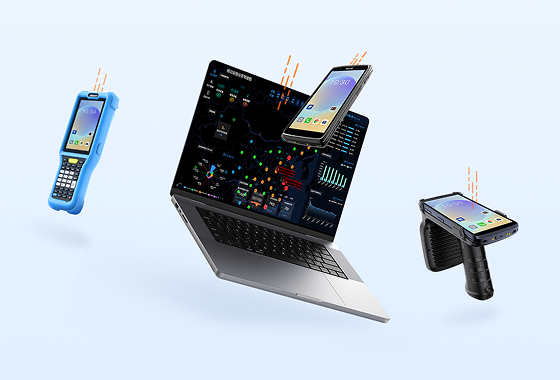
In warehouses, factories, retail stores, hospital pharmacies, and even public utility field sites, inaccurate inventory is often not because "nobody counted" — it's because "getting the data into the system takes too long after counting." Many teams use hand-held computers to scan barcodes, which is certainly faster than paper records. But if the scan results still need to be exported, organized, and manually imported into the WMS, the lag persists. The real value lies in making Inventory Supplies Using a Hand-Held Computer not just about data capture, but about seamless WMS integration: scan and upload, upload and validate, validate and update inventory — all in real time. This article explains how to turn the hand-held terminal into part of a real-time inventory closed loop, covering data interfaces, process automation, and device selection.

1. Why Hand-Held Computers Must Be Integrated with WMS in Real Time
A standalone hand-held computer solves the problems of "slow data entry, frequent typos, and wasted time walking back and forth." But only when connected to a WMS can it address the fundamental contradiction between "system inventory" and "actual inventory."
For factories, if line-side warehouse materials are consumed but the WMS doesn't deduct them instantly, production scheduling will be based on incorrect stock levels. For retail chains and department stores, if store transfers, returns, and inventory counts are imported in batches, the corporate view of inventory will always lag behind. For hospital pharmacies and clinics, if drug batch numbers, expiration dates, and departmental requisitions are recorded after the fact, it compromises traceability and increases near-expiry waste. For electric, gas, and water utility field operations, if meters, spare parts, and work order materials cannot be written back on-site, the gap between back-office inventory and field availability will persist indefinitely.
Therefore, the value of a hand-held computer should not be limited to "fast scanning." It should be defined as: on-site operation node → standardized data format → real-time WMS validation → automatic inventory status refresh.
2. Data Interfaces: The Technical Path from Scan to Real-Time Upload
The first step to achieving real-time updates is determining the communication method between the hand-held computer and the WMS. Most modern WMS and middleware platforms support the following two approaches:
2.1 REST API Real-Time Calls
The hand-held computer submits inventory, receiving, transfer, and issuance results in real time via HTTPS calls to the WMS's open API. The request body typically uses JSON, though some legacy systems still use XML. A standard inventory record should include at least:
SKU / Material Code: Unified master data identifier to avoid alias conflicts across terminals
Quantity: Actual count, with unit differentiation (pieces, boxes, pallets, etc.)
Location / Position: Warehouse bin, store shelf, ward cabinet, or field site
Operation Timestamp: Precise to the second, for sequence validation and auditing
Operator ID: Bound to employee ID for traceability
Document / Task ID: Linked to the WMS-generated inventory task or work order
Batch / Serial / Lot Number: Mandatory for pharmaceuticals, electronics, and food industries
2.2 Message Queues and Async Buffering
For high-concurrency scenarios (e.g., promotional sortation, full-team cycle counting), message queues (Kafka, RabbitMQ, MQTT, etc.) can be introduced. The hand-held terminal sends data to the queue first, and the WMS consumer processes it sequentially, preventing API overload. Message queues are well-suited for architectures involving "large volumes of small data packets," "multiple terminals transmitting simultaneously," and "replay and compensation needs."
2.3 Offline Cache and Auto-Resync
Network dead zones are common in factory basements, cold storage facilities, hospital lower levels, and remote power substations. The hand-held computer should support local caching: scan data is written to a local database first, and automatically retransmitted in chronological order when the network is restored. The key is deduplication and conflict resolution in the resync process — for example, if two offline records exist for the same SKU at the same location, the WMS should merge them based on "task ID + operation type + timestamp" rather than simply overwriting.
3. Process Automation: From Task Dispatch to Discrepancy Order Closed Loop
For many enterprises, the pain point of inventory counting is not the scanning itself — it's the "scan, copy, re-enter, and still find mismatches" cycle. By connecting the hand-held computer to the WMS task flow, the process can be transformed into a closed loop.
3.1 WMS Dispatches Inventory Tasks
The WMS generates tasks based on predefined rules: designated zones, SKU ranges, inventory type, and deadline. Upon login, the hand-held computer automatically pulls "my tasks," preventing operators from randomly selecting locations and causing omissions.
3.2 On-Site Scanning with Real-Time Write-Back
Operators scan barcodes along the assigned path, and the terminal instantly returns the WMS book quantity. If the actual count matches the book quantity, it's marked as normal. If there's a discrepancy, the terminal prompts a re-scan to reduce misreads.
3.3 Automatic Inventory Adjustment Trigger
For minor discrepancies within authorized limits, "auto-adjustment" can be configured. For larger variances exceeding a threshold, the adjustment enters an approval workflow. Compared to the traditional "log in Excel first, then batch import" approach, automatic adjustment compresses inventory updates from hours to seconds.
3.4 Automatic Discrepancy Order Generation
The system generates a discrepancy order based on "SKU + location + book quantity + actual count + operator + timestamp," which can be routed directly to replenishment, loss investigation, quality inspection, or financial audit teams. No manual re-entry is needed, reducing the risk of missed orders caused by manual processing.
3.5 Support for Multiple Inventory Modes
Wave counting: Concentrate on one zone during wave picking idle periods — suitable for e-commerce fulfillment centers
Cycle counting: Daily spot checks on A-class high-turnover items, monthly checks on C-class low-turnover items — suitable for factories and pharmaceuticals
Full counting: Periodic closed-warehouse counting, with hand-held terminals handling high-speed data capture
Dynamic / non-stop counting: Retail stores and hospital wards can count by zone during operating hours
4. Implementation Priorities by Industry
While the technical architecture is universal, different audiences have different focal points:
Factory / Line-Side Warehouse: Emphasis on work order material write-back, surplus material return, and batch traceability
Retail Chains / Department Stores / Apparel: Emphasis on store transfers, size/color variants, and high-frequency counting during promotions
Supermarkets / Fresh Food: Emphasis on weighed items, expiration dates, spoilage, and overnight restocking sync
3PL / E-Commerce Fulfillment: Emphasis on wave picking, multi-client isolation, and real-time release of order-occupied inventory
Hospitals / Pharmacies / Clinics: Emphasis on batch numbers, expiration dates, controlled substance permissions, and departmental requisition traceability
Electric / Gas / Water Utilities: Emphasis on field spare parts, meters, work order issuance/returns, and offline data transmission
Government / Law Enforcement / Field Operations: Emphasis on asset IDs, inspection materials, and auditable on-site records
5. Selection Considerations: Don't Just Look at "Can It Scan"
When buying hand-held computers, many teams only ask about scan speed and price. But what truly affects WMS integration are the following factors:
5.1 SDK and WMS Compatibility
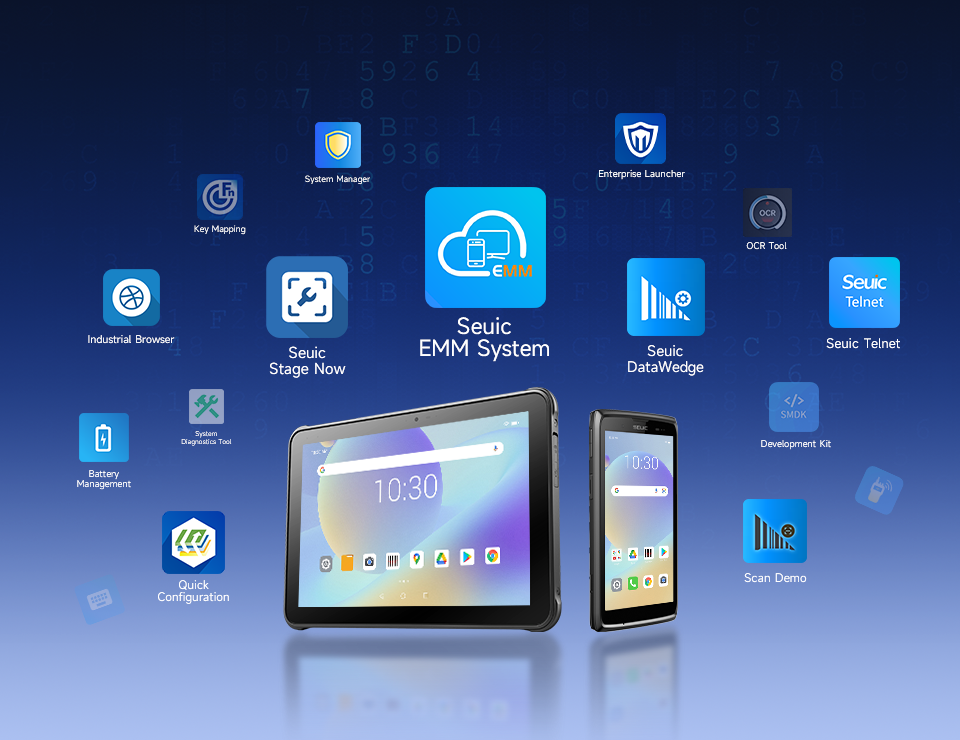
Confirm that the vendor provides a complete SDK and that it can interface with mainstream WMS platforms. If your company uses SAP, Oracle, Infor, or similar systems, verify in advance: Are standard interface examples provided? Does it support single sign-on? Can it work with your enterprise ESB/middleware? Are there pre-built adapters? Without an SDK — or if only an APK black box is provided — customization costs later will be substantial.
5.2 Operating System and Lifecycle
Android Enterprise Edition is the most common, but confirm the major version upgrade roadmap, GMS/non-GMS status, and patch policy. Hospitals, utilities, and other intranet environments often require GMS-free builds with MDM support for centralized management.
5.3 Scanning and Expansion Capabilities
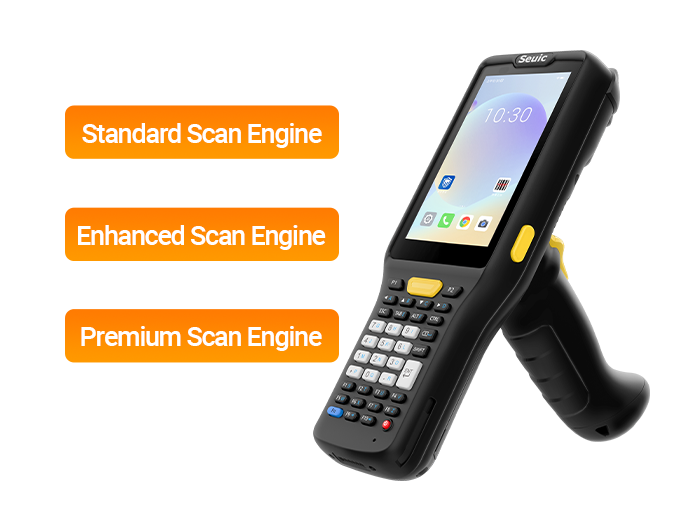
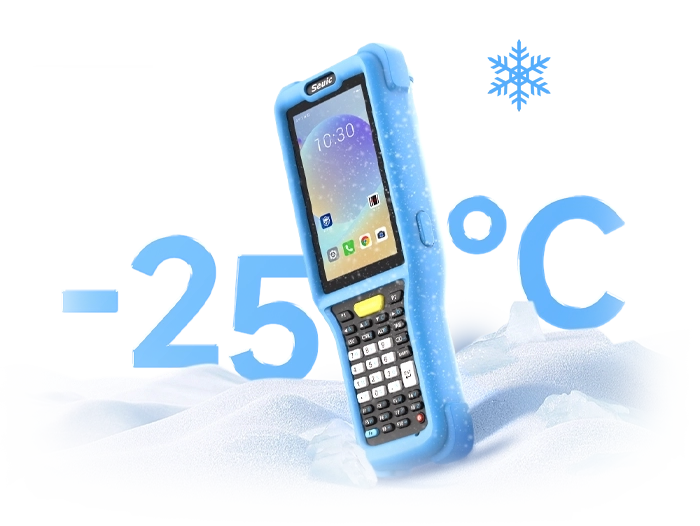
1D/2D barcodes are the baseline. For pharmaceuticals, high-value assets, and apparel, consider RFID. Whether fingerprint/facial recognition, NFC, infrared, low-temperature displays, or glove touch are needed depends on the scenario.
5.4 Offline Capability and Security
Local databases should be encrypted. Operator logout or device loss should trigger remote data wipe. Transport layer should use TLS, and APIs should use token-based authentication. The WMS side should enforce role-based access control (read-only / inventory / adjustment / approval).
5.5 Performance and Battery Life
For full-warehouse counting and high-intensity night shifts at sortation centers, pay attention to hot-swappable batteries, smooth performance across tens of thousands of SKUs, and efficient network reconnection in weak signal areas.
5.6 Implementation and Service
Prioritize vendors that can provide a POC (Proof of Concept): run a one-week trial with real SKUs and real locations, measure discrepancy rates, sync latency, and offline recovery performance — then discuss procurement.
6. Implementation Roadmap
Clean up master data: Standardize SKUs, locations, units, and batch rules in the WMS first, so the terminal scans correctly and the system matches.
Define interface contracts: Specify JSON/XML fields, status codes, failure retry logic, and offline retransmission rules.
Run a small-scale pilot: Select one warehouse zone or one store, test both wave counting and cycle counting modes.
Set KPIs: Inventory accuracy rate, counting man-hours, discrepancy order processing time, data sync latency.
Train and assign permissions: Operators handle data capture only; supervisors manage adjustments and approvals; the system maintains a full audit trail.
Roll out gradually: Replicate by factory, store, or region — avoid switching everything at once.
By executing the above steps, Inventory Supplies Using a Hand-Held Computer evolves from a "scanning tool" into a "real-time WMS data entry point," significantly reducing inventory lag, manual data entry, and discrepancy disputes.
A hand-held computer is not isolated hardware — the key to real-time inventory lies in integration. By uploading standardized inventory data via REST API or message queues, combined with offline caching, task dispatch, and automatic discrepancy orders, WMS inventory can always stay aligned with actual on-site quantities. When selecting a device, be sure to validate SDK compatibility with SAP, Oracle, Infor, and other WMS platforms, then run a small-scale POC to verify sync stability.
Related News

-
Portable Barcode Scanner Buying Guide
Product Updates | 2026.09.22Learn More
-

What Is RFID Meaning? Definition & Common Beginner Misconceptions
Product Updates | 2026.09.21Learn More
-
What Is RFID? A Complete Guide to Radio Frequency Identification: Definition, Working Principle & Applications
Product Updates | 2026.09.21Learn More
-
2D Barcode Scanner for Automotive DPM Traceability
Product Updates | 2026.09.20Learn More