





PDA vs RFID: Equipment Selection Guide for PCB Warehouse Material Management
The real dilemma isn't about choosing sides — it's about the fear of picking the wrong device, wasting money, failing to improve efficiency, or making implementation too complicated.
The truth is, this is never a binary "which is better or more advanced" question. It's about finding the right fit for different warehouse scenarios and operational needs.
This practical guide walks through real pain points in PCB warehouse operations, explaining the applicable scenarios, pros and cons, and selection logic for both device types. Read it once and you'll know exactly how to apply it to your own warehouse.

1. What Makes PCB Warehouse Management So Difficult?
PCB (Printed Circuit Board) warehouses are fundamentally different from standard electronic component warehouses. They demand higher operational standards and allow less room for error, driven by two unique characteristics:
1.1 Full Traceability — One Code, End to End, No Breaks
PCB materials are managed by "panel" and "roll" as base units. From cutting, lay-up, outer-layer processing, electrical testing, to final shipment — every step requires barcode traceability. Copper-clad laminates, copper foil, chemicals, and finished boards across the supply chain must be bound by a single identity chain. Any break in the chain makes tracing impossible.
1.2 Complex Operating Environment — Scanning Is Genuinely Difficult
The warehouse contains both metal substrates (copper foil, copper-clad laminates) and various liquid chemicals. Boards are prone to warping and surface oil contamination. Most materials carry small laser-etched edge codes with low contrast and high susceptibility to wear — placing extreme demands on scanning equipment.
PCB warehouse daily workflows follow a fixed sequence: receiving and counting → IQC inspection → inbound/outbound transfer. Across this entire chain, almost every factory encounters three critical pain points:
Severe inventory discrepancies: Heavy reliance on manual paper records and hand-entry ledgers. Count data and system data are perpetually out of sync, creating blind spots in inventory.
Extremely high risk of material mix-ups: Part numbers and batch numbers are complex. Copper-clad laminates, copper foil, and liquid chemicals look alike and are easily confused. A wrong material hitting the production line causes massive losses that are difficult to trace.
Abysmal bulk counting efficiency: Peak inbound/outbound periods and monthly/quarterly counts rely entirely on manual case-by-case, roll-by-roll scanning — time-consuming, labor-intensive, and costly.
So when we debate PDA vs RFID, what we're really asking is: which steps demand extreme precision and item-by-item verification, and which steps call for high-speed bulk processing to save time and labor?
2. Barcode PDA: Built for "Precision Without Error" — Ideal for Daily Core Operations
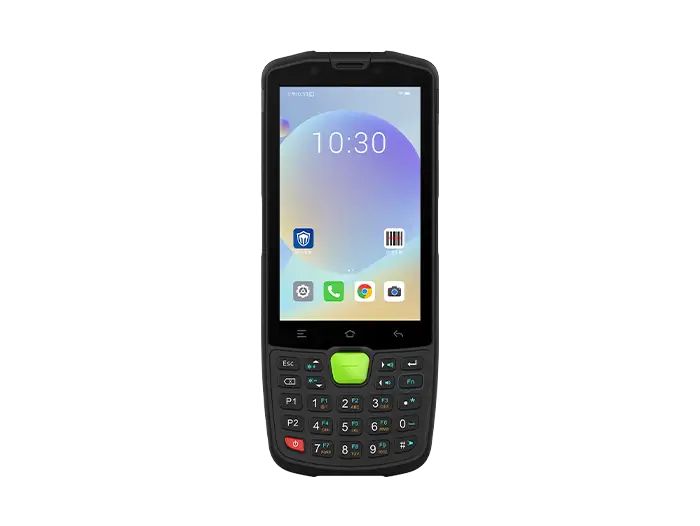
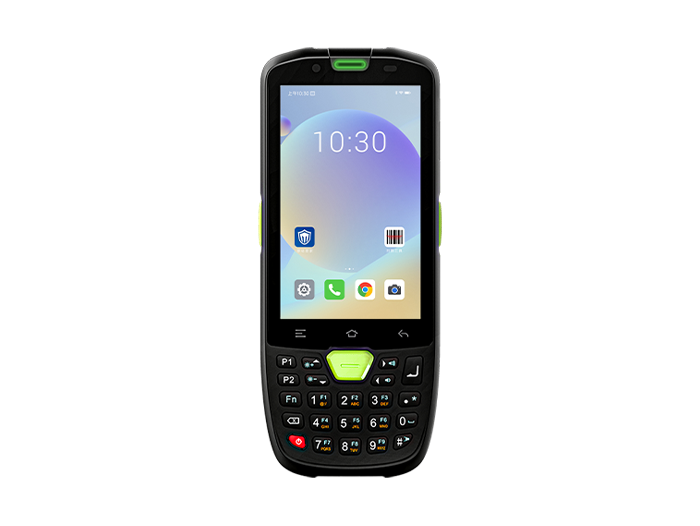
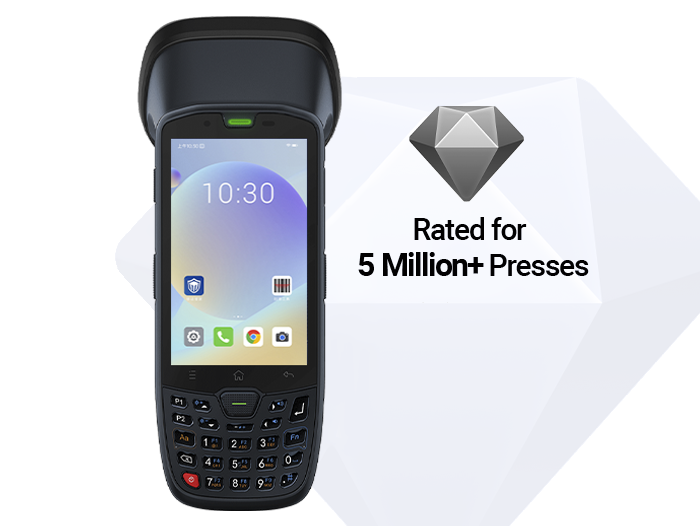
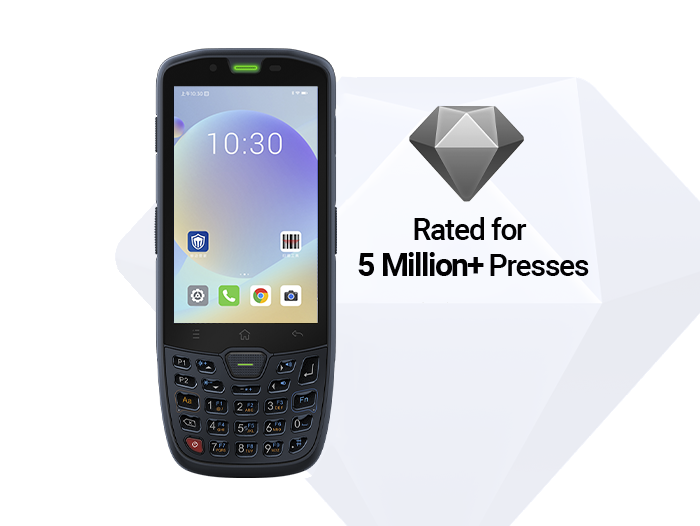
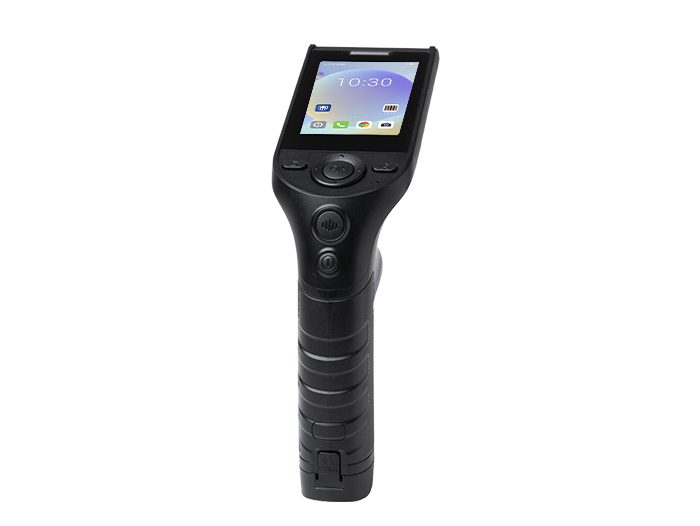
A PDA (Portable Data Assistant) industrial handheld terminal works by using an optical scan engine to read box codes, edge codes, and roll codes, verifying material identity. It's essential equipment for day-to-day precision operations in a PCB warehouse.
It perfectly fits three core PCB warehouse scenarios:
Receiving and counting: One-click scan on arrival, auto-match against purchase orders and material specs. Bluetooth-connected calipers, LCR meters, spectrometers, and other inspection equipment automatically record test data and PASS/NG decisions — eliminating manual entry errors.
Inbound/outbound and transfer: Scan to complete putaway, relocation, and outbound operations. Inventory data syncs to WMS/MES in real time, eliminating inventory lag.
Shop-floor material requisition: Issue materials by work order scan, intercepting wrong-part and mixed-material issues at the source — guarding the first line of production defense.
2.1 PDA Core Advantages (PCB-Specific)
Zero infrastructure modification, maximum cost-effectiveness: Most PCB factories already have "one box, one code" and "board-edge marking" in place. No need to modify the label system — devices work out of the box with minimal deployment cost.
Granular precision, fully controllable: Supports case-by-case, roll-by-roll, and board-by-board scanning verification. Perfect for high-stakes scenarios like IQC inspection and work-order issuing where "even one wrong part is unacceptable."
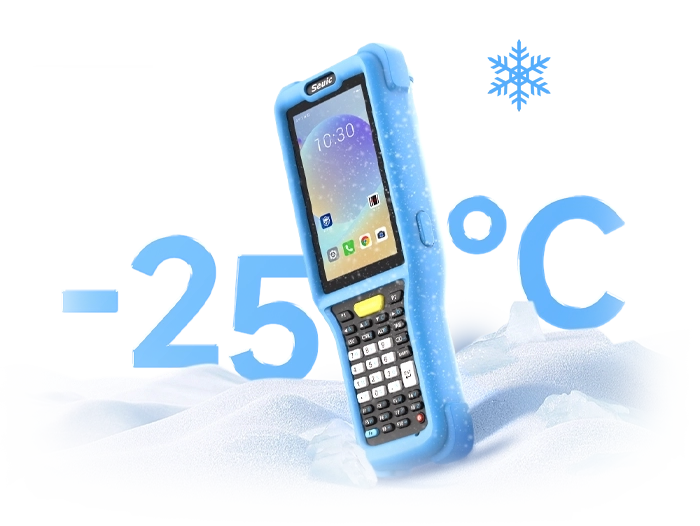
Adapted to harsh scanning conditions: Industrial PDAs with AI decoding algorithms deliver 30ms response. For PCB warehouse challenges like oily codes, worn codes, reflective metal codes, and low-contrast laser-etched codes, recognition rates far exceed standard smartphones. Large-aperture night-mode cameras capture clear photo evidence even in low light.
Multi-function, versatile: Beyond scanning, supports photo capture, Bluetooth device pairing, and industrial system operation — ideal for composite operations requiring manual verification.
2.2 PDA Inherent Limitations
Efficiency tied to human speed: Single-item sequential scanning only. Bulk counting and full-pallet inbound/outbound are constrained by operator pace.
Barcode dependency: If labels fall off, are severely damaged, or boards warp and compress the code surface, scanning fails and manual re-entry is required — introducing potential errors.
Limited working radius: Stacked goods and high racks require opening cases and climbing to align the scanner — inconvenient and inefficient.
Summary: If your warehouse's core needs are daily receiving inspection, precise work-order issuing, and case-by-case error-proofing, a PDA is the fastest, most cost-effective solution.
3. RFID Handheld Reader: Built for "Speed and Labor Savings" — Tackles Bulk Counting Challenges
UHF RFID handheld readers use radio frequency signals to read electronic tags — no need for item-by-item alignment, no need to open cases, no contact required. They directly solve the "slow to scan, can't reach to scan" limitations of PDAs, focusing on high-speed bulk operations.
They're better suited for lightweight, high-volume material flow scenarios in PCB warehouses:
Dense bulk counting: Read entire pallets and entire rack sections in one pass — no need to open cases and scan each item individually. Counting efficiency doubles or more.
High-rack and outdoor operations: Long-range reading from ground level captures tags on high racks and outdoor staging areas — eliminating climbing risks.
High-frequency, high-volume inbound/outbound: Ultra-fast read/write speeds suit warehouse scenarios with heavy material throughput.
3.1 RFID Device Core Advantages
Bulk reading, crushing efficiency: High-end devices read thousands of tags in seconds. Stacked materials and tiny tags are fully covered. Counting time compresses from hours to minutes — dramatic labor savings.
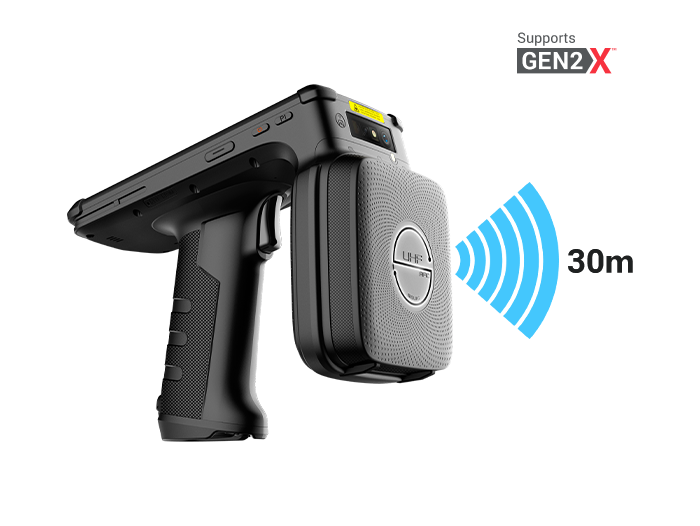
Long range, no alignment needed: Maximum read distance up to 30 meters. No need to align with tag angle. Reads through cases and racks — adaptable to complex storage layouts.
Multi-angle stable reading: Multi-polarization auto-recognition technology adapts to random tag attachment angles. Dead-angle-free reading suits warehouses where materials are stacked unpredictably.
Integrated data sync: While reading tags, batch, quantity, and bin location information can be bound and uploaded to the system in one click — no secondary data entry required.
3.2 RFID Inherent Limitations (Key Concerns for PCB Factories)
Higher upfront modification cost: Existing materials all use barcode labels. Adding RFID electronic tags and modifying packaging requires additional hardware investment.
Susceptible to environmental interference: Copper foil, copper-clad laminates, and other metal materials in PCB warehouses reflect RF signals. Liquid chemicals absorb signals. Standard tag read rates drop significantly. Specialized anti-metal tags are required, further increasing costs.
Insufficient precision, cannot replace PDA: Only supports "full pallet, full rack" bulk statistics. Cannot achieve board-by-board or roll-by-roll precision tracing. Error-proofing capability is limited.
Higher long-term cost: Individual RFID tags cost significantly more than standard barcodes. At scale, total cost of ownership is substantially higher.
Summary: If your warehouse's pain points are slow bulk counting, difficult high-rack operations, and high-volume material flow — and you're willing to invest in infrastructure upgrades — RFID is an excellent choice for freeing up labor.
4. Understand the Core Differences — Make the Right Choice
To help you compare and select accurately, here's a dimension-by-dimension breakdown of the two device types across eight key areas: reading method, modification barrier, identification precision, operational efficiency, scenario fit, environmental tolerance, investment cost, and applicable scenarios.
Reading Method: Barcode PDA relies on optical scanning — item-by-item precision reading requiring close proximity and direct alignment with the code surface. RFID handheld reader uses RF signals — contactless bulk reading with no alignment needed, simultaneously reading multiple items.
Prerequisite Modification: Barcode PDA requires zero upfront modification — fully compatible with existing PCB factory box codes and board-edge laser-etched codes. Ready to use out of the box with zero deployment barrier. RFID handheld reader cannot work with existing barcode systems. Requires purchasing and applying RFID electronic tags. Some scenarios also need packaging modification — adding upfront investment.
Identification Precision: Barcode PDA delivers maximum precision — accurately identifies individual boxes, rolls, and boards. Fully meets requirements for fine-grained traceability and error-proof verification. RFID handheld reader only supports full-pallet, full-rack bulk material statistics. Cannot achieve board-level precision binding and verification — precision is insufficient for strict error-proofing scenarios.
Counting Efficiency: Barcode PDA efficiency is limited by operator speed — item-by-item scanning only. Bulk counting and full-pallet inbound/outbound are time-consuming with high labor cost. RFID handheld reader offers significant efficiency advantages — reads thousands of tags in seconds. Compresses traditional hour-long counting to minutes — substantial labor savings.
Long-Range and Through-Barrier Capability: Barcode PDA requires close proximity and direct line of sight to the code surface. Stacked goods and high racks require opening cases and climbing — severely limiting working radius and scenarios. RFID handheld reader supports up to 30-meter long-range reading. Reads through cases and racks — no opening or climbing needed. Adapts to complex storage layouts and outdoor staging areas.
Environmental Adaptability: Barcode PDA uses optical recognition — unaffected by metal substrates and liquid chemicals in PCB warehouses. Stably reads oily, worn, reflective, and low-contrast laser-etched codes — perfect for complex workshop conditions. RFID RF signals are easily reflected by metal and absorbed by liquids. Standard tag read rates drop significantly. Requires specialized anti-metal tags for normal operation — higher environmental adaptation barrier.
Investment Cost: Barcode PDA requires minimal total investment — no infrastructure modification, no ongoing consumable costs. Exceptional cost-effectiveness. RFID handheld reader represents a medium-to-high investment solution — requires not only specialized devices but also ongoing costs for electronic tags and modification adaptation. Total cost of ownership at scale is significantly higher.
Core Applicable Scenarios: Barcode PDA focuses on precision control — ideal for receiving inspection, IQC verification, work-order issuing, and case-by-case verification where accuracy is paramount. RFID handheld reader focuses on high-speed operations — ideal for monthly/quarterly bulk counting, high-rack material verification, high-volume full-pallet inbound/outbound, and high-frequency material flow.
5. The Ultimate Selection Logic: Don't Choose One — Combine Them for the Best Result
Looking at the comparison, it's clear: PDA and RFID are never substitutes for each other. They are complementary tools for the PCB warehouse.
Here's a directly implementable selection plan:
Daily precision operations (receiving, IQC inspection, work-order issuing): Lead with PDA. Precision error-proofing, low cost, zero modification — safeguarding the corebase line of material traceability and production error prevention.
Periodic bulk counting, high racks, full-pallet batch inbound/outbound: Lead with RFID. Focus on efficiency and time savings — freeing up labor, improving warehouse throughput.
Finished goods warehouse/external warehouse with existing RFID system: RFID handheld reader as core device, PDA as backup for individual item precision tracing.
Simple summary: PDA manages "precision" — securing the production safety baseline. RFID manages "speed" — improving warehouse operational efficiency.
6. Recommended Devices for PCB Factory Scenarios
Based on the complex conditions of PCB warehouses, here are two highly compatible devices for your selection shortlist:
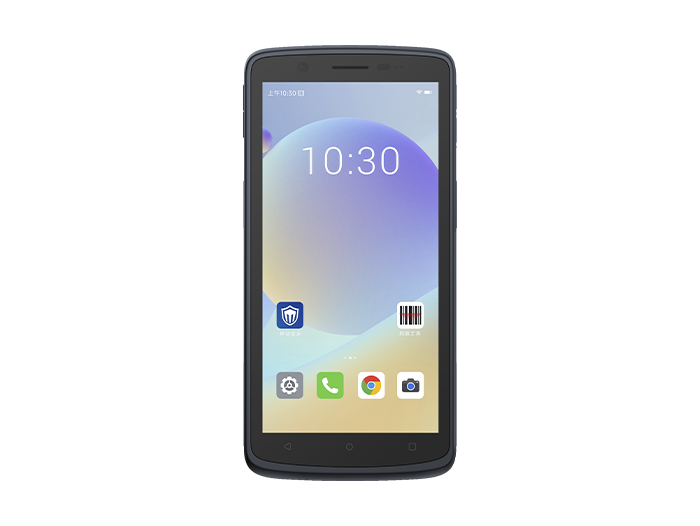
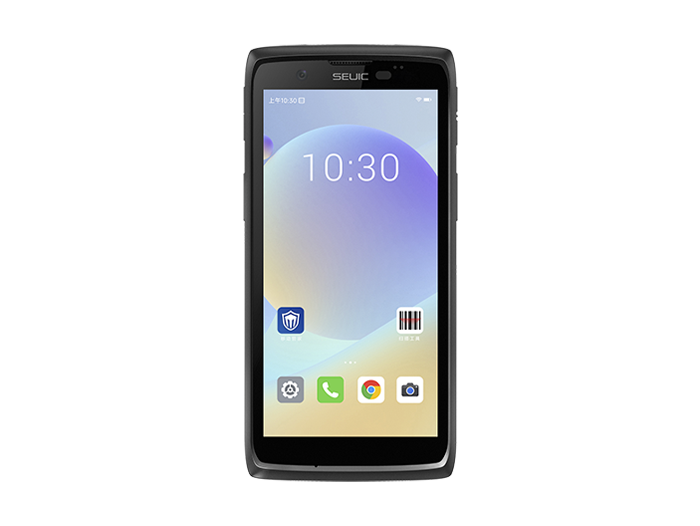
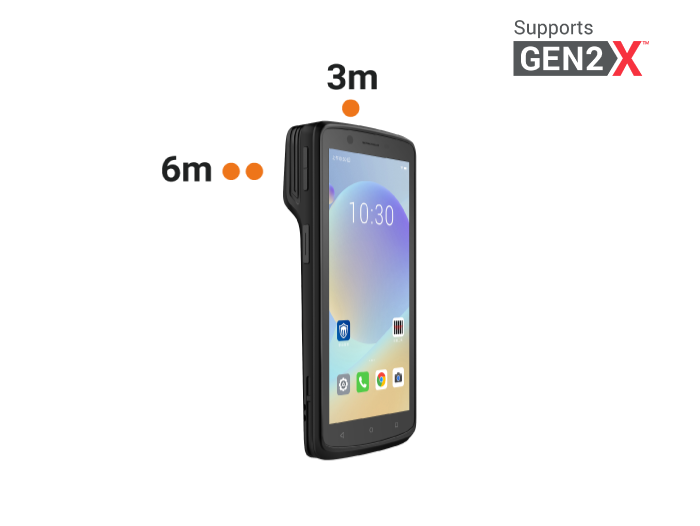
6.1 Recommended Barcode PDA: SEUIC CRUISE2
An Android handheld terminal built for harsh industrial scenarios — perfectly adapted to PCB warehouse challenges of oily codes, low light, and reflective scanning. Powered by an octa-core 2.0GHz processor with a 5.5-inch screen supporting wet-hand and gloved-hand operation. Removable 5000mAh large battery supports hot-swap across full production shifts.
Key highlights: AI algorithm precisely recognizes oily, worn, and low-contrast laser-etched codes. 16MP large-aperture camera captures clear photo evidence in low light. Supports Bluetooth-connected inspection equipment and stable MES/WMS system operation — one-stop solution for receiving, inspection, and issuing across the full composite workflow.

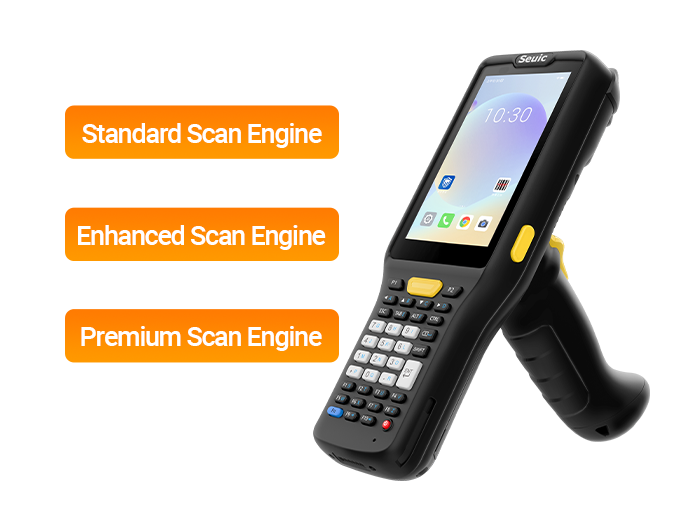
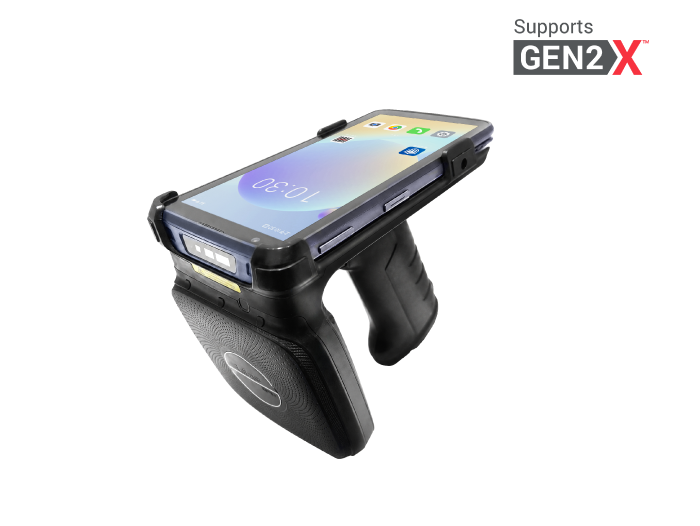
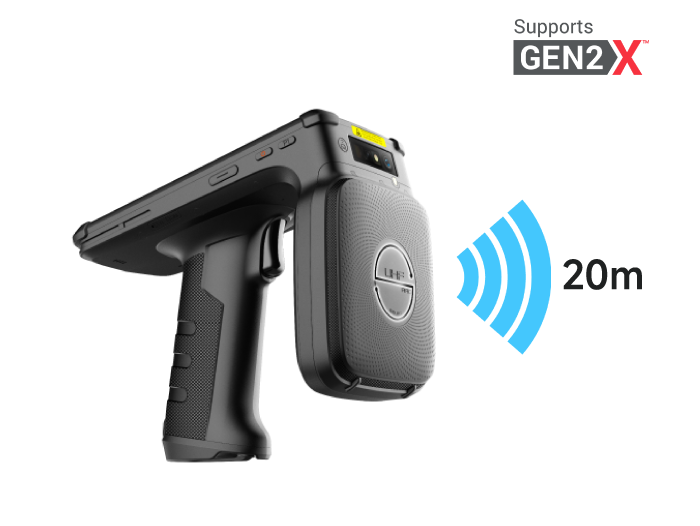
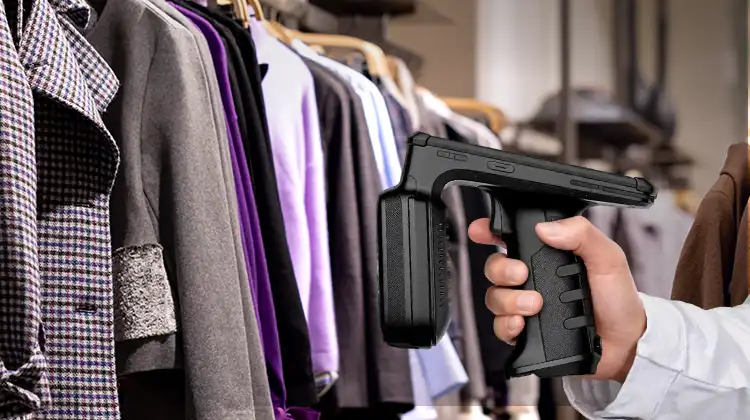
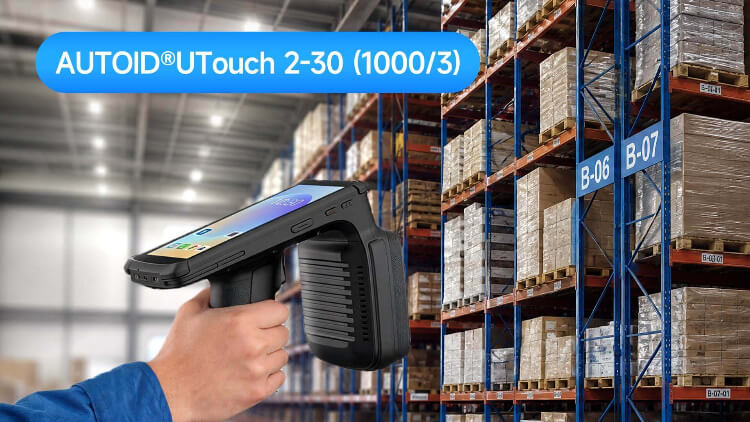
6.2 Recommended RFID Handheld Reader: SEUIC AUTOID UTouch 2-30 (1000/3)
An ultra-long-range UHF RFID handheld terminal designed for PCB bulk counting and high-rack operations. 30-meter ultra-long read distance. Reads thousands of tags in 3 seconds. Multi-polarization auto-recognition technology adapts to various tag attachment angles.
Equipped with an 11,700mAh large-capacity battery. IP67 dust/water resistance. 1.5-meter drop survival. Suitable for workshop, warehouse, and outdoor multi-scenario use. Also supports barcode and NFC reading — seamlessly bridges with existing barcode systems without full-scale modification. In metal and liquid-dense scenarios, pairs with anti-metal tags for stable operation.
7. Common Selection Mistakes — 90% of Factories Have Made Them
Mistake: Once we deploy RFID, we don't need PDA anymore.
RFID only solves bulk counting efficiency. Board-by-board and roll-by-roll precision error-proofing and traceability verification still depend on PDA. They are not substitutes.
Mistake: Barcode technology is outdated — RFID is more advanced.
Board-edge codes and box codes are universal industry standards in PCB manufacturing. The barcode system is mature, stable, and carries zero modification cost. Blindly replacing it with RFID only adds unnecessary deployment risk and expense.
Mistake: RFID is completely unusable in metal and liquid environments.
It's not unusable — standard tags are affected. But with specialized anti-metal tags and standardized attachment solutions, it works normally. Just evaluate the solution upfront.
When selecting equipment for your PCB warehouse, avoid blindly chasing the newest or trendiest option. Don't get stuck debating whether PDA or RFID is more advanced. Focus on your actual operational pain points: if you need precision error-proofing and stable traceability, go with PDA. If you need high-efficiency counting and labor savings, deploy RFID. Match devices to your specific scenarios, leverage each one's strengths, and that's the optimal path to cost reduction and efficiency improvement in your PCB warehouse.
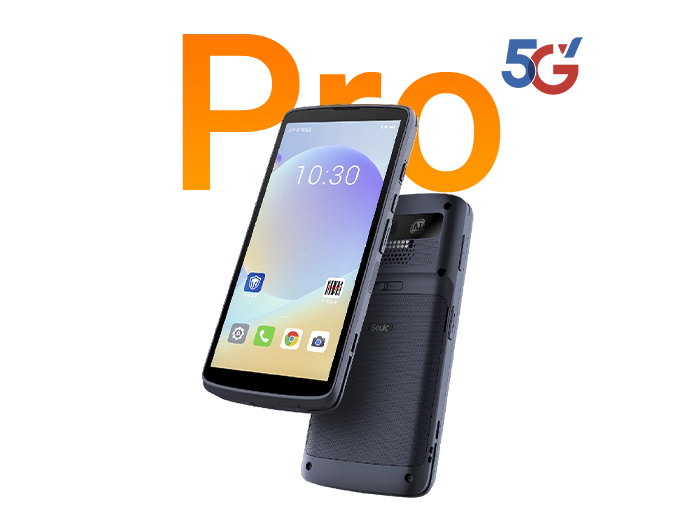
Innovation is the core soul of SEUIC. SEUIC pioneered the full-screen, lightweight industrial handheld "CRUISE" and has made rapid breakthroughs in UHF RFID and industrial tablets, successfully breaking the long-standing monopoly of international brands. Currently, SEUIC holds 421 software copyrights and patents. Leveraging six core technologies — full-scenario barcode recognition, AI OCR vision algorithms, UHF RFID recognition technology, and 5G wireless communications — we continue to build long-term competitiveness in the digital era.
Related News
-
2D Barcode Scanner Buying Guide: Decoding, Environment & Lifecycle
Product Updates | 2026.10.10Learn More
-
What Is a 2D Barcode Scanner? Definition, How It Works & Supported Symbologies
Product Updates | 2026.10.09Learn More
-
How to Choose a Rugged Android Tablet? Ditch Spec Stacking, Use Scenario Tables
Product Updates | 2026.10.09Learn More
-
What Is an RFID Tag? Structure, Working Principle & Common Uses
Product Updates | 2026.10.08Learn More