




Portable Barcode Scanner Buying Guide
Don't buy a portable barcode scanner based solely on whether it "can scan QR codes." Many budget models perform fine in a demo but fall apart on the production line, in cold storage, at the pharmacy counter, in outdoor utility pits, or in high-rack warehouses — slow decoding, poor long-range read rates, unreliable damaged-code recognition, and system incompatibility. To avoid costly rework down the road, your RFPs and bid documents should quantify decoding capability, scan range, ingress protection, system integration, and total cost of ownership.
1. Reading Specifications: Ensuring Accuracy and Coverage
1.1 Symbology Coverage
List all symbologies your operations require:
1D: Code 128, EAN/UPC, Code 39, ITF
2D: QR, Data Matrix, PDF417, Aztec
Specialty: GS1, pharmaceutical serial numbers, DPM (direct part marking)
Scanners that only support a subset of symbologies are unsuitable for traceability systems.
Industrial applications: Require support for laser-engraved, dot-peened, and low-contrast DPM codes
1.2 Decode Rate and First-Pass Read Rate (FPR)
Don't just specify "decodable." Specify:
First-pass read rate ≥ 99%
Field test of at least 5,000 scans with error rate below threshold
For high-throughput sorting and receiving lines: ≥ 300 scans/second
For general warehousing: 60–120 scans/second is acceptable
For damaged, blurry, low-contrast, reflective, or curved-surface codes, require live testing with your actual sample codes — don't rely on manufacturer claims alone.
1.3 Minimum Resolution (mil) and Depth of Field
Small items (PCBs, jewelry, pill bottles): Specify minimum module size, e.g., 3 mil or 5 mil capability
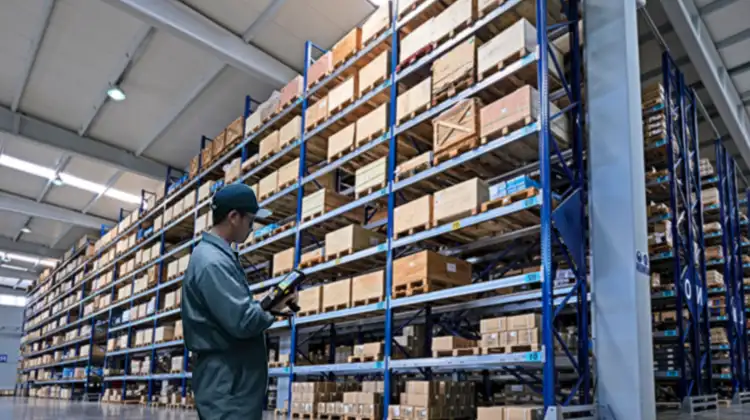
High racks and distant pallets: Require telephoto or extended depth-of-field optics
Write clearly in your RFP: "Stable read of [symbology] at [X mil] over [distance range]."
Separately list read range requirements for long-distance scenarios (e.g., high racks) — don't substitute with standard close-range imagers.
1.4 Angular Tolerance and Motion Tolerance
Pitch, skew, and rotation tolerances directly impact workflow efficiency. Common requirements: pitch/skew ±60°, roll 360°
For conveyor lines or high-speed pass-through, evaluate motion blur tolerance
Conduct separate sample tests for on-screen codes, colored codes, low-contrast codes, and dim-light environments.
2. Hardware and Environment: Durability and Reliability
2.1 Ingress Protection (IP Rating)
Office / retail: IP52–IP54 is generally sufficient
Warehouse / factory: IP65 recommended
Outdoor, washdown, spray, or humid environments: IP67/IP68
Note: IP rating covers dust and water ingress only — not drop resistance.
Food processing, pharmaceutical, and cold storage environments should additionally specify:
Disinfectant-compatible housing
Chemical-cleaner resistance
Anti-condensation design
2.2 Drop Resistance
Specify drop height by use case:
General commercial: 1.2m
Industrial: 1.8m
Heavy-duty: 2.0–2.5m
Pair with tumble count for more rigorous testing.
Temperature:
Operating: 0°C to 50°C for standard environments
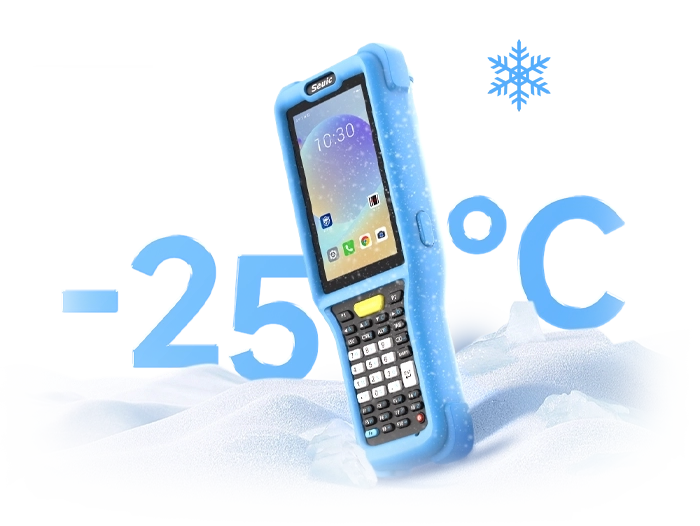
Cold storage: Require low-temperature battery and certification; some models support -20°C or lower
Special environments:
Explosive / hazardous: ATEX or IEC 60079 certification
Oily production lines: Oil-resistant housing
Medical: Disinfectant compatibility
2.3 Wireless, Interface, and Offline Capability
Select by system architecture:
Fixed workstation: USB / RS232
Mobile operation: Bluetooth, 2.4G, Wi-Fi
Large campus / field operations: Consider 4G/5G
Specify protocol modes: HID, COM/virtual COM, SSI, BLE, SPP, and integration method with WMS/ERP/POS.
Don't just quote open-air wireless range. Specify: "Through-shelf range in warehouse environment ≥ X meters."
For Wi-Fi scenarios, list 2.4/5 GHz band support, roaming capability, and signal threshold.
For offline operation, require onboard storage capacity and automatic retransmission upon reconnection.
2.4 Battery and Continuous Operation
Single-shift retail: 8 hours minimum
Multi-shift warehousing / all-day field work: Hot-swappable battery or ≥ 12-hour runtime, plus charging cradles and fast charging
In your RFP, specify: "Runtime + charge cycle life + spare battery ratio" — e.g., 2–3 spare batteries per 10 units.
For cold storage, separately confirm lithium-ion battery degradation and alternative solutions.
3. System and Management: Avoiding Integration Headaches
Barcode scanners: Focus on driver support, HID/COM profiles, and programming manuals.
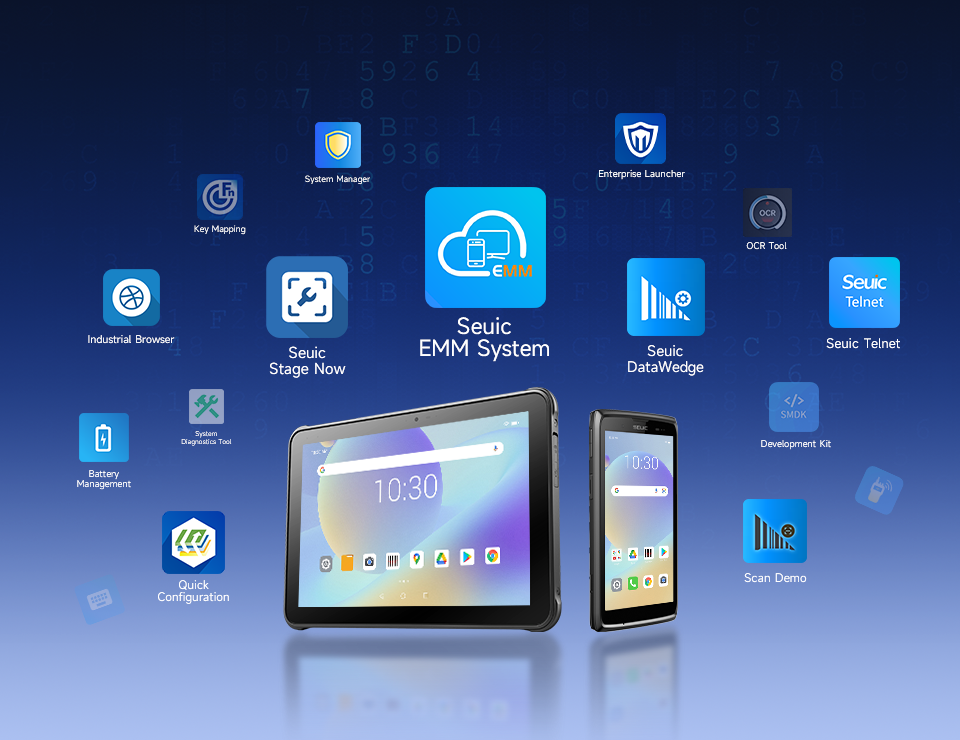
Mobile computers (industrial PDAs): Focus on OS version, security patches, MDM support, remote configuration, and firmware distribution.
Large enterprises should include MDM license cost, policy deployment, and lost-device lock/wipe in TCO calculations.
When integrating with ERP/WMS/MES/EMR systems, confirm:
Prefix/suffix configuration
UTF-8 vs ASCII encoding
Scan-to-jump-field behavior
Batch import capability
Logging and audit trails
Pharmaceutical scenarios require additional compliance and audit trail documentation.
4. Total Cost of Ownership (TCO): Low Unit Price ≠ Cheap
Don't budget based on device unit price alone. Calculate over a 3–5 year horizon:
Host device
Base station / cables
Spare batteries
Warranty and extended service
MDM licenses
Integration and commissioning
Training
Firmware upgrades
Backup units and turnaround time for repairs
Industry estimates:
Lightweight 2D Bluetooth scanners: tens to low hundreds of USD
Enterprise-grade industrial mobile computers: hundreds to thousands of USD
The difference comes down to durability, service, and lifecycle support.
For large-volume purchases, follow this process: 2–4 week on-site pilot → small batch → full rollout. This is far more reliable than comparing prices alone.
Replace "can scan QR codes" with verifiable acceptance criteria: what codes to scan, at what distance, whether damaged codes are readable, in what environment, connected to what system, who manages it remotely, and what it costs over 3 years. Send demo units for 72-hour or 2-week stress tests before writing final tender specifications. This approach significantly reduces misprocurement and rework.
SEUIC Technologies Co., Ltd., founded in 2002, is dedicated to mastering core technologies and driving innovation to deliver outstanding branded products, including mobile computers, RFID readers, tablet computers, barcode scanners, and fixed-mount readers. With highly reliable products and efficient service, our solutions are widely deployed across manufacturing, retail, logistics, healthcare, and other industries. We equip frontline workers with more durable real-time data collection tools, helping you improve operational efficiency and take productivity to the next level.
Related News
-
What Is RFID Meaning? Definition & Common Beginner Misconceptions
Product Updates | 2026.09.21Learn More
-
What Is RFID? A Complete Guide to Radio Frequency Identification: Definition, Working Principle & Applications
Product Updates | 2026.09.21Learn More
-
2D Barcode Scanner for Automotive DPM Traceability
Product Updates | 2026.09.20Learn More
-
Portable Barcode Scanner for High-Rack Warehouses
Product Updates | 2026.09.20Learn More