


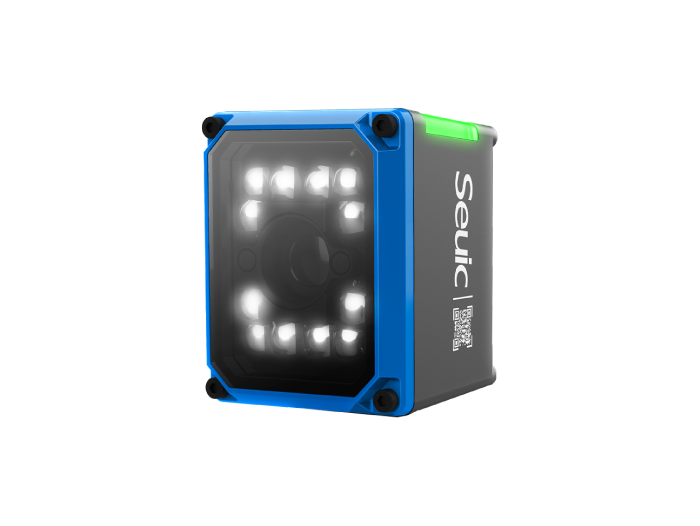
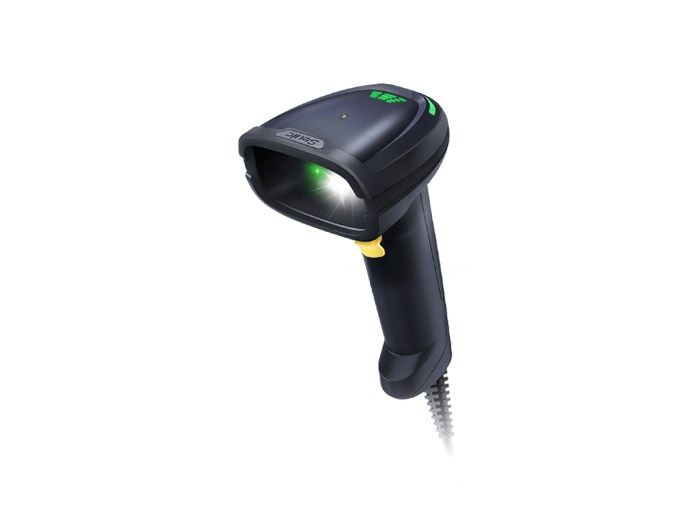
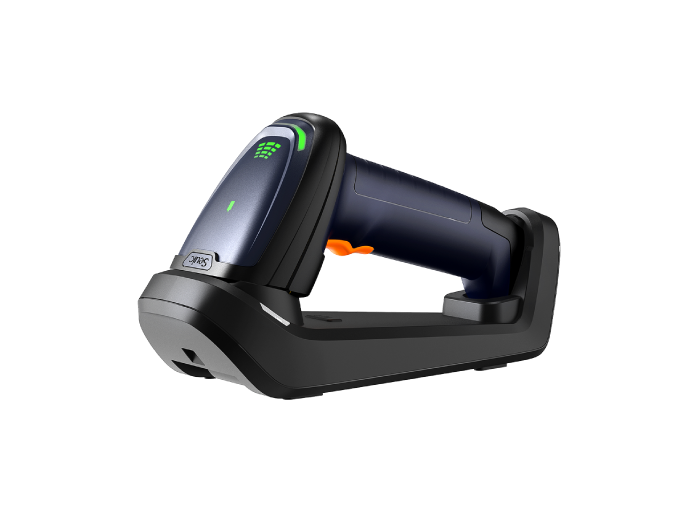
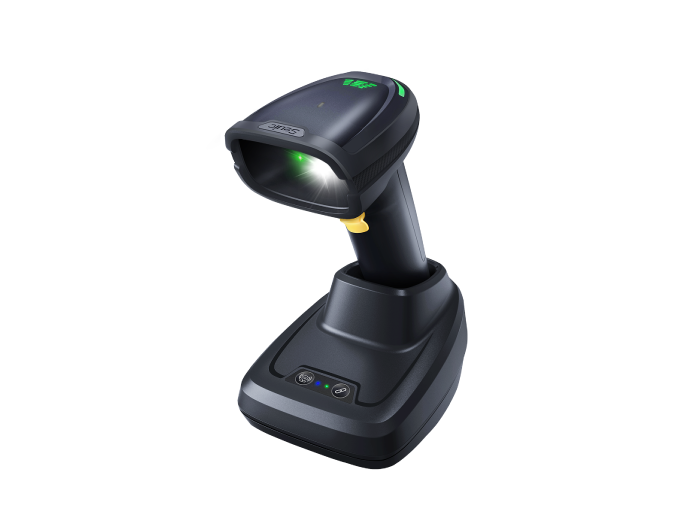


Portable Barcode Scanner Vendor Evaluation Guide: Support, Lifecycle & Fleet Management
On factory production lines, third-party warehouses, retail stores, hospital pharmacies, gas/electric meter reading sites, and government field operations, a portable barcode scanner is no longer just a tool for "scanning barcodes." It has become a data collection terminal connecting WMS, ERP, MES, HIS, and metering systems. Many procurement teams compare scanning speed, battery capacity, screen size, and ingress protection during the bidding phase, but the real problems surface two to three years after deployment: firmware stops updating, Android security patches dry up, scan engines break with no replacements available, bulk configuration requires manually setting up each device, and compatibility issues emerge whenever a production line or warehouse expands. This article provides a practical vendor evaluation framework focusing on support systems, product credentials, software ecosystems, and long-term lifecycle management.

1. Why Vendor Service Capability Determines Long-Term Risk When Specs Are Similar
When multiple portable barcode scanners have comparable specifications on paper, it is often the post-sale service — not the initial specs — that drives total cost of ownership (TCO). For plant managers, warehouse supervisors, retail operators, and 3PL leaders, every minute of device downtime can mean picking backlogs, production line stoppages, checkout queues, or delayed nursing records.
During evaluation, separate "hardware specs" from "service specs" and score them independently:
Firmware & system maintenance: Does the vendor release fix patches regularly? Are there release notes? Are Android security patches monthly, quarterly, or ad hoc? What is the SLA for critical vulnerability response?
Spare parts & replacement system: Are scan heads, batteries, charging cradles, screens, and motherboards available as individual spare part SKUs? What is the RMA turnaround time? Are loaner units or on-site replacement offered?
Fleet management capability: Can hundreds of devices be configured in bulk for Wi-Fi, APN, app whitelists, and scan parameters? Does the solution support zero-touch enrollment, profile push, and remote reset?
Industry response mechanism: During night shifts, peak season promotions, holidays, hospital surges, or seasonal meter-reading tasks, can the vendor provide expedited support?
Failure data visibility: Can the system report per-device uptime, battery health, scan failure rate, and app crash statistics — instead of waiting for users to report issues?
For QC inspectors, warehouse staff, nurses, and meter readers, a poorly performing scanner increases manual data entry. For managers, the lack of fleet management means that the larger the device fleet grows, the higher the hidden costs. Therefore, it is recommended to itemize "three-plus year service costs" separately during bidding, rather than focusing solely on unit price.
2. How to Evaluate Product Credentials: Drop/Dust/Water Testing, Long-Range Field Tests & Industry Deployment Volume
Many portable barcode scanners claim to be "industrial grade," "durable," and "long range," but procurement teams need to translate marketing claims into verifiable evidence.
2.1 Protection & Reliability Test Reports
Request reliability data from the vendor's own lab or a third-party facility — preferably CNAS-accredited test reports. Focus on: dust/water ingress verification, drop height and number of drops, tumble testing, high/low temperature cycling, humidity, vibration, and electrostatic discharge (ESD). For cold storage, outdoor power grid inspection, and port transshipment scenarios, also review low-temperature startup and condensation protection tests separately.
2.2 Long-Range Scanning Field Tests — Not Just Rated Meters
Actual read distance depends on barcode density, contrast, dirt levels, screen glare, and outdoor light conditions. Conduct sample tests along real operational paths: large labels on high racks, small labels on floor stacks, courier waybills, medical wristbands, electronic shipping labels, and QR codes on metal nameplates. If the vendor claims long-range capability, request gradient tests from 0 to X meters using the same SKU, lighting, and angle, and record the first-pass read rate.
2.3 Industry Deployment Volume & Comparable Case Studies
Deployment volume is more valuable than a single pilot. Ask: How many units of the same model have been shipped cumulatively in manufacturing, warehousing, retail, healthcare, and utilities? Are there case studies similar to your own operation — same barcode types, same systems, same shift intensity? Request anonymized data such as device uptime, average annual failure rate, and average scans per device per day.
Making decisions based solely on brochure specs often leads to a "repair spike" between months 18 and 36. Cross-referencing test reports, field long-range data, and industry deployment volumes reduces the probability of selecting the wrong model.
3. Service & Ecosystem: SDK, System Integration, EMM/MDM & Security Patches
The value of a portable barcode scanner lies not in the hardware itself, but in how stably it integrates into business systems. When evaluating the software ecosystem, ask vendors along four main lines.
3.1 WMS/ERP/MES/HIS Integration Examples
Request verifiable integration templates, such as: inbound putaway, outbound picking, cycle counting, quality traceability, production line reporting, store receiving, pharmacy dispensing, and metering data collection. Check whether standard APIs, sample code, and data format documentation are provided, and whether offline caching with automatic sync upon network recovery is supported. For manufacturers, MES reporting and batch traceability require low latency; for 3PL and e-commerce fulfillment, WMS wave picking must handle peak concurrency.
3.2 SDK
Before purchasing, confirm that the SDK covers scanning, RFID (if applicable), camera, NFC, positioning, printing, and other modules. Are Java/Kotlin, iOS, Web, or cross-platform samples available? Is the technical documentation continuously updated? If custom barcodes or special labels are encountered, can the vendor optimize decoding algorithms within a reasonable timeframe?
3.3 EMM/MDM Management
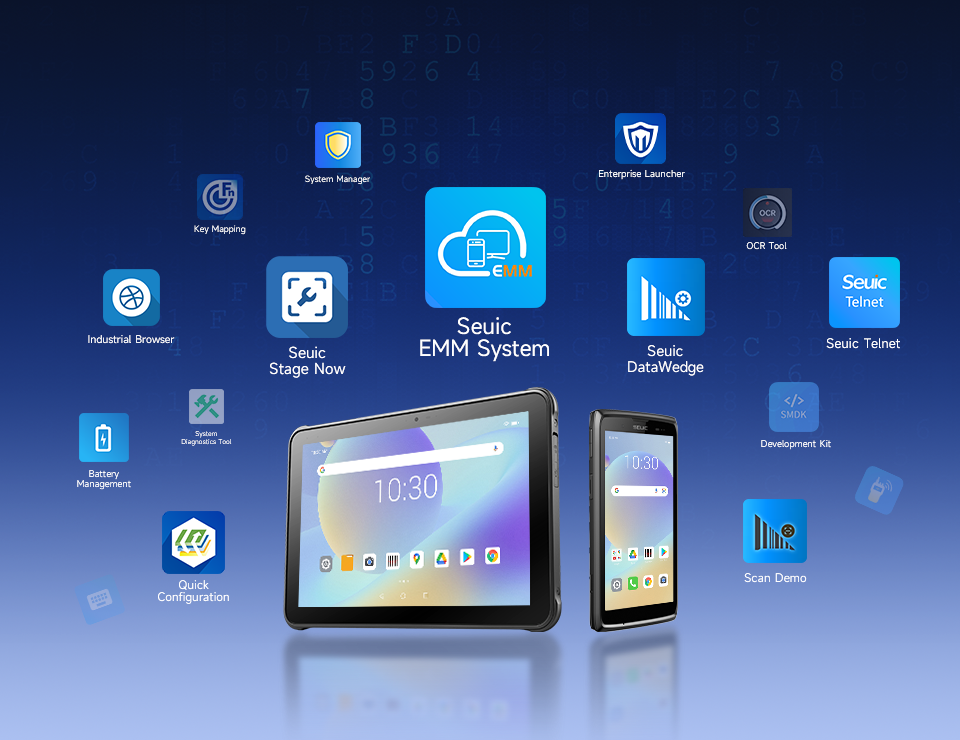
When the device fleet exceeds several dozen units, manual per-device setup becomes unsustainable. Evaluate whether the vendor provides or is compatible with EMM/MDM. Minimum capabilities should include: bulk enrollment and policy push, app distribution and version control, centralized Wi-Fi/VPN/scan parameter configuration, device health monitoring, remote lock and wipe for lost devices, and usage compliance auditing. For multi-region retail, supermarket chains, and multiple distribution centers, centralized management significantly reduces on-site IT workload.
3.4 Android Security Patches & Maintainability Window
Clarify: the Android major version upgrade roadmap, security patch release frequency, the point at which security updates stop, and who is responsible if the custom ROM has compatibility issues. For industries with strict compliance requirements — hospitals, government, power utilities — also confirm whether the device supports app isolation, log auditing, certificate management, and enterprise app store distribution.
In addition, hardware serviceability should be written into the contract: is the scan engine modular and replaceable? Will batteries be supplied long-term? Are there alternative part numbers for charging ports and key structural components? Many devices are not worn out — they are retired because a small part is discontinued.
4. Lifecycle Management: Avoid Running Out of Spare Parts & System Support After Three Years
The most common hidden risk in portable barcode scanner procurement is winning the bid on low upfront pricing, only to find no path to extend the device's useful life later. Factories, warehouses, retail chains, and utility companies should incorporate lifecycle requirements into their technical specifications.
Recommended thresholds:
Supply period: Key models should be guaranteed for at least 5 years of continuous supply, preventing discontinuation when production lines expand or warehouses add capacity.
System iteration: Clearly define responsibility and cadence for Android security patches, major version upgrades, driver updates, and scan decode library updates.
Spare parts period: Even after the host model is discontinued, core spare parts — batteries, scan heads, cradles, screens — should continue to be available for several years.
Migration path: When a new generation is released, does it remain compatible with existing MDM policies, app configurations, barcode rules, and user training assets?
Lifecycle cost model: Combine purchase price, failure rate, replacement cost, MDM management fees, system integration fees, and downtime losses — rather than looking at hardware quotes alone.
For managers, a lifecycle commitment is essentially a "risk commitment." If a vendor only guarantees one year and is vague about third-year spare parts, even the best initial specs do not justify large-scale deployment.
5. Recommended Solution: SEUIC AUTOID Q7-(Grip) Handheld Terminal
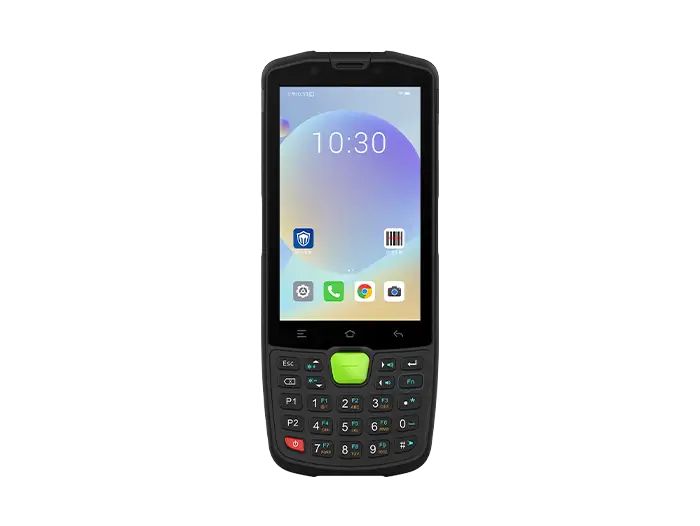
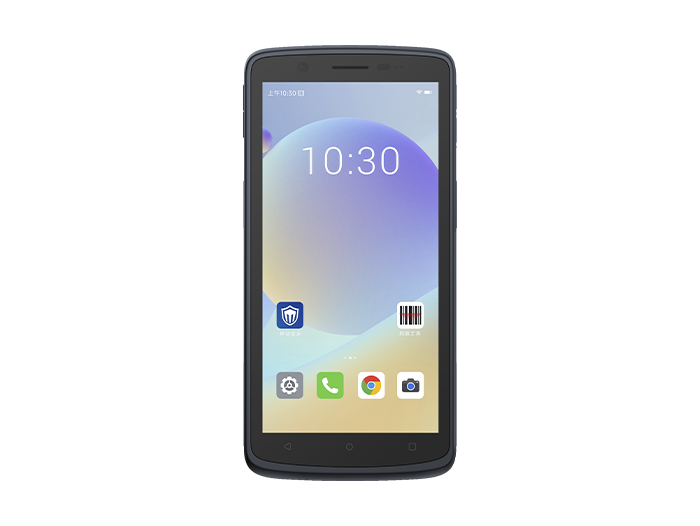
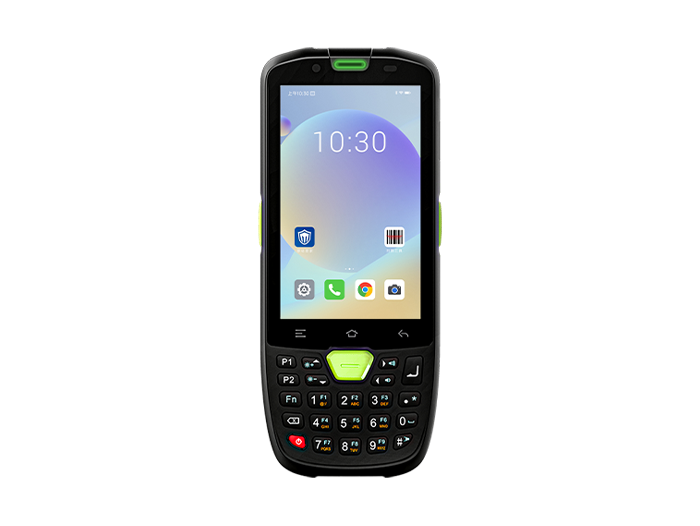
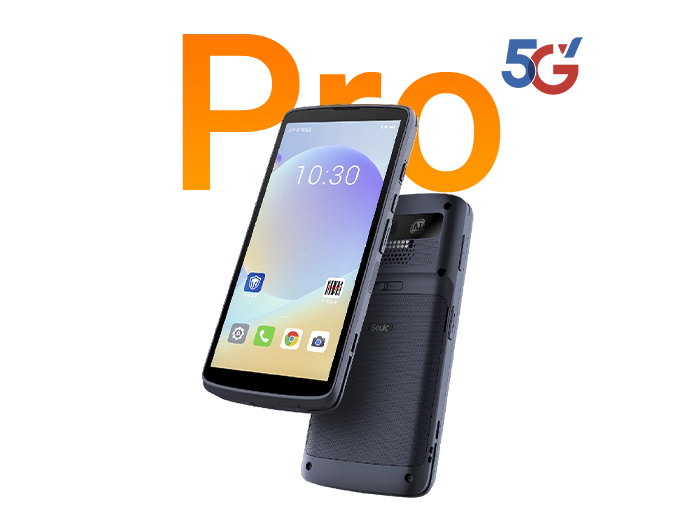
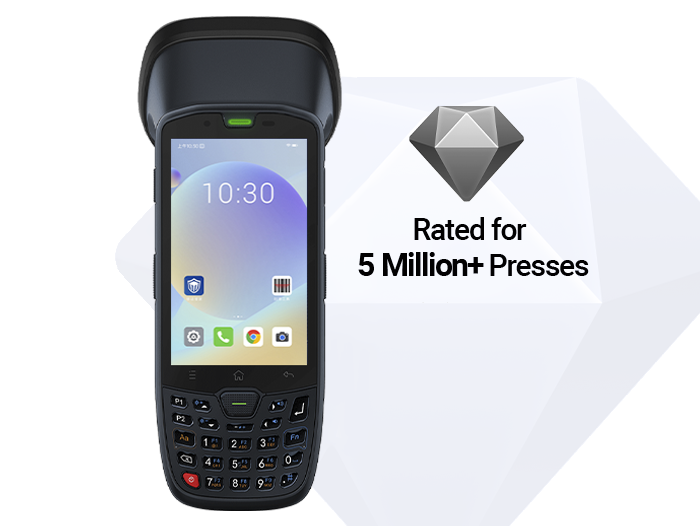
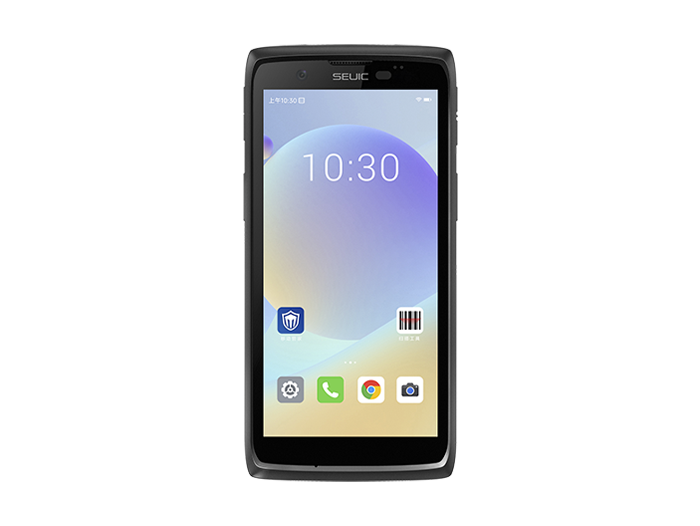
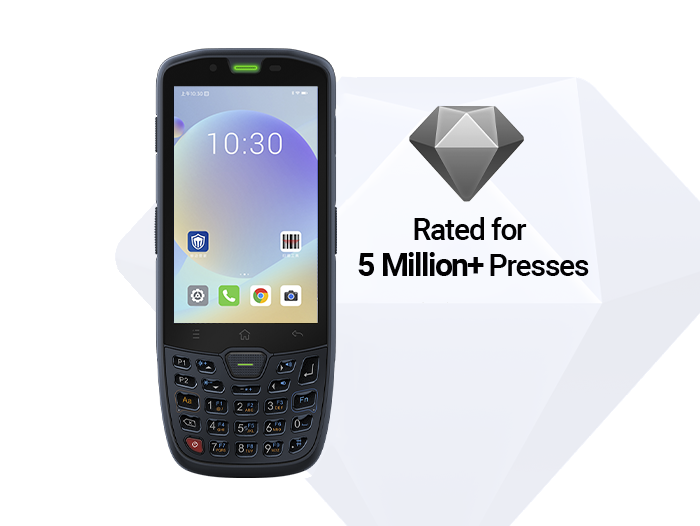
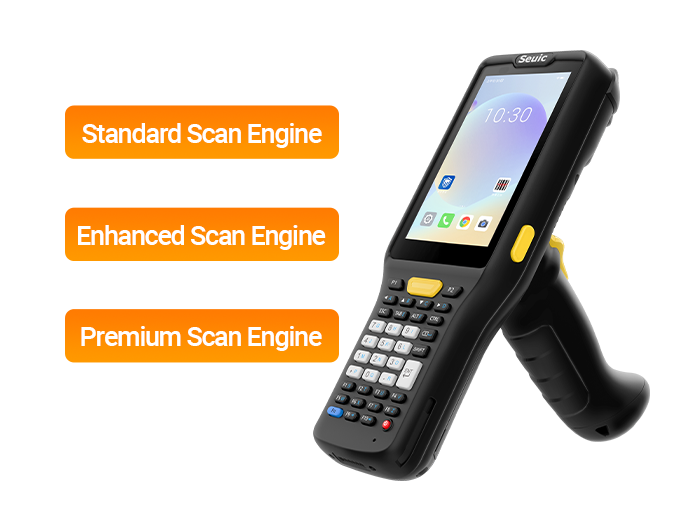
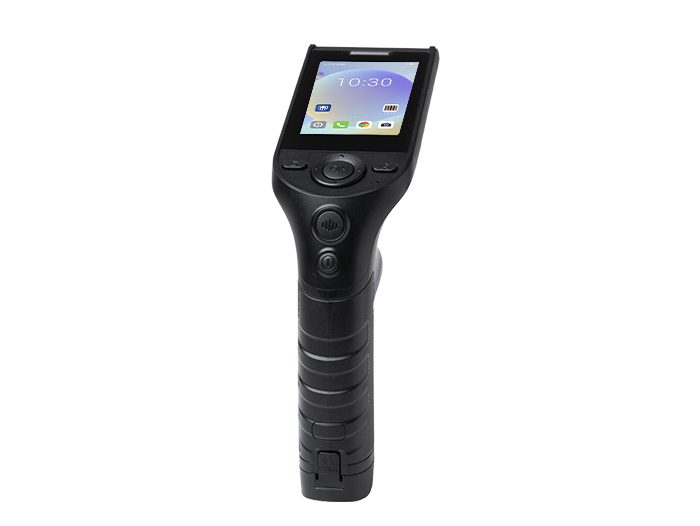
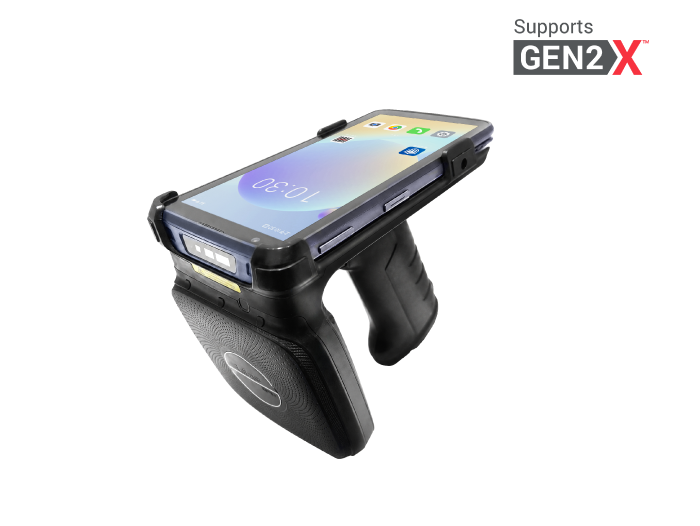
For industrial and warehousing scenarios requiring long-term bulk deployment, consider the SEUIC AUTOID Q7-(Grip). This product is positioned as a portable handheld PDA for efficient warehousing and industrial data collection.
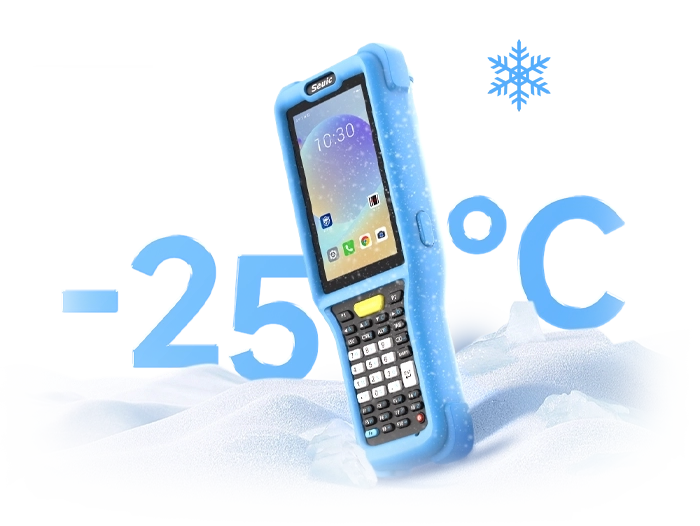
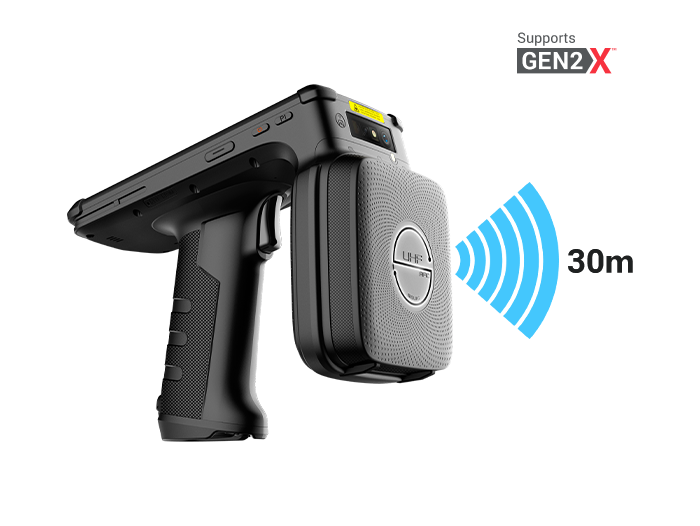
Product credentials: The AUTOID Q7-(Grip) emphasizes industrial-grade reliability, with over 1 million units deployed globally. It features IP65 protection, a Qualcomm platform with Android 14, and SEUIC's proprietary Wi-Fi Well technology for improved connection stability in complex wireless environments. Its operating range covers 0–30 meters, and it supports environments from ambient-temperature warehousing to -25°C cold chain operations — suitable for high racks, outdoor transshipment, cold storage, and production-line adjacent warehouses.
Service & ecosystem: This model can be managed via SEUIC EMM, covering MDM (device management), MAM (application management), and MCM (content management). It supports bulk deployment, status monitoring, configuration updates, app management, data collection, and remote wipe — enabling unified O&M across multiple plants, warehouses, and stores. For projects integrating with WMS/ERP/MES, the scanning SDK, staging configuration, and centralized policies reduce on-site debugging effort. Android 14 combined with EMM helps enforce app whitelisting, security patch push, and remote troubleshooting. During procurement, further confirm with SEUIC regarding scan engine replacement, long-term battery supply, SDK samples, and industry templates.
Lifecycle: The AUTOID Q7-(Grip) product documentation states a 5+ year lifecycle investment target, supported by long-term firmware/system maintenance, sustainable spare parts supply, and the SEUIC software ecosystem — reducing the risk of "no spare parts after three years, difficult to scale after five years." For users planning deployments of 1,000+ units in manufacturing, logistics, retail, and utilities, a three-phase validation approach (pilot → small batch → mass rollout) is recommended, with Android security patch cycles, EMM reporting, and battery health policies written into the service agreement.
6. Case Study: AUTOID Q7-(Grip) Terminal Upgrade at a Sino-German Joint Venture Automotive Plant
A Sino-German joint venture passenger car manufacturer relies on high automation and standardization to support vehicle production. However, as its existing handheld terminals aged, device performance degraded, failure rates increased, and maintenance costs rose. Meanwhile, compatibility gaps emerged between the system version and newly deployed business applications, causing hardware to slow down new process rollouts. On the production line — during data collection, material receiving and issuing, and warehouse verification — repeated lags, rework, and adaptation issues directly disrupted the production pace.
To address these challenges, the manufacturer introduced the SEUIC AUTOID Q7-(Grip) to replace the aging terminals. Leveraging high-performance scanning, industrial-grade durability, long battery life, and seamless system compatibility, the device covers multiple scenarios across production and warehousing while removing integration barriers between legacy and new systems.
After deployment, daily terminal operations saved approximately 2.5 hours per day, significantly smoothing production flow. Equipment failure rates dropped by 90%, and annual maintenance and system adaptation costs were reduced by over 350,000 RMB, minimizing line stoppages and safety stock pressure caused by terminal anomalies. The solution supports the launch of new business processes with stable data capture and rapid compatibility, improving manufacturing execution and inventory collaboration efficiency, and establishing a replicable model for mobile terminal upgrades in automotive plants.
For more case details, please click here.
When evaluating portable barcode scanner vendors, hardware specs are just the entry ticket. What really determines cost over three-plus years is: verifiable drop/dust/water and long-range test results, SDK and WMS/ERP/MES ecosystem integration, EMM/MDM fleet management capabilities, and a clear Android security patch and 5-year spare parts strategy. It is recommended that enterprises build a vendor scorecard weighted as follows: credential testing 20%, ecosystem integration 30%, service SLA 25%, and lifecycle 25%.
If you are currently bidding for scan terminals in factories, warehouses, retail, or utilities, feel free to contact SEUIC for the AUTOID Q7-(Grip) specification sheet, a demo, and an industry pilot proposal.
Related News
-

Rugged Android Tablet for Retail Stores: Inventory Management, Assisted Selling & Store Inspections
Product Updates | 2026.09.30Learn More
-

11-Inch Rugged Android Tablet: One Device for Inventory, Sorting & Dispatch
Product Updates | 2026.09.30Learn More
-
Barcode Scanner vs Handheld Terminal: Selection Guide for PCB Factory Digital Transformation
Product Updates | 2026.09.29Learn More
-
RFID Handheld Reader Selection: High-Bay Needs Range, Pallet Needs Speed
Product Updates | 2026.09.29Learn More