




Portable RFID Reader Buying Guide
Portable RFID readers come with a dizzying array of parameters — frequency, power, antenna, operating system, battery, management console. Overlook just one, and you could face missed reads on-site, costly rework, or a device that simply won't talk to your WMS or ERP down the road.
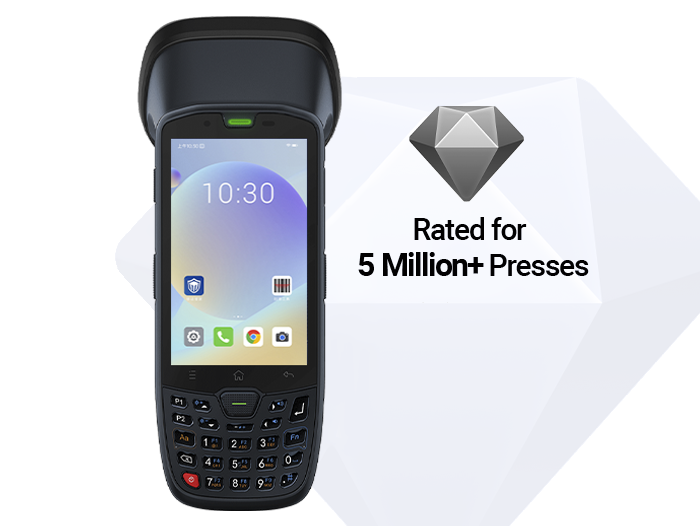
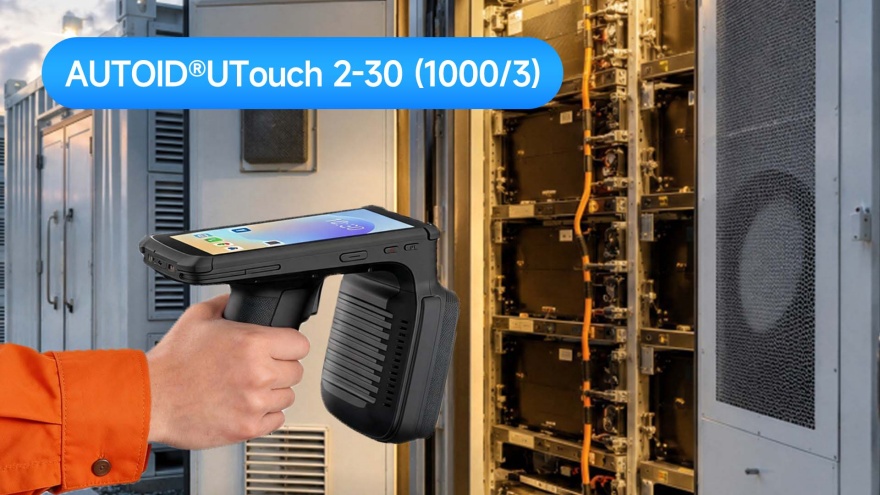
Below, we've organized 8 specifications you must check one by one when selecting a device, structured across four dimensions: RF Performance → Hardware Durability → Software Ecosystem → System Integration. We've also included the Seuic AUTOID UTouch 2-30 (1000/3) ultra-long-range UHF solution as a benchmark for comparison.
1. RF Performance: Frequency, Power, and Receiver Sensitivity
1.1 Frequency Range and Regional Compliance
UHF portable RFID readers typically cover 860–960 MHz, but available frequency bands vary by country/region: China commonly uses 920–925 MHz, the US uses 902–928 MHz, and Europe uses 865–868 MHz. [Source: GS1 EPC / ISO 18000-6C regional spectrum guidelines] If you're deploying across regions, make sure the device supports multi-band operation or regional firmware switching to avoid compliance issues.
1.2 Output Power
Focus on the adjustable range and upper limit. Handheld UHF readers generally max out at ≤30 dBm (about 1W), though some overseas models can reach 33 dBm subject to local regulations. [Source: ISO/IEC 18000-6C and regional RF standards] More power isn't always better: for high-rack warehouses and outdoor inspections, higher power helps; for retail clothing racks with dense tags or hospital consumables scanned at close range, you'll want to dial it down to reduce false reads and interference from the human body.
1.3 Receiver Sensitivity
Aim for ≤ -80 dBm or better. Sensitivity determines whether the device can reliably pick up weak return signals from small tags, or tags near liquids and metal. For scenarios involving beverages, personal care products, pharmaceutical cold chain, or metal tools, the receive chain matters more than raw transmit power alone.
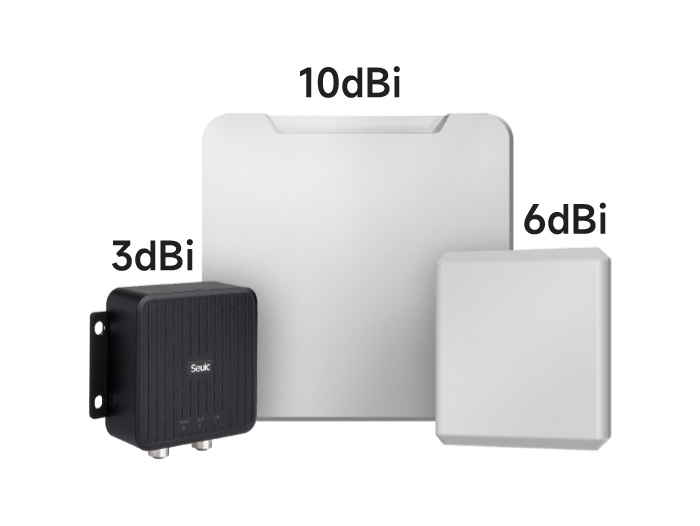
2. Antenna and Batch Reading: Polarization, Range, and Anti-Collision
2.1 Antenna Polarization
Circular polarization works well when tag orientation is random — think retail, library books, and full-pallet inventory. Linear polarization gives you longer range when tag alignment is consistent. Multi-polarization automatic identification dynamically adapts to tag orientation on the fly.
2.2 Read Range and Batch Read Rate
Don't just trust a lab spec that says "30 meters in open air." Test with your actual tags: how far does it read white cards, inlays, anti-metal tags, and anti-liquid tags? How long does it take to read 100, 500, or 1,000 densely stacked tags without missing any? Key metrics to verify: single-tag long-range performance, dense batch reading with zero misses, and stable anti-collision algorithms. The slotted algorithm defined by EPC Gen2 / ISO 18000-6C directly determines inventory efficiency at the hundred and thousand tag levels.
3. Hardware Durability: Protection, Drop Resistance, Temperature and Humidity
Industrial sites, warehouses, substations, hospital campuses, and outdoor meter reading all have very different durability requirements.
Ingress protection: At least IP65. For dusty environments or areas exposed to spray, go with IP67. Cold storage, outdoor rainy seasons, and sanitation enforcement should start at IP67.
Drop resistance: For warehousing and industrial use, ≥1.5 meters is recommended. For frequent forklift operations or outdoor use, consider 2 meters.
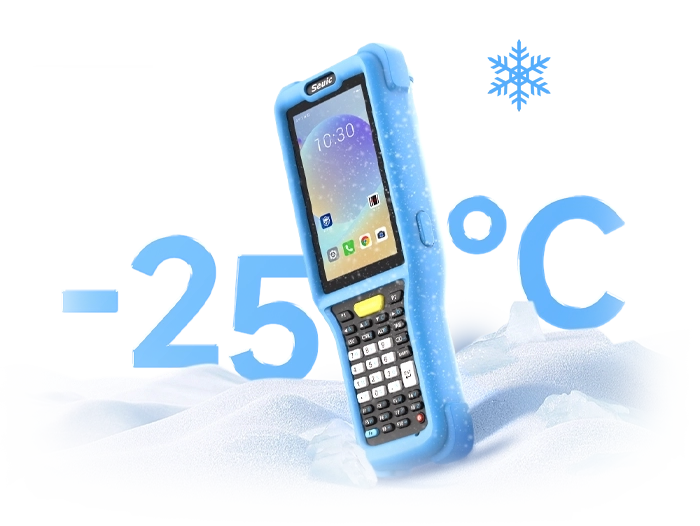
Operating temperature: The standard -20°C to 50°C range covers most warehouses, factory floors, and electric/water utility outdoor work. For cold storage, test battery performance separately at low temperatures.
Additional considerations: ESD protection, 5%–95% non-condensing humidity, glove-compatible touchscreen, and ergonomic handle design.
4. Software Ecosystem: OS, SDK, MDM, and Offline Cache
Hardware reads the tags, but software makes the project work.
4.1 Operating System and Lifecycle
Prioritize Android versions with long-term support. Recommended requirement: Android 12 or higher. For mission-critical scenarios, go straight to Android 14 and ask about the patch commitment roadmap.
4.2 SDK and Integration Capability
Request the following from your vendor: Android SDK, sample code, RFID middleware, REST/LLRP/MQTT interface documentation. Confirm compatibility with SAP EWM, Oracle WMS, Kingdee/Yonyou ERP, hospital SPD systems, and utility asset management platforms.
4.3 Device Management and Offline Cache
Four things to verify: MDM for remote configuration, device lockdown, and firmware updates; application whitelisting; offline cache with automatic retransmission when connectivity resumes; and local logging of abnormal tags. These are critical for unconnected workshops, underground garages, hospital basement blind spots, and outdoor meter reading routes.
5. Seuic AUTOID UTouch 2-30 (1000/3) Ultra-Long-Range Solution
5.1 Ultra-Long Range and High-Density Batch Reading
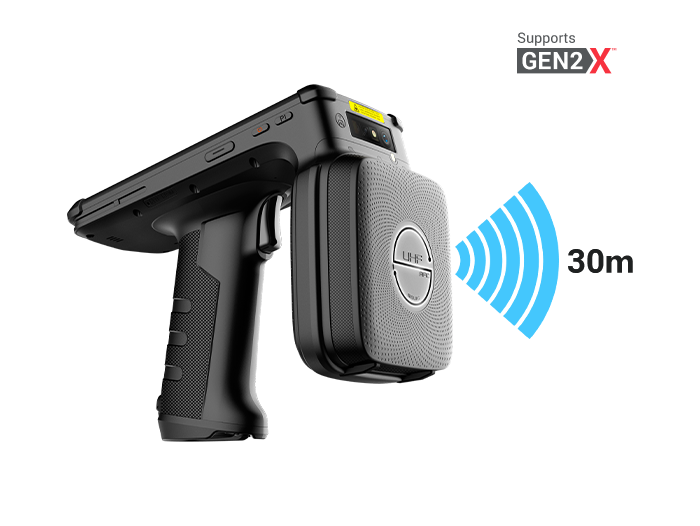
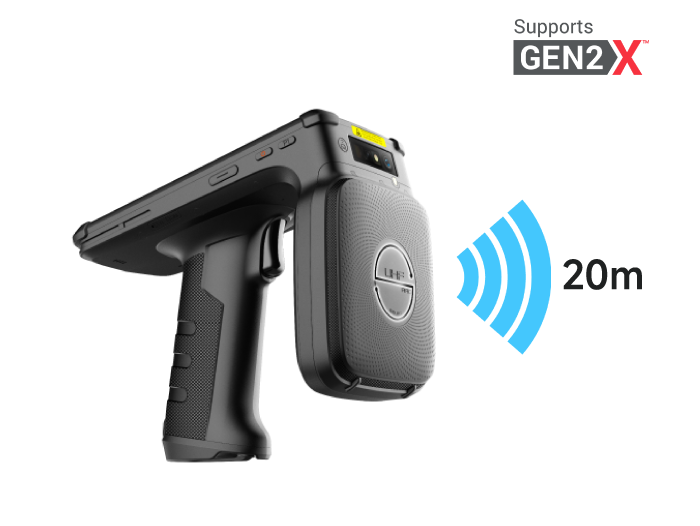
UHF ultra-long range: 30 meters+ (ideal conditions with inlay tags)
Reads 1,000 tags in approximately 3 seconds
Multi-polarization automatic identification — works with horizontally, vertically, and diagonally placed tags
Optimized for beverage, personal care, full-pallet, and micro-tag scenarios
Supports ISO 18000-6C, EPC C1 Gen2 / Gen2X, and regional frequency bands including China 920–925 MHz; output power adjustable per local regulations
5.2 Industrial Durability and All-Day Battery Life
11,700 mAh replaceable dual battery (5,000 mAh in the main unit + 6,700 mAh in the handle), rated for 24 hours of intensive operation, supports QC 3.0 / 18W fast charging
IP67 dust and water resistance, 1.5-meter drop protection, operating temperature -20°C to 50°C, ESD air discharge ±15 kV / contact discharge ±8 kV
Ideal for high-rack warehouses, outdoor inspections, electric/railway/water/gas field operations, and large 3PL distribution centers
5.3 Android 14 Software and Multi-Mode Data Capture
Android 14 + 6 GB / 64 GB (upgradeable to 8 GB / 128 GB), UFS 2.1, octa-core processor, 1.15 TOPS AI compute
UHF RFID + 1D/2D barcode + top-mounted NFC/HF + 13 MP rear camera / 5 MP front camera + PSAM security card
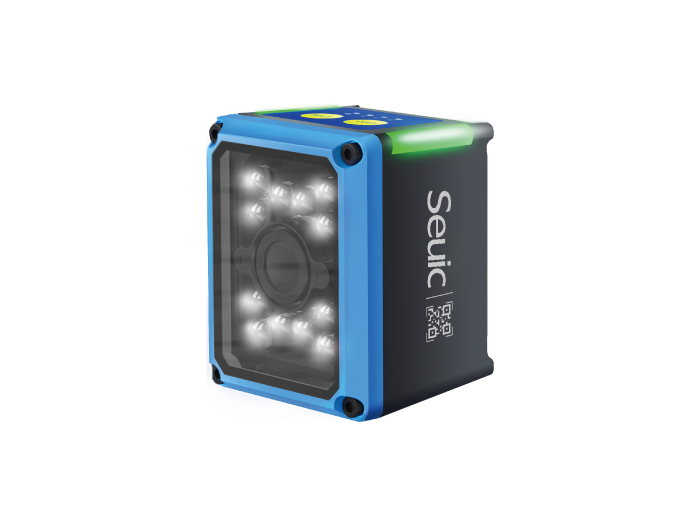
Android development support, compatible with MDM/EMM, offline cache, WMS/ERP/MES integration
Suitable for retail, healthcare, government, and general asset management, scenario mapping:
| User Profile | Primary Focus |
| Factory / QC | Error-proofing and traceability |
| Warehouse / 3PL | High-rack and full-pallet batch reading |
| Retail / Apparel | Store-level instant inventory |
| Hospital / Pharmacy | Consumables and SPD close-range reading |
| Utility meter reading / Inspection | 30-meter long range + 24-hour offline operation |
| Government / Law enforcement | IP67 + NFC credential capture |
6. Scenario-Based Quick Selection Checklist
| Scenario | Must-Have Specs |
| High-rack warehouse / large DC | 30-meter class long range + multi-polarization + IP67 + swappable battery + WMS interface |
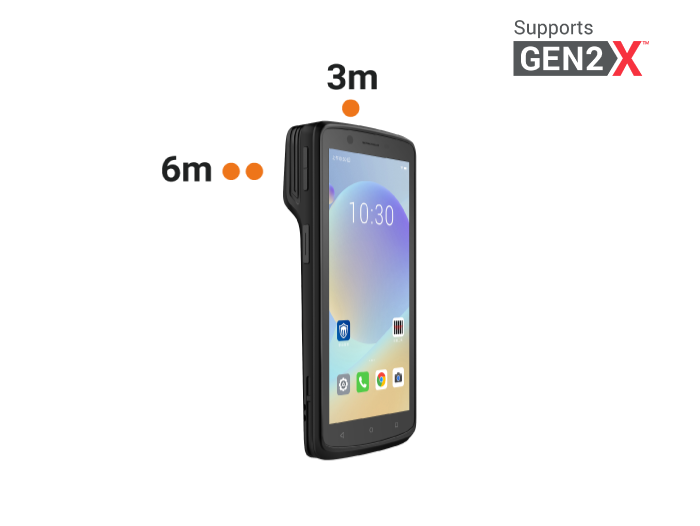
| Retail apparel store | 0–6 meter dual-range + lightweight + Android app + anti-collision with zero misses |
| Pharmaceutical / Hospital | HF/NFC + optional UHF + cleanable/disinfectable housing + offline retransmission + audit trail |
| Electric / Water / Gas utility | -20°C to 50°C + 1.5m drop + 24h battery + PSAM security |
| 3PL / Express sortation | 1,000-level batch read + Wi-Fi/5G + LLRP/REST + MDM bulk management |
When buying a portable RFID reader, start by listing these 8 items: frequency compliance, output power / sensitivity, polarization and range, batch read anti-collision, IP rating / drop / temperature & humidity, swappable battery and battery life, Android / SDK / MDM / offline cache, and multi-mode data capture with backend integration. Then run a small-scale POC using your own tags, racks, and metal/liquid ratios. Base your purchasing decision on real-world miss rates — not the manufacturer's lab-tested range figures.
Founded in 2002, Seuic Technology Co., Ltd. has always focused on mastering core technologies, continuously improving innovation capabilities, and building outstanding branded products including mobile computers, UHF RFID readers, tablet computers, barcode scanners, and fixed-mount readers. With highly reliable products and efficient service, our solutions are widely applied in manufacturing, retail, logistics, healthcare, and other industries. We provide frontline workers with more durable real-time data capture tools, helping you improve operational efficiency and take productivity to new heights.
Related News
-
Portable Barcode Scanner Buying Guide
Product Updates | 2026.09.22Learn More
-
What Is RFID Meaning? Definition & Common Beginner Misconceptions
Product Updates | 2026.09.21Learn More
-
What Is RFID? A Complete Guide to Radio Frequency Identification: Definition, Working Principle & Applications
Product Updates | 2026.09.21Learn More
-
2D Barcode Scanner for Automotive DPM Traceability
Product Updates | 2026.09.20Learn More