







Portable RFID Reader POC Checklist
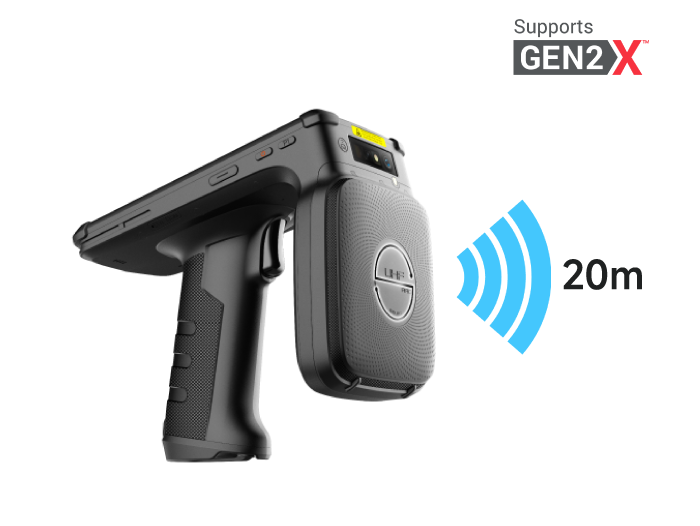
Imagine this: You confidently order a batch of brand-new portable RFID readers, hoping to finally solve chronic problems like slow inventory counting and hard-to-find assets. Then the devices arrive on-site — and they go "deaf" in front of metal shelving, or their read range drops dramatically in direct sunlight outdoors. Not only is your budget wasted, but your team's confidence takes a hit.
This scenario is more common than you think. The reason is simple: no rigorous proof of concept.
A well-designed POC (Proof of Concept) is your most effective tool for mitigating risk and ensuring ROI. It's not a walkthrough in a lab — it's a real test in your actual business environment, using your real items and workflows, to see if the equipment can truly do the job.
Whether you're a factory manager, warehouse supervisor, hospital logistics director, or retail chain operations head, this portable RFID reader POC checklist will help you systematically evaluate and make sure every dollar is well spent.
1. Set Up the "Battlefield": Your POC Test Environment
Don't try to test in an ideal, empty conference room. The real challenge comes from your actual workspace. You need to simulate the toughest, most typical conditions.
1.1 Select Representative Areas
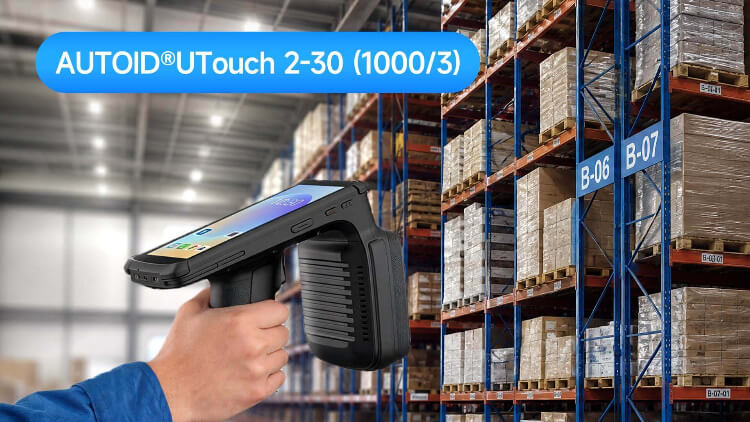
High-density storage area: If your warehouse has heavy-duty racks several meters high, this is a must-test. See if the reader can accurately pick up tags on upper shelves.
Metal interference zone: Metal shelving, metal containers, and even certain products themselves (e.g., canned goods, mechanical parts) severely interfere with RF signals. Be sure to test in environments with plenty of metal.
Outdoor/open area: If you need vehicle access management, open-yard inventory, or field enforcement, test reading performance under direct sunlight, rain, or fog.
Liquid-heavy area: For hospital pharmacies, beverage warehouses, or cosmetics storerooms, liquid significantly attenuates UHF RFID signals. This is an easily overlooked but critical test point.
1.2 Prepare Diverse Test Tags
Don't bring just one type of tag. Based on the characteristics of the items you manage, prepare different kinds:
Standard paper tags: For regular items like cartons and garment hangtags.
Anti-metal tags: Specifically designed for metal surfaces — essential for factories and electronics manufacturers.
Anti-liquid tags: For test tubes, IV bags, bottled water, etc.
High/low temperature tags: Necessary if your operations involve cold chain logistics or high-temperature sterilization.
Attach different tag types to items of various materials to simulate real-world attachment conditions.
2. Validate Core Capabilities: Key Performance Indicators
This step is the heart of the entire POC. You need quantitative data to assess the device's true performance — not gut feeling.
2.1 Read Success Rate: The Bottom Line
Target: ≥99%
Test method: Prepare a known batch of tagged items (e.g., 100 labeled cartons). Simulate normal operating speed (e.g., walking and scanning, or quickly sweeping the reader). Record how many tags the reader successfully identifies. Repeat at least 3 times and take the average.
Note: Pay attention to which tags were missed — what type were they, what material were they attached to, and where were they located? This helps you identify root causes.
2.2 Batch Read Speed: The Lifeline of Efficiency
Target: ≥500 tags/second
Test method: Densely stack a large number of tags (e.g., 500+) to simulate a full pallet of goods. Use the reader's fast inventory mode and measure the time to complete one full round of identification. Calculate tags read per second.
Why it matters: If you process thousands of SKUs daily, batch read speed directly determines your inventory efficiency. A slow device wastes your team's time waiting.
2.3 Maximum Read Range: Flexibility Guaranteed
Target: Set based on your actual needs (e.g., >5 meters for high-rack inventory, 1–2 meters for close-range scanning).
Test method: In an unobstructed open area, hold the reader facing a single tag and gradually increase the distance until the reader can no longer read it reliably. Record this threshold distance.
Important variable: Test separately indoors, outdoors, and near metal interference sources. You may find significant differences.
2.4 Offline Caching and Sync: Work Without Interruption
Target: Supports local storage of thousands of records or more, with seamless, complete data synchronization once the network is restored.
Test method: Enable the reader's offline mode, perform a full inventory operation generating hundreds of records. Then turn off the device and disconnect the network. Reboot and reconnect to the network. Check that all offline data has been fully and accurately synced to the backend system.
Why it matters: Many warehouses, basements, and remote sites have unstable network signals. Without reliable offline functionality, your workflow can be interrupted at any time.
3. Connect the Arteries: System Integration Testing
Even the best hardware is just an expensive toy if it doesn't integrate seamlessly with your existing systems. This step verifies data flow integrity.
3.1 Accuracy of Data Written to WMS/ERP
Test scenario: Use the reader to perform a receiving operation. Scan an RFID tag on a pallet — the system should automatically increase the corresponding item's inventory quantity.
Verification point: Check that the data in your WMS/ERP system matches the scanned items, quantities, and locations exactly. Are there any data errors, duplicates, or missing entries?
3.2 Recovery and Sync Integrity After Network Interruption
Test scenario: Simulate a sudden network outage. Continue performing inventory operations with the reader — all data is temporarily stored locally. Then restore the network connection.
Verification point: Does the system automatically detect the network recovery? Is all locally cached data fully synced to the server without manual intervention? Does the sync process cause conflicts or system lag? How long does it take?
3.3 Integration with Other Automated Equipment (if applicable)
If your warehouse uses AGVs, automated sortation lines, or lifting platforms, test the communication interface between the reader and these devices. For example, after the reader scans a package, can it immediately trigger a divert action on the sortation line?
Purchasing a portable RFID reader is never a simple "order and receive" process. It's a strategic decision that affects operational efficiency and cost control. By executing this POC checklist, you transform from a passive "buyer" into an active "validator." Instead of relying on marketing brochures, you use your own data and experience to judge whether the device truly fits your business scenario.
Remember, a good POC not only helps you choose the right device — it also gives you confidence in the implementation outcome. It ensures every dollar you invest translates into real efficiency gains and cost savings.
Founded in 2002, Seuic Technology Co., Ltd. has always focused on mastering core technologies, continuously improving innovation capabilities, and building outstanding branded products including mobile computers, UHF RFID readers, tablet computers, barcode scanners, and fixed-mount readers. With highly reliable products and efficient service, our solutions are widely applied in manufacturing, retail, logistics, healthcare, and other industries. We provide frontline workers with more durable real-time data capture tools, helping you improve operational efficiency and take productivity to new heights.
Start now! Contact Seuic, request a demo unit, and take this checklist to launch a real "live-fire exercise" on your site.
Related News

-

Portable Barcode Scanner Buying Guide
Product Updates | 2026.09.22Learn More
-

What Is RFID Meaning? Definition & Common Beginner Misconceptions
Product Updates | 2026.09.21Learn More
-
What Is RFID? A Complete Guide to Radio Frequency Identification: Definition, Working Principle & Applications
Product Updates | 2026.09.21Learn More
-
2D Barcode Scanner for Automotive DPM Traceability
Product Updates | 2026.09.20Learn More