




RFID Asset Tracking: 5 Parameters & On-Site Verification for High-Bay Inventory
Anyone who has done high-bay rack inventory knows the struggle.
The device datasheet says 15 meters. But standing in the aisle, holding the reader up to ear level and pointing it at the third tier 10 meters high, the number of tags showing up on screen is always dozens fewer than the ledger. A second pass fills in half of them — but adds a few duplicates. By the time you're done, you're still fetching the scissor lift.
Specified read range and usable read range are two different metrics. The former is lab data: no interference, tag facing the antenna, single tag. The latter is what you can actually read in one pass in a real aisle. Between them sit metal shelving, cardboard obstructions, random tag orientations, and hundreds of tags responding at the same time.
For 8–12 meter high-bay racks inventoried from the ground, how much stable read range do you actually need? Where does that number come from? And how do you verify it before buying?
1. Why "Specified Read Range" Can't Be Used Directly as a Procurement Basis
Because specified read range is an ideal value measured with a single tag, no interference, and the tag facing the antenna. High-bay rack inventory faces a real-world aisle with multiple tags, reflections, and chaotic tag orientations. These are not the same thing — and the gap is significant.
UHF RFID operates in the 860–960 MHz band. Reading follows a two-way link: the reader transmits, the tag harvests energy and reflects back, and the reader receives. Both paths incur free-space path loss. So doubling the distance adds roughly 6 dB of link loss.
This leads to a practical conclusion: pushing read range further comes at a steep cost. A device that can reliably reach 30 meters versus one that tops out at 15 meters — the difference isn't those 15 meters themselves. It's the extra energy margin available to fill the holes dug by the rack environment.
How many holes does the rack environment dig? Four — and none can be ignored.
Hole #1: Elevation angle. Standing on the ground looking up at high racks, tags sit at the edge of the antenna's main lobe, not at the center. Once the energy pattern shifts outward, the readable zone narrows.
Hole #2: Tag orientation. Which side of the box the label is on depends on the packer's habit that day. Circular-polarized antennas don't care about orientation, but they still incur an inherent loss against linearly polarized tags — it's a trade-off of the polarization method itself, not a device defect.
Hole #3: Metal and liquid. The uprights and beams of metal shelving are reflective surfaces, bouncing signals around the aisle. High-water-content goods like beverages and household chemicals absorb energy directly. Reflection plus absorption means less power reaches the tag.
Hole #4: Collision. Thousands of tags in one rack row respond simultaneously. Even the smartest anti-collision algorithm has to sort them one by one. When time slots collide, some tags fall through the cracks.
Stack these four holes together, and you have to accept one thing: the specified value must leave enough margin to survive real-world consumption.
2. Why High-Bay Inventory Must Be Solved by Read Range, Not Tools
Traditional high-bay rack inventory has three approaches, and all share the same limitation: the operator's height caps efficiency.
Forklift with a rider requires a licensed driver. One vehicle, two people. Blocking the aisle halts other operations. A single rack row typically takes hours.
Scissor lift works for one person, but covers only 2–3 meters of height per repositioning. Going up and down a column four or five times leaves legs exhausted by end of shift.
Extension pole seems easiest, but the problem is at the tip. Beyond 4 meters, handling stability drops sharply, read range at the tip degrades significantly, and recognition rates fall instead of rising.
All three approaches carry a hidden cost: elevated work requires safety gear, training, and insurance — a management chain far longer than ground-level work. That money could have been saved by buying a machine with enough read range.
So read range is actually a clear dividing line. Based on field experience:
A device with a 15-meter specified range typically covers up to 4 tiers reliably from the ground. The top tier still needs a lift.
20-meter covers 5 tiers, but the topmost tier still requires climbing.
25-meter handles 6–7 tiers, completing the job from the ground.
30-meter covers 8–10 tiers, with margin to spare.
(These tiers correspond to common warehouse conditions. Actual coverage varies with tag type, rack material, and product moisture content — final results depend on on-site testing.)
There's an easily overlooked detail: insufficient read range doesn't just waste time — it hurts data quality. Repeated rescans introduce duplicate reads. Extra counts in the ledger take even more time to reconcile later. Getting it right in one pass isn't about the device costing more — it's about avoiding the reconciliation costs downstream.
3. Five Parameters to Evaluate When Selecting a High-Bay RFID Handheld Reader
Five parameters matter: specified read range and antenna gain, polarization, bulk read speed, adjustable transmit power compliance, and sustained operation capability. Together, these determine whether you can get complete reads from the ground.
3.1 Specified Read Range and Antenna Gain: Ask Beyond the Number
Specified read range is the threshold. But don't start comparing prices when you see "30 meters." First ask: is this 30 meters the maximum with a single tag facing the antenna, or the usable range with multiple tags in bulk mode? The former is a physical ceiling; the latter is an engineering metric.
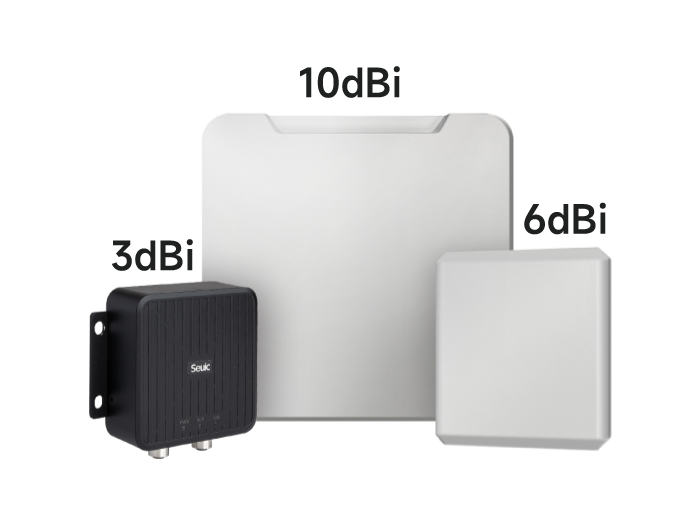
Also check two supporting specs: antenna gain (dBi) and transmit power (dBm). Two devices both claiming 30 meters — the one with 8 dBi paired with 33 dBm is typically more stable. The difference shows up in elevation-angle scenarios.
3.2 Polarization: Determines Whether Tags Are Read Regardless of Orientation
This is the most overlooked parameter, yet it has the biggest impact on high-bay racks.
Circular-polarized antennas respond to all orientations but incur a 3 dB inherent loss against linearly polarized tags. Linearly polarized antennas offer higher gain but require the tag orientation to be precisely aligned. And in a warehouse, tags never have a uniform orientation. How boxes are stacked and where labels are placed depends entirely on the packer's mood that day.
What high-bay racks really need is multi-polarization capability that automatically adapts to tag orientation. Two things to check: first, whether the device integrates omnidirectional, vertical, and horizontal polarization recognition; second, whether it can switch dynamically during a scan.
3.3 Bulk Read Speed: One Pass or Five
A single high-bay rack row typically holds 200–800 tag units (SKUs × tiers × facings). A whole row easily exceeds 1,000.
Industry average is hundreds of tags per second. Optimized models can read 1,000 tags in 3 seconds. Across a 40-row warehouse, that difference translates to tens of minutes versus hours.
3.4 Adjustable Transmit Power: Maximum Isn't Everything
High-bay racks need high power. But when you turn to the adjacent aisle, high power starts reading tags from the neighboring row — inflating your count. Adjustable power lets one device handle both "long-range catch-up scanning" and "precision reading in adjacent aisles."
3.5 Sustained Operation: Inventory Isn't a Ten-Minute Job
A full inventory of a 5,000 m² warehouse typically takes 4–8 hours of continuous operation. That means battery capacity, thermal management, and ergonomic design must be calculated for a full day, not an hour.
Check these specifics: battery capacity in mAh, whether it's replaceable, and how many tags it can read on a single charge. Don't ignore device weight either — eight hours in hand is very different from ten minutes. For protection rating, warehouse aisles are dusty with occasional drops — IP67 plus 1.5-meter drop resistance is a reasonable baseline for warehouse use.
4. What a Real 12-Meter Rack Consumes in the Field
Let's break it down in five steps.
Step 1: Geometric distance. Standing at the aisle center, 2 meters from the rack, scanning a tag at 12 meters height — the slant distance exceeds 12 meters.
Step 2: Elevation angle. The antenna's main lobe radiates along its axis. At 75°–80° elevation, you're at the edge of the main lobe. Energy here is much weaker than when facing directly.
Step 3: Tag orientation. Box label orientations are nearly random. Circular-polarized antennas inherently lose 3 dB against linearly polarized tags. When tags face away or sideways, the situation gets worse.
Step 4: Environmental multipath — the most underestimated factor. Metal rack uprights and beams form reflective surfaces. Signals bounce back and forth in the aisle. Some spots get enhanced; others fall into deep fading with drops exceeding 10 dB. This is the real reason "the first half of the row reads fine, but the middle misses tags."
Step 5: Multi-tag collision. With 500 tags present in a single row, the anti-collision algorithm (e.g., Gen2 Q-adjustment) needs more time slots to clear the queue. The result: slow, incomplete reads.
Put these five steps together, and the conclusion is clear: for 12–13 meters of physical distance, you need equipment capable of 25–30 meters of engineered range. That margin isn't wasted — it's reserved for the field.
This also explains a common on-site observation: when a warehouse switches to a device with longer read range, the missed-read rate doesn't just "improve a little" — it often jumps from needing rescans to not needing them at all. Because the new device clears the field's consumption line in one step.
5. What Does a Device Meeting These Requirements Look Like? A Parameter-by-Parameter Example
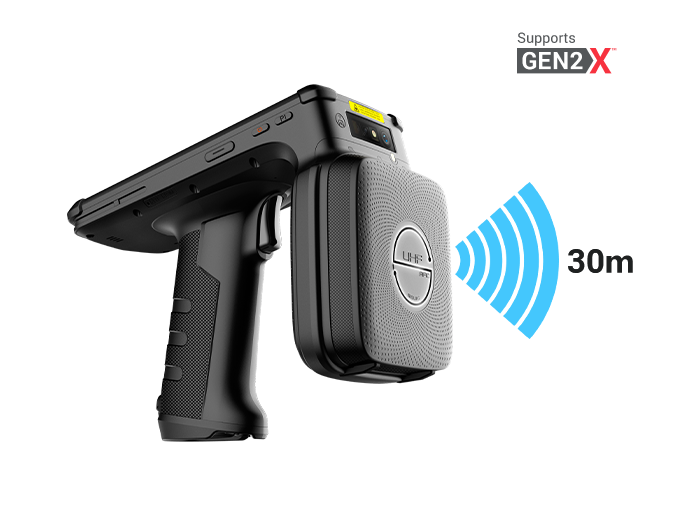
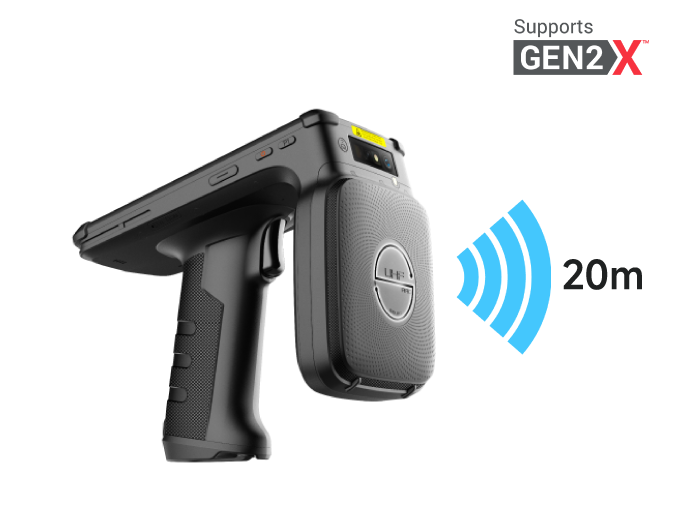
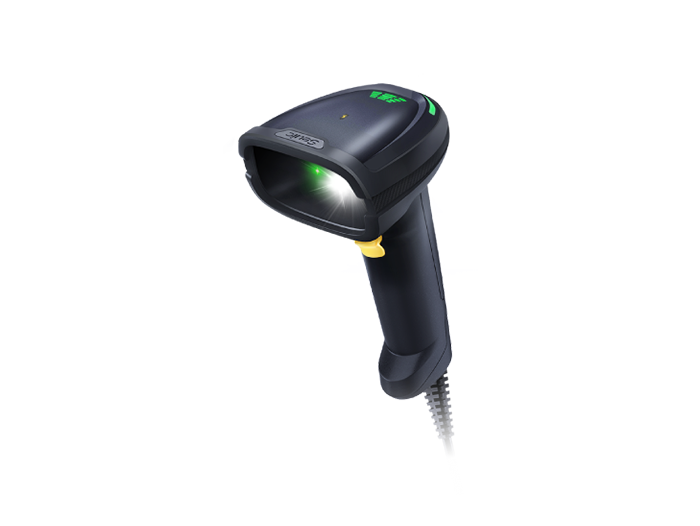
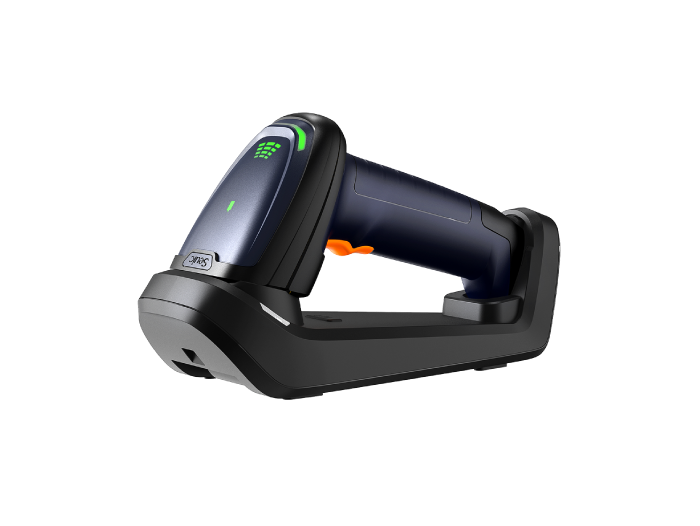
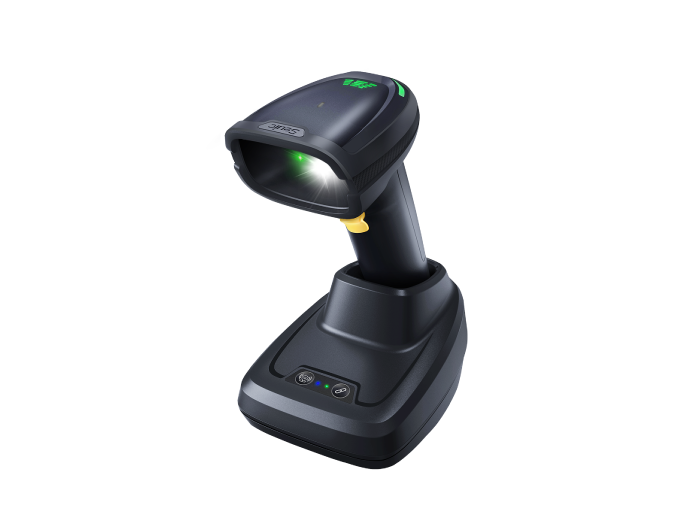
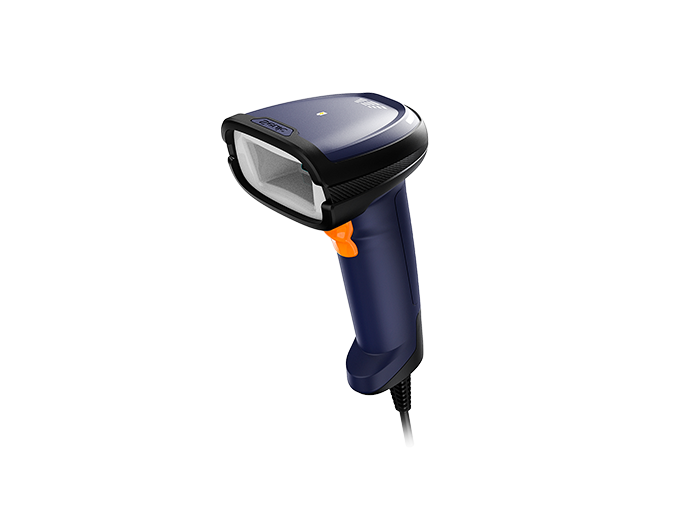
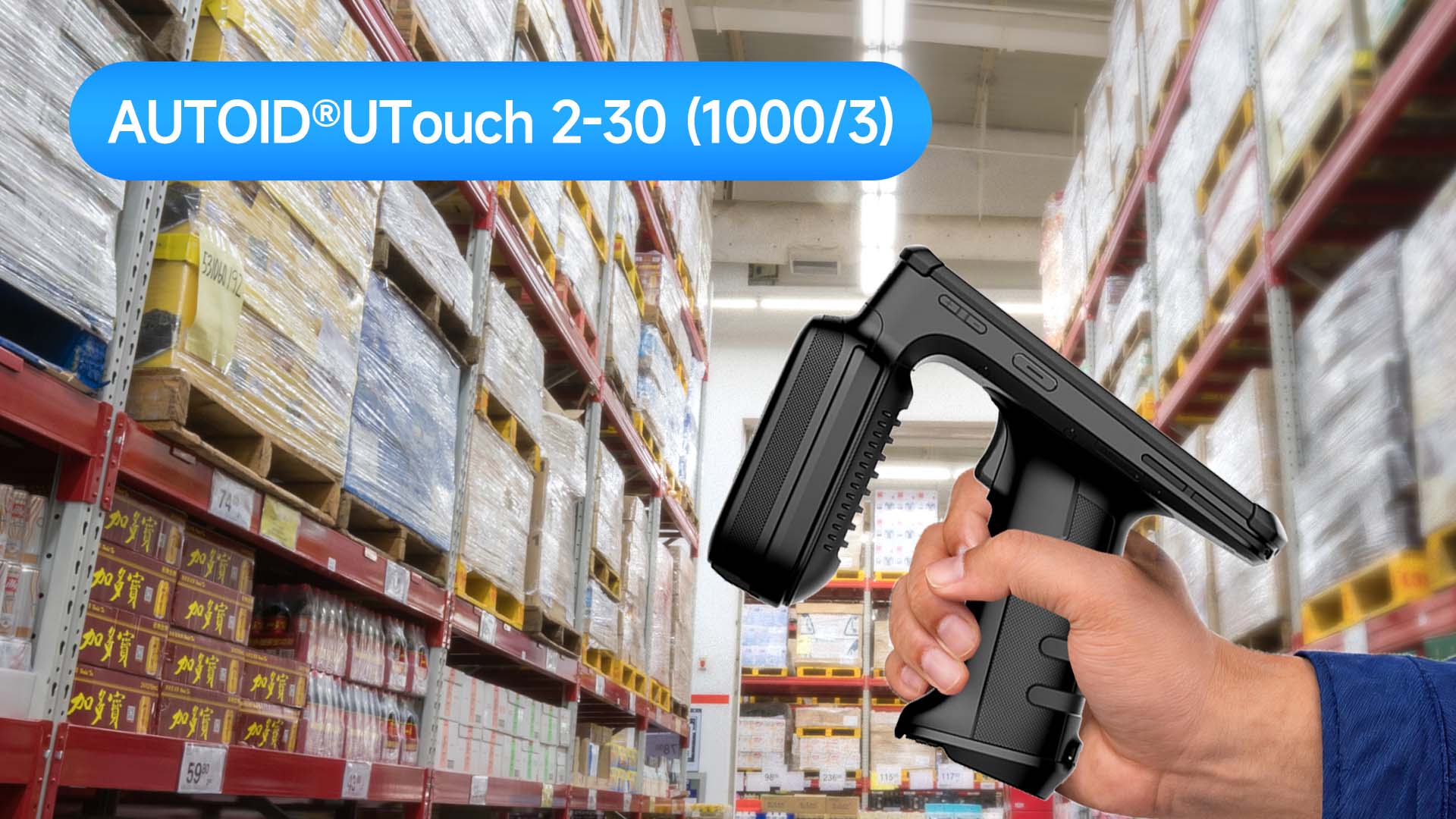
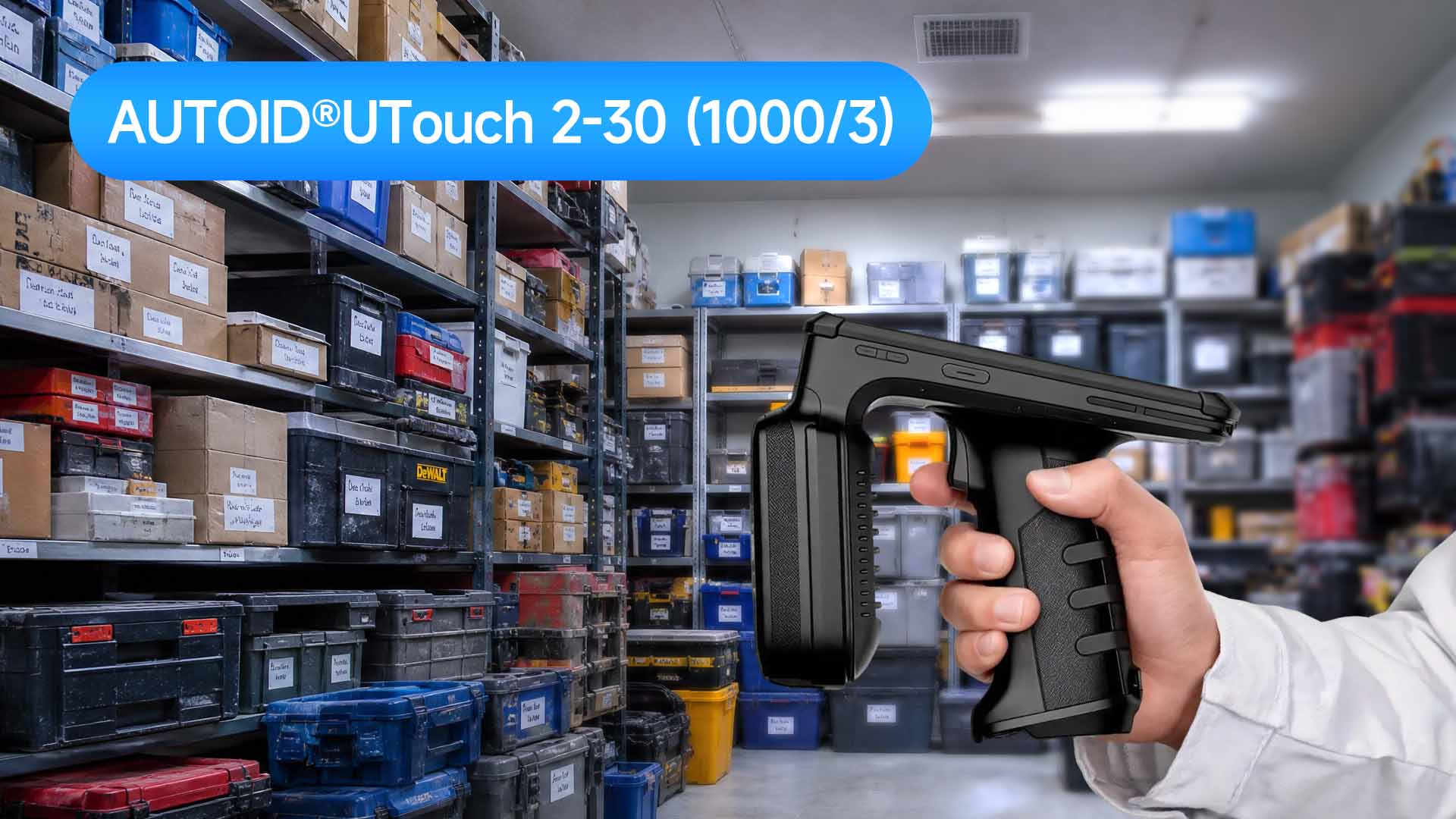
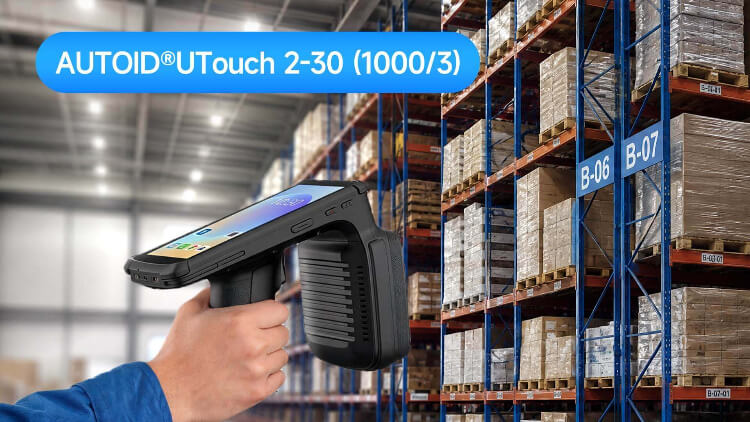
The AUTOID UTouch 2-30 (1000/3) UHF RFID handheld reader from SEUIC fits squarely in this tier: specified read range of 30 meters, 1,000 tags read in 3 seconds.
Specified read range: 30 meters — above the 25-meter threshold
Bulk read speed: 1,000 tags in 3 seconds — in the thousand-per-second range
Polarization: Multi-polarization auto-recognition covering omnidirectional, vertical, and horizontal
Battery: 11,700 mAh, replaceable, 24-hour endurance
Protection: IP67, 1.5-meter drop resistance
Platform: 11 nm octa-core processor, Android 14
Several points deserve special mention.
Multi-polarization auto-recognition solves the tag orientation problem. This technology senses the tag attachment and product placement angle and dynamically adapts. The AUTOID UTouch 2-30 (1000/3) delivers 40% better recognition efficiency compared to conventional circular-polarization devices. For high-bay racks, the practical benefit is: packing doesn't need to enforce uniform tag orientation — saving a process change cost.
1,000 tags in 3 seconds targets dense stacking and small tags. High-bay rows have dense tags, and full-pallet in/out operations involve stacking. The challenge here isn't distance — it's anti-collision algorithm efficiency.
11,700 mAh dual battery addresses full-warehouse inventory duration. Supporting over 50,000 tag reads, a single charge covers most small-to-medium warehouse full-inventory tasks.
Limitations should also be stated clearly. At the high-power setting, the 30-meter read range carries a risk of reading tags from adjacent aisles — mitigated by power adjustment and antenna direction control, which requires operator training. Also, ultra-long-range reading is sensitive to tag quality. Low-quality tags return weak signals at distance, shortening the actual readable range noticeably. Device capability doesn't equal tag capability — this is the item most easily overlooked in budgeting.
6. Where Does This Device's Confidence Come From? SEUIC's Technical Foundation
A device that achieves a specified read range of 30 meters isn't just about turning up the amplifier. Behind it lie accumulated expertise in three areas — RF front-end, antenna polarization, and anti-collision algorithms — plus a complete set of manufacturing and testing capabilities that turn design intent into mass-produced products.
Founded in 2002 and headquartered in Nanjing, SEUIC's technical team originated from the National IC Engineering Center of Southeast University. The company established the AUTOID brand in 2008 and entered the UHF RFID and industrial tablet product lines in 2016. Since 2021, six core product lines have taken shape.
As a national specialized and innovative "Little Giant" enterprise, SEUIC has become a preferred partner for digital transformation of global enterprises, backed by highly reliable products and efficient service. The company's business spans over 40 countries and regions, with 60+ localized service teams worldwide, offering 200+ products and integrated solutions widely deployed across smart manufacturing, smart logistics, smart healthcare, and other industries. Guided by the philosophy of "every unit under control," SEUIC has earned broad market recognition.
7. How to Verify Read Range After Purchase: Three-Step On-Site Testing
Three steps of on-site testing will verify it: static maximum range test, dynamic aisle scan, and missed-read rate calculation.
Step 1: Static maximum range test. Find an open area away from metal reflectors. Place a single tag facing the device. Move from 5 meters outward, increasing distance incrementally, and record whether each distance produces a stable read. Compare the resulting "single-tag maximum value" against the specified value. If the deviation exceeds 30%, investigate further.
Step 2: Dynamic aisle scan. Move to a real rack aisle. Stand on the ground and walk at normal speed down the aisle, recording the number of tags read versus the total known count. This step measures the combined effect of elevation angle, multipath, and collision — the most valuable reference among the three tests.
Step 3: Missed-read rate calculation. Compare the results from Step 2 against the ledger. Count missed reads and duplicate reads separately. High missed-read rate indicates insufficient anti-collision capability. High duplicate reads suggest excessive power or missing deduplication logic. Treat them differently — the corrective actions are completely opposite.
8. FAQ
Q: How much price difference is there between devices with 30-meter and 15-meter specified read ranges?
A: The price difference mainly comes from the RF front-end (amplifier, antenna) and the overall platform. But don't base your decision on device price alone. Factor in three costs: scissor lift/scaffolding investment, labor for two-person operations, and safety management for elevated work. Calculated across full-inventory frequency, the hidden costs of insufficient read range typically exceed the device price difference.
Q: Why does the same rack row read fine in the first half but miss tags in the middle?
A: Metal rack uprights and beams form reflective surfaces, creating standing waves in the aisle. Certain positions experience deep fading where signal strength can drop by over 10 dB. This is multipath effect, not a device defect. Two solutions: choose a model with longer read range to build thicker margin, or pause at missed locations for 1–2 seconds to allow the device to complete multi-slot clearing.
Q: Is longer read range always better? Won't it read tags from adjacent aisles?
A: Longer range isn't always better by itself. It must be paired with adjustable power settings: high power for long-distance catch-up scanning, medium-low power for precision reading in adjacent aisles. When purchasing, confirm the device has adjustable power levels. Document power settings for each zone in your operating procedures — otherwise, your ledger count will be inflated.
Q: What should I consider when selecting tags for high-bay rack inventory?
A: Three points. First, tag sensitivity — long-distance reading relies on the tag's return signal. Low-sensitivity tags significantly shorten actual read range. Second, attachment position — prefer the side facing the aisle to avoid obstruction by the product itself. Third, use on-metal tags for metal containers — standard tags on metal surfaces suffer severe read range degradation.
Related News
-
Double Efficiency High-Bay Inventory: Normal vs Ultra-Long Range UHF RFID Handheld
Product Updates | 2026.11.04Learn More
-
India RFID Supplier Selection: Industrial Procurement & Audit Guide
Product Updates | 2026.11.04Learn More
-
RFID Inventory for Beverages & Fresh Food: Handheld Reader Selection Guide
Product Updates | 2026.11.04Learn More
-

RFID Manufacturer Selection: China vs India Sourcing Decision Guide
Product Updates | 2026.11.04Learn More