




RFID Asset Tracking Frequency Selection: UHF vs HF, Don't Get It Wrong
In any asset tracking project, "going with RFID" is never the finish line — choosing the right frequency is where it starts. Both are called RFID, but HF (13.56 MHz) and UHF (860–960 MHz) operate on fundamentally different physics. One excels at "close range, precise reading." The other excels at "long range, fast bulk reading." Pick the wrong frequency, and even the most expensive reader won't save your read rate. This article lays out the boundaries, scenarios, and decision logic for both technologies in one clear framework.
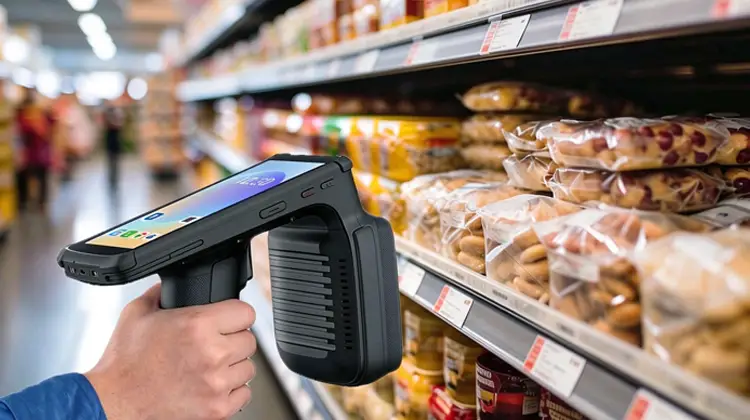
1. HF RFID: Near-Field Precision for Small Items and Challenging Media
HF RFID operates on electromagnetic induction (near-field coupling), with a typical read range of a few centimeters to under one meter. Its strength is not "scan a whole area" — it's "identify one item at a time with certainty."
Strong interference resistance: Much less sensitive to metal surfaces, liquid packaging, and humid environments compared to UHF. Performs reliably on aqueous medications, surgical instruments, precious metals, and precision tools.
Point-to-point reliability: Ideal for "one-by-one confirmation" workflows such as tooling fixture check-out, high-value consumable counting, archive lending, and NFC anti-counterfeiting traceability.
Limited concurrent reading: Can only handle a modest number of tags simultaneously. Dense stacking leads to collisions, making it unsuitable for "scan a pallet in one second" workflows.
In factory workshops, hospital sterilization rooms, and pharmacy cold cabinets — where assets are small, media are varied, and error tolerance is low — HF's near-field precision is far more valuable than long range.
2. UHF RFID: Long-Range Bulk Reading — The Efficiency Engine for Warehouses and Yards
UHF RFID operates on far-field backscatter, with a typical read range of 3–15 meters (depending on power, antenna, and tag type), making it the undisputed workhorse of modern logistics and warehousing.
Exceptional bulk concurrency: Mature anti-collision algorithms enable portal readers to capture dozens to hundreds of tags from a passing pallet in one go. A handheld can clear an entire rack row in a single walk down the aisle.
Non-contact, no depalletizing required: Full-pallet inbound checks can be completed without removing shrink wrap or aligning anything — a forklift simply drives through. Inventory labor productivity can increase by multiples.
Environmental sensitivity is the Achilles' heel: Metal reflects signals; liquids (especially water and saline media) absorb them. A standard tag on a metal surface might see its read range drop from 8 meters to 30 cm — requiring on-metal tags, on-liquid tags, and thorough on-site testing.
For UHF RFID warehouses, distribution centers, production line logistics, and retail bulk inventory — where assets are numerous, flow is fast, and throughput is critical — UHF is the only frequency that can keep pace.
3. How to Choose: A Decision Framework, Not "Which Is Better"
There is no superior frequency — only the right fit for the scenario. Walk through these four questions in order:
3.1 How far does it need to read?
Handoff at close range, single-item confirmation → HF
Portal identification, long-range rack inventory → UHF
3.2 How many tags at once?
Single or small quantities of high-value assets → HF
Full pallets, full cases, full store bulk reads → UHF
3.3 What is the tag attached to?
Metal equipment, liquid medications, reagents, food products → Prefer HF, or UHF with dedicated on-metal/on-liquid tags
Cardboard boxes, plastic bins, wooden pallets, clean packaging → UHF is more cost-effective
3.4 What does the business process require?
Precise traceability, error-proof check-out, process binding → HF near-field is more stable
Automated inbound/outbound sensing, dynamic inventory, sortation acceleration → UHF takes the lead
Always conduct small-scale field testing before deployment: attach tags to actual media (server cabinets, cold-chain boxes, metal shelving, moisture-rich products), measure read rates at realistic angles and distances, then decide on bulk purchasing. The cost of peeling and reapplying tags is often higher than the tags themselves.
4. When UHF Takes Center Stage: Making "Long-Range Bulk Reading" Work in the Field
For most enterprises — warehouses, distribution centers, retail stores, power utility inspection, and fixed asset audits — the scenario already points to UHF. The real challenge is no longer "should we choose UHF?" but whether the handheld terminal can translate UHF's theoretical capability into actual field read rates. In practice, you'll encounter several specific pain points:
Top-tier tags on high-bay racks — employees don't want to climb ladders, but ordinary handhelds can't reach them
Products displayed dynamically, tags applied in random orientations — single-polarization devices repeatedly miss reads
Peak-season intensive inventory — thousands of tags responding simultaneously, the anti-collision algorithm chokes, forcing rescanning
Warehouse dust, rainy outdoor inspections, occasional drops — consumer-grade PDAs fail within a month
In other words, the upper limit of a UHF solution's effectiveness is largely locked in by the handheld terminal's RF design, polarization capability, battery life, and protection rating. This is why, in UHF-centric asset tracking projects, I place greater emphasis on "scenario-optimized" handheld terminals rather than a generic barcode gun with an RFID module bolted on.
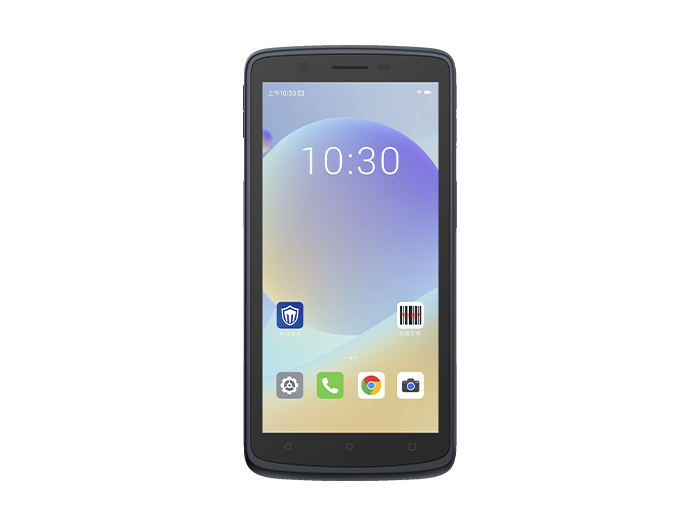
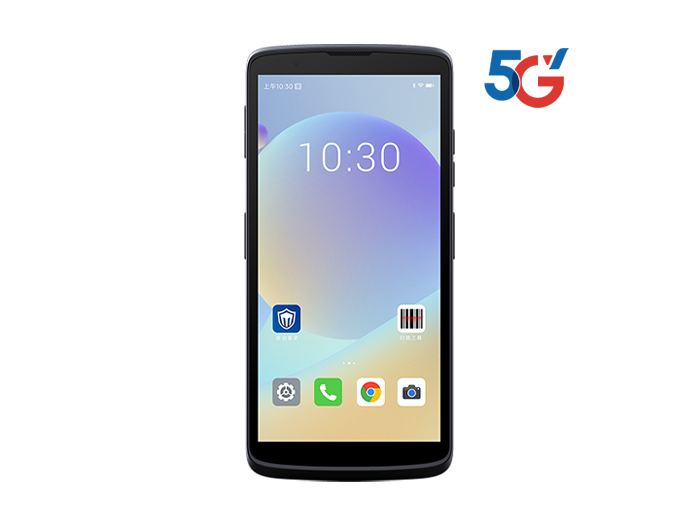
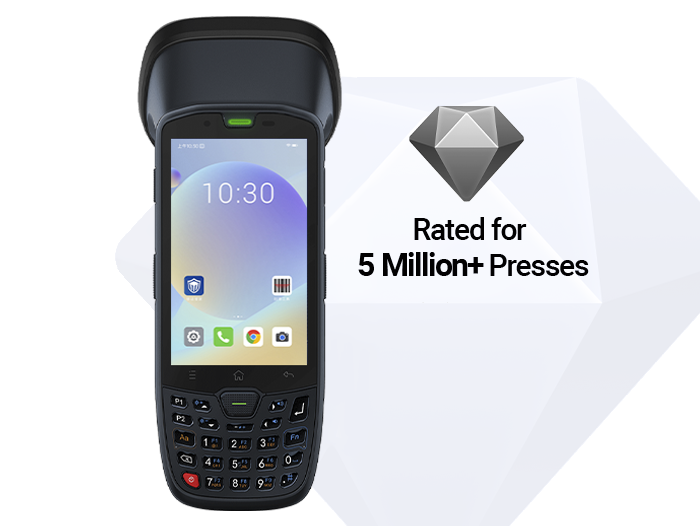
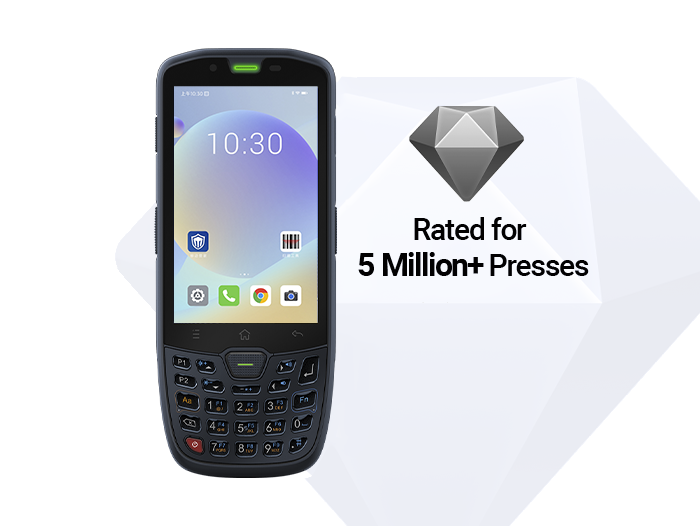
Take an industrial-grade UHF handheld like the SEUIC AUTOID UTouch 2-30 as an example. It is designed to address exactly the pain points listed above:
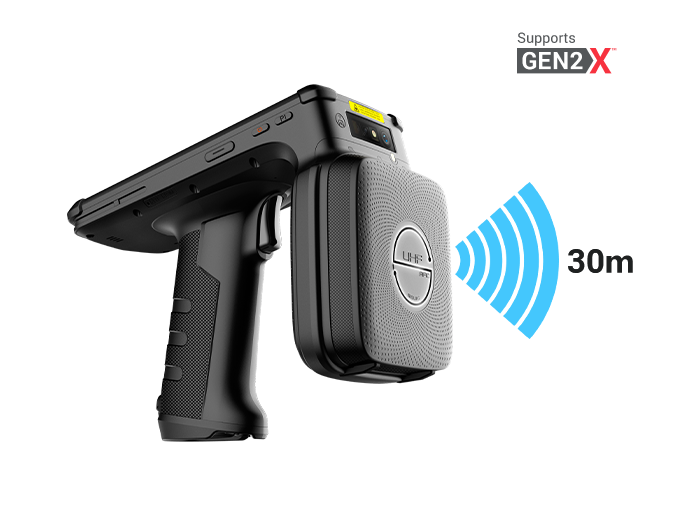
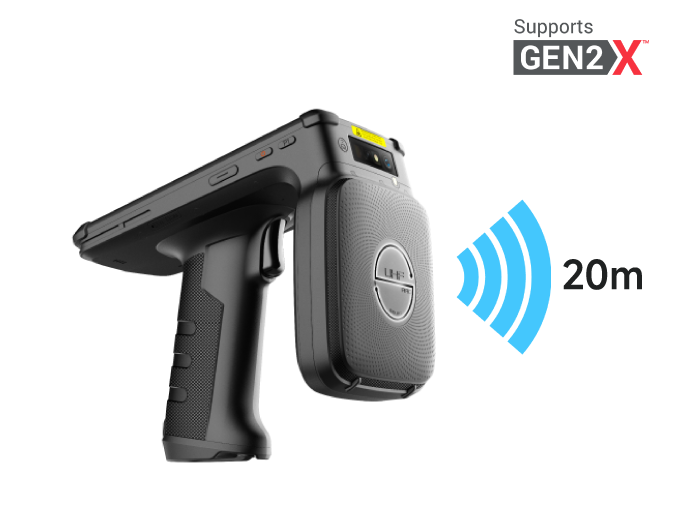
Long-range reading: Based on a high-sensitivity UHF module, ground-level inspection covers top-tier high-bay racks. Stated read range reaches up to 30 meters (actual performance depends on environment and tag type).
Multi-polarization auto-recognition: Reads tags regardless of orientation — front-facing, side-facing, or angled. Delivers approximately 40% better recognition efficiency compared to conventional circular-polarization devices.
High-speed anti-collision: Completes bulk reading of approximately 1,000 tags in 3 seconds, ideal for dense SKU environments and instant row-by-row inventory.
Metal environment optimization: Signal algorithms incorporate suppression for rack reflection, providing more stable read performance in metal-heavy environments.
Industrial-grade durability: 11,700 mAh dual hot-swappable batteries, IP67 protection, 1.5-meter drop resistance — suitable for warehouses, outdoor inspections, cold storage, and other demanding conditions.
If your scenario involves large-scale warehouse inventory, asset inspection, retail bulk verification, or power/water utility field patrols, this type of long-range UHF handheld terminal offers more flexibility than fixed portal readers and greater durability than consumer-grade PDAs. We recommend testing 1–2 units on actual rack aisles for one week — compare read rates and rescan counts — before scaling up deployment.
HF and UHF are not iterative generations. They represent two different physical capabilities: HF wins on "near-field reliability and media adaptability"; UHF wins on "long range, bulk throughput, and speed." The essence of RFID asset tracking frequency selection is understanding what your assets look like and where your workflow bottlenecks are — then letting the frequency serve the business, not the other way around.
For enterprises primarily operating warehouses, logistics, retail, and fixed asset inspection, UHF is typically the main track. Once you pair it with the right handheld terminal, on-metal tags, and thorough field testing, RFID truly evolves from "it can read" to "it reads completely, accurately, and reliably."
Do your assets primarily flow at the pallet level, or are they mostly small, high-value individual items? Feel free to contact SEUIC. We will arrange one-on-one expert service to customize a solution for you.
Related News

-
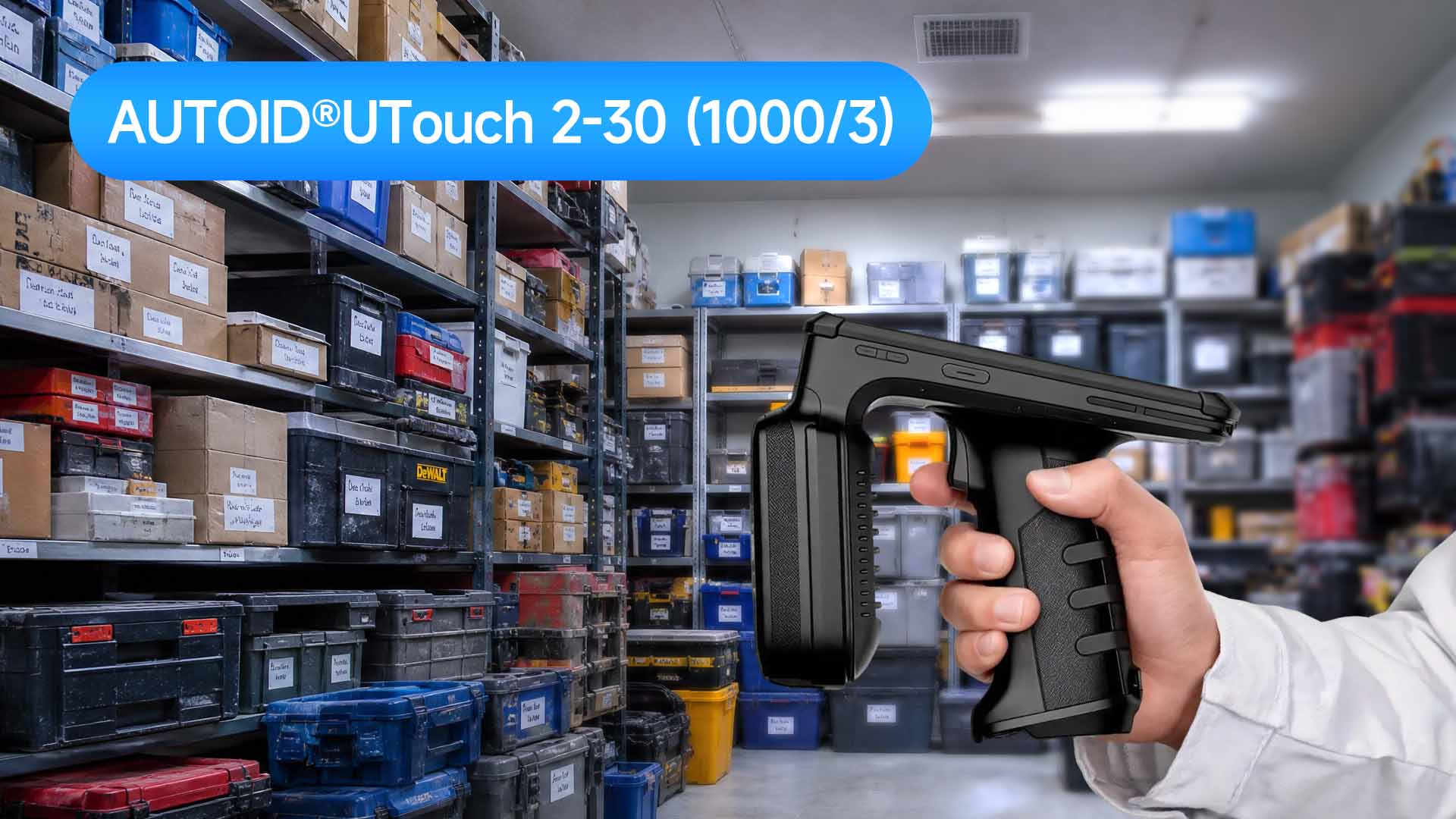
Double Efficiency High-Bay Inventory: Normal vs Ultra-Long Range UHF RFID Handheld
Product Updates | 2026.11.04Learn More
-
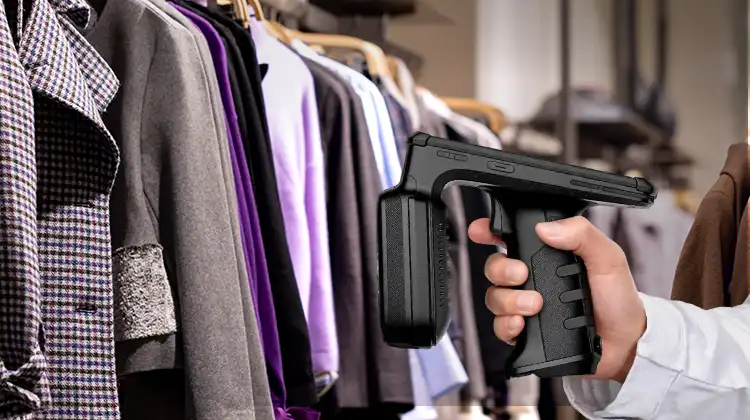
India RFID Supplier Selection: Industrial Procurement & Audit Guide
Product Updates | 2026.11.04Learn More
-
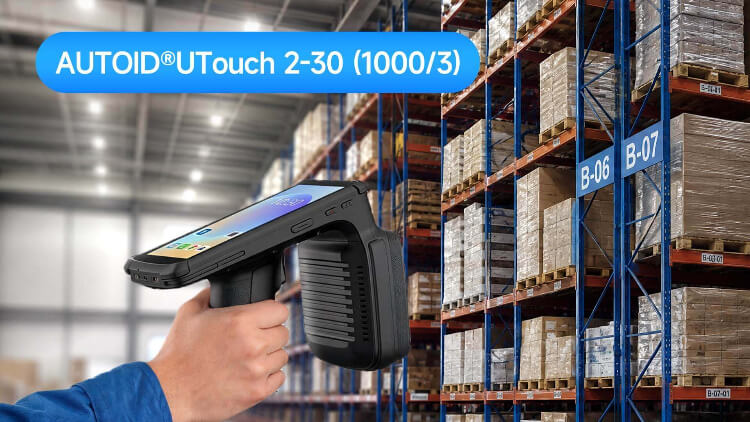
RFID Inventory for Beverages & Fresh Food: Handheld Reader Selection Guide
Product Updates | 2026.11.04Learn More
-

RFID Manufacturer Selection: China vs India Sourcing Decision Guide
Product Updates | 2026.11.04Learn More