




RFID Asset Tracking Vendor Evaluation Guide: Hardware, Software & Delivery Checklist
For manufacturing, logistics, healthcare, retail, and public utility scenarios, how do you evaluate an RFID asset tracking vendor? This article provides a verifiable checklist across hardware compatibility, software integration, and delivery/operations to help you avoid selection traps.

1. Introduction: Choosing the Wrong Vendor Costs More Than Not Choosing at All
The value of RFID asset tracking lies not in "sticking tags and buying handhelds," but in automatically recording every piece of equipment, pallet, tool, and medication from receipt to disposal. Yet in practice, many projects fail at the vendor selection stage: impressive spec sheets and smooth demos, but missed reads as soon as you hit metal shelving, cold storage, or hospital corridors. System interfaces get vague promises of "we can connect," only to require additional development fees post-launch.
Evaluating an RFID asset tracking vendor is essentially converting "who's good" from a fuzzy notion into a verifiable match score. Understand your own scenario first, then see if the vendor can handle it.
2. Hardware & Tags: Do They Truly Fit Your Assets, or Just the Datasheet?
Hardware selection is most easily derailed by sales talk: chasing "maximum range" and "highest bulk read speed" while ignoring the physical properties of your actual assets.
2.1 Define Your Asset Materials and Environment First
Metal surfaces (machine tools, electrical meters, medication carts, tools) reflect RF signals — on-metal tags must be evaluated
Liquid environments (cold chain, pharmacies, beverage warehouses) absorb signals — tag placement and power levels need testing
Outdoor inspections face rain, snow, dust, and drops — IP67 protection and 1.5-meter drop resistance should be the baseline, not a bonus feature
2.2 Tag Specifications Must Be Verifiable, Not Just "It Works"
Reference hard requirements from government/enterprise procurement: frequency 860–960 MHz, EPC Class 1 Gen 2 / ISO 18000-6C compliance, EPC memory ≥ 128 bits, read/write endurance ≥ 100,000 cycles, data retention ≥ 10 years, tear-resistant and fade-proof, strong adhesive.
2.3 Field Testing, Not Lab Demos
Run three rounds of testing with your actual assets (not sample tags):
Do missed reads or cross-reads occur in dense stacking?
Is reading stable across different orientations and heights?
How does it perform under abnormal conditions — network outage, partial occlusion, nearby metal?
Judgment criterion: Whether the vendor is willing to run a pilot with your assets, your warehouse area, and your business processes tells you far more than any spec sheet.
3. Software Integration & Delivery Capability: RFID Is Just the Collection Layer — Value Closes in the System
RFID that only reads and writes but doesn't feed into business systems is just an "electronic megaphone." Real cost savings come from data flowing into your operational systems.
3.1 Integration Is Not "We Have an API" — It's Deliverable Evidence
Require the vendor to provide:
Real integration cases and interface documentation with your ERP/WMS/MES/financial systems (e.g., SAP, Oracle, Kingdee)
Field mapping, encoding rules, and retry mechanisms for exception data
Offline caching capability — no data loss during network fluctuations, automatic re-transmission upon recovery
3.2 Permissions & Multi-Organization Models
Hospitals need department-level access control. Factories need isolation by production line or workshop. Government and group enterprises need multi-subsidiary support. Hierarchical permissions, dynamic forms, and audit logs must be verified during the pilot phase — changing permissions post-launch is more expensive than changing tags.
3.3 Delivery Is Not "Ship + Training" — It's Full Lifecycle Capability
Look at four things:
Does the vendor conduct on-site surveys (door widths, rack layout, electromagnetic interference, temperature/humidity)?
Is there a small-scale pilot with clearly defined acceptance criteria (read rate, inventory time, discrepancy rate)?
Does the vendor provide tag initialization, data migration, and frontline operator training?
What is the maintenance system: warranty period, response time, consumables replenishment, system upgrade strategy?
3.4 Total Cost of Ownership (TCO) Perspective
Hardware procurement is just the tip of the iceberg. Tag replenishment, software subscriptions, secondary interface development, spare devices, and retraining due to staff turnover should all be factored into a 3-year cost model. Low-bid winning followed by post-launch price increases is the most common hidden trap in RFID projects.
4. Make Decisions with a Scoring Checklist
Compress all the dimensions above into a scorecard for RFID solution vendor evaluation (rate each item 1–5; proceed with caution if total score is below 25):
| Dimension | Key Verification Point |
| Scenario Understanding | Has similar industry cases; can articulate your business process pain points |
| Hardware Compatibility | Real asset read rate testing; validation in metal/liquid/high-bay scenarios |
| Tag Solution | Verifiable specifications; not locked into proprietary consumables; environmental interference resistance |
| Software Integration | Standard interface documentation + proof of live system integration |
| Delivery Capability | End-to-end closed loop: site survey, pilot, training, data migration |
| Operations & Maintenance | Warranty, response SLA, upgrade policy, localized service |
| Compliance & Security | Private cloud / intranet deployment capability; permission isolation; auditable trail |
Three common pitfalls: Comparing only on price, counting only the feature list length, and trusting only "we've done benchmark cases." Cases should be visitable in person. Specs should be reproducible on-site.
5. From Scenario Back to Device: Vendor Directions Worth Putting on Your Shortlist
Different industry pain points are driving the emergence of vendors capable of "integrated hardware + software delivery."
High-bay rack warehouses: The pain isn't "can it read" — it's "no need to climb." Inventory personnel standing on the ground should cover racks 10+ meters high without missing dense tags.
Manufacturing workshops: WIP, fixtures, and tools move frequently. Devices need to both bulk-read and run MES client apps, with offline caching capability.
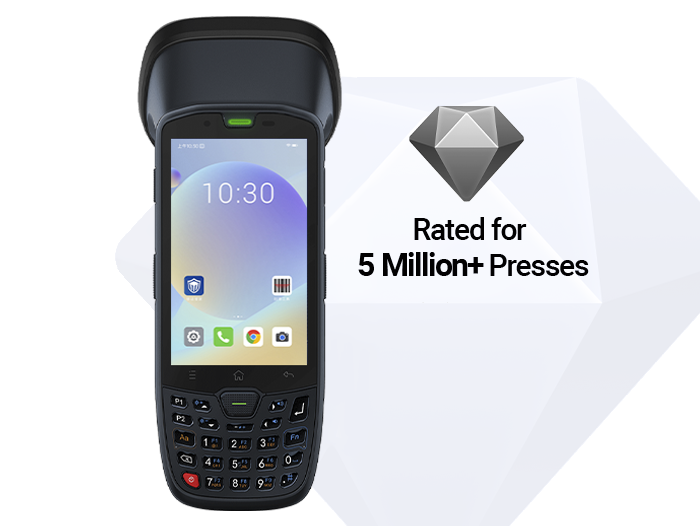
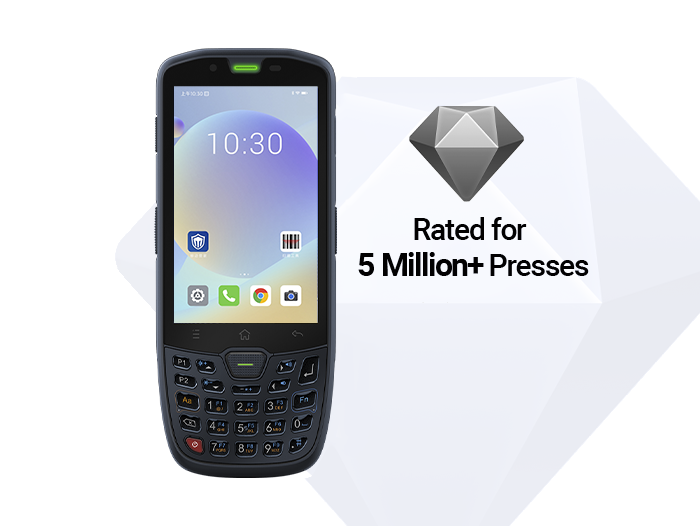
Hospitals and pharmacies: Devices circulate across departments. Tags must withstand disinfectants and bending. Handhelds should be lightweight with integrated barcode + RFID.
Power/water/gas field service: Long-distance outdoor operation with strong interference. Battery must last an entire shift. Protection ratings are non-negotiable.
Retail and apparel chains: Store inventory needs "walk through, clear a zone in one pass" — highly sensitive to bulk read speed and multi-polarization recognition.
Following this logic, vendors with an "Automatic Identification and Data Capture (AIDC)" background deserve a spot on your evaluation list — not just selling readers, but possessing closed-loop capabilities across handheld terminals, middleware, and industry solutions.
One vendor worth understanding in this category is SEUIC: founded in 2002 in Nanjing, with a technical team originating from the National IC Engineering Center of Southeast University. The company launched the AUTOID brand in 2008, entered UHF RFID and industrial tablets in 2016, and now serves manufacturing, logistics, healthcare, retail, and public utility sectors. Its business spans 40+ countries and regions, serving over 200,000 enterprise users.
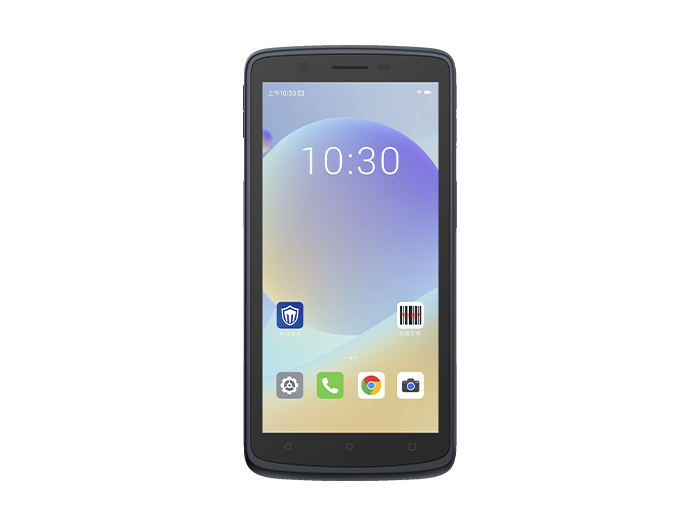
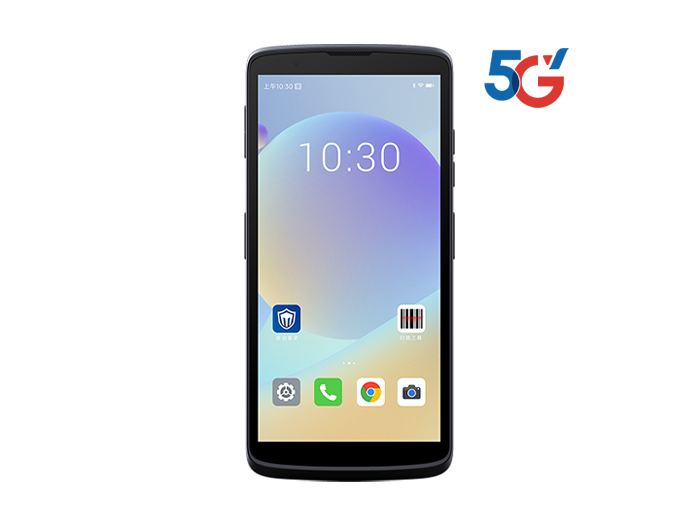
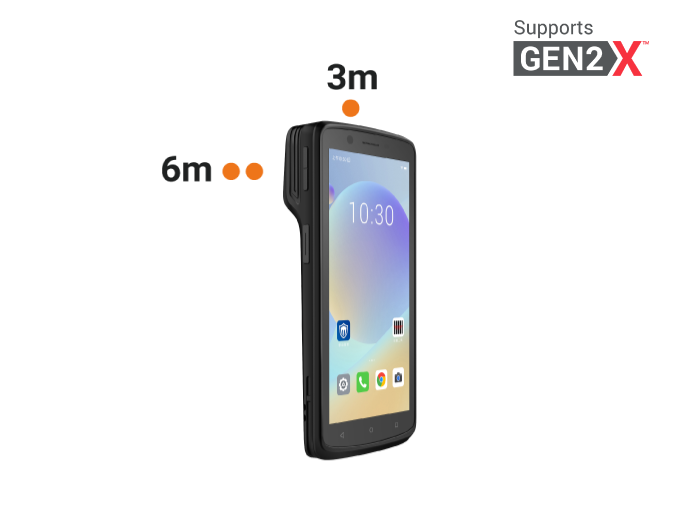
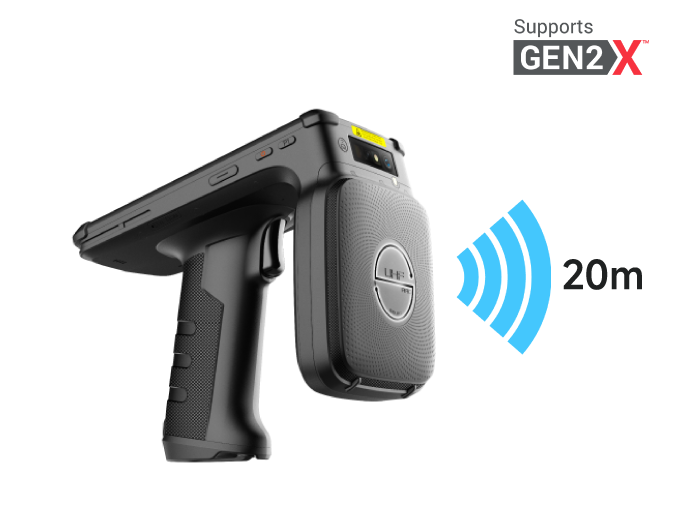
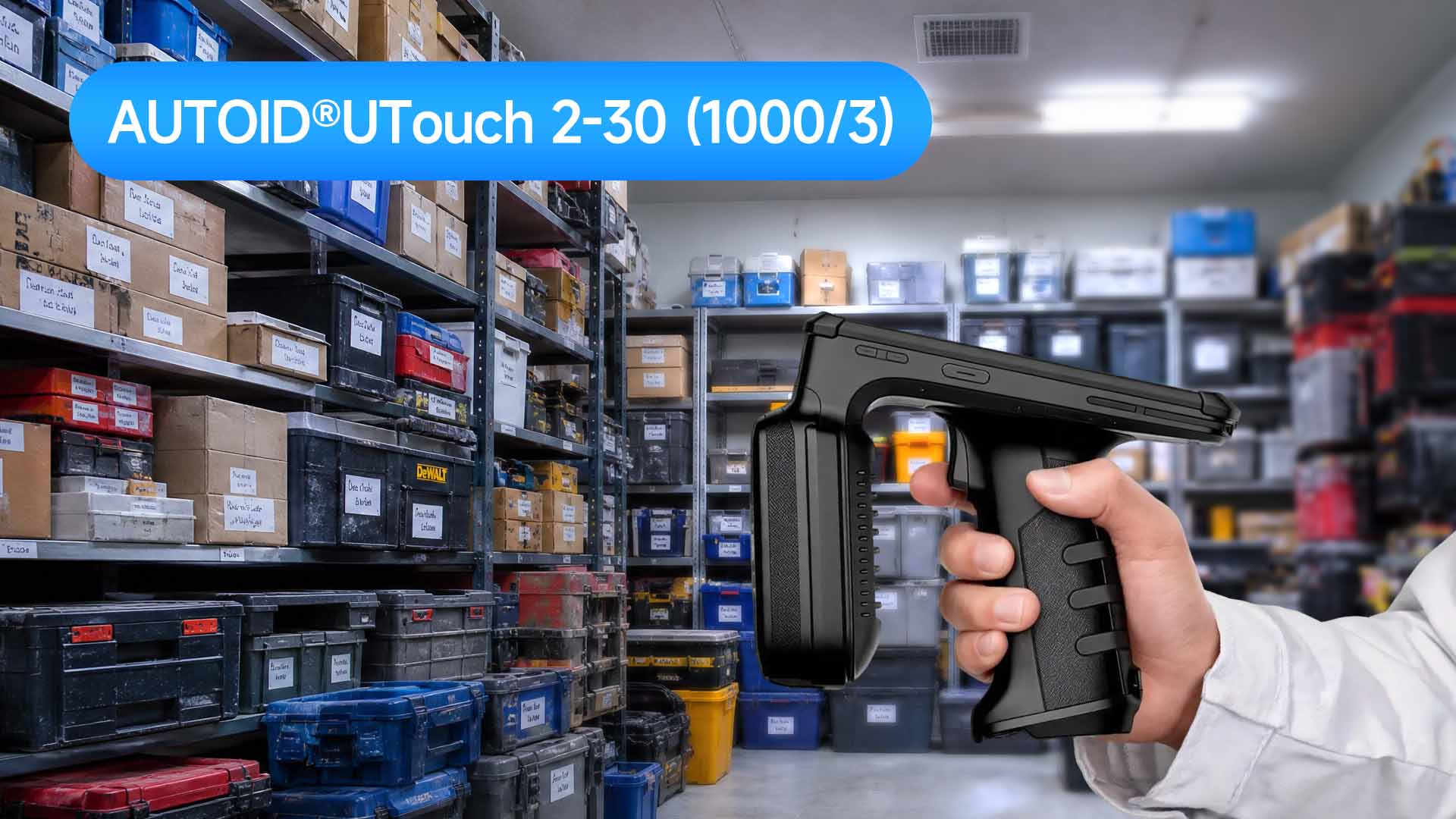
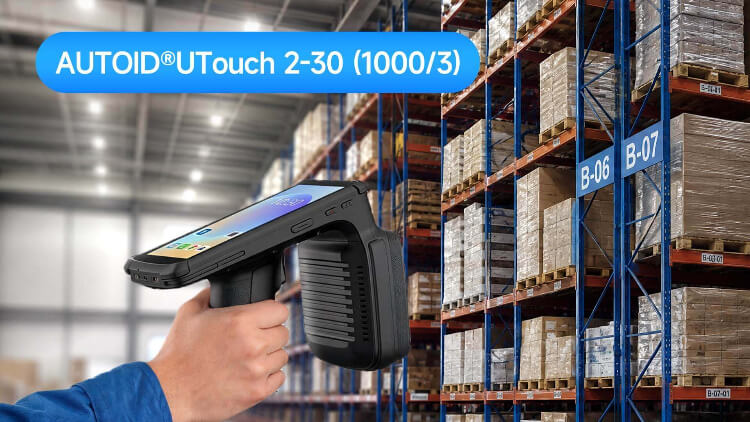
Within its RFID handheld product line, the AUTOID UTouch 2-30 (1000/3) is a representative model for "long-range + high-density inventory" scenarios. Several capabilities worth validating during the POC phase:
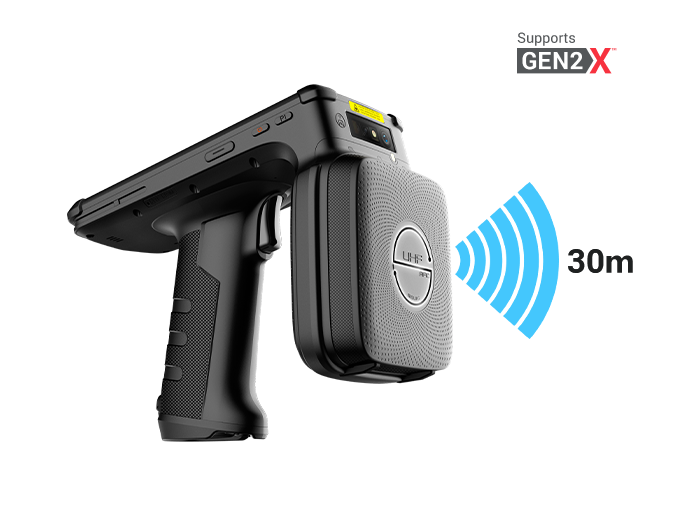
Ultra-long-range reading: 30-meter class read range, suitable for high-bay racks and outdoor inspections, reducing the need for ladders and forklifts
Extreme bulk read speed: Reads 1,000 tags in 3 seconds — focus on "complete read rate" in dense stacking and small-tag scenarios, not just peak speed
Multi-polarization auto-recognition: Adapts to random tag attachment angles, mitigating missed reads from inconsistent product orientation — approximately 40% efficiency improvement over traditional circular polarization
Industrial-grade battery life and protection: 11,700 mAh replaceable battery, IP67 protection, drop-resistant design — matching two-shift operations and rough field conditions
Edge processing potential: Octa-core platform with AI compute — not just "scan and transmit," but capable of running local business apps and offline caching
6. Summary: The Core of Selection Is Choosing a Partner for the Long Haul
When evaluating an RFID asset tracking vendor, don't start with "which brand is bigger." Start with: "What do my assets look like? How does my system flow? How harsh is my field environment?"
Hardware: Real-environment compatibility
Software: Interface and permission closure
Delivery: Pilot and operations support
Finally, use a scoring table to convert fuzzy judgments into documented decision criteria.
Once you've clearly described your scenario and brought shortlisted vendors to your site for a live run — who's swimming naked and who has real substance — you'll know within half an hour.
Related News

-
Double Efficiency High-Bay Inventory: Normal vs Ultra-Long Range UHF RFID Handheld
Product Updates | 2026.11.04Learn More
-

India RFID Supplier Selection: Industrial Procurement & Audit Guide
Product Updates | 2026.11.04Learn More
-
RFID Inventory for Beverages & Fresh Food: Handheld Reader Selection Guide
Product Updates | 2026.11.04Learn More
-
RFID Manufacturer Selection: China vs India Sourcing Decision Guide
Product Updates | 2026.11.04Learn More