




RFID Handheld Reader Selection Guide for Inventory: Efficiency Gains & Six Key Metrics
The core challenge of inventory counting has never been about having a system — it's whether field data can be captured accurately at the moment it's needed. Traditional manual counting is time-consuming and error-prone. Barcode systems are better, but they still require line-of-sight for every single item. In high-frequency receiving and shipping, weekly cycle counts, and large-quantity counting scenarios, the time lost and errors from barcode scanning directly drag down safety stock accuracy and book-to-physical variance.
RFID handheld readers change this entirely: no need to aim at each tag — just walk past and read an entire batch in one pass. For warehouse managers, retail operators, and 3PL staff, the value isn't in the technology itself, but in compressing hours of counting into tens of minutes and eliminating human missed scans altogether.
Quick applicability check: If you run monthly counts or more, have over 1,000 SKUs per warehouse, or your barcode accuracy has been consistently below 80%, RFID is likely already ROI-positive.
1. Handheld RFID vs. Barcode Scanning: Where the Gap Really Shows
1.1 Line-of-Sight Dependency vs. Radio Penetration
Barcode scanning is fundamentally optical: if the label is dirty, wrinkled, facing inward on a carton, or hidden under shrink wrap, you have to dig it out and scan again. UHF RFID communicates via 860–960 MHz radio waves, penetrating cardboard, plastic film, and thin wooden crates — no line-of-sight required.
Real-world results:
Barcode: One scan per item. Including aiming time, roughly 1–2 seconds per label.
UHF handheld: A single sweep can read dozens to hundreds of tags. Entire pallets can be counted without breaking down layers.
1.2 Speed Difference Magnifies with Volume
Industry benchmarks show barcode throughput at roughly 2,000 items per hour (operator-dependent). UHF handhelds, with proper antenna and power settings, can achieve hundreds of tags per second. For an apparel store with 5,000 items, a full barcode count might take a team 6–8 hours. An RFID handheld walk-through can finish in 20–30 minutes.
1.3 Accuracy Isn't Just About Speed
Common errors in manual barcode counting include:
Missed scans due to damaged labels
Only scanning the top layer of identical items
Fatigue-driven sampling instead of full counts
RFID performs an area-wide census rather than sampling. Retail inventory accuracy can jump from 65–80% (barcode era) to 95–99%.
1.4 But RFID Doesn't Replace Barcodes in Every Case
Metal reflects RF signals, liquids absorb them, and poor tag placement can drastically reduce read range. For ultra-low-value individual items (pens, small consumables), adding an RFID tag may not be cost-effective.
A more practical approach is layered deployment:
Item / POS level: Keep barcodes
Carton, pallet, asset, store inventory audit level: Deploy UHF RFID handhelds
2. Six Key Metrics for a Good Inventory RFID Handheld Reader
The most common pitfall is chasing the vendor's claimed "30-meter range." In real warehouses with metal shelving, liquid products, and densely stacked tags, actual read range is usually much lower than lab data.
2.1 Real-World Read Range, Not Peak Specs
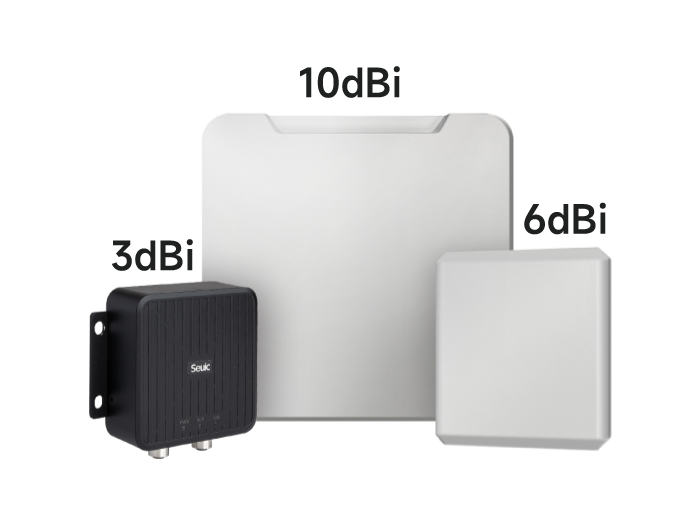
Focus on stable identification distance with your tags on your shelves. Typical effective range for UHF handhelds is 4–12 meters. High-power industrial models can go further, but always test on site:
Angled reads from high racking
Tags in the middle of a pallet
Dropouts near metal or liquids
2.2 Protocol Compatibility: EPC Gen2 v2 / ISO 18000-6C
At minimum, native support for EPC Class 1 Gen2 (ISO 18000-6C) is essential, otherwise you'll be locked into one tag supplier later. For high-value assets or pharmaceutical traceability, check for TID locking and other extended capabilities.
2.3 Batch Reading & Anti-Collision
It's not just about being able to read — it's about stable performance with dense tags, no duplicates, and no missed tags. Evaluate:
Number of tags readable in a single sweep
Duplicate filtering / buffering
Stability when tags are stacked closely
2.4 Battery Life Under Load, Not Standby
A claimed 14-hour standby is meaningless. Look at:
Continuous scanning hours with Wi-Fi / 4G on
Whether hot-swappable battery is supported (critical for multi-shift operations)
2.5 Ingress Protection & Drop Resistance
Warehouses aren't offices: dust, rain, cold storage, and loading docks are daily realities.
General warehouse: IP65 minimum
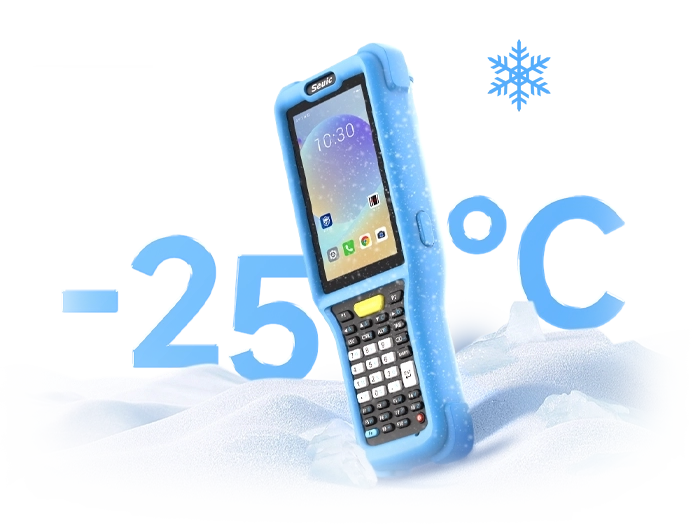
Cold chain / outdoor / dock: IP67 preferred
Drop test: 1.5m onto concrete
2.6 System Integration with Existing WMS/ERP
The reader is just the data collector; real value comes when data enters your system:
Android enterprise-grade OS
SDK/API availability
Offline caching with later sync
Compatibility with SAP, Oracle, or custom WMS
Bonus: A built-in 1D/2D barcode engine, NFC, and camera aren't gimmicks — they're very practical during the transition period. One device that can scan old barcodes and read RFID tags dramatically improves field adoption.
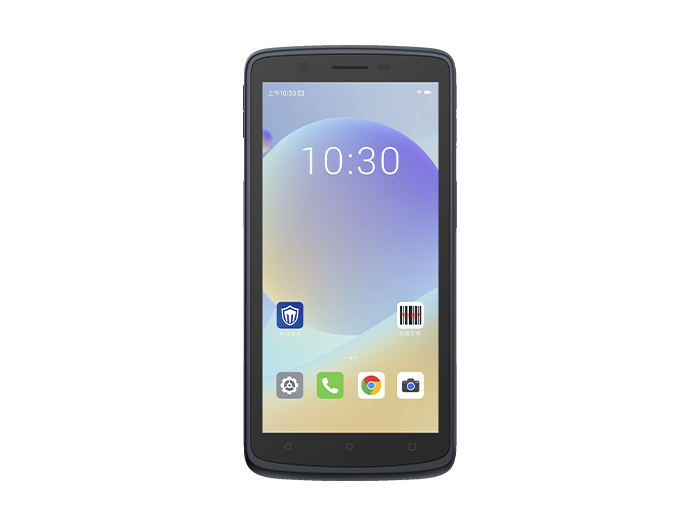
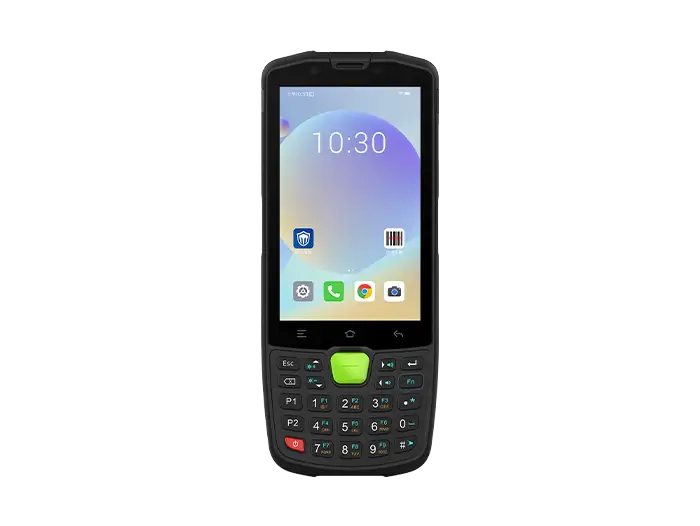
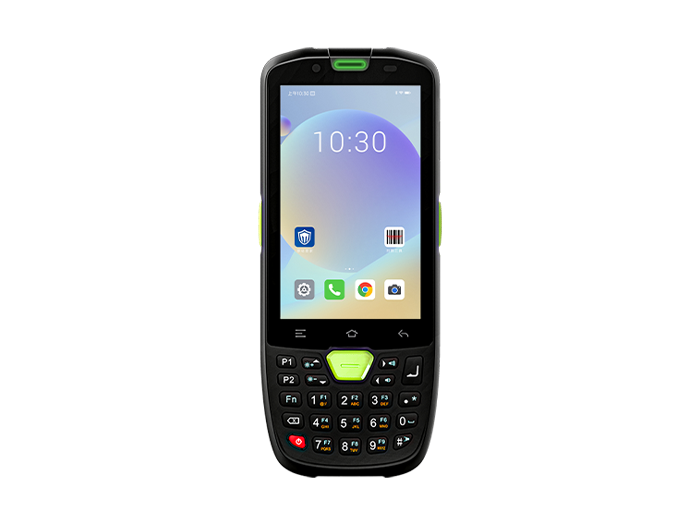
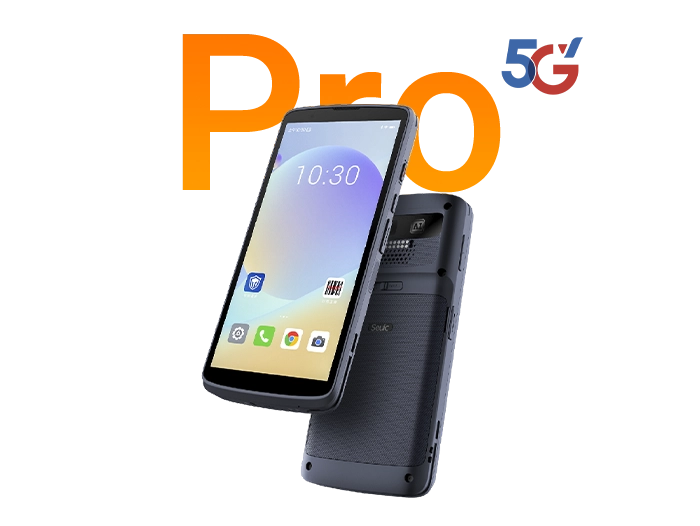
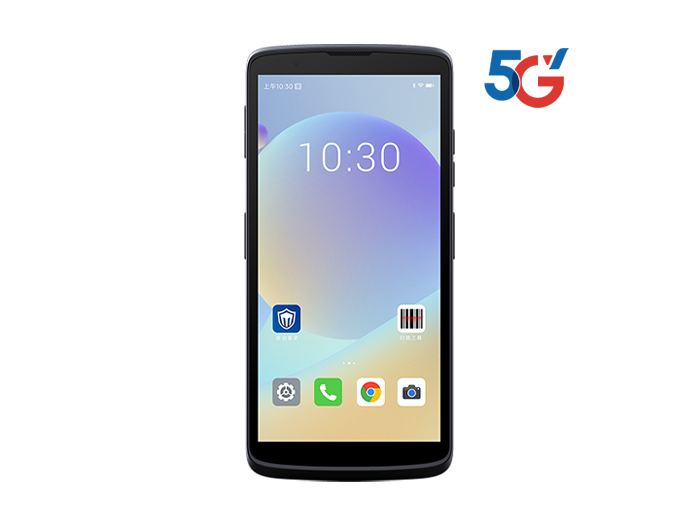
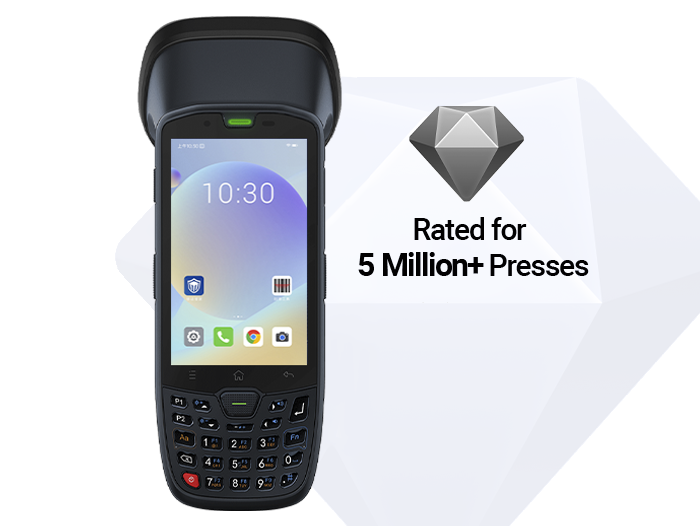
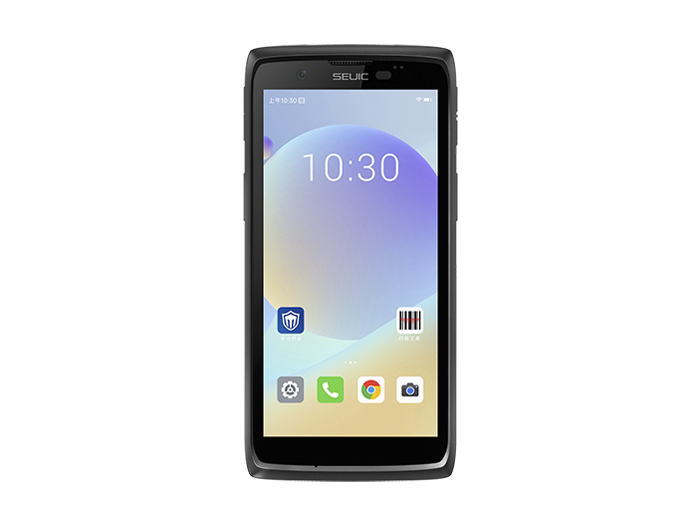
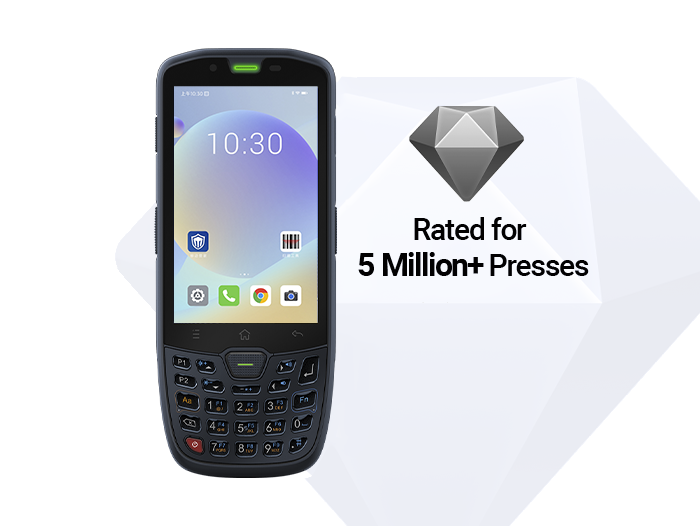
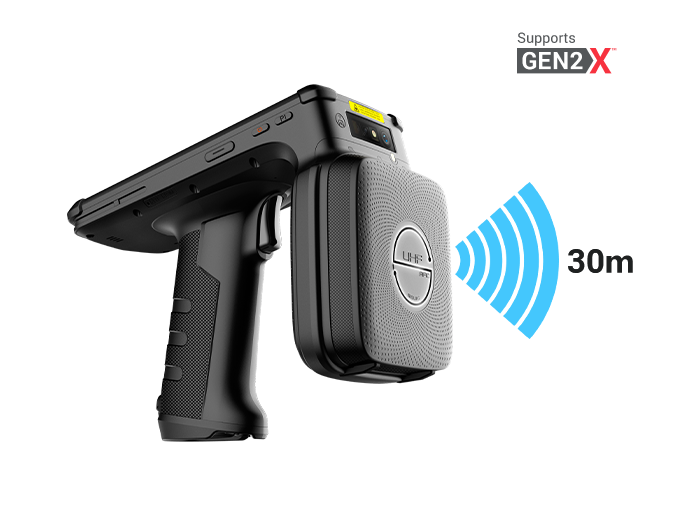
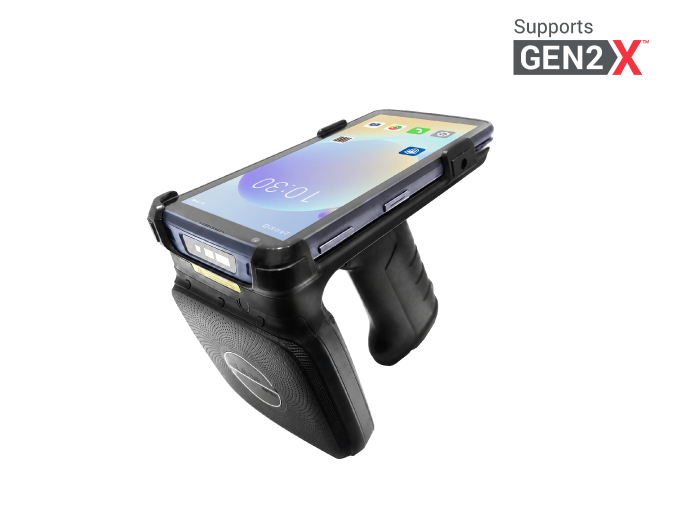
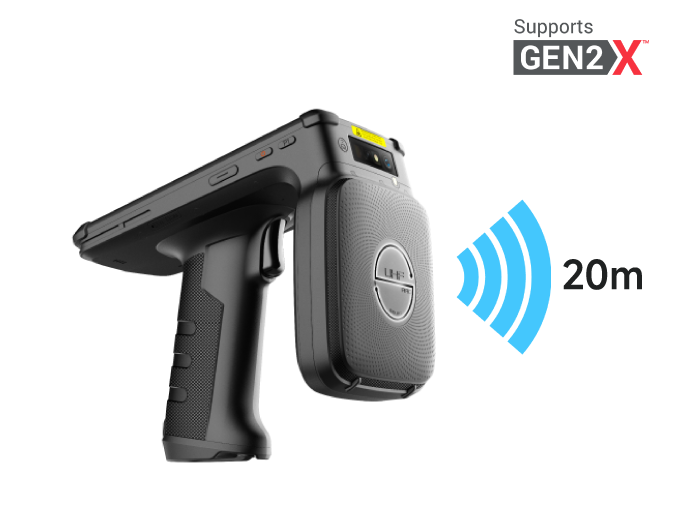
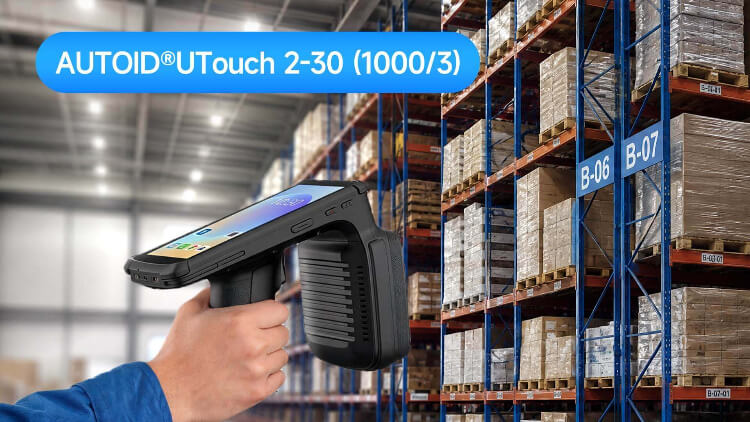
3. Recommended Model: SEUIC AUTOID UTouch 2-30 Handheld RFID Reader
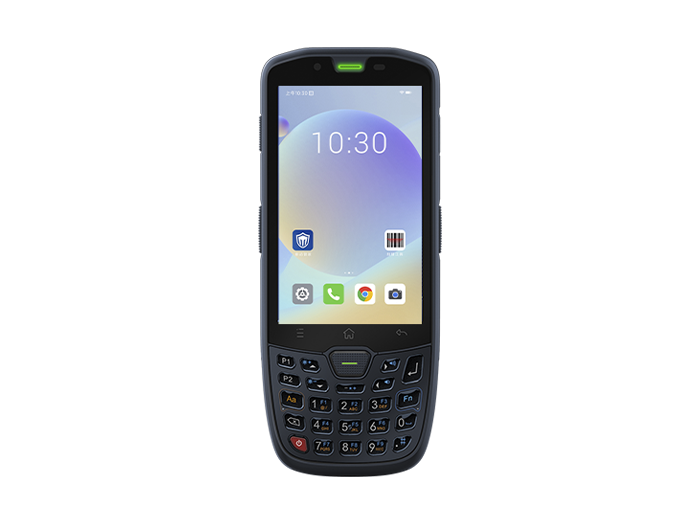
For high-density inventory, long-range counting, and demanding industrial environments, the SEUIC AUTOID UTouch 2-30 is a strong contender.
Why it stands out:
Extended read range: Rated up to 30m+ — suitable for high racking, large-site asset patrols, and whole-pallet batch identification.
Fast batch response: Reads 1,000 tags in 3 seconds — ideal for high-frequency receiving and cycle counting.
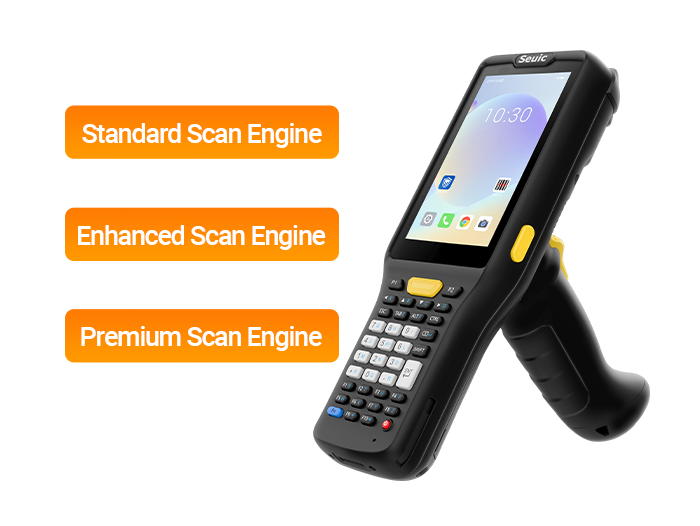
Multi-modal data capture: Supports UHF RFID, NFC, barcode, and image capture — no need to swap devices during the barcode-to-RFID transition.
Industrial-grade protection: IP67 + 1.8m drop resistance — ready for warehouses, loading docks, production lines, and field use.
Large battery: 11,700 mAh swappable battery — covers long shifts and multi-shift operations.
Who it fits:
Factory / warehouse / 3PL: Pallet receiving, location audits, dock verification
Retail chains / apparel: Store-wide cycle counts, shelf-level instant counting, loss prevention audits
Hospitals / pharmacies: Instrument kits, high-value consumables, drug batch checks (with NFC)
Utilities / field services: Asset number verification, meter inspections, outdoor batch reading
Government / law enforcement: On-site asset registration, offline data collection with later upload
Implementation Advice
Don't roll out RFID across the entire warehouse at once. Start with one pain point:
Receiving dock or monthly full-count cycle
Apply UHF tags to that batch
Use the AUTOID UTouch 2-30 for wireless scanning
Feed data into WMS to compare book-to-physical variance and time savings
After one round of comparative data, decide whether to expand to the whole warehouse or multiple stores.
Choosing an RFID handheld reader isn't about picking the one with the flashiest specs. It's about whether it can close the inventory loop on your shelves, with your tags, and in your system.
Barcode pain points are clear: high frequency, high volume, accuracy bottleneck
RFID's strength is batch and non-line-of-sight reading, but it doesn't completely replace barcodes
Selection criteria: real-world read range, protocol, batch dedup, battery under load, IP rating, system integration
For high-density inventory / industrial scenarios, consider the AUTOID UTouch 2-30 — long range, multi-mode, swappable battery
If your scenario involves factory weekly counts, 3PL receiving and shipping, apparel store full inventories, or hospital consumable audits, contact SEUIC to request a demo unit. Test read range and miss rate on your actual aisles — it's far more reliable than reading spec sheets.
Related News
-
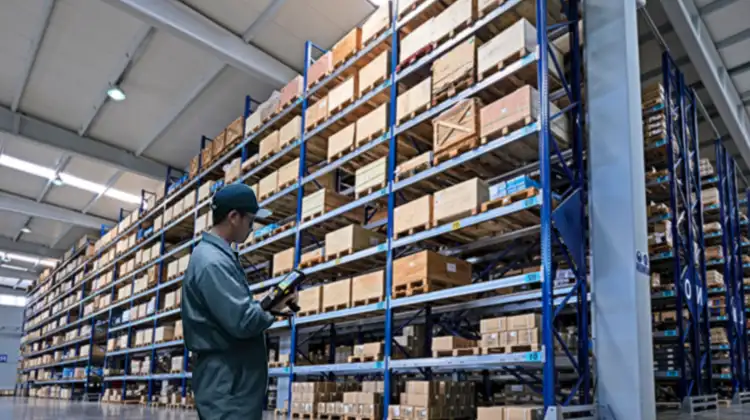
2D Barcode Scanner Selection Guide for Warehouse: Receiving & Cycle Count
Product Updates | 2026.10.22Learn More
-
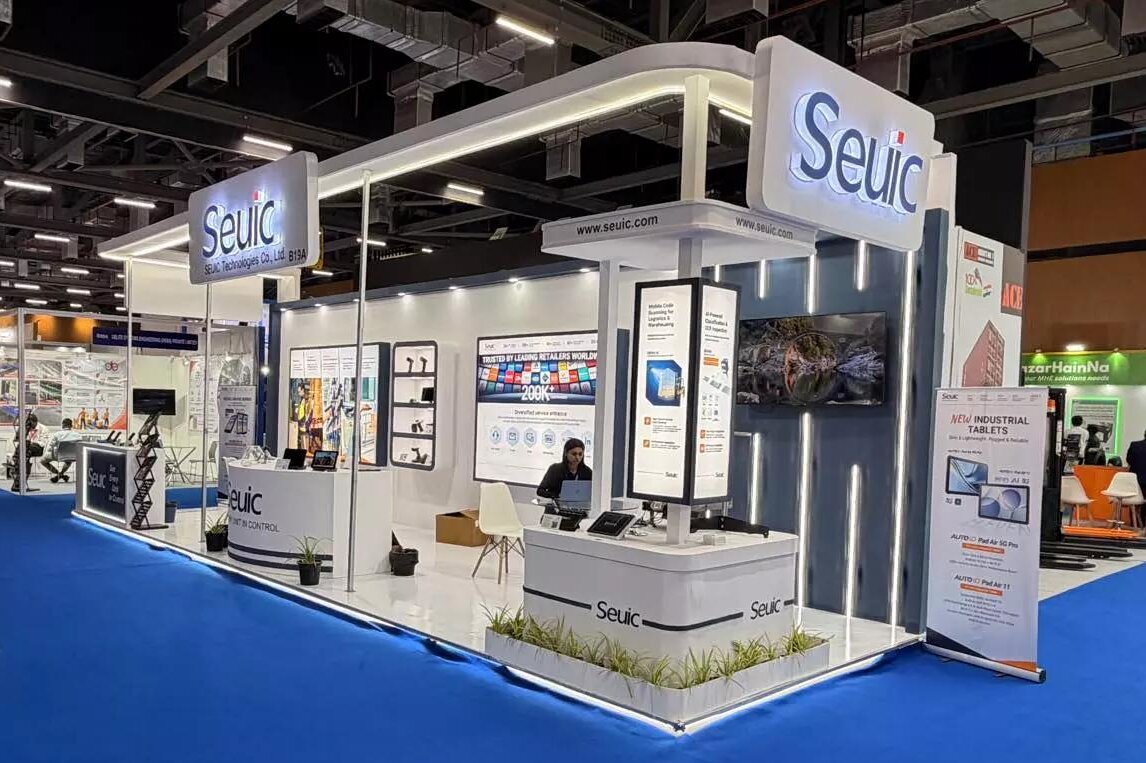
IWE Chennai 2026 Recap: Connecting Data to Smarter Operations
News & Events | 2026.10.22Learn More
-
Rugged Android Tablet vs PDA: Field Worker Selection Guide
Product Updates | 2026.10.21Learn More
-
Industrial PDA Protection Rating Guide: IP67 & MIL-STD-810 Explained
Product Updates | 2026.10.21Learn More