







RFID Handheld Reader Selection: High-Bay Needs Range, Pallet Needs Speed
Many companies upgrading their warehouse digitalization fall into the same trap: choosing an RFID handheld reader based solely on "read range."
The default logic seems to be: the farther it reads, the better and more versatile the device. But when it actually hits the warehouse floor, the device turns out to be a poor fit for the real environment. Instead of boosting efficiency, it adds labor costs and ends up being more trouble than it's worth.
Have you ever run into these problems?
Small items on high shelves can't be reached from the ground at all — you have to climb ladders or use forklifts, which is time-consuming and dangerous. When moving full pallets in and out, repeated scans still miss tags frequently, forcing manual double-checks that create bottlenecks during peak hours.
The root cause is simple: high-bay small-item cycle counting and full-pallet batch cycle counting are two completely different RFID application scenarios, with entirely different selection criteria. Trying to use one general-purpose device for both usually means mediocre results on both fronts.
1. Breaking Down the Two Core Warehouse Scenarios: Completely Different Pain Points
Different warehouse cycle-counting scenarios have different operational requirements and interference factors, which means the device's core parameters must differ accordingly. The prerequisite for choosing the right device is understanding your own operational pain points first.
1.1 High-Bay Small-Item Cycle Counting: Core Pain Point — "Can't Reach, Can't Read Steadily"
Modern warehouse shelves commonly reach heights of 5–8 meters, with some large facilities exceeding 10 meters. Small loose items on upper shelves are the hardest-hit area for cycle counting.
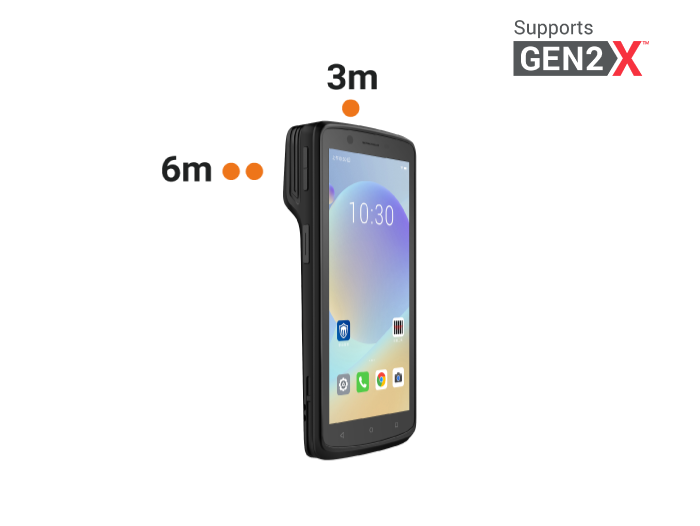
Ordinary RFID handheld readers have a read range of only 3–5 meters, which can't cover upper-level goods at all. This leads to a cascade of problems:
High operational risk, low efficiency: Workers must climb or use forklifts — high labor costs with safety hazards.
Severe tag misses: Small-item tags on shelves are densely packed, causing signal interference and extremely high miss rates on a single pass.
Strong environmental interference: Metal shelves reflect and block signals. Even slight angular deviation prevents tag reading.
Simple summary: For high-bay cycle counting, the core requirements are ultra-long read range, stable reading, and anti-metal interference.
1.2 Full-Pallet Inbound/Outbound Cycle Counting: Core Pain Point — "Reads Slowly, Doesn't Read Everything"
Full-pallet operations are the opposite of high-bay counting. They don't need ultra-long read range, but they demand extremely high batch read speed, penetration capability, and anti-interference performance.
A single pallet often carries hundreds of items with densely packed tags, plus various complex conditions:
Low read efficiency: Massive numbers of tags need to be identified simultaneously. Ordinary devices read slowly, causing bottlenecks during peak inbound/outbound periods.
Liquid signal attenuation: Beverages, household chemicals, fresh food, and other liquid products directly absorb RFID signals, making bottom-layer tags unreadable.
Random tag orientation: Pallet goods are arranged without fixed standards. Tag orientations vary wildly, creating frequent read dead zones.
Simple summary: For full-pallet cycle counting, the core requirements are ultra-fast batch reading, strong penetration, omni-directional reading, and resistance to complex interference.
2. Precision RFID Handheld Reader Selection Criteria: Different Scenarios, Different Parameter Priorities
Avoid the trap of "range-only thinking." Remember this core selection mantra: For high-bay shelves, prioritize range and stability. For full pallets, prioritize speed and penetration.
Here are five core selection dimensions that companies can use as a direct reference:
2.1 Read Range: Scenario Fit Is Key
High-bay shelf scenario: Choose devices with 10–30 meter ultra-long read range. Standing on the ground, you can cover the full height of shelves — no more climbing.
Full-pallet scenario: 3–5 meter read range is sufficient. Focus on penetrating read capability to ensure tags at the bottom of stacked goods can be read.
2.2 Batch Read Speed: Determines Warehouse Throughput
High-bay shelves: Moderate tag density. Focus on anti-collision and anti-miss capabilities to ensure read stability.
Full-pallet cycle counting: Speed is the core metric. Prioritize devices capable of reading thousands of tags per second to directly resolve inbound/outbound congestion.
2.3 Anti-Interference Capability: Adapted to Complex Warehouse Environments
High-bay shelves: Primarily combat signal reflection and blocking from metal shelves.
Full-pallet scenario: Must simultaneously handle liquid signal attenuation, metal pallet interference, and dense tag signal collision — a triple challenge.
2.4 Polarization Mode: Eliminate Read Dead Zones
Whether for small items on shelves or full-pallet goods, tag orientations are random. Traditional single-polarization devices frequently miss reads. Prioritize multi-polarization, omni-directional reading devices that adapt to any tag angle.
2.5 Battery Life and Protection: Suited for All-Weather Operation
Indoor shelf operations have moderate requirements for battery life and protection. Full-pallet operations often involve outdoor loading/unloading and long-distance transport, requiring long battery life, high-level waterproof/dustproof ratings, and drop resistance.
3. No Need to Buy Two Devices! One Unit Handles Both Warehouse Scenarios
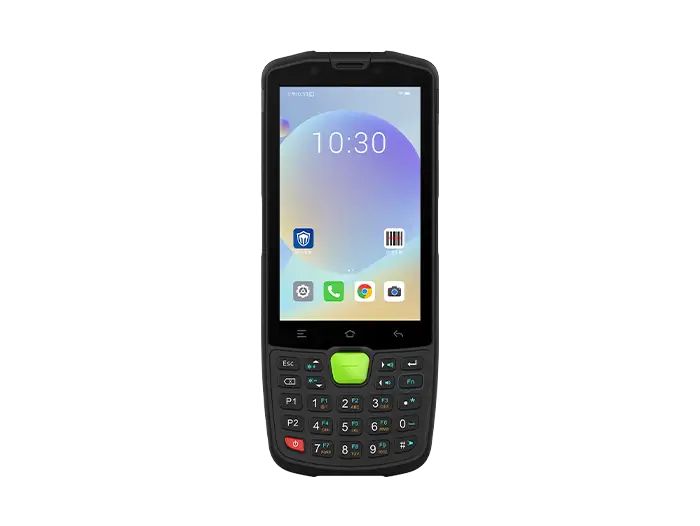
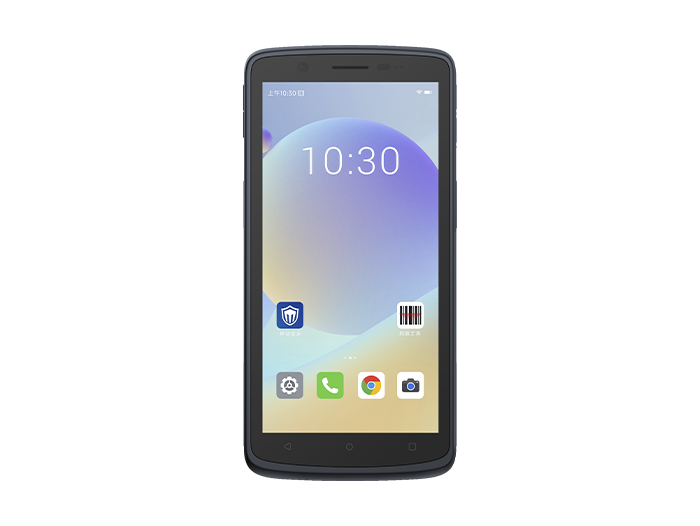
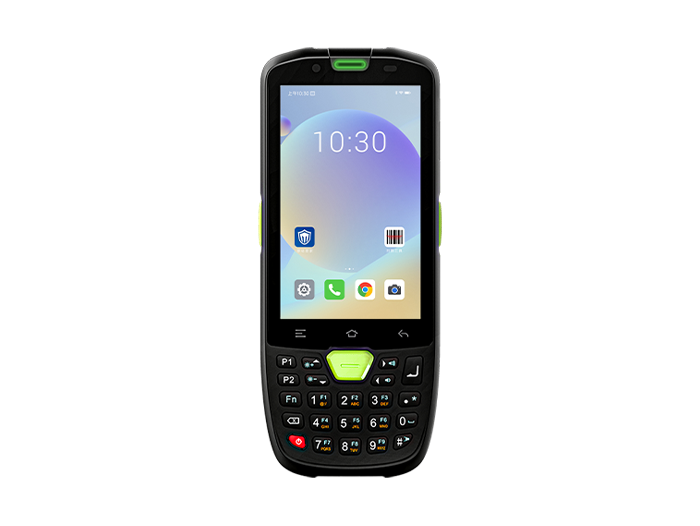
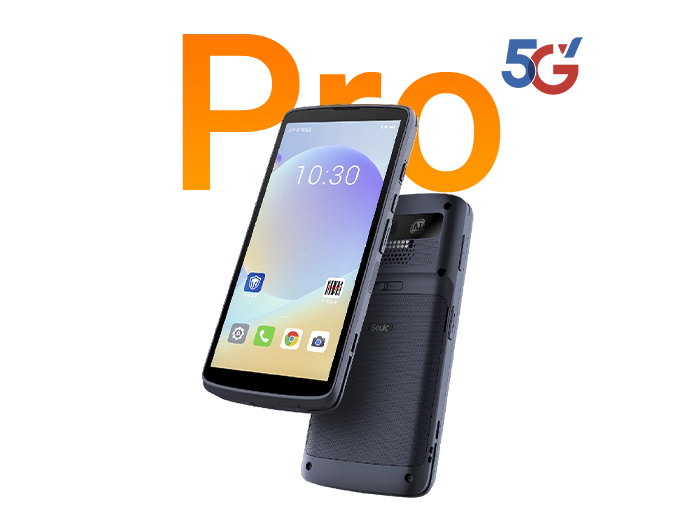
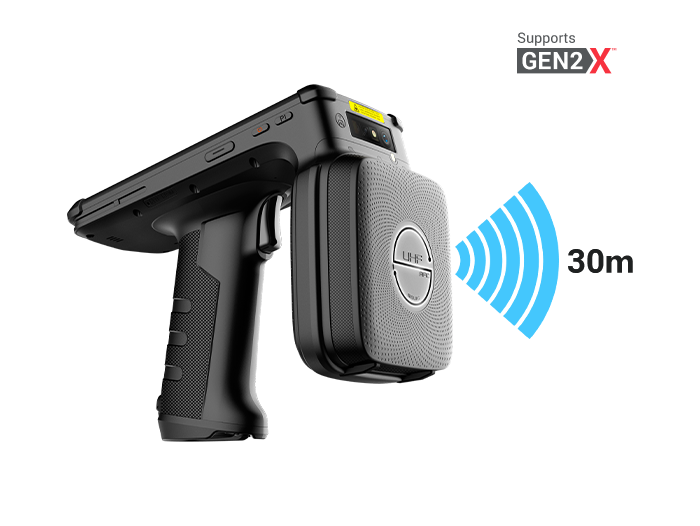
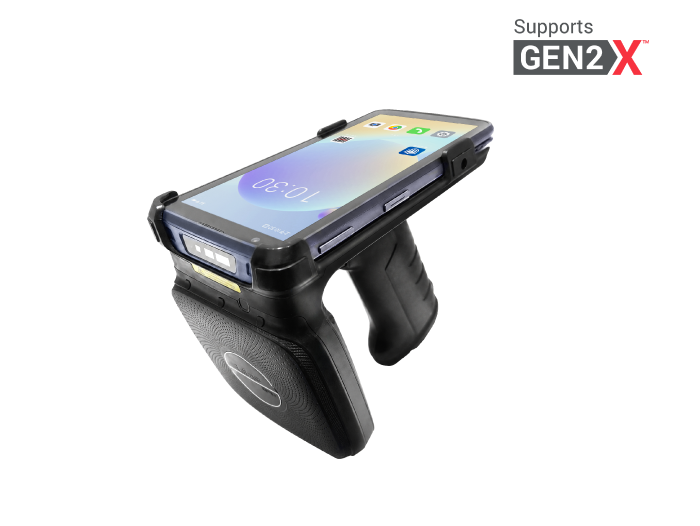
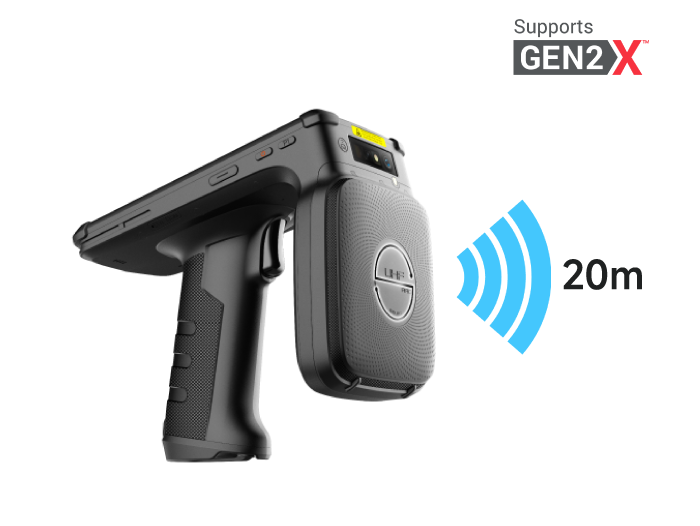
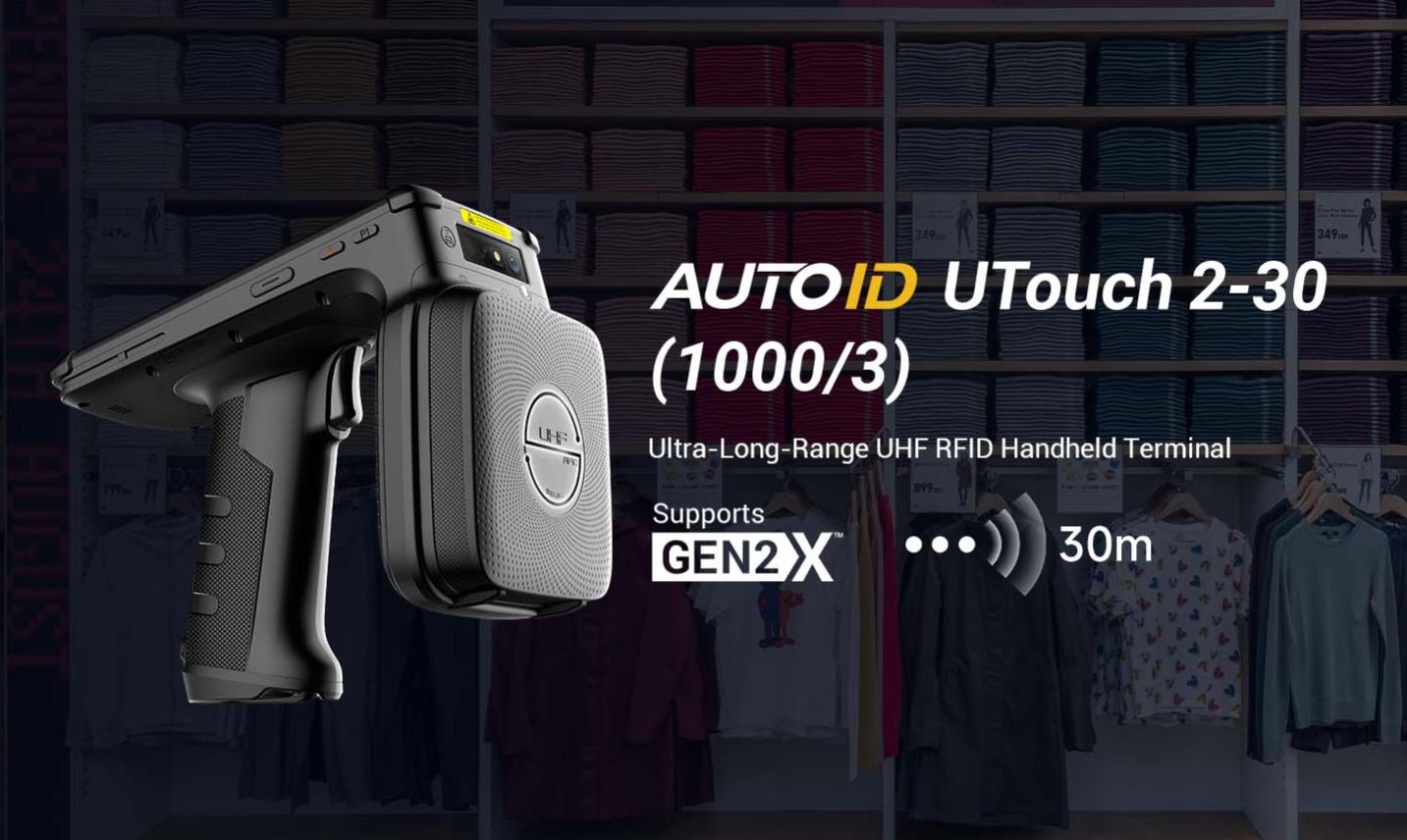
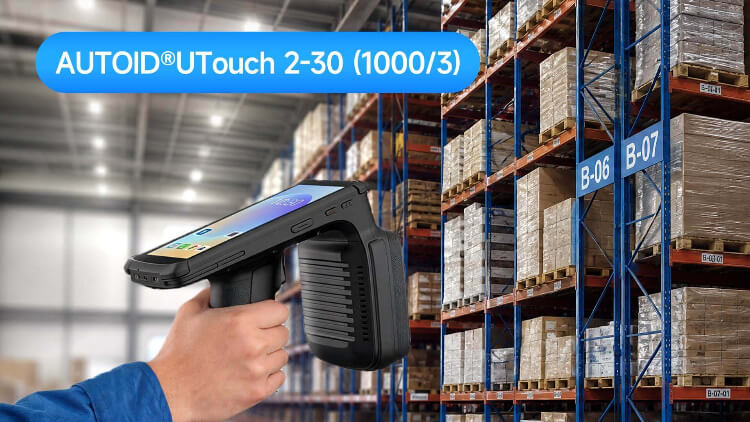
Many mid-sized warehouses have both high-bay shelf cycle counting and full-pallet inbound/outbound scenarios. Buying two separate devices is too expensive and leaves equipment idle. For these hybrid warehouse environments, the SEUIC AUTOID UTouch 2-30(1000/3) ultra-long-range UHF RFID handheld reader is the perfect fit — combining ultra-long-range reading and ultra-fast batch reading in one device that covers the full warehouse landscape.
3.1 30-Meter Ultra-Long Range: No Climbing Needed for High-Bay Counting
The device supports stable reading at up to 30 meters — far exceeding the typical 10-meter shelf height in conventional warehouses. Workers stand on the ground, raise the device, and scan the entire row of high shelves in seconds. No ladders, no forklifts — safe and efficient.
Applicable scenarios: High-bay shelf cycle counting, outdoor warehouse patrol inspections, large automated warehouse operations.
3.2 1,000 Tags in 3 Seconds: Zero Congestion for Full-Pallet Operations
For dense, high-volume full-pallet tag scenarios, the device reads 1,000 tags in just 3 seconds with no misses and no errors. The algorithm is deeply optimized for liquid materials (beverages, household chemicals, fresh food) and densely stacked goods, perfectly solving signal attenuation and tag collision challenges — dramatically accelerating inbound/outbound throughput.
Applicable scenarios: Fast-moving consumer goods full-pallet counting, food and fresh produce warehousing, dense material management, batch inbound/outbound operations.
3.3 Intelligent Multi-Polarization Auto-Recognition: No Dead Zones at Any Angle
Traditional circular polarization devices are highly sensitive to tag angle. Any angular deviation drastically reduces recognition rates. This device is equipped with multi-dimensional polarization recognition technology that intelligently senses tag attachment angles and product placement direction, automatically switching to the optimal read mode. Recognition efficiency improves by 40% compared to traditional devices — dead zones eliminated.
3.4 Rugged Hardware Configuration for All-Weather High-Intensity Operations
Massive battery life: 11,700mAh dual large-capacity battery supports reading over 50,000 tags. 18W fast charging for full-day high-intensity operations.
Built tough: IP67 waterproof/dustproof rating, 1.5-meter drop resistance — easily handles bumps, dust, moisture, and other harsh warehouse conditions.
Smooth, never lags: Octa-core high-speed processor + Android 14. Multiple business applications run simultaneously without stutter. Extended device lifecycle for better cost-effectiveness.
4. Final Summary: Warehouse RFID Device Selection Quick Reference
High-bay small-item cycle counting: Prioritize 30-meter-class ultra-long read range, anti-metal interference, and stable read performance.
Full-pallet batch cycle counting: Prioritize ultra-fast batch reading, strong penetration, and anti-liquid attenuation.
Hybrid scenario warehouses: Go straight for the SEUIC AUTOID UTouch 2-30(1000/3). One device handles both high-bay counting and full-pallet inbound/outbound — cost-efficient, productive, and ready for every warehouse scenario.
SEUIC has broken the long-standing monopoly of international brands through independent innovation, building a full-scenario industrial-grade product matrix spanning seven major categories — including industrial mobile data terminals, UHF RFID readers, industrial vision products, medical terminals, integrated products, and barcode scanners. From compact indoor handhelds to slim outdoor industrial phones, from fixed-mount devices to mobile terminals, SEUIC meets the personalized data collection needs of different industries and scenarios.
Related News
-
Portable Barcode Scanner Vendor Evaluation Guide: Support, Lifecycle & Fleet Management
Product Updates | 2026.10.08Learn More
-

Rugged Android Tablet for Retail Stores: Inventory Management, Assisted Selling & Store Inspections
Product Updates | 2026.09.30Learn More
-

11-Inch Rugged Android Tablet: One Device for Inventory, Sorting & Dispatch
Product Updates | 2026.09.30Learn More
-
Barcode Scanner vs Handheld Terminal: Selection Guide for PCB Factory Digital Transformation
Product Updates | 2026.09.29Learn More