




RFID Medical Asset Tracking: Instant Location Solution for Infusion Pumps & Monitors
In emergency departments, ICUs, and inpatient wards, infusion pumps and patient monitors circulate constantly between nurse stations, patient rooms, treatment areas, and equipment storage. Traditional pen-and-paper logs and periodic inventory checks turn "where is the device?" into a phone tag game. Finding a single pump can take 20 to 30 minutes. A monitor gets borrowed by another department with no record.
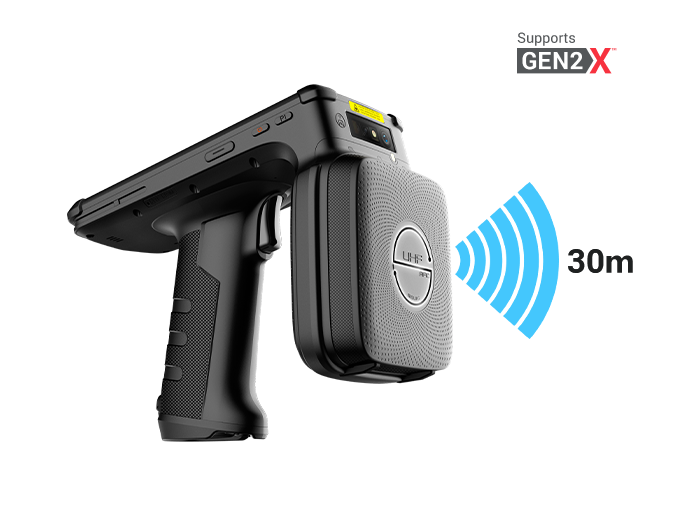
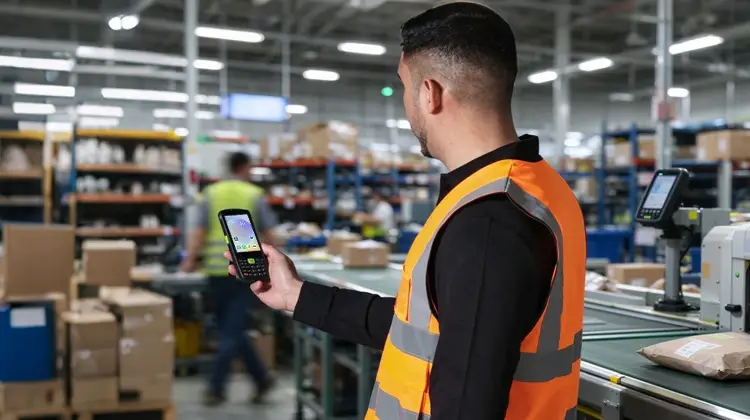
The SEUIC AUTOID UTouch 2-30(1000/3) ultra-long-range UHF RFID handheld reader changes this. With a 30-meter read range and the ability to read 1,000 tags in 3 seconds, clinical staff can stand in the hallway, sweep once, and locate available equipment in seconds — giving the time spent searching back to patient care.
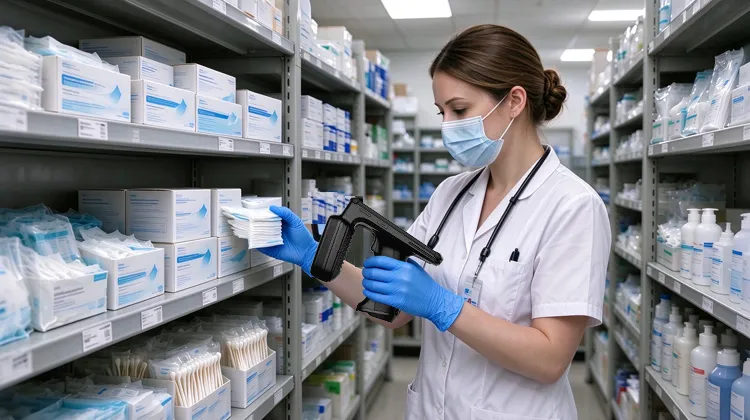
1. The Real Pain Points of Mobile Medical Equipment Management
In large hospitals, the problem with mobile medical equipment isn't "we can't afford to buy it" — it's "we can't see it."
Location black hole: Pumps and monitors move with patients between departments. Manual logging lags behind reality. The ledger never matches the floor.
Slow emergency deployment: When a code is called, no one can find an available infusion pump. Nurses search room by room, delaying medication delivery.
Hoarding alongside shortages: Department A is short on pumps while Department B hides extras. The fear of "not having one next time" drives hoarding behavior.
Maintenance blind spots: Calibration-overdue, awaiting-disinfection, and under-repair devices get mixed in with the available pool — creating clinical risk.
Duplicate purchases: Because departments believe they don't have enough, hospitals keep renting or buying more equipment that could have been redeployed internally.
For Clinical Engineering / EBME teams, there are added technical challenges: metal enclosure reflections, random tag orientations, and complex ward signal environments.
2. The SEUIC AUTOID UTouch 2-30(1000/3) Solution
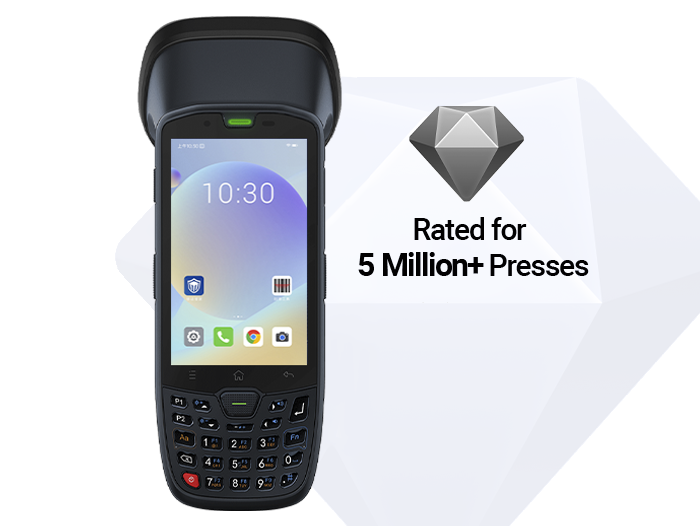
The AUTOID UTouch 2-30(1000/3) is a UHF RFID handheld terminal designed for high-density, long-range identification scenarios. It's not just a "barcode gun" — it combines bulk RFID reading, barcode/NFC scanning, image capture, and an Android business system in one device. It's particularly well-suited for hospital asset rounds, spot checks, and emergency inventory.
2.1 30+ Meter Read Range — Scan the Hallway, Reach the Equipment
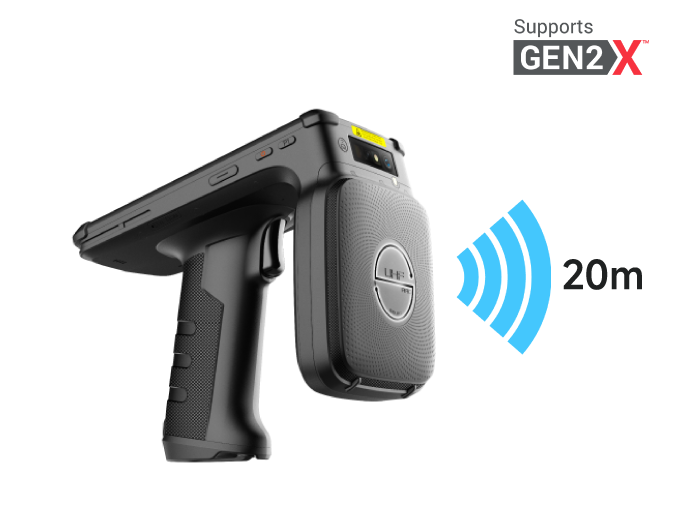
The UHF module achieves a read range of over 30 meters. Nurses standing in the ward corridor or at the equipment room entrance can read tags on pumps and monitors mounted on wall brackets or carts — no need to get close or unwrap packaging. Adjustable transmit power allows the read zone to be narrowed to a target ward area, reducing cross-room reads.
2.2 1,000 Tags in 3 Seconds — No Missed Reads in Dense Asset Areas
Equipped with an advanced anti-collision algorithm, it handles the dense stacking of a dozen pumps and monitors inside a nurse station cart. Bulk reading completes in seconds. Multi-polarization auto-recognition (omnidirectional, vertical, horizontal) dynamically adapts to tag attachment angles, solving missed reads caused by metal enclosures, cable obstructions, and random tag orientation. Recognition efficiency improves by approximately 40% compared to traditional circularly polarized readers.
2.3 Multi-Function + Industrial Durability — Built for the Clinical Environment
Simultaneously supports UHF RFID, HF NFC, 1D/2D barcodes, and 13MP imaging — verify equipment nameplates, serial numbers, and disinfection records
11,700mAh dual hot-swappable batteries for 24-hour continuous operation — supports hospital-wide rounds without recharging
IP67 protection + 1.5m drop resistance — withstands disinfectant wiping, cart collisions, and accidental floor drops
Android 14 system — connects directly to hospital asset platforms and WMS for on-the-spot status updates: In Use / Idle / Needs Calibration / Awaiting Disinfection
3. How to Deploy: From Tagging to Daily Use
Tag and register:
Apply medical-grade anti-metal RFID tags (or NFC + UHF dual-frequency tags) to each infusion pump and patient monitor. Bind device ID, model, assigned department, and calibration cycle.
Fixed nodes + handheld backup:
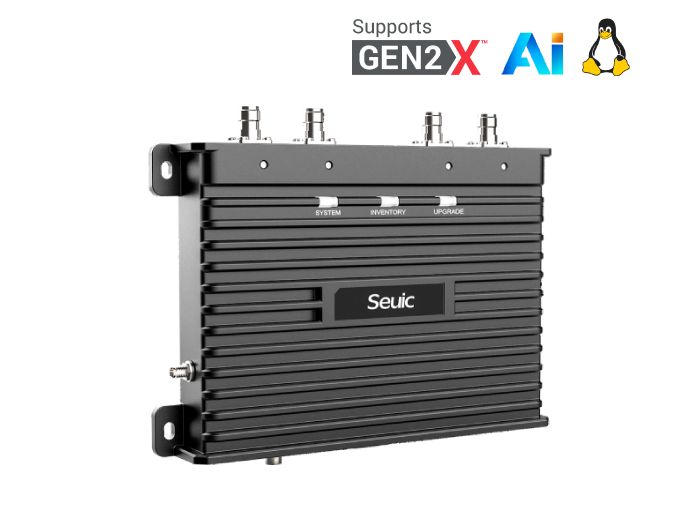
Deploy fixed RFID readers at ward entrances and equipment room exits for automatic in/out recording
For spot checks, emergency redeployment, repair verification, and night rounds, use a handheld RFID reader such as the AUTOID UTouch 2-30
Platform integration:
Read data flows in real time to the asset management system, updating "last seen location + current status." Nurses type "available infusion pump" into a tablet or nurse station display, and the system sorts results by proximity and status.
Closed-loop workflow:
Checkout automatically assigns responsibility. Cross-department transfers update ownership. Calibration-overdue devices are locked. Repaired devices are reactivated.
RFID medical asset tracking isn't about buying more readers. It's about connecting device identity, location, status, and maintenance into a single real-time data chain. The SEUIC AUTOID UTouch 2-30, with its 30-meter read range, 1,000-tag bulk read in 3 seconds, multi-polarization anti-interference, and medical-grade durability, helps hospitals compress the time to find infusion pumps and monitors from half an hour to a few scans. It reduces hoarding, cuts duplicate purchases, and keeps calibration compliance on track. Devices stay in place. Nurses stay at the bedside.
Evaluating an RFID deployment for your hospital? Contact SEUIC for one-on-one scenario assessment and a trial solution.
Founded in 2002, SEUIC Technology Co., Ltd. has always focused on mastering core technologies, continuously improving innovation capabilities, and building excellent branded products including mobile computers, UHF RFID readers, tablets, barcode scanners, and fixed-mount readers. With highly reliable products and efficient service, our solutions are widely used in manufacturing, retail, logistics, healthcare, and other industries. We provide frontline workers with more durable real-time data collection tools, helping you improve operational efficiency and take productivity to new heights.
Related News
-
Handheld DPM Scanner vs Fixed Barcode Reader: Production Line Guide
Product Updates | 2026.11.17Learn More
-
Rugged Mobile Computer for Field Service: Selection & Deployment Guide
Product Updates | 2026.11.17Learn More
-

MES Workstation Data Capture: Industrial Handheld PDA Selection & Deployment Guide
Product Updates | 2026.11.17Learn More
-
Swappable Battery PDA: SEUIC AUTOID Q9 Pro Sortation Power Solution
Product Updates | 2026.11.17Learn More