






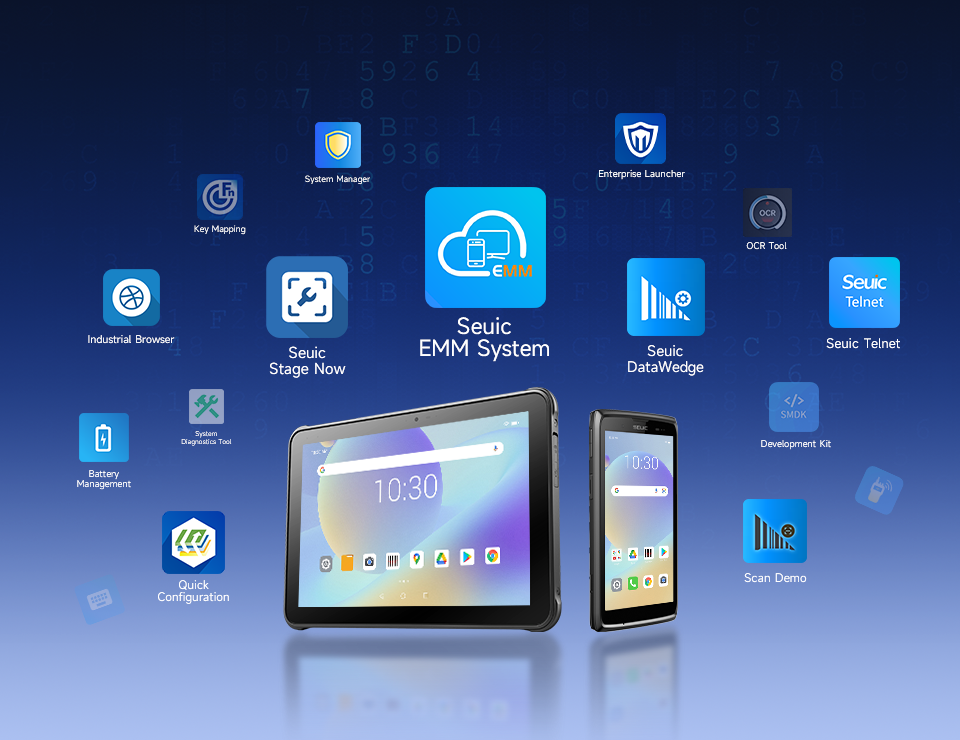


RFID Tracking in Supply Chain: An End-to-End Visibility Solution from Factory to Customer
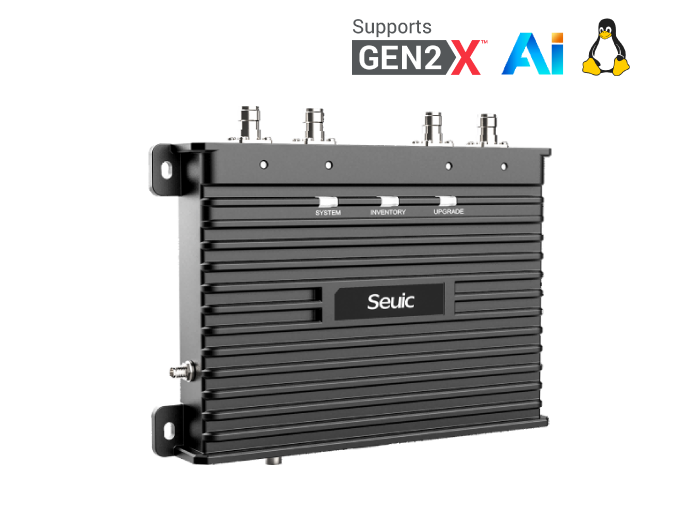
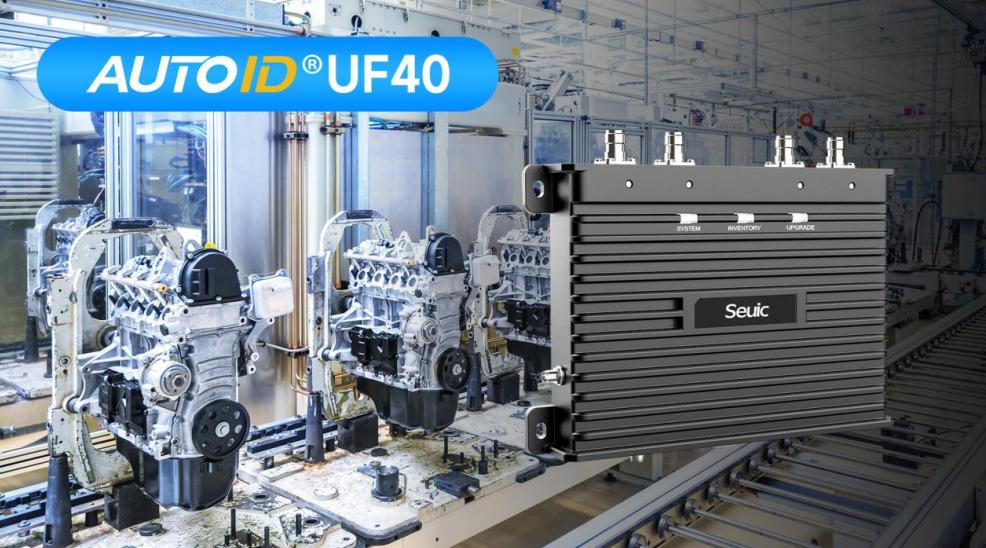
In supply chain management, goods often enter a "black box" state after leaving the warehouse — their location and quantity remain unknown until they reach the next checkpoint. RFID Tracking closes this gap by automatically collecting data at key nodes: factory shipping docks, transit hubs, distribution center receiving docks, and transport vehicles. It turns discrete activities — loading, transshipment, in-transit movement, and proof of delivery — into a continuous stream of events. The Seuic AUTOID UF40 Linux AI Fixed RFID Reader, with its Linux system, AI-powered self-organizing network, four-channel UHF high-performance reading, and DeepSeek-assisted O&M, supports end-to-end visibility from the factory floor to the end customer in high-volume scenarios.
1. Why the Traditional Supply Chain Has Always Been "Half-Blind"
Many factories, 3PLs, retail warehouses, and hospital supply departments already have systems in place — but data breaks between nodes.
1.1 Location Unknown After Shipment
Once a truck leaves the loading dock, dispatchers often rely solely on phone calls from drivers, Excel-based return receipts, or scattered GPS data to track progress. Whether the cargo is following the planned route, stuck at a sorting hub, or mistakenly loaded onto another truck is usually discovered only when the next stop finds a discrepancy upon receipt.
1.2 In Transit: You See the Truck, Not the Cargo
GPS can answer "where is the truck," but it struggles to answer "is the batch of pallets, pharmaceuticals, or garments on board intact and loaded per the order?" For pharmaceuticals, automotive parts, cold chain, and high-value retail goods, tracking the vehicle alone does not equal tracking the cargo.
1.3 Receiving: Slow Manual Checks, High Error Rates
Traditional receiving often relies on scanning items one by one, paper packing slips, and manual counting. With multiple pallets, numerous SKUs, and mixed loads, checking a single truckload can take anywhere from dozens of minutes to several hours. Missed scans, duplicate scans, wrong boxes, and delayed system updates directly cause inventory discrepancies, follow-up investigations, and customer complaints.
1.4 Exception Tracing Relies on Memory
When shortages, batch mix-ups, or quality recalls occur, without automatic read records at each node, the only recourse is to dig through paper documents and surveillance footage. Factory QC, warehouse staff, transport drivers, and store receivers often have conflicting accounts, making liability determination costly.
Summary: The traditional model is not entirely untracked — it is "human-driven, node-isolated, and in-transit black-boxed." The value of RFID is shifting tracking from "after-the-fact reconciliation" to "in-process and preemptive alerts."
2. The End-to-End Logic of RFID Tracking: Tags + Fixed Nodes + Vehicle Positioning
The core of RFID Tracking is not simply "buying readers" — it is writing identity data into tags and automatically reading them at mandatory points along the business flow.
2.1 Source Tagging: Bind Identity from the Factory Floor
At the end of the production line, packaging station, or before finished goods are put away, attach UHF RFID tags at the individual item, inner pack, outer carton, or pallet level. The tag typically encodes:
Product SKU, specifications, batch/lot number, production time
QC result, production line/station ID
Pallet ID, packing list, ASN (Advanced Shipping Notice) reference
Target customer, store, warehouse, or project number
The more standardized the source encoding, the higher the automatic identification rate for subsequent receiving, sorting, counting, and returns. Industries such as apparel, retail, pharmaceuticals, and automotive parts can apply pre-printed tags at the factory to avoid secondary labeling at the warehouse.
2.2 Fixed Reading at Key Nodes: Batch Capture Without Stopping or Breaking Down Pallets
Deploy fixed RFID read zones at the following locations to achieve "pass-and-record":
Factory shipping dock / loading bay: As forklifts carry full pallets through the portal, the system automatically reads all carton/pallet tags and compares them against the outbound order.
Transit sorting hub: LTL, parcel, and 3PL cross-docks use portal antennas or sortation line antennas to record transshipment, dwell time, and re-dispatch times.
Distribution center receiving dock: Upon truck arrival, tags are read in bulk, automatically generating a receiving record and comparing it against the ASN — missing cartons, extra cartons, or wrong batches trigger instant alerts.
Store / hospital / construction site secondary warehouse receiving: Low-volume, high-frequency inbound shipments use portal or desktop fixed readers to reduce front-counter manual scanning.
In warehouse settings, fixed readers can be placed at entry/exit aisles, conveyor belts, rack aisles, and beside automated sorters. Portal doors typically use circularly polarized antennas for volumetric coverage; conveyors deploy 1–2 antennas depending on belt width, paired with photoelectric triggers to avoid empty reads. A typical warehouse portal can verify an entire pallet in seconds and push events to the WMS/ERP.
2.3 Combining GPS for Dual-Layer "Cargo + Vehicle" Tracking
Pure RFID excels at fine-grained node and intra-warehouse identification; pure GPS excels at wide-area vehicle tracking. An end-to-end solution typically fuses them as follows:
RFID handles "which batch, which pallet, which carton, when it passed which door"
GPS/BeiDou handles "where the truck is, whether it deviates from route, estimated arrival time"
Transit hub RFID reads handle "how many pallets were unloaded, whether unloading matched the plan"
The backend merges RFID events, GPS tracks, TMS waybills, and WMS inventory into a unified timeline
Example: Tags are written at the factory. Read once at the loading dock, again at the regional transit hub, and once more at the customer receiving dock. Meanwhile, vehicle GPS continuously reports position. Managers see not just "truck on highway," but "Order A's 3 pallets left factory → loaded at 08:40 → arrived at transit hub at 12:10, unloaded and sorted → reloaded at 14:30 → all successfully read at receiving dock at 17:20."
2.4 Data Only Matters When It Reaches the Business System
RFID should not stop at "we can read it" — it must translate into business events:
Integration with WMS: Automatic putaway, putaway suggestions, outbound verification, cycle counting
Integration with ERP: Inventory book-to-physical sync, batch ledger, financial count basis
Integration with TMS: Waybill-to-vehicle-to-pallet linkage, in-transit anomaly alerts
Integration with QC/traceability system: Recall, quarantine, warranty tracing by batch/serial number
For hospital pharmacies, utility metering assets, government law enforcement equipment, and similar scenarios, the same "fixed read point + asset tag" approach applies for periodic counting and circulation audits — only the tag hierarchy and read frequency differ.
3. Typical Deployment Path from Factory to Customer
Different industries use different node names, but the end-to-end skeleton remains largely the same.
3.1 Factory Floor / Production Line End
Finished goods come off the line → tag binding with batch info → QC pass → move to staging area. Goal: before shipment, the system already knows "what goods, how many, which batch passed QC."
3.2 Shipping Warehouse / Outbound Dock
Pre-load portal read → compare against sales order/ASN → alert on abnormal cartons → generate loading confirmation. Prevents wrong shipments, shortages, and batch mixing.
3.3 Line-Haul Transportation
Continuous GPS positioning; if entering owned campuses, service stations, or customs-bonded zones, set up RFID nodes to record stops. For high-value cargo, add RFID electronic seals to log tamper events.
3.4 Regional Transit / 3PL Sorting Hub
Read by pallet, carton, or piece; update transit timestamp; integrate with sortation lines for automatic chute assignment. Parcel and e-commerce fulfillment centers can use fixed portals to increase throughput per hour.
3.5 City Warehouse / Store / Hospital / End-User Facility
Batch tag read on arrival → system auto-receives → putaway or direct-to-workstation. Retail can continue with store-level counting and loss prevention; hospitals can trace drugs, consumables, and instrument kits; utility companies can incorporate meter assets into fixed read points for periodic inspection.
3.6 Customer Proof of Delivery and Reverse Logistics
Re-read on returns, repairs, or empty pallet recovery to close the full lifecycle data chain. Especially important for apparel and retail — linking returns, laundry, refurbishment to the original tag.
4. Common Pitfalls During Implementation
Buying readers without planning antenna layout: The same reader performs very differently across various portal sizes, metal environments, and tag heights. Portal design must account for side-mount height, antenna tilt, circular vs. linear polarization choice, and avoidance of blind spots or cross-reads.
Assuming higher power is always better: High power reads neighboring aisles and adjacent pallets. Start from low power and incrementally increase, tuning with Q values, triggers, and blacklist/whitelist filtering.
Wrong tag selection: Metal, liquids, low temperatures, and outdoor UV exposure degrade UHF performance. Use on-metal tags for metal cargo; cold-chain applications require robust adhesive; apparel needs consideration for hang-tag or care-label embedding.
Not integrating with WMS/ERP: Reading without pushing business events ultimately leads back to manual spreadsheet exports. Define at least five event types upfront: inbound, outbound, transfer, counting, and anomaly.
Using only GPS for in-transit tracking without node RFID: You can see the truck but can't verify cargo integrity. High-value, regulated, pharmaceutical, and contract manufacturing scenarios should combine RFID nodes with GPS.
Rolling out across all SKUs and categories at once: Safer to start with 1–2 SKU categories that have high error rates, high labor costs, or high counting frequency. Expand only after read rates stabilize.
Neglecting O&M readiness: How to alert on device offline, how to recalibrate bumped antennas, how to reissue damaged tags, how to ensure system clock synchronization. End-to-end visibility is not a single-point hardware project — it is ongoing operation of the "tag → reader → middleware → business system" stack.
5. Product Recommendation: Seuic AUTOID UF40 Linux AI Fixed RFID Reader
If the goal is to connect the "factory → transportation → transit hub → warehouse → end customer" chain for end-to-end visibility, a fixed reader needs three things: batch reads reliably at nodes, easy deployment across multiple doors/sites, and low-maintenance operation in industrial environments. The Seuic AUTOID UF40 Linux AI Fixed RFID Reader delivers on these fronts:
5.1 Automated Batch Collection at Key Nodes, Reducing Manual Checks
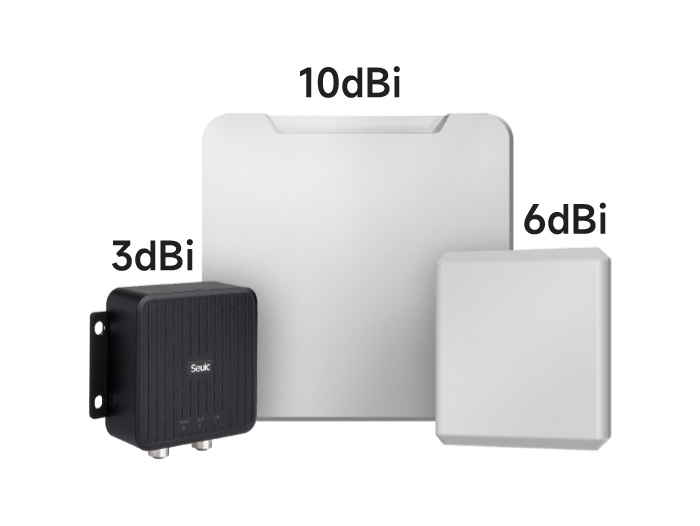
The AUTOID UF40 uses a UHF solution supporting EPC Class 1 Gen 2 / Gen 2X and ISO 18000-6C, equipped with an Impinj E710-grade high-performance module capable of up to ~1,300 tags/second. Four RP-TNC antenna ports cover portal doors, loading docks, and conveyor beams with multiple beam patterns. Paired with 9 dBiC circularly polarized antennas and 30 dBm output, typical open-air read range exceeds 10 meters, write range over 5 meters. Power adjustable from 1–33 dBm in 1 dB steps allows precise control to limit reads to "this pallet only, not the adjacent lane." For factory full-pallet outbound, 3PL full-truckload transshipment, and retail DC full-carton receiving, "pass-and-count" replaces item-by-item scanning.
5.2 AI-Powered Self-Organizing Network and Tuning, Lowering Multi-Site Deployment Barriers
Supply chain projects often deploy equipment across multiple warehouses and shipping doors simultaneously. Traditional fixed reader tuning relies on RF expertise. The UF40 runs Linux 5.4, integrates AI capabilities, and connects to the DeepSeek large language model, supporting intelligent self-organizing networks, one-click parameter tuning, natural-language Q&A, and online firmware upgrades. Its built-in 1 TOPS NPU enables edge-level filtering — tag deduplication, static vs. dynamic tag classification, and basic rule evaluation — before reporting to WMS/ERP, reducing backend middleware load. This makes it particularly friendly for retail chains, hospitals, and regional 3PLs without dedicated RF engineers.
5.3 Industrial-Grade Stability and System Integration, Suited for Factory-to-Logistics Full Chain
The UF40 supports Gigabit RJ45, PoE, RS232, USB, 2.4G/5G dual-band Wi-Fi, optional 4G; 4 optically isolated inputs, 4 outputs including relay, compatible with photoelectric sensors, gates, alarm lights, and PLCs. Operating temperature approx. -20°C to +60°C, IP54 protection, 12–48 V wide voltage input — suitable for workshops, cold storage peripherals, loading docks, and sorting hubs. By integrating with WMS/ERP/TMS, it automatically converts "factory read → transit read → arrival read" into order status changes, inventory updates, and in-transit anomaly events, supporting an end-to-end dashboard from factory floor to customer receiving.
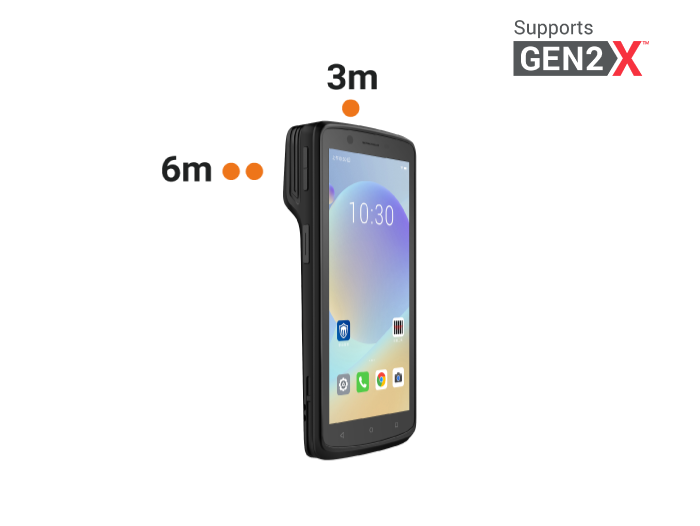
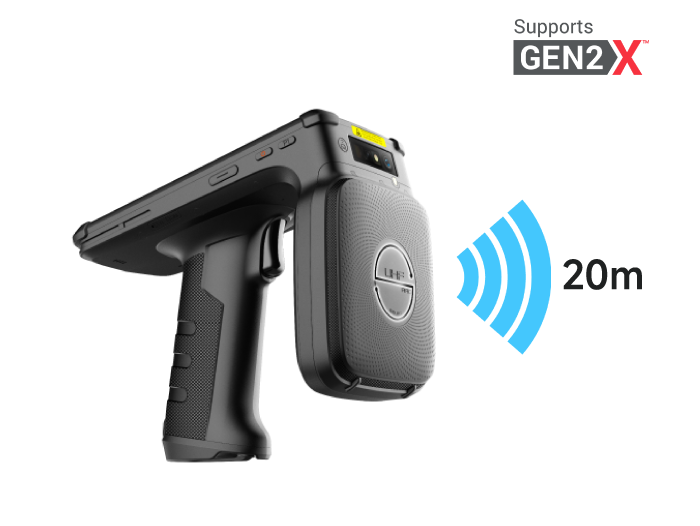
Deployment recommendation: For high-volume outbound doors, DC receiving/shipping doors, conveyor verification, and 3PL transit channels, prioritize fixed UF40 readers. For store counting, mobile patrols, and exception re-reads, pair with handheld RFID terminals to form a complete "fixed node + mobile supplement" tracking network.
The key to RFID Tracking from factory to customer is not "reading farther" in a single instance — it is connecting tag identity, fixed read nodes, GPS vehicle tracks, and business system events. Start by automating the three highest-frequency nodes: shipping dock, transit hub, and receiving dock. Then overlay vehicle positioning. Most enterprises can then transform "black box after leaving the warehouse" into "every critical action is system-verified."
If you are evaluating a retrofit at factory outbound doors, regional distribution centers, or retail receiving points, begin by gathering three pieces of information: the granularity of tracking needed (pallet/carton/item), the RFID event interfaces supported by your existing WMS/ERP, and environmental constraints at each node (metal, liquids, portal width, etc.). Once you have these details, feel free to contact Seuic for a free demo unit trial.
Related News
-
Portable Barcode Scanner for High-Rack Warehouses
Product Updates | 2026.09.20Learn More
-

RFID Tracking System Buying Guide: 10 Must-Evaluate Selection Factors
Product Updates | 2026.09.18Learn More
-
RFID Tracking vs Barcode: The Ultimate Asset Tracking Selection Guide
Product Updates | 2026.09.18Learn More
-
RFID Tracking for Warehouse Assets: Achieving Real-Time Visibility for Pallets and Containers
Product Updates | 2026.09.15Learn More