




Rugged Android Tablet Buying Guide: Protection, Battery Life & Scenario Fit
On factory floors, in warehouses, retail stores, healthcare facilities, and outdoor inspection sites, ordinary consumer tablets often retire early — choked by dust, shattered from drops, or shut down by freezing temperatures. What enterprises really need is a rugged Android tablet that can withstand harsh environments, stay connected, and capture data efficiently. This industrial Android tablet buying guide doesn't just stack specs. Instead, it builds a practical enterprise rugged tablet selection logic starting from real job roles.

1. Durability Specs
Many buyers see "IP68" and place an order, but IP ratings only mean "dust-tight + continuous immersion." The exact depth and duration depend on the manufacturer's test report — you must require third-party CMA-certified test data. What actually wears down industrial devices is often drops and impacts: prioritize MIL-STD-810H military-grade certification, focusing on 1.2-meter-plus concrete drops, tumble tests, vibration, salt fog, and more than twenty other environmental validations.
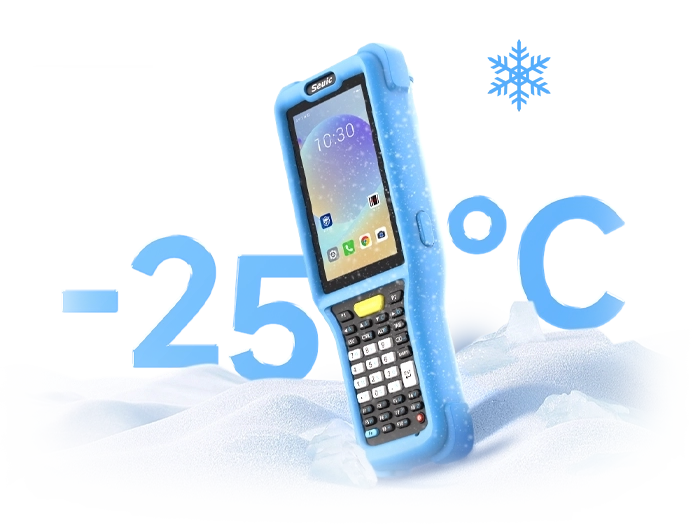
Beyond that, operating temperature range affects daily usability more than waterproofing. Consumer tablets rated 0–40°C will shut down in cold storage, northern outdoor sites, or hot server rooms. Industrial terminals should cover at least -20°C to 50°C. Screen glass material (e.g., Corning Gorilla Glass), sealing gaskets, and soft rubber bezel construction also determine the failure rate three years down the road. Put "test conditions" into your acceptance criteria — don't just look at the three letters on the nameplate.
2. Display, Power & Data Capture
Display: Under bright sunlight at warehouse docks or outdoor inspection sites, a standard 500-nit screen is practically unusable. Industrial scenarios need 700–1000 nits brightness, anti-glare (AG) coating, and support for thin gloves or wet-finger touch — otherwise, QC inspectors have to remove gloves just to tap the screen.
Power: Multi-shift operations dread "battery anxiety." A built-in non-removable battery means the device stops working when it dies. The right solution is a removable battery or a main battery that supports hot-swap — replace without shutting down, business continues uninterrupted. Even better, support for no-battery direct power mode, ideal for forklift mounting and long-shift patrols.
Data capture: Barcode scanning, UHF RFID, NFC, and high-definition imaging are high-frequency daily actions. Prioritize devices with natively integrated scan engines and UHF RFID modules — avoid USB dongles that can loosen and disconnect from vibration. The scan head must read damaged, wrinkled 1D/2D codes. RFID read range should match your shelf density and asset layout.
3. OS, MDM & Scenario Matching
System and lifecycle: The promised lifespan of Android major versions and security patches directly determines whether you can still install business apps three years later. During procurement, require the vendor to specify a 4–8 year system compatibility roadmap and confirm support for Zero-Touch enrollment — so IT can manage devices straight out of the box.
Management closure: A true enterprise rugged tablet must come with MDM capabilities — kiosk lock, application whitelist/blacklist, remote wipe, and offline geofencing. When a device is lost, you need to locate it and wipe data. That's an enterprise asset, not a consumer toy.
Match by job role, not by screen size:
Factory QC / production lines: Heavy scanning for work reporting, ESOP image viewing, oil-resistant and wide-temperature tolerant
Warehouse picking: RFID bulk reading, swappable battery, vehicle mount
Retail stores: Light-duty rugged, slim and good-looking, member NFC, quick inventory
Healthcare: Antimicrobial housing, silent vibration, wrist-strap scanning
Utility inspection / meter reading: Usable at -20°C, glove touch, offline maps and GPS
Law enforcement patrol: Photo evidence capture, secure desktop, data encryption
Whether the screen is slightly larger or smaller is just the carrier. Whether the workflow runs smoothly — that's the core.
4. Pre-Purchase 6-Point Self-Checklist
Put this checklist into your procurement requirements — it's more useful than reading ten brochures:
Environment boundary: Does the dust level, possible liquid depth, drop height, and operating temperature cover your actual working conditions?
Capture capability: Are 1D/2D codes, UHF RFID, and NFC natively integrated? Are read range and decode rate field-tested?
Power solution: Does it support hot-swap / no-battery operation? Can a single battery cover a full shift?
System lifecycle: How many years of Android major version and security updates are promised? Is there a MIL/IP third-party report?
Management capability: Can it do Zero-Touch mass deployment, kiosk lock, remote locate and wipe?
Total Cost of Ownership (TCO): Are the 3–5 year failure rate, spare parts lead time, and after-sales response time quantifiable?
5. Rugged Android Tablet Recommendation — The AUTOID Pad Air 11 in a Closed-Loop Scenario
When you break down those six points, you realize you never wanted "a tougher tablet." You wanted a mobile node that integrates into MES/WMS/retail ERP and reduces long-term operational costs. The factory needs high-definition engineering drawings plus hot-swap. The warehouse needs long-range RFID plus seamless Wi-Fi roaming. Inspectors need extreme cold usability plus offline navigation. IT needs unified management and an eight-year lifecycle.
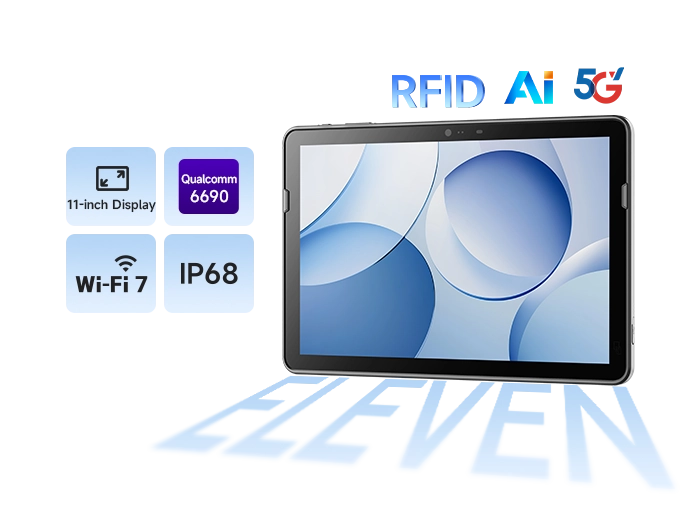
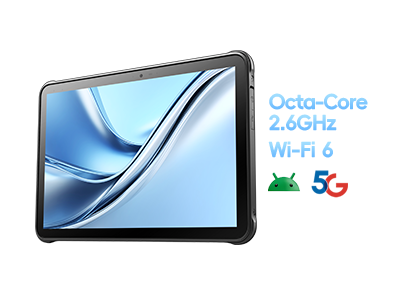
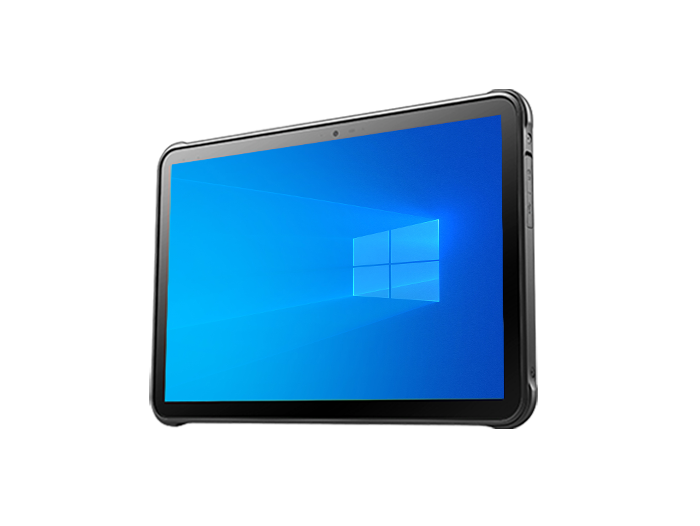
Under this demand for "thin yet tough," a new benchmark emerges: an 11-inch device that balances consumer-grade feel with industrial-grade reliability. Take the Seuic AUTOID Pad Air 11 Industrial Tablet as an example. It delivers on three key points from the checklist:
Performance and long-term evolution: Powered by a Qualcomm QCM6690 octa-core 2.9 GHz platform, with integrated Wi-Fi 7 and 5G wide-area connectivity, plus on-device AI compute. An 8-year product lifecycle commitment with ongoing Android compatibility updates solves the enterprise pain point of "slows down after two years, system updates stop."
Reliability and battery life: Despite a slim body as thin as 8.5 mm, it passes IP68 protection and 1.2-meter drop resistance, supporting -20°C to 50°C wide temperature. A 10,000 mAh removable battery supports hot-swap and no-battery operation — perfect for multi-shift continuous work and vehicle mounting.
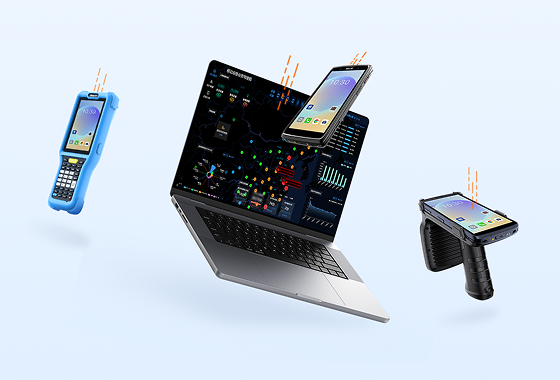
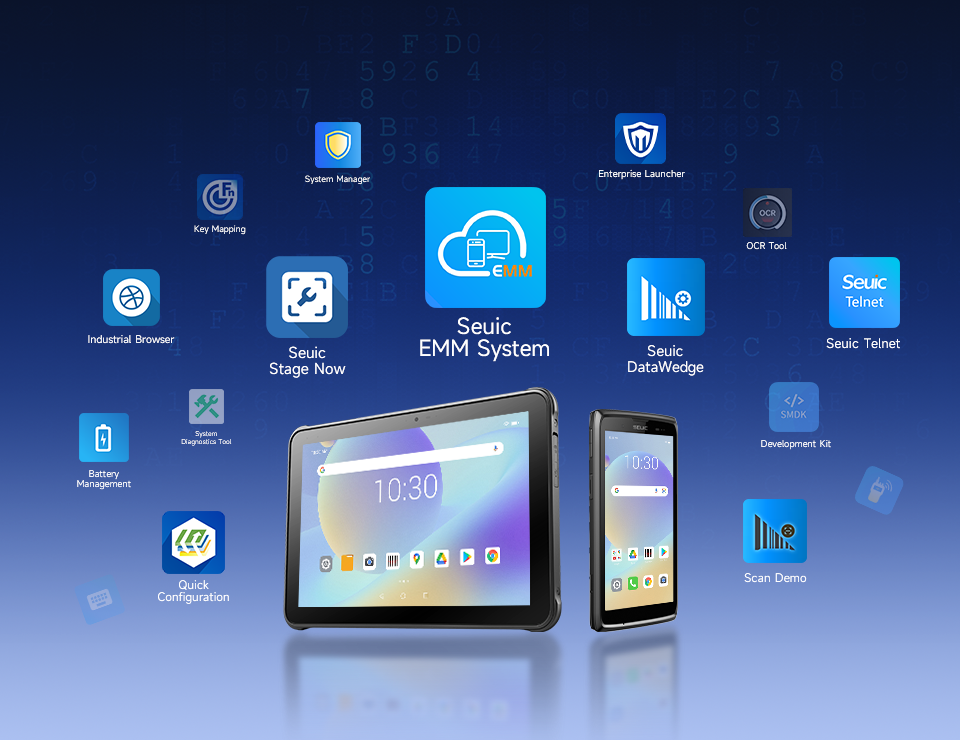
Interaction and management: An 11-inch display with anti-glare, anti-fingerprint coating. Natively integrated UHF RFID, 1D/2D barcode scanning, and high-definition imaging. Paired with the Seuic EMM platform for mass deployment, application management, offline device tracking, and remote wipe — covering manufacturing, retail, logistics, healthcare, and public utilities end to end.
For enterprises that need "one device to manage for five-plus years," this delivery model — bundling connectivity, data capture, and lifecycle services — delivers far more value than buying hardware alone.
Choosing an enterprise rugged tablet is essentially choosing a "trusted colleague" for your frontline workflow. Align protection, display, capture, system, and management with the job role, then calculate the total cost from a TCO perspective. Only then does a rugged tablet go from "a bit more expensive" to "a lot more savings." Put the standards into your procurement document, take a real unit to the field for two weeks — that's how digital transformation stays solid.
Related News
-
Double Efficiency High-Bay Inventory: Normal vs Ultra-Long Range UHF RFID Handheld
Product Updates | 2026.11.04Learn More
-
India RFID Supplier Selection: Industrial Procurement & Audit Guide
Product Updates | 2026.11.04Learn More
-
RFID Inventory for Beverages & Fresh Food: Handheld Reader Selection Guide
Product Updates | 2026.11.04Learn More
-

RFID Manufacturer Selection: China vs India Sourcing Decision Guide
Product Updates | 2026.11.04Learn More