




Rugged Tablet Buying Guide: Practical Selection for Industrial & Field Use
Workshop oil, warehouse dust, cold storage temperatures, outdoor sun exposure, bumps and drops during field inspections — ordinary consumer tablets rarely survive a quarter in these environments.
For production, warehousing, retail, and public utility managers, a truly usable industrial tablet for industrial and field use isn't just "a tougher tablet." It's a field node that embeds into business workflows, continuously collects data, and never drops offline.
This guide walks you through environmental differences, hard spec baselines, scenario-weighted priorities, and procurement execution — giving you a logic framework you can write directly into your tender requirements.
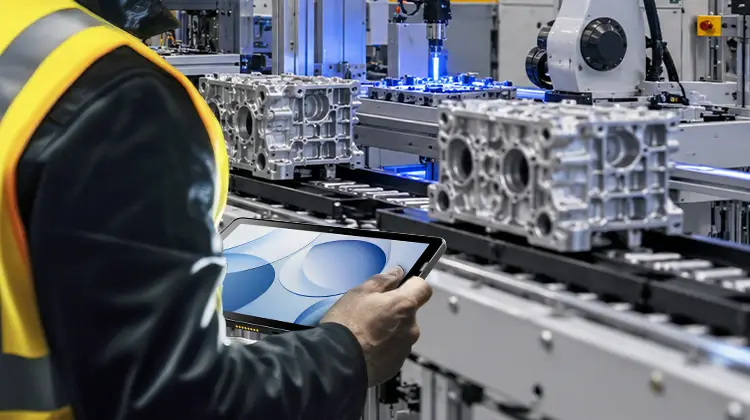
1. Know Your Environment First: The Hard Difference Between Industrial and Field
Choosing the wrong device often starts with treating "industrial" and "field" as the same thing.
Workshop / Plant Floor (Industrial)
The core challenge is "micro-environment attack": metal dust, cutting fluid splash, oil, static electricity, continuous vibration, high-frequency scanning, proximity to PLCs and motors. The device may not always be outdoors, but it operates in 0–50°C fluctuating temperatures, risks being knocked off tables, and requires gloved operation.
Outdoor / Field Operations (Field)
The core challenge is "uncontrollable conditions": direct sunlight, rain and snow, mud, wide temperature swings (-20°C cold storage / northern winter to summer heat), GPS roaming, AP handoffs, vehicle vibration. The device must switch between handheld and vehicle-mounted modes, work offline, and sync later.
Simply put:
Industrial focuses on contamination resistance, drop protection, continuous scanning, and system stability.
Field focuses on wide temperature range, sunlight-readable display, network roaming, GPS, and offline capability.
These two environments overlap (cold chain warehousing is both industrial and field), so enterprises should select based on the "worst-case condition," not the average.
2. Six Must-Check Specs: Minimum Acceptable Thresholds
These are not top-tier specs — they are non-negotiable baselines for acceptance testing.
2.1 Ingress Protection & Drop Resistance
Dust/water rating: At least IP68 (wet environments, washdown areas, outdoor rain)
Drop: MIL-STD-810H rated, 1.2m+ multiple drops onto concrete without failure
Display: Corning Gorilla Glass grade, rubber bezel protection
2.2 Wide Operating Temperature Range
Minimum acceptable: -20°C to 50°C
Must cover cold storage, outdoor winter, and high-temperature workshop areas
Must support charging and booting at low temperatures
2.3 Screen Readability
Brightness: 700–1000 nits minimum for outdoor use
Anti-glare (AG) optical bonding
Supports glove touch + wet hand operation
QC engineers viewing drawings and inspectors checking maps should not have to remove gloves to tap the screen
2.4 Native Data Capture Capability
Integrated 1D/2D barcode engine (not software-based camera decoding)
Native UHF RFID integration (asset inventory, bulk location reads)
NFC (personnel authentication, membership identification, medical device verification)
Avoid USB-attached external scanners that loosen under vibration
2.5 Power & Continuous Operation
Battery: Removable / hot-swappable, single charge covers a full shift (≥8 hours under real load)
Supports "no-battery direct power" mode (forklift mounts, fixed stations — no battery bulge)
Multi-shift scenarios: spare batteries + cradle charger + vehicle charger closed loop
2.6 System Lifecycle & Manageability
Android Enterprise roadmap, committed to 4–8 years of security patches and version compatibility
Supports Zero-Touch enrollment, MDM lockdown, remote wipe, and offline location tracking
A lost device means lost business data — it must be manageable and controllable
3. Weight Priorities by Scenario: The Same Tablet, Completely Different Focus
| Scenario | Top Priority | Second Priority | Compromisable |
| Factory QC / Production Line | Oil resistance, wide temp, scanning, system stability | Screen size, AI image recognition | Ultra-lightweight |
| Warehouse Picking / Inventory | RFID bulk read, hot-swappable battery | Wi-Fi roaming, glove touch | Camera resolution |
| Retail Store / Supermarket | Slim appearance, NFC payment, scanning | Splash resistance, quiet vibration | Extreme wide temp |
| Pharmaceutical Logistics / Nursing | Easy disinfection, silent operation, barcode verification | Offline capability, permission control | Industrial I/O ports |
| Utility / Water / Gas Inspection | Wide temp, GPS, anti-glare display | Photo evidence, offline forms | High-performance GPU |
| Law Enforcement / Public Patrol | Encryption, GPS, photo documentation | 5G roaming, device tracking | Cost sensitivity |
Key principle: Rank priorities by job role first, then derive configuration. Don't default to "bigger screen is better" — QC engineers need a large screen for drawings, but field inspectors climbing poles need a device they can hold in one hand.
4. From Scenario Pain Points to What a Next-Gen Industrial Tablet Should Solve
Putting the above pieces together reveals several persistent problems with traditional rugged tablets:
Scans fast but transmits slowly: Barcode scanned, then Wi-Fi roaming drops, data write-back fails
Large screen but useless outdoors: Unreadable in direct sunlight at the loading dock
Has RFID but inconsistent read range: Dense shelving and metal surfaces cause missed tags in bulk reads
Android OS abandoned after two years: WMS/MES apps can't be installed, devices prematurely retired
Non-removable battery: Shift ends before the battery does; replacing the device means stopping the line
For manufacturing, retail chains, 3PL, hospitals, and utilities — where devices are productivity tools — what's truly needed isn't spec stacking. It's a closed loop of:
Sense (scan/read/capture) → Edge compute (local decision-making) → Stable transmission (no drops) → Long-lifecycle manageability.
5. Scenario-Based Recommendation: A New-Generation Rugged Android Tablet for Multiple Industries
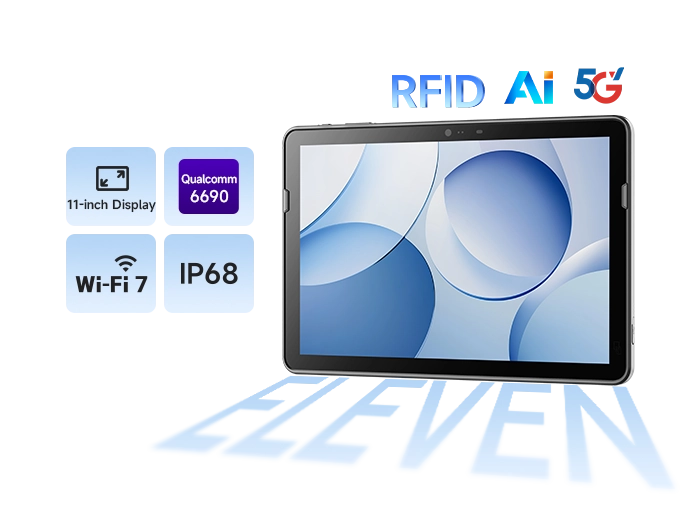
When you put "workshop + warehouse + retail + outdoor inspection" into a single procurement framework, you want a device that can view drawings, count inventory, and work in cold storage and blazing sun alike. The SEUIC AUTOID Pad Air 11 is designed for exactly this.
It's an 11-inch 5G rugged Android tablet, but what matters isn't just the "rugged" label — it's the capabilities that map directly to the scenarios above:
Wi-Fi 7 + 5G Dual Channel — Solves "Scanned but Can't Send"
Wi-Fi 7 theoretical peak 30 Gbps, average latency <3 ms, seamless AP roaming
MLO multi-link aggregation, auto-switching across 2.4/5/6 GHz
Production line reporting, sorting bay scanning, hospital ward EHR write-back — never stuck on "the last step of uploading"
Qualcomm 6690 + 6 TOPS On-Device AI — Judge On the Spot
Run OCR, auxiliary inspection models, and voice noise reduction locally
QC photos auto-compared for defects — no waiting for cloud return
Clear calls in noisy workshops; labels and nameplates decoded on the spot
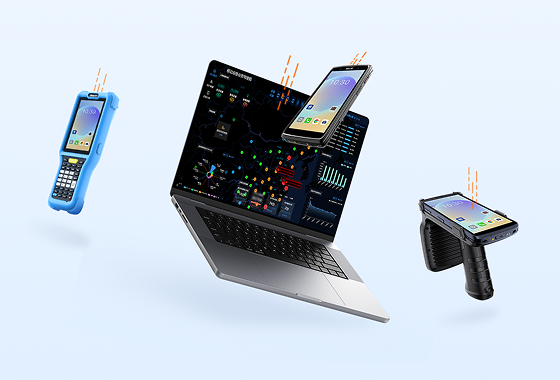
UHF RFID + Native Scanning + NFC — No More External Add-Ons
Native RFID integration (not add-on modules) — faster, more stable bulk reads for locations and assets
Retail case-count inventory, pharmaceutical lot number verification, electric meter/inspection point reads in one pass
NFC for personnel authorization and handover signing
11-Inch Anti-Glare Display + IP68 + 1.2m Drop + -20°C to 50°C
17% more viewable area than a 10-inch screen — engineering drawings and full-page inventory lists viewed in one glance
Outdoor anti-glare, cold storage no freeze, workshop oil wipable
10,000 mAh removable battery, supports hot-swap and no-battery direct power (forklift mount / fixed station)
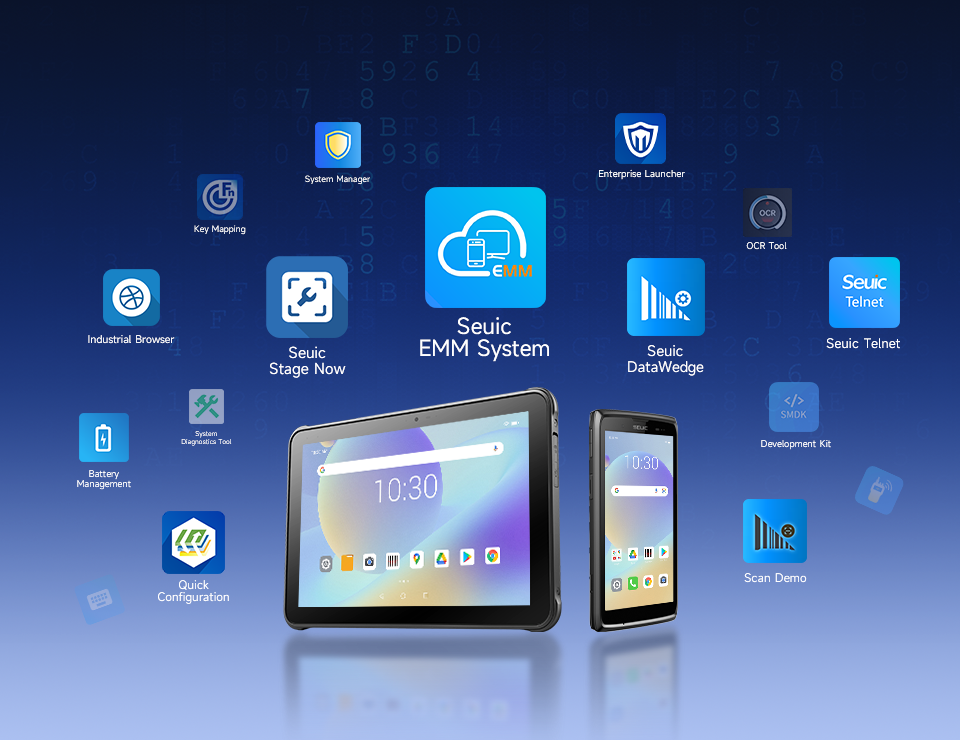
8-Year Lifecycle + EMM Unified Management
Continuous system and application compatibility — avoid "e-waste after 3 years"
Lost device: offline location tracking, remote lock and wipe
Suitable for thousand-unit deployments in manufacturing, retail, and logistics enterprises
Scenario mapping summary:
Factory: AI-assisted inspection + wide temp + oil-resistant screen
Warehouse: RFID bulk read + hot-swap battery
Retail: Slim + NFC
Healthcare: Silent + offline
Inspection: Wide temp + GPS + Wi-Fi 7 roaming
6. Procurement Execution Checklist (Self-Audit Before Writing Tender Requirements)
List worst-case conditions: Highest dust level, lowest temperature, maximum drop height, whether washdown applies
List high-frequency actions: How many scans per day? Are thick gloves worn? Are large images viewed?
List system dependencies: Which WMS/MES/ERP app will run? Which Android version generation is locked?
List management requirements: Can devices be enrolled in bulk? How to wipe a lost device? Can it be located offline?
Demand a test unit — don't rely on brochures:
Drop the device onto concrete 3 times
Place in cold storage for 1 hour, then boot
Continuously scan 100 times with gloves on
Walk across 3 APs without losing connection
Calculate TCO, not unit price: 3-year failure rate, battery replacement cost, system longevity, downtime losses
When selecting a rugged industrial Android tablet, don't start with the spec sheet — start with the job task. Workshops need stability, warehouses need speed, outdoor sites need durability, retail stores need lightness. Hold the line on six baselines: IP68, 1.2m drop resistance, wide temperature, native data capture, hot-swappable battery, and 8-year system compatibility. Then layer on network and AI capabilities as efficiency multipliers. Only then does the tablet become a true business node.
For enterprises with mixed-scenario deployments, a platform device like the SEUIC AUTOID Pad Air 11 — with its large screen, rugged build, Wi-Fi 7, on-device AI, and long lifecycle — will go further than simply buying a tougher tablet.
Are you currently deploying for a single scenario pilot, or conducting a unified multi-scenario selection? Contact SEUIC for one-on-one expert consultation. We'll customize a solution for your environment and offer a free demo unit for testing.
Founded in 2002, SEUIC Technology Co., Ltd. has always focused on mastering core technologies, continuously improving innovation capabilities, and building excellent branded products including mobile computers, UHF RFID readers, tablets, barcode scanners, and fixed-mount readers. With highly reliable products and efficient service, our solutions are widely used in manufacturing, retail, logistics, healthcare, and other industries. We provide frontline workers with more durable real-time data collection tools, helping you improve operational efficiency and take productivity to new heights.
Related News
-
Handheld DPM Scanner vs Fixed Barcode Reader: Production Line Guide
Product Updates | 2026.11.17Learn More
-
Rugged Mobile Computer for Field Service: Selection & Deployment Guide
Product Updates | 2026.11.17Learn More
-

MES Workstation Data Capture: Industrial Handheld PDA Selection & Deployment Guide
Product Updates | 2026.11.17Learn More
-
Swappable Battery PDA: SEUIC AUTOID Q9 Pro Sortation Power Solution
Product Updates | 2026.11.17Learn More