







Seuic AUTOID 10: Never Lose Data During Machining Process Transfers
The machining workshop is the beating heart of precision automotive parts manufacturing. Engine blocks, transmission housings, steering knuckles, gears, and other critical components all go through multiple precision processes — turning, milling, grinding — that directly determine final product accuracy and quality. Today, most automotive parts manufacturers have implemented MES (Manufacturing Execution Systems) to achieve production transparency and full lifecycle traceability. Yet on the shop floor, common problems persist: lagging data synchronization, process transfer errors, and broken data chains. These issues aren't system design flaws — they stem from weaknesses in on-site data capture. The Seuic AUTOID 10 handheld computer is the specialized digital tool built to solve this exact problem.
1. The Digital Pain Point in Machining Workshops: The Weak Link in Production Data Flow
Machining workshops operate in a multi-step continuous production model. Components move through rough machining, finishing, inspection, and transfer across multiple stations. Each completed process requires a transfer report to sync with the MES. Any delay or error in data capture at any station breaks the production data chain, disrupting scheduling and quality management. Today, most shops still rely on manual paper records and basic barcode scanners for process transfers — creating multiple pain points.
Under manual operation, parts can't be reported in real time after transfer, causing MES data to fall out of sync with actual production progress. Production planning loses its accuracy. Workers must separately scan the part code, station code, and cart code — a tedious process prone to missed scans and incorrect entries. When moving across different workshop areas, standard devices suffer from poor wireless roaming, frequent disconnections, and failed data uploads requiring manual retransmission. Meanwhile, running MES, quality inspection, and other applications simultaneously on standard terminals causes lag and crashes, further slowing operations. The significant time spent on data re-entry and correction not only increases labor costs but also compromises the product traceability chain — failing to meet IATF audit requirements and OEM quality control standards.
2. What Machining Workshops Need from an Industrial Handheld Computer
Unlike basic barcode scanners or consumer smartphones, an industrial handheld computer is the critical terminal that connects workstations, people, equipment, and the MES system — and the key to fixing broken data chains during process transfers. An industrial PDA built for machining workshop conditions must deliver six core capabilities:
Accurately read DPM industrial barcodes contaminated with oil and reflections — ensuring data accuracy at the source
Support continuous multi-code scanning for one-shot multi-dimensional data binding
Provide real-time MES integration with sub-second data upload
Deliver seamless wireless roaming across stations and workshop areas without disconnectionOffer all-day battery life for three-shift production, eliminating downtime for charging
Meet high industrial protection standards against oil, metal shavens, cutting fluid, and dust
Only when the terminal device is stable and reliable can the MES system's digital management value be fully realized.
3. Seuic AUTOID 10: Solving Machining Workshop Process Transfer Challenges
When a leading Chinese automotive parts manufacturer was upgrading its shop floor digitalization, it conducted on-site testing of multiple mainstream industrial handheld computers. It ultimately selected the Seuic AUTOID 10 as the dedicated data capture terminal for its machining and forging workshops — completely solving the low efficiency, poor data quality, and device instability of traditional process transfer methods.
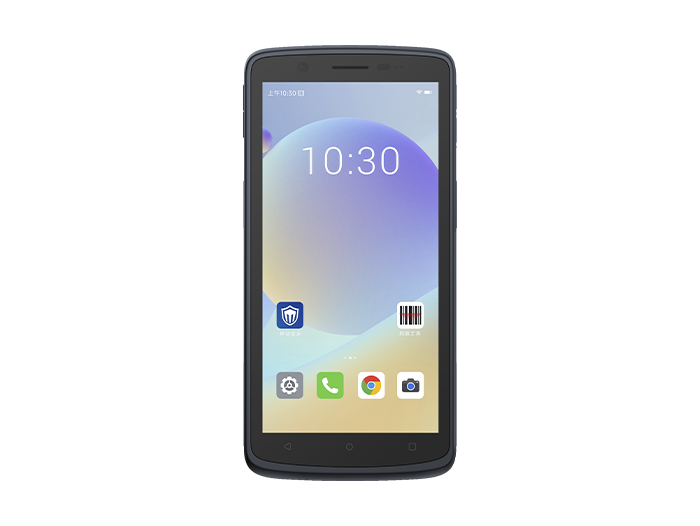
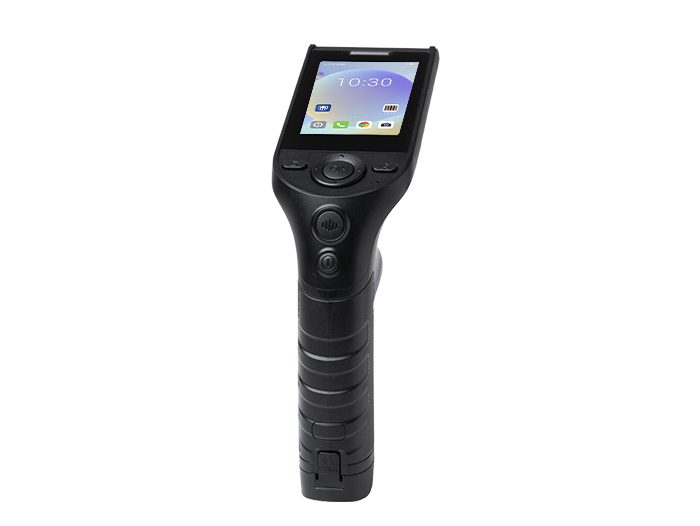
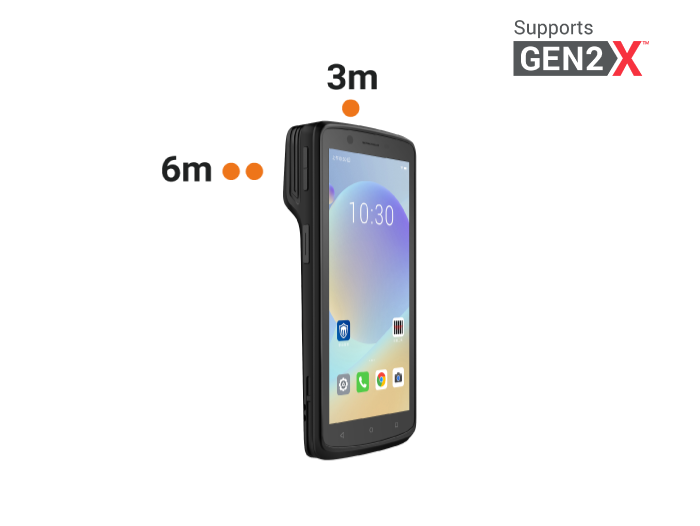
The AUTOID 10 is powered by a Qualcomm octa-core 2.0GHz processor with 4GB LPDDR4 RAM and 64GB UFS 2.1 storage. Overall performance is significantly improved over the previous generation, running multiple applications smoothly and stably. After deployment, the company's report completion rate exceeded 99.9%, and cross-workshop wireless roaming disconnection failures dropped by 98% — achieving seamless data transmission across the entire facility. Operators can now focus on production instead of troubleshooting device failures and re-entering data.

3.1 AI-Powered Scanning for Complex Parts
Machining workshop parts are often coated with cutting fluid and oil. Laser-etched DPM codes suffer from reflections and wear. Standard scanners frequently fail or require multiple attempts.
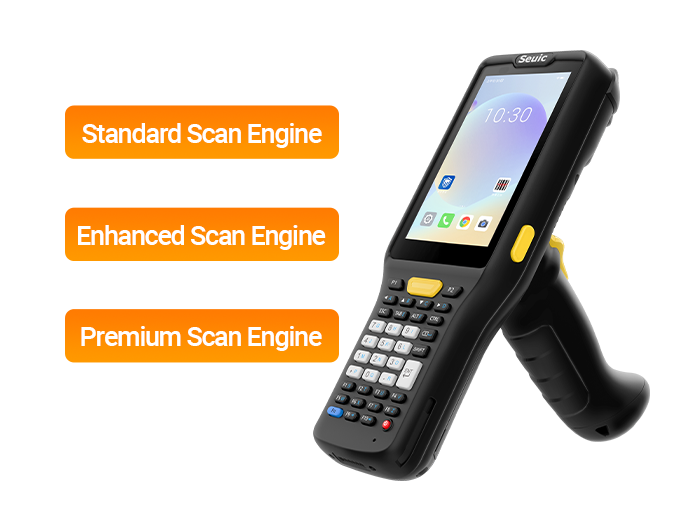
The AUTOID 10 features a next-generation AI scan engine with a movement scan speed of 4.4 m/s (industry average: 2.0 m/s). It easily reads high-density, low-contrast, worn, soiled, reflective, and metal DPM codes. Combined with AI + OCR technology, digit, letter, and symbol recognition speed is doubled — data is captured directly, eliminating manual entry. Ultra-high read accuracy completely eliminates missed and incorrect scans, ensuring MES data accuracy and integrity from the source.
3.2 High-Performance Hardware for Smooth Multi-System Operation
Workshop terminals must simultaneously run MES, quality inspection, equipment management, and other applications. Insufficient performance causes lag and crashes, disrupting production continuity.
The AUTOID 10 is powered by a Qualcomm octa-core 2.0GHz processor with Android 14 and 4GB of RAM. Its outstanding overall performance keeps multiple applications running smoothly and stably. After deployment, the company's report completion rate exceeded 99.9%, and cross-workshop wireless roaming disconnection failures dropped by 98% — achieving seamless data transmission across the entire facility. Operators can focus on production instead of troubleshooting device failures and re-entering data.
3.3 Industrial-Grade Rugged Design for Lower Long-Term Maintenance Costs
Machining workshops are perpetually filled with oil, metal shavens, and dust. Standard terminals suffer from corroded ports, cracked screens, and failed keypads — driving up maintenance costs.
The AUTOID 10 features IP67 industrial protection, survives 2-meter drops onto marble, and has passed over 60 rigorous CNAS lab tests (salt spray, high/low temperature, vibration, etc.) plus MIL-STD certification. It effectively resists all types of workshop environmental erosion. It also supports wet-hand and gloved-hand touch operation, aligning with real-world working habits.
Equipped with a 5360mAh removable high-capacity battery, AI + power-saving technology reduces consumption by over 25%, supporting 16 hours of continuous operation. The innovative hot-swap battery feature allows battery replacement without shutting down — tasks continue uninterrupted and data is never lost. Charging downtime is completely eliminated, ensuring non-stop production. In practice, corrosion, data loss, and failure-related downtime issues issues have been virtually eliminated. Device lifespan has been significantly extended (5+ years of continuous use), dramatically reducing equipment replacement and maintenance costs.
3.4 Wi-Fi 6 Ready Seamless Roaming — Zero Disconnection Across Stations
To address the issue of poor wireless network roaming capability during cross-area operations in machining workshops, the AUTOID 10 adopts new Wi-Fi 6 Ready technology with the "WELL Wi-Fi" solution. It delivers fast, stable transmission of digits, text, images, and even video. Network response latency is as low as 3-4 ms, with data syncing to the MES in under a second. Moving across workshops and stations without disconnection eliminates failed data uploads and manual retransmission.
3.5 Head-Mounted NFC Design for Efficient One-Handed Operation
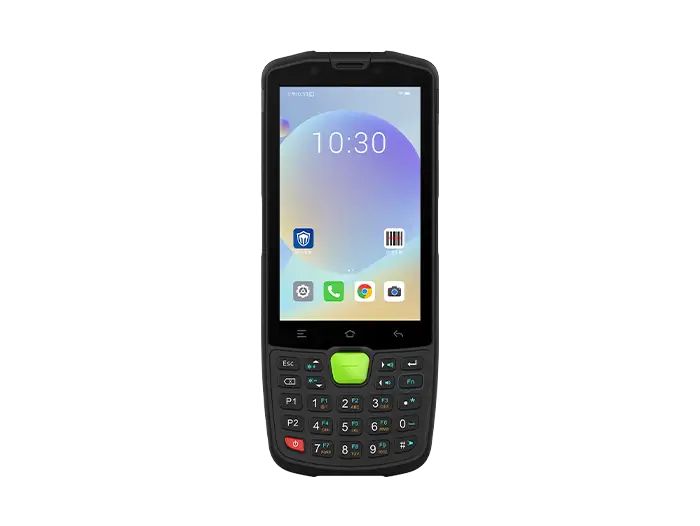
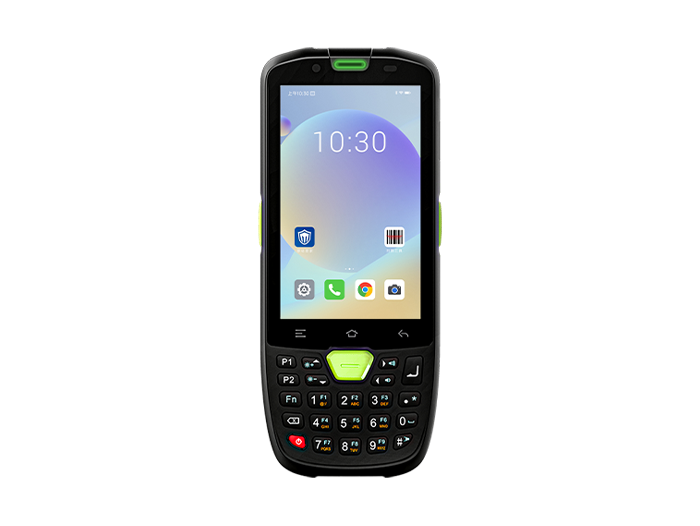
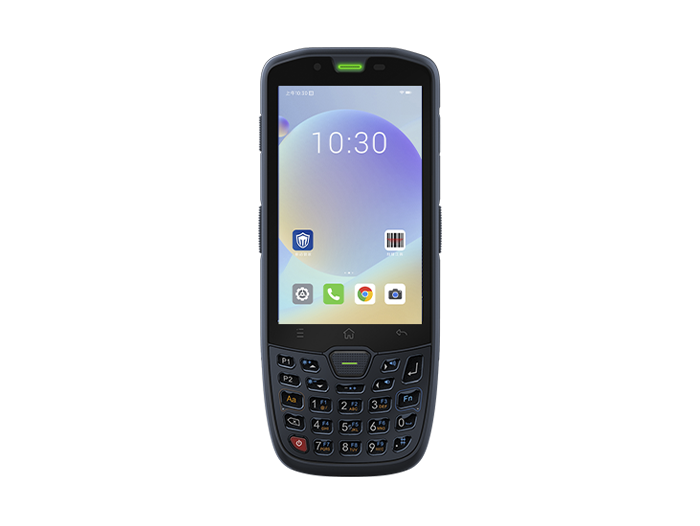
The AUTOID 10 innovatively integrates the NFC module into the device head. Workers can read cards without adjusting their grip — saving 5 seconds per operation compared to traditional devices. Combined with the 27-key industrial IMD full keyboard (with enlarged Enter key and 2 customizable shortcut keys), workers wearing gloves can operate with precision, Reduce accidental touches and wasted movements..
4. Closed-Loop Data Flow for Transparent Production Traceability
Powered by the AUTOID 10's real-time data capture capability, companies can record core information for every part — processing station, operator, production time, and equipment status — at every step. This gives the MES real-time visibility into each component's production progress and flow status. This complete closed-loop data system not only improves production scheduling accuracy and efficiency but also provides reliable data support for process optimization, equipment maintenance, and quality traceability. As the new energy vehicle industry accelerates, flexible and digital production has become an essential requirement. Real-time process transfer and full-chain traceability are now the core foundation of smart factory construction.
5. Digital Terminals Empower Machining Workshop Smart Upgrades
Machining workshops involve complex processes and high-frequency data flow. Their digital transformation effectiveness directly determines a company's smart manufacturing level. With five core advantages — AI precision scanning, high-performance operation, Wi-Fi 6 stable connectivity, industrial-grade protection, and hot-swappable long battery life — the Seuic AUTOID 10 completely solves the core pain points of inefficient process transfers, inaccurate data, and unstable devices in machining workshops. After deployment, the company successfully met IATF quality traceability audit requirements, achieving a closed-loop production data chain across the entire process. This provides a replicable blueprint for digital transformation in automotive parts machining workshops.
Today, the industrial mobile terminal is no longer just a scanning tool. It has become the core data gateway connecting the entire production process — continuously driving automotive parts manufacturing toward greater efficiency, transparency, and intelligence.
Seuic has long been dedicated to industrial data capture and intelligent identification — a natural choice driven by the national trend toward digitalization and intelligence, rooted in core industry demands, and guided by the company's founding mission. We consistently uphold our core purpose: "Building durable on-site data capture tools to help enterprises achieve digital transformation," staying aligned with the national strategic direction of smart manufacturing and industrial digital transformation. On-site data capture is the foundational layer of enterprise digitalization, running through the entire process of production, warehousing, and circulation. It is the critical link for traditional industries to improve quality, increase efficiency, and undergo transformation and upgrading — possessing immense industrial value and development prospects. This is the fundamental reason we remain firmly committed to this field.
Related News

-
Portable Barcode Scanner Buying Guide
Product Updates | 2026.09.22Learn More
-

What Is RFID Meaning? Definition & Common Beginner Misconceptions
Product Updates | 2026.09.21Learn More
-
What Is RFID? A Complete Guide to Radio Frequency Identification: Definition, Working Principle & Applications
Product Updates | 2026.09.21Learn More
-
2D Barcode Scanner for Automotive DPM Traceability
Product Updates | 2026.09.20Learn More