





Seuic HS325DP Conquers DPM Code Reading on 3C Metal Surfaces
Mid-to-high-end phones, laptops, smart wearables, and other 3C products commonly use aluminum alloy, stainless steel, and other metal casings. Laser-etched DPM traceability codes are engraved on curved edges and interior surfaces for full product lifecycle traceability, balancing aesthetics with compliance — making this a mainstream industry process. However, the high reflectivity of metal surfaces, curved surface distortion, and shallow, low-contrast etched codes cause conventional barcode scanners to frequently fail, miss, or misread codes. This severely slows down production lines, increases rework and labor costs, and has become a common bottleneck on 3C metal assembly lines.
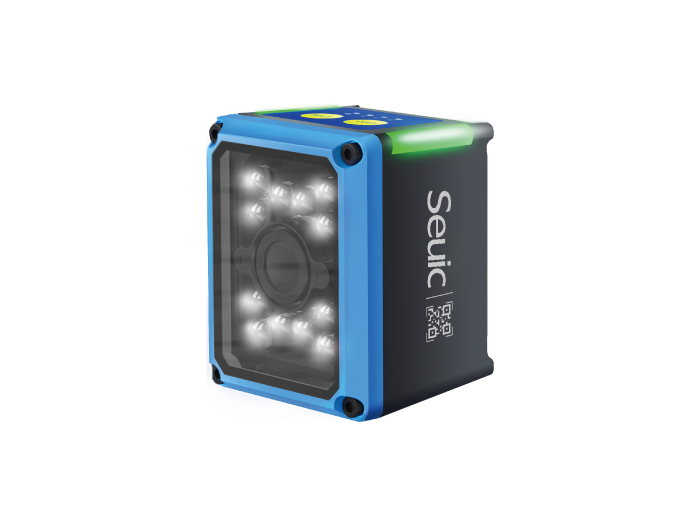
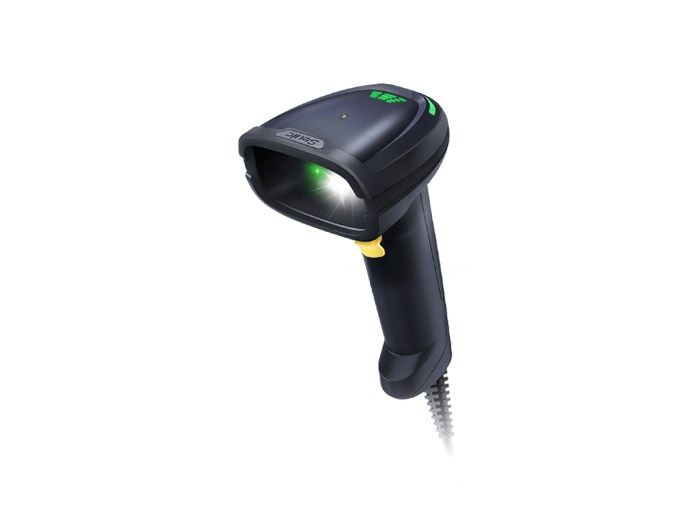
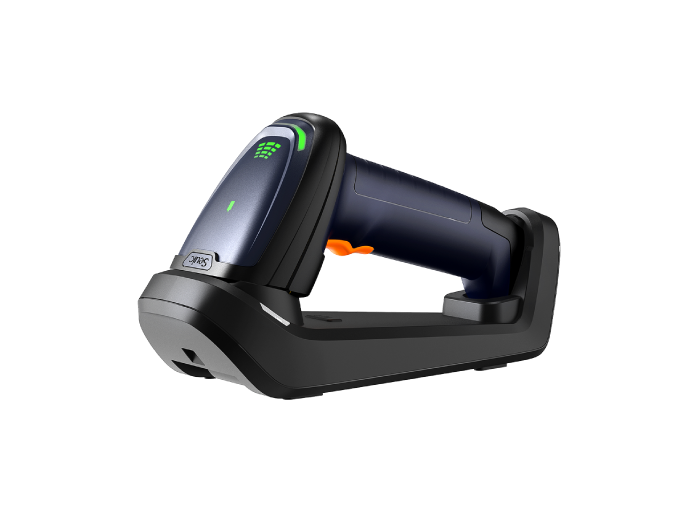
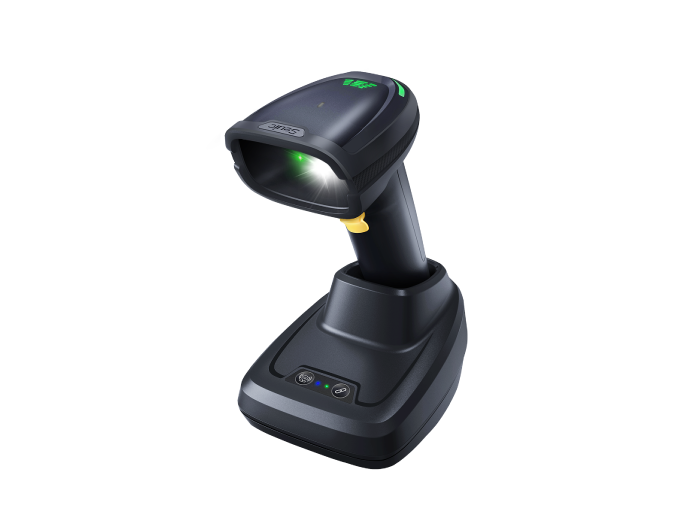
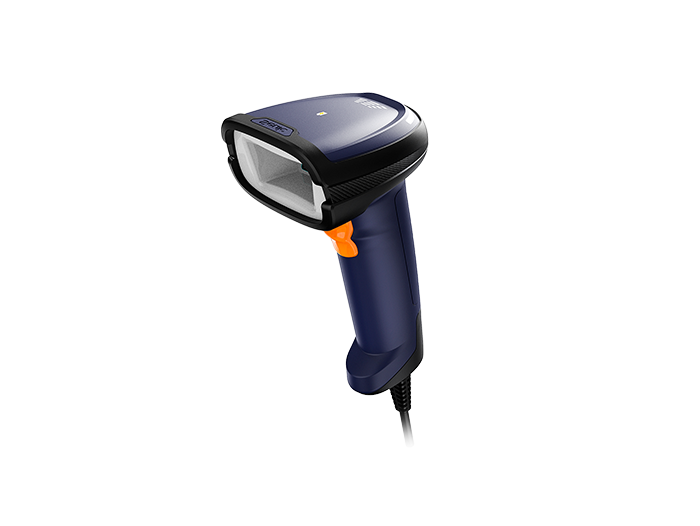
To address these pain points, the Seuic HS325DP industrial wireless scanner leverages proprietary optical design, AI decoding algorithms, and industrial-grade ergonomics to precisely conquer the challenge of reading DPM codes on curved metal surfaces—perfectly suited for the high-frequency, high-precision demands of 3C precision casing assembly.
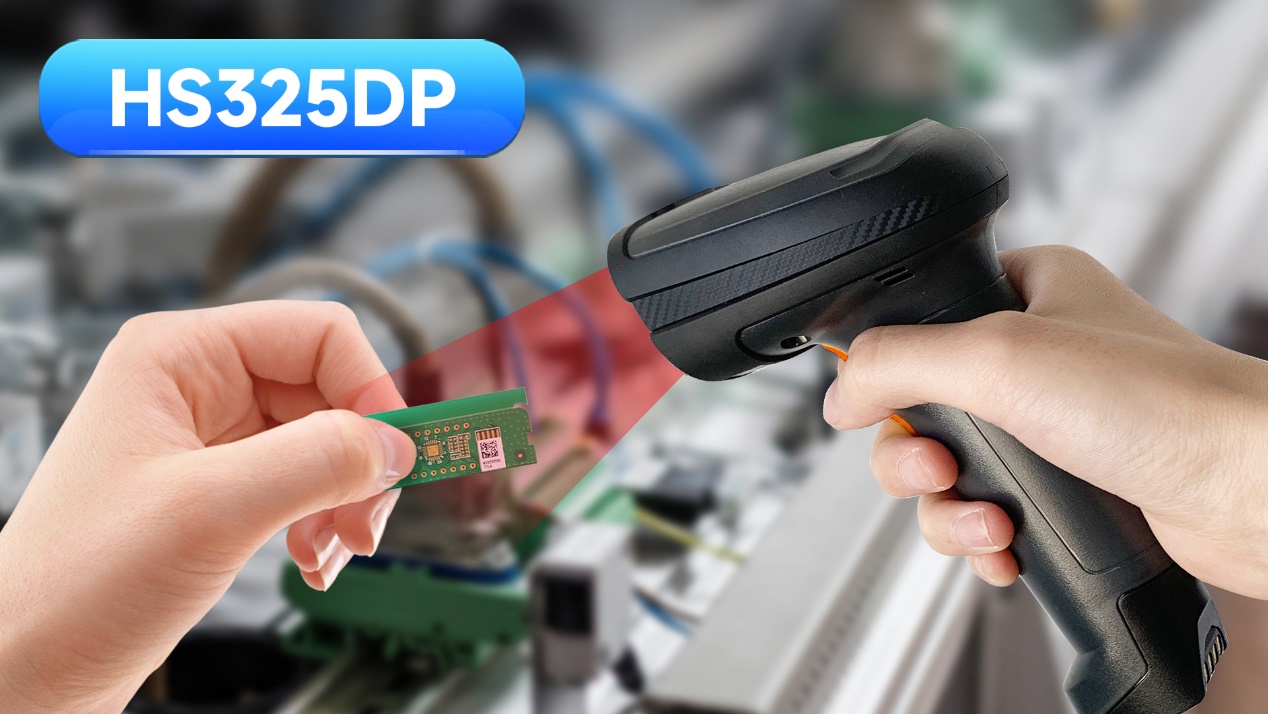
1. Breaking Down the Problem: Four Key Pain Points of Scanning 3C Metal Casings
Many 3C production managers face the same issue: ordinary scanners perform well on paper and plastic barcodes, but when confronted with laser-etched DPM codes on metal surfaces, read rates plummet — even repeated angle adjustments fail to achieve successful reads. This isn't operator error; it stems from inherent recognition challenges posed by metal materials, product structures, and manufacturing processes. The core pain points fall into four categories:
Metal Glare Interference Blurs Barcode Details. 3C metal casings undergo precision polishing, resulting in smooth, mirror-like surfaces. Workshop lighting combined with direct light from conventional scanners easily creates overexposed hotspots, obscuring the shallow laser-etched barcode textures. Because the etched marks themselves are shallow with weak contrast, glare overlay renders the device unable to capture valid barcode information, ultimately causing decode failure.
Curved Surface Distortion Defeats Conventional Decoding Algorithms. Modern digital products increasingly feature curved mid-frames and contoured bodies, with traceability codes often engraved on side edges, corners, and other non-flat areas. As barcodes stretch and deform along curved surfaces, they take on irregular shapes. Conventional scanners only support flat-plane decoding models and cannot parse distorted barcodes, resulting in sluggish reads or outright failures that directly drag down production line throughput.
Multi-Layer Finishing Processes Produce Extremely Low Contrast. To enhance product texture and durability, metal casings typically undergo sandblasting, anodizing, PVD coating, and other finishing treatments. These surface coatings weaken the color contrast between the laser-etched dot matrix and the casing background, making the barcode nearly blend into the surface. Contrast is compressed to extremely low levels, dramatically increasing scanning difficulty.
High-Frequency Scanning Exacerbates Operator Fatigue. 3C casing assembly is manual line work, requiring operators to perform thousands of high-frequency scans daily. Conventional scanners are heavier, offer poor grip comfort, and lack intuitive status feedback. Long-term use causes hand fatigue, leading to repeated scans, invalid operations, and further reductions in overall production efficiency.
2. Precision Breakthrough: Four Core Advantages of the Seuic HS325DP
Unlike general-purpose scanning devices, the Seuic HS325DP is purpose-built for precision metal component assembly in 3C environments. It delivers comprehensive optimization across four dimensions — optical hardware, decoding algorithms, human-machine interaction, and industrial durability — precisely tackling the challenges of metal glare, curved surface distortion, low-contrast code reading, and operator fatigue in high-intensity production settings.
Optical Hardware: Dedicated Blue Diffused Light Source Eliminates Metal Glare. Conventional scanners typically use white or red light sources, which exacerbate glare when directed at metal surfaces. The HS325DP features an intelligently adjustable blue diffused light source that leverages blue light's unique optical properties to effectively absorb and scatter strong reflections from metal surfaces, mitigating hotspot overexposure. At the same time, it enhances the clarity of laser-etched dot matrix patterns, increasing contrast between the barcode and the metal casing background. Codes that were previously blurry and low-contrast become sharply defined on the image sensor, fundamentally solving glare-induced scan failures.
Decoding Capability: HD Hardware + AI Algorithms Correct Distortion and Deliver Blazing-Fast Decoding. The device is equipped with a 1080x1280 high-resolution global shutter CMOS sensor supporting 60 fps ultra-high frame rate image capture, instantly capturing full details of curved and low-quality barcodes without missing any dot matrix information. Powered by a dual-core high-performance processor and proprietary AI image enhancement and distortion correction algorithms, it automatically stretches and repairs deformed curved barcodes while brightening and optimizing low-contrast codes. Decoding is completed rapidly, dramatically improving first-pass read rates and eliminating the tedious need for repeated scans and manual angle adjustments.
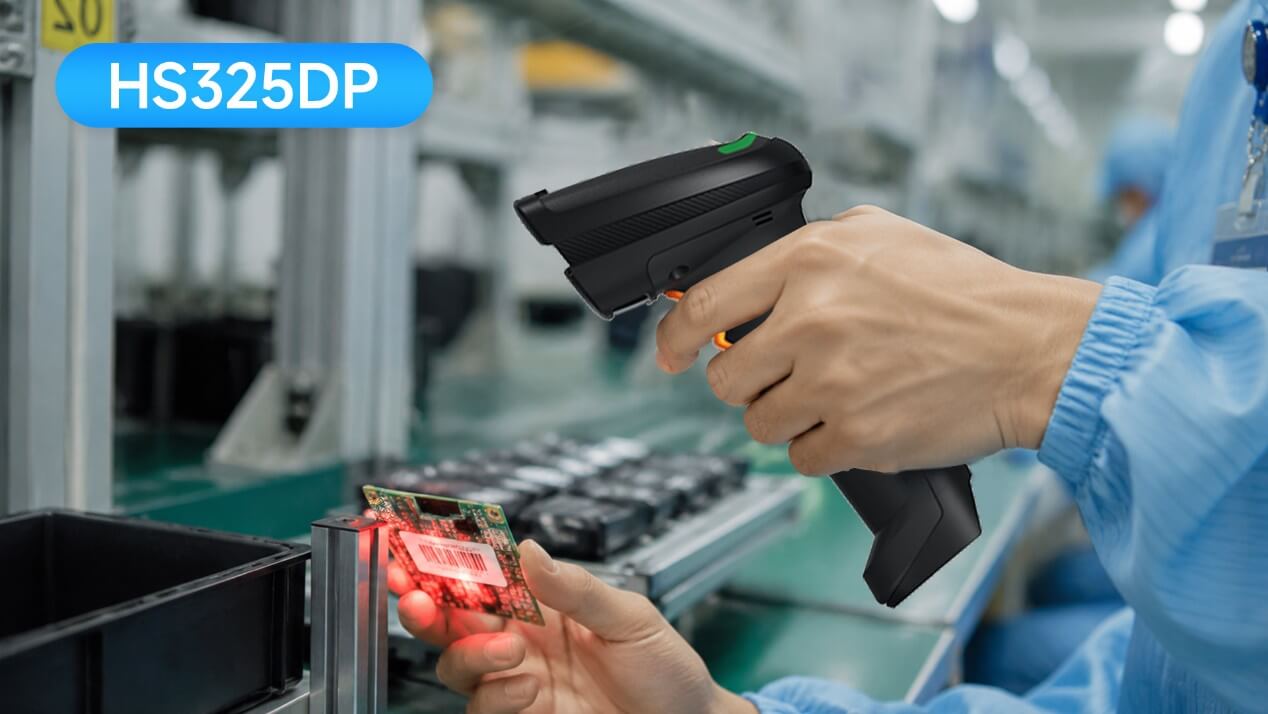
Human-Machine Interaction: 3-Way Visual Indicator Lights Make Device Status Instantly Clear. Designed for high-frequency production line use, the device features a 3-way surround-status indicator light array on top, plus a hidden battery level display. Operators can instantly assess device status and scan results at a glance — no need to lean in, check a screen, or connect to a backend system. Green light indicates battery above 50%; instant feedback confirms successful decoding for smooth, efficient operation. Yellow light signals battery between 21%-50% and can also warn of communication anomalies for timely troubleshooting. Red light indicates battery below 20% or decode failure, effectively preventing missed scans, incorrect scans, and invalid operations — significantly reducing error rates.
Industrial Durability: Lightweight Ergonomic Design Built for the Factory Floor. Weighing just 226g, the device has been ergonomically refined through multiple iterations. It fits naturally in the palm with balanced weight distribution, so even thousands of daily pickups and trigger pulls won't cause significant muscle fatigue — greatly reducing physical strain on operators. The device features a high-strength industrial-grade housing with IP54 dust and splash protection, withstands 50 drops from 1.8m and 2,000 tumbles from 0.5m. It is perfectly suited for the demanding environment of 3C workshops — impact-resistant, wear-resistant, low failure rate, and stable performance even under sustained high-intensity use.
3. On-Site Value: Driving Quality and Efficiency on 3C Assembly Lines
For 3C electronics manufacturers, the challenge of reading laser-etched DPM codes on metal casings may seem like a minor scanning equipment issue — but it directly impacts production line throughput, product traceability accuracy, and labor cost control. Conventional scanners with low read rates and poor stability not only slow down line speed but also risk data omissions and recording errors, leading to broken traceability chains and difficulty controlling defective products. Repeated invalid scans also waste significant labor capacity.
The deployment of the Seuic HS325DP industrial wireless scanner has completely broken through this production bottleneck. Its proprietary blue light optical system and AI-powered intelligent decoding algorithm solve the challenges of metal glare, curved surface distortion, and low-contrast code reading, achieving blazing-fast, pinpoint-accurate recognition of all types of etched codes on 3C metal casings. This dramatically improves data collection accuracy and operational efficiency. The human-centric lightweight design and visual status indicators effectively reduce operator fatigue and minimize human error, optimizing the frontline production experience.
Meanwhile, the device's rugged industrial durability reduces equipment repair and replacement frequency, lowering maintenance costs for enterprises. Together, these features deliver a highly efficient, stable, and cost-effective data capture solution for 3C precision metal casing assembly lines — helping digital device manufacturers achieve simultaneous improvements in production quality, efficiency, and cost reduction.
Founded in 2002, SEUIC Technologies Co., Ltd. is committed to mastering core technologies, continuously improving innovation capabilities, and delivering outstanding branded products including mobile computers, RFID readers, tablets, barcode scanners, and fixed readers. With highly reliable products and efficient service, our solutions are widely applied across manufacturing, retail, logistics, healthcare, and more. We provide frontline workers with more durable real-time data collection tools, helping you improve operational efficiency and take productivity to new heights.
Related News

-

Portable Barcode Scanner Buying Guide
Product Updates | 2026.09.22Learn More
-
What Is RFID Meaning? Definition & Common Beginner Misconceptions
Product Updates | 2026.09.21Learn More
-
What Is RFID? A Complete Guide to Radio Frequency Identification: Definition, Working Principle & Applications
Product Updates | 2026.09.21Learn More
-
2D Barcode Scanner for Automotive DPM Traceability
Product Updates | 2026.09.20Learn More