


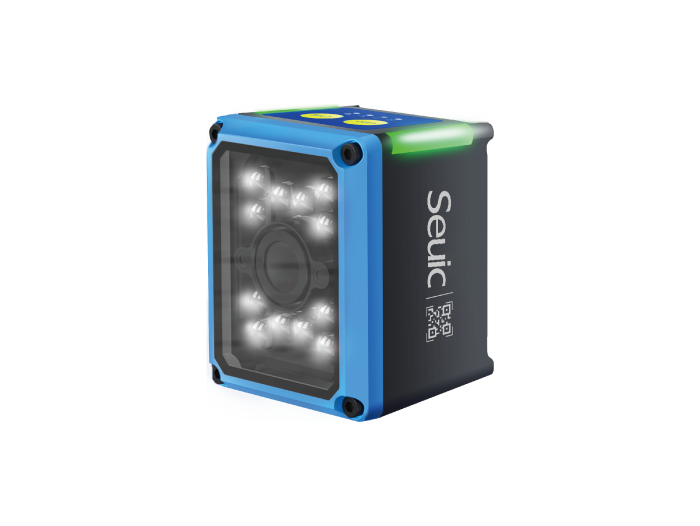
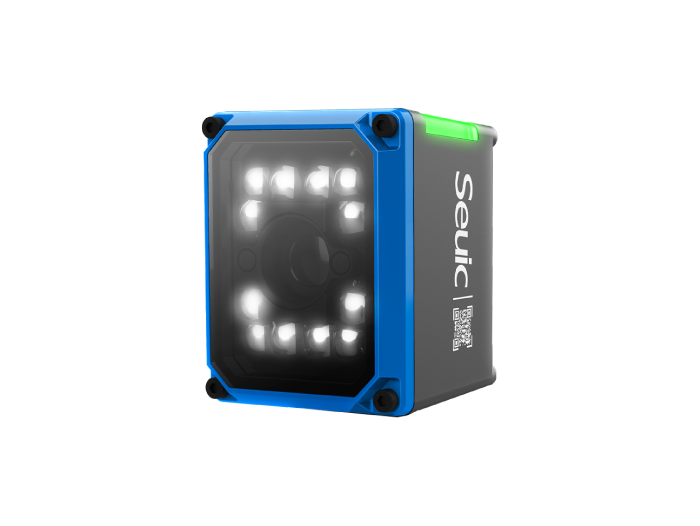
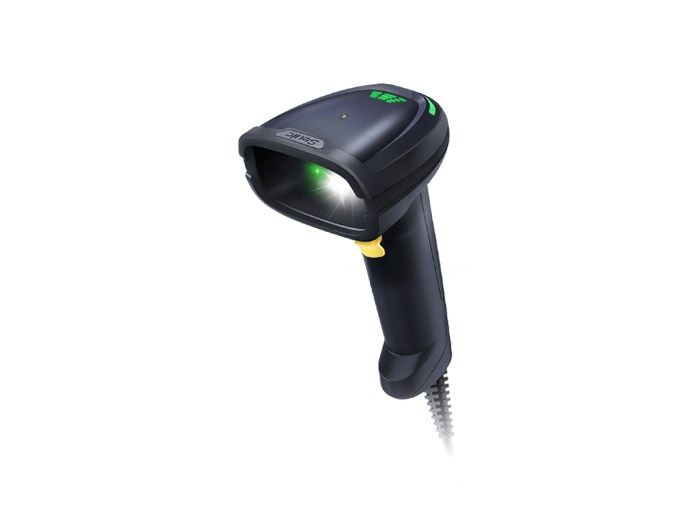
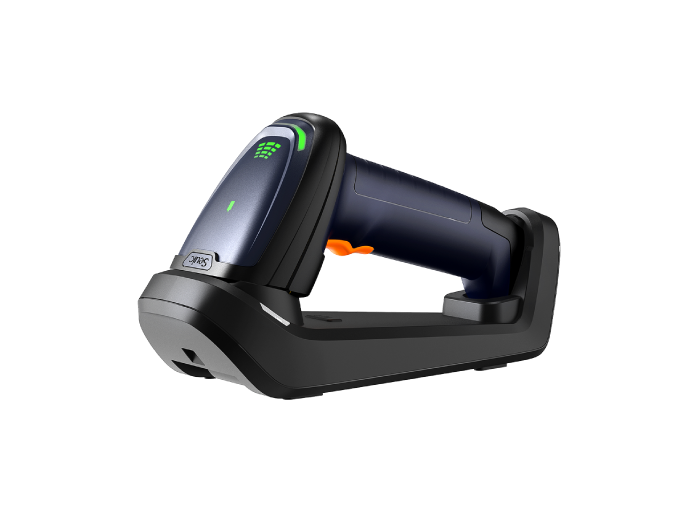



SEUIC HS325DP Barcode Scanner: 99.99% FPR on Curved Reflective PCB Codes
In 3C electronics manufacturing and automotive electronics, barcode traceability on PCBs (Printed Circuit Boards) has become a critical part of quality control. However, when PCBs use metal substrates (such as aluminum or copper) and feature curved surfaces, barcode reading becomes a notorious challenge on the production line. Three compounding difficulties — high reflectivity from metal substrates, geometric distortion from curved surfaces, and inherently low contrast from laser-engraved codes — cause conventional industrial scanners to fail repeatedly.
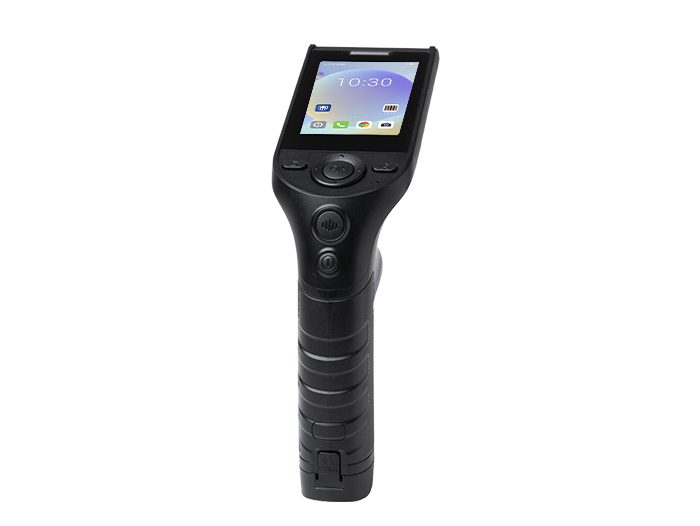
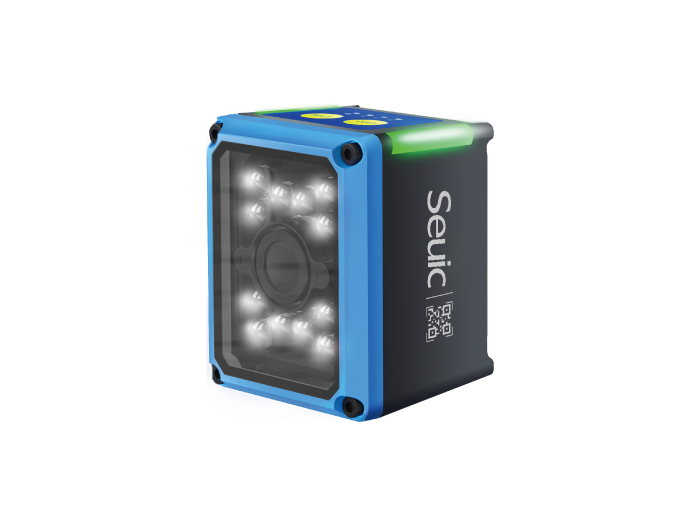
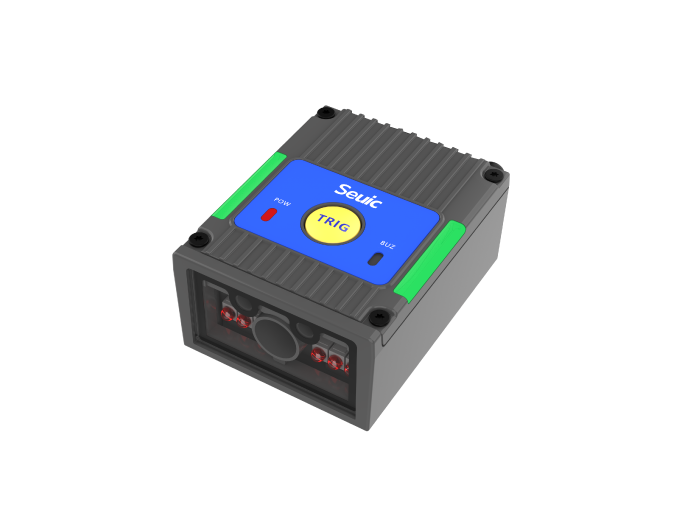
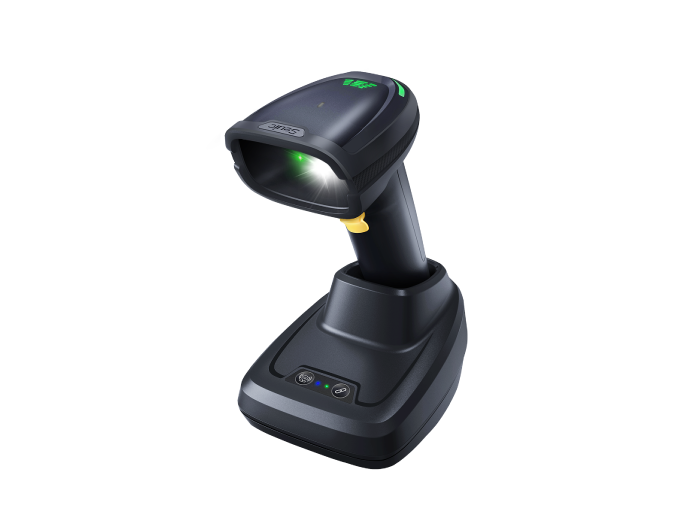
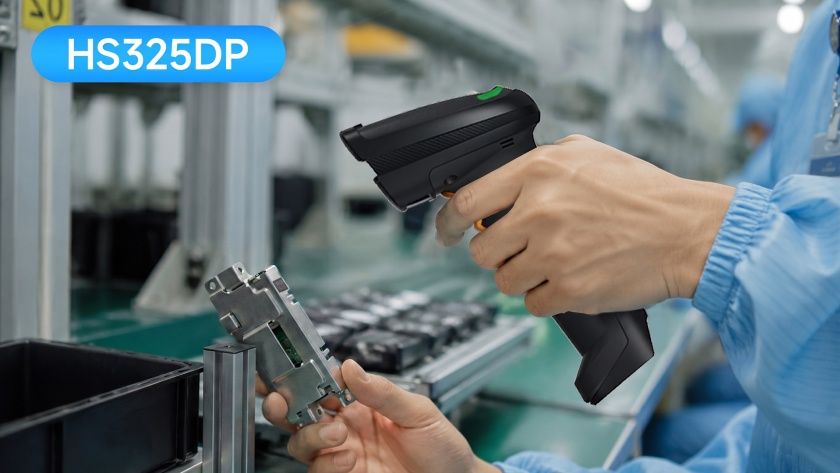
The SEUIC HS325DP industrial barcode scanner is purpose-built to solve this type of compound reading challenge. Through the synergy of an AI-powered decoding algorithm and intelligent tri-color illumination, it provides a systematic technical path for reading curved reflective codes on metal-base PCBs.
1. Three Major Reading Challenges of Curved Reflective Codes on Metal-Base PCBs
1.1 Mirror Reflection from Metal Substrates Creates Glare
Aluminum and copper substrates have smooth surfaces that reflect light like a mirror. When illuminated by a traditional red-light scanner, the reflected light hits the sensor directly, creating large areas of glare. The contrast between the barcode and the background drops sharply, and the edges become blurred and unrecognizable.
1.2 Curved Surfaces Cause Geometric Distortion
When PCBs are mounted on curved housings or arranged in an arc, the barcode is no longer a flat rectangle — it undergoes perspective deformation and curvature distortion. Conventional decoding algorithms based on planar models cannot effectively correct this geometric distortion, resulting in extremely high decode failure rates.
1.3 Laser-Engraved Codes Are Already Low-Contrast
DPM codes on PCBs are mostly created by direct laser engraving. The code dots and the metal substrate are similar in color, with minimal grayscale difference. Combined with reflection and distortion, the difficulty of decoding for traditional devices increases exponentially.
2. Limitations of Conventional Approaches
Conventional solutions have clear shortcomings when facing these challenges:
Adjusting the angle to avoid reflection: Production line takt time does not allow operators to repeatedly adjust angles — inefficient.
Adding a polarizing filter: Only effective for reflected light at specific angles; cannot handle multi-angle reflections from curved surfaces.
External lighting: Adds hardware cost and deployment complexity with poor flexibility.
3. The SEUIC HS325DP Solution — Two Core Technologies Working Together
3.1 Intelligent Red/Blue/White Tri-Color Illumination: Physically Penetrating Reflections
The HS325DP is equipped with intelligent red, blue, and white adjustable illumination that automatically switches the lighting scheme based on the surface material and reflectivity. When facing high reflectivity from metal substrates, the device automatically switches to blue light. Leveraging the superior diffuse reflection properties of short-wavelength blue light, it effectively suppresses mirror reflection, revealing barcode outlines that were previously "washed out" by glare. For different PCB substrate colors, the device can also use red or white light for optimal adaptation, ensuring the best possible raw image is always captured.
3.2 AI-Powered Intelligent Decoding Algorithm: Precisely Correcting Curved Distortion and Low Contrast
The HS325DP features a dual-core processor and an AI-powered recognition algorithm specifically designed for DPM code reading challenges — distortion, curved surfaces, dot peening, blurring, damage, and low contrast. The algorithm uses deep learning models to:
Automatically compensate for geometric distortion caused by curved surfaces, correcting perspective deformation in real time
Intelligently enhance weak signals under extremely low contrast, restoring barcode features from minimal grayscale differences
Repair localized damage caused by processing or wear, improving decode success rates
With this technology combination, the HS325DP achieves a DPM first-pass read accuracy of 99.99%, with millisecond-level response that keeps production line takt unaffected.
4. Production Line Ready: Wireless Design and Industrial Durability
Wireless freedom: Supports Bluetooth 5.0 wireless communication with a transmission range of up to 100 meters in open environments, allowing operators to move freely between production line stations.
Industrial-grade durability: IP54 protection rating, withstands 50 drops from 1.8 meters and 2,000 tumbles from 0.5 meters — unfazed by demanding production line conditions.
Broad scenario fit: Suitable for consumer electronics component traceability, manufacturing production line data collection, and more — PCB metal-substrate code scanning is one of its core applications.
5. Frequently Asked Questions (FAQ)
Q: The code on the metal-base PCB is located on a curved surface. Can the HS325DP read it effectively?
A: Yes. The HS325DP's AI algorithm is specifically optimized for curved surface distortion, correcting geometric deformation in real time for stable decoding.
Q: Do I need to manually switch the light source when encountering strong reflection from metal substrates?
A: No. The device's light source switching is fully automatic. It intelligently selects the optimal illumination based on the surface reflectivity — operators simply point and scan.
Q: How does the data collected by the HS325DP interface with the MES system?
A: The device supports multiple standard communication interfaces including RS232, USB Keyboard, and USB COM — plug and play. The wireless version supports Bluetooth 5.0 for real-time data synchronization to the MES system.
Q: What other applications does this device have on 3C electronics production lines?
A: It is widely applicable across the entire process — PCB incoming inspection, SMT patch traceability, final assembly station verification, finished product testing correlation, and more.
Reading curved reflective codes on metal-base PCBs tests a scanner's combined capability in optical reflection suppression and algorithmic distortion correction. Through the deep synergy of intelligent tri-color illumination and AI-powered decoding algorithms, the SEUIC HS325DP industrial barcode scanner provides a systematic solution to this compound challenge — ensuring that every barcode on a metal-base curved surface can be read accurately and quickly, providing solid data collection assurance for quality traceability in 3C electronics manufacturing.
SEUIC Technologies Co., Ltd., founded in 2002, has focused on on-site data collection for over two decades. We offer durable tools including mobile computers, UHF RFID readers, barcode scanners, and machine vision solutions, widely deployed across manufacturing, logistics, retail, and healthcare industries to enable real-time, accurate frontline data. Backed by global localized services, we accompany enterprises on their digital transformation journey, driving cost reduction and efficiency improvement.
Related News
-
Integrate Portable Barcode Scanners with WMS/ERP/MES — Data, Offline & Device Lifecycle Management
Product Updates | 2026.09.22Learn More
-

Portable Barcode Scanner Buying Guide
Product Updates | 2026.09.22Learn More
-
What Is RFID Meaning? Definition & Common Beginner Misconceptions
Product Updates | 2026.09.21Learn More
-
What Is RFID? A Complete Guide to Radio Frequency Identification: Definition, Working Principle & Applications
Product Updates | 2026.09.21Learn More