






What Is a DPM Barcode Scanner? Definition, How It Works & Industrial Selection Guide
On automotive parts, electronics assemblies, and medical device production lines, you'll often see barcodes that don't come from a printer — they're etched directly onto metal, plastic, or glass surfaces. The color barely contrasts with the background. They reflect light badly. Some are smudged with oil or scratched from handling. A standard retail barcode scanner pointed at these marks simply blinks and gives up.
Those marks are called DPM codes. And the devices built to read them are DPM barcode scanners — also referred to as DPM readers or industrial DPM scanners.
1. What Is a DPM Barcode Scanner?
DPM stands for Direct Part Marking. It's not a barcode symbology — it's a method of applying a permanent code directly onto a part itself, rather than on a stick-on label.
Traditional barcodes depend on a label carrier. If the label peels off, gets soaked, wears out, or is swapped, the traceability chain breaks. DPM, by contrast, uses laser etching, dot peening, electrochemical etching, or inkjet printing to place a Data Matrix code, QR code, or (less commonly) a 1D barcode directly onto the workpiece surface. The code stays with the part for its entire life.
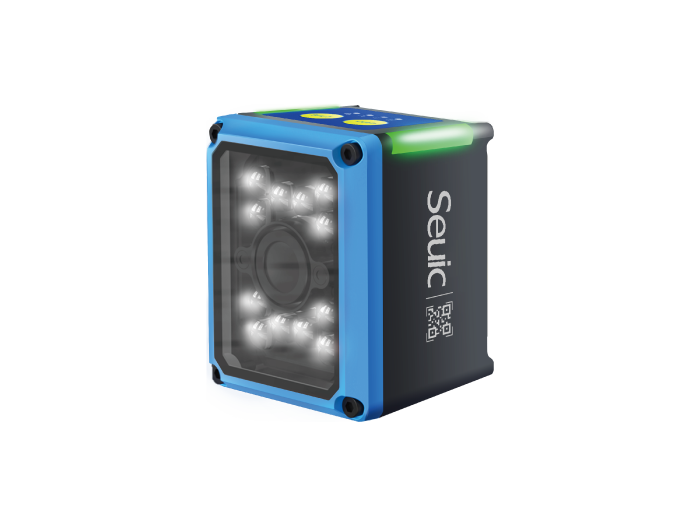
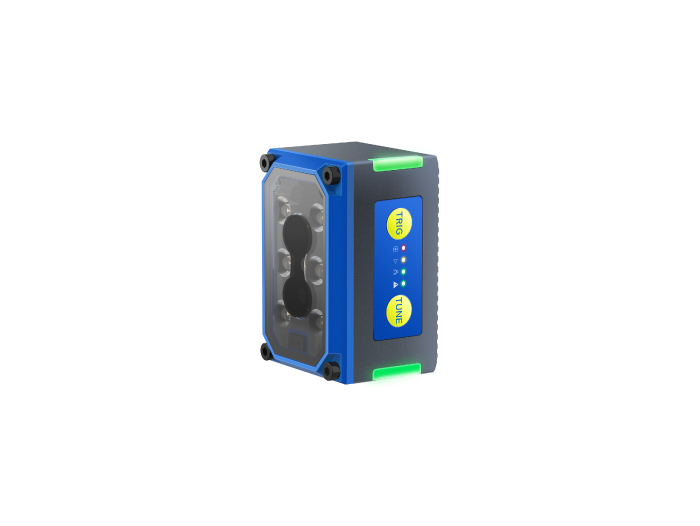
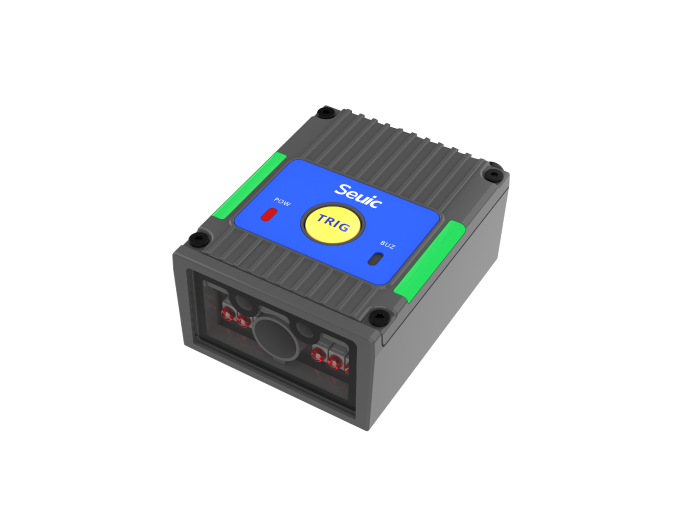
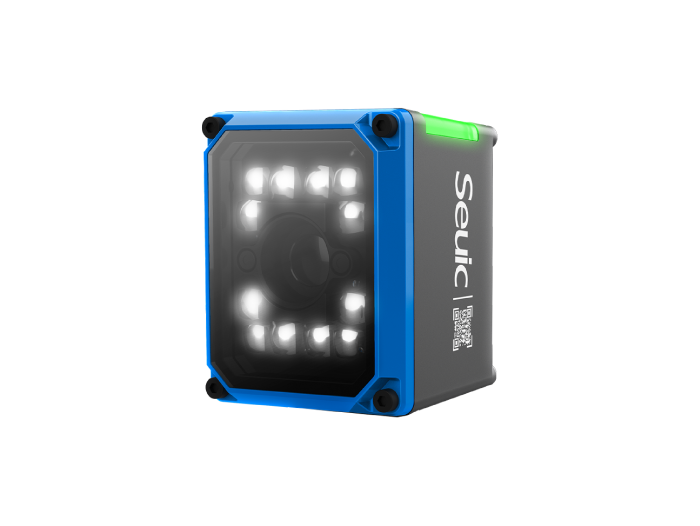
A DPM barcode scanner is an industrial imaging device purpose-built to read these "label-less, low-contrast, often uneven" codes. It typically includes:
A high-resolution CMOS image sensor
Multi-color / multi-angle illumination
Decoding algorithms optimized for low-contrast marks
Industrial-grade housing and connectivity
In plain terms: a regular scanner reads "black-and-white printed labels." A DPM scanner reads "shallow pits, discolored zones, and reflective textures on metal."
2. How a DPM Barcode Scanner Works
The core process is not a laser scan line — it's image-based reading.
Illumination Trigger
The scanner activates its light source based on the surface material. Red, white, or blue light hits the code from different angles to suppress metal glare and highlight edges.
Image Capture
A high-resolution CMOS sensor captures a full-frame image. A global shutter prevents motion blur on moving production lines.
Image Enhancement
Algorithms perform denoising, HDR compositing, polarization filtering, and dark-field enhancement to extract the grayscale difference between "indentations" and "flat surfaces." Laser-etched codes often have only 10–30% contrast — this step is critical.
Decoding Output
The system identifies Data Matrix or QR cell structures, applies error correction for minor damage, and outputs the serial number, lot code, or process step to the MES, WMS, or PLC.
Key difference: A laser line scanner reads 1D codes by measuring reflected light intensity. A DPM scanner reads 2D direct marks by capturing images and running algorithms — tolerating missing quiet zones, curved surfaces, and partial contamination.
3. What Makes a DPM Scanner Different
Reads codes with virtually no contrast
Label codes can have 90% black-white contrast. Metal laser marks may have only 20–30% visual difference. DPM scanners compensate with multi-source illumination and image processing — they don't rely on the label's inherent contrast.
Handles glare, oil, and curved surfaces
Stainless steel, aluminum parts, and polished curves create mirror-like reflections that overwhelm standard cameras. Industrial DPM readers typically use:
Low-angle dark-field lighting (for dot-peened indentations)
Coaxial polarized light (to suppress metallic highlights)
Blue light channels (to enhance contrast on copper and anodized surfaces)
The code is permanent — traceability never breaks
A DPM mark lives with the part through high heat, washing, friction, and chemical exposure. This makes it essential for industries with mandatory traceability requirements: automotive (IATF 16949), aerospace (AS9132), and medical devices (UDI).
Tamper-proof and anti-counterfeit
Labels can be peeled off and replaced. A direct engraving cannot be separated from the part — critical for warranty recalls, parts authentication, and asset ownership verification.
Algorithmic tolerance for imperfect codes
Real-world codes often have shallow engraving, broken cells, oil residue, or rust. A DPM decoder uses cell reconstruction and AI-based completion to recover the data — rather than simply reporting "no read."
4. Typical Applications by Industry
Automotive & Components
Engine blocks, transmission housings, and chassis parts commonly carry dot-peened or laser-etched Data Matrix codes. Assembly stations scan VIN + part codes for error-proofing and recall traceability.
3C Electronics / PCB
Micro-etched codes on PCB copper surfaces, chip packages, and phone mid-frames — extremely small, low contrast, requiring macro imaging.
Medical Devices & Surgical Instruments
Stainless steel instruments carry UDI codes applied by electrochemical or laser etching, surviving repeated autoclave sterilization.
Aerospace & Heavy Industry
Turbine blades, fasteners, and rough castings with dot-peened codes and oxide layers — among the most challenging DPM reading scenarios.
5. How to Choose a DPM Barcode Scanner
Don't just look for "DPM support" on a spec sheet. Verify these items:
Match the marking method
Laser-etched metal → low-angle / polarized light
Dot-peened → dark-field illumination
Inkjet → HDR + standard lighting
Test with real samples
Use actual production parts (with oil, shallow marks, different surface treatments) to measure continuous first-pass read rate. Never substitute with printed paper codes.
Sensor and depth of field
Tiny codes → check pixel resolution and lens
Moving parts on a line → global shutter required
Handheld / variable distance → check depth of field and aiming system
Illumination configuration
Does it support multi-color light? Zoned illumination? Optional polarization? These determine stability on metal surfaces.
First-pass read rate and retry handling
Ask for the actual first-pass rate — not just "can it read." Production lines need one-shot reads, not repeated attempts.
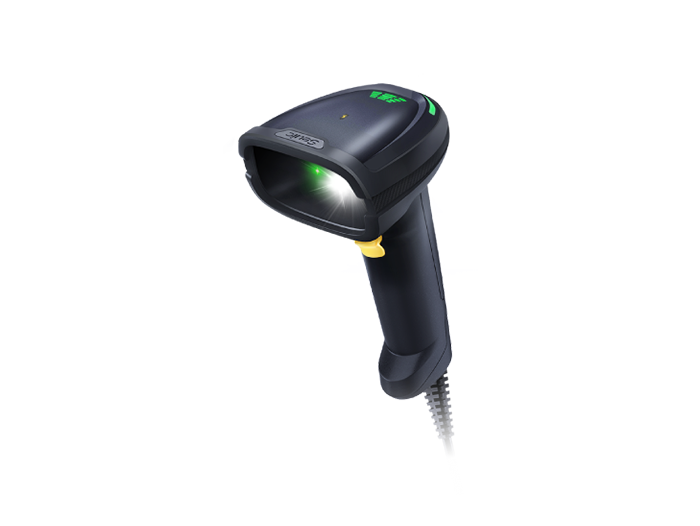
Form factor: handheld vs. fixed-mount
Spot checks, warehouse, repair → handheld
Fixed-position automated reading on a line → fixed-mount vision reader
System integration
USB / RS232 / Ethernet, MES compatibility, offline caching, and centralized device management — these determine long-term maintenance cost.
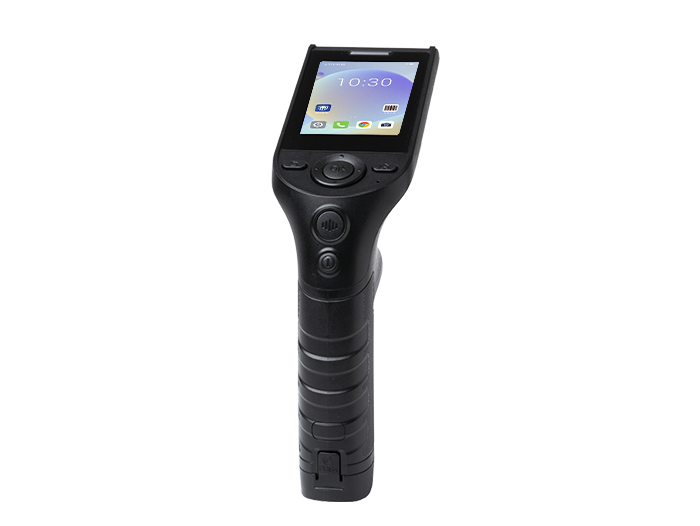
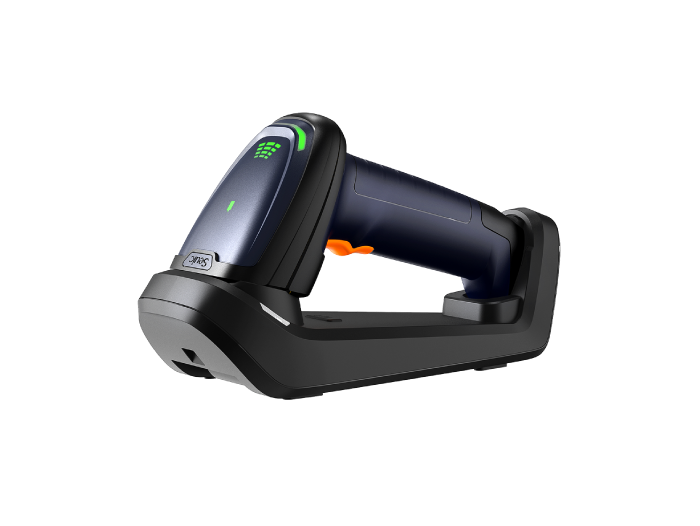
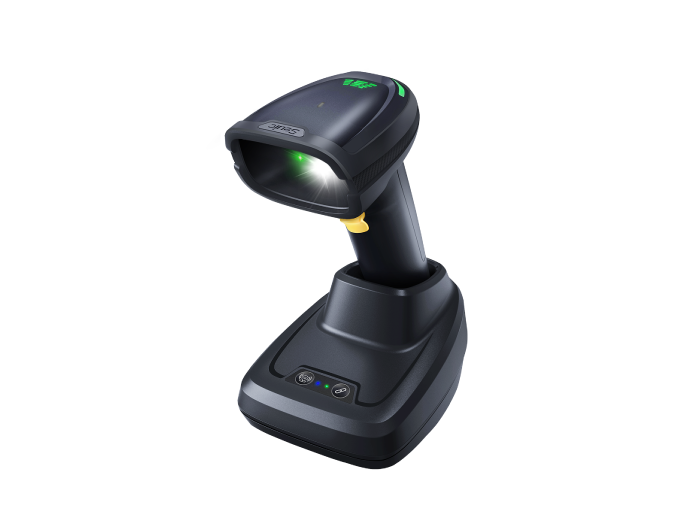
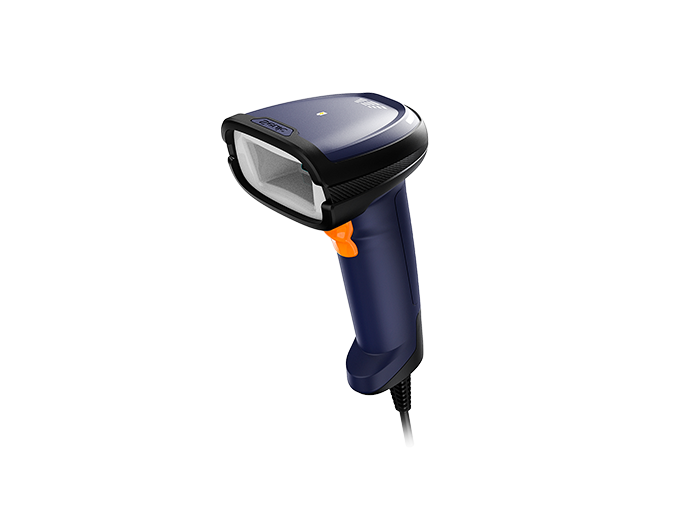
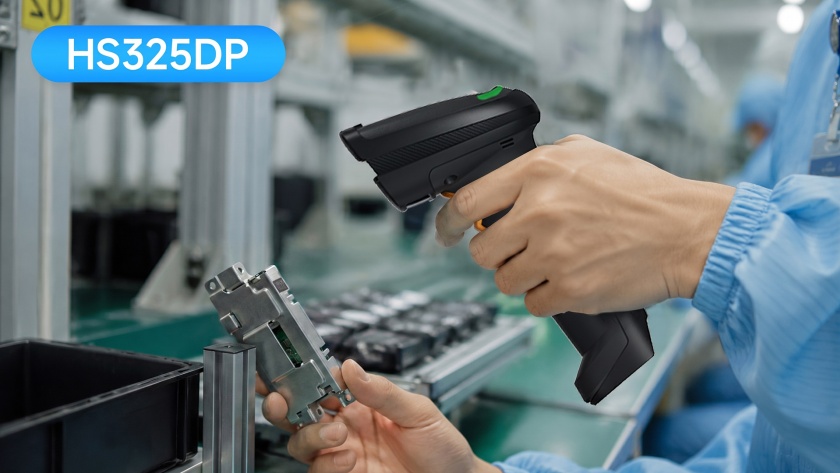
6. Recommended Product: SEUIC HS325DP DPM Barcode Scanner
If your operation involves automotive parts assembly, PCB laser-mark tracing, oily machined parts collection, or mixed scanning of metal nameplates and labels in warehouses — and your current scanner's first-pass rate is falling short — it's time to evaluate an industrial DPM wireless scanner.
The SEUIC HS325DP addresses these needs directly:
Dual-core + AI decoding — compensates for distortion, wear, and low contrast
Red, blue, and white tri-color illumination— suppresses metal glare
Global shutter DPM lens— captures sharp images of moving or curved surfaces
100-meter wireless range + lightweight body— suits mobile workstations
The recommendation: test the HS325DP with your actual parts to verify first-pass read rate before scaling deployment.
A DPM barcode scanner isn't about "buying a better barcode gun." It's about redesigning the reading approach — from optics to algorithms to industrial form factor — specifically for direct part marks.
Whether your line runs automotive engine blocks, electronic PCBs, or metal asset tags, the selection principle remains the same: test with real parts. Understand your marking method, base material, code quality, and current read pain points. Then match the illumination, decode engine, and device form factor accordingly. That's how you make traceability truly reliable.
Related News
-

2D Barcode Scanner Selection Guide for Warehouse: Receiving & Cycle Count
Product Updates | 2026.10.22Learn More
-
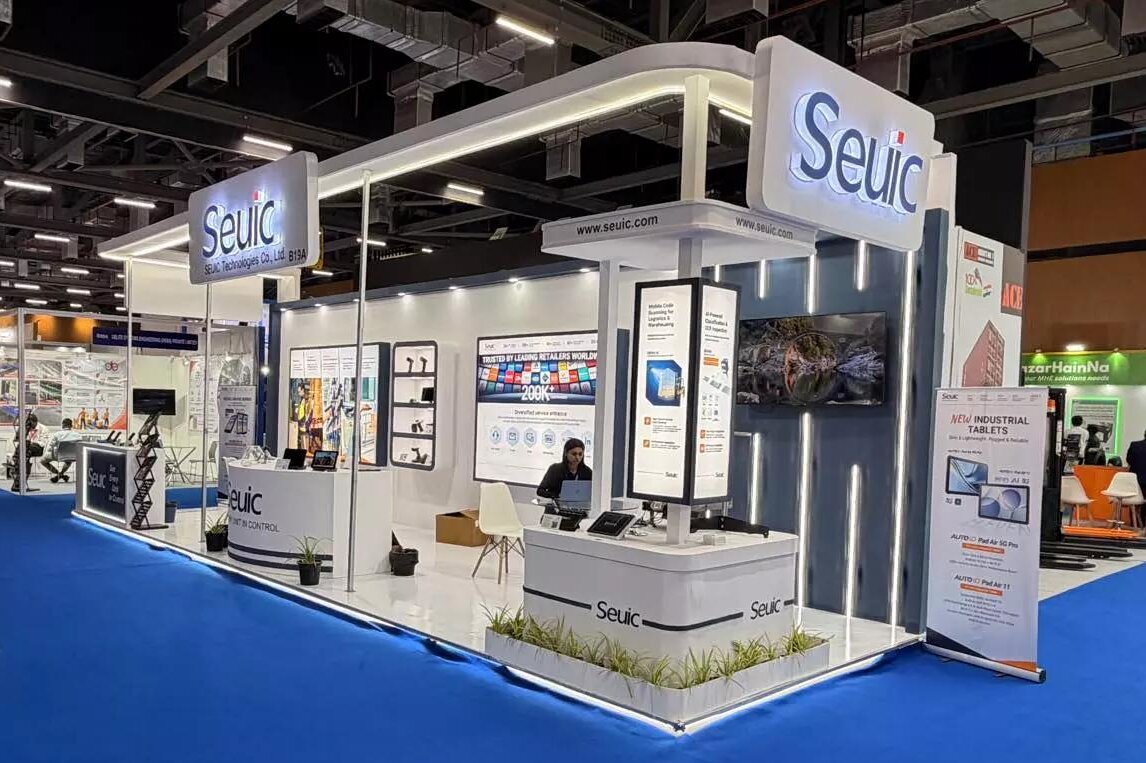
IWE Chennai 2026 Recap: Connecting Data to Smarter Operations
News & Events | 2026.10.22Learn More
-
Rugged Android Tablet vs PDA: Field Worker Selection Guide
Product Updates | 2026.10.21Learn More
-

Industrial PDA Protection Rating Guide: IP67 & MIL-STD-810 Explained
Product Updates | 2026.10.21Learn More