




Barcode Scanner vs Handheld Terminal: Selection Guide for PCB Factory Digital Transformation
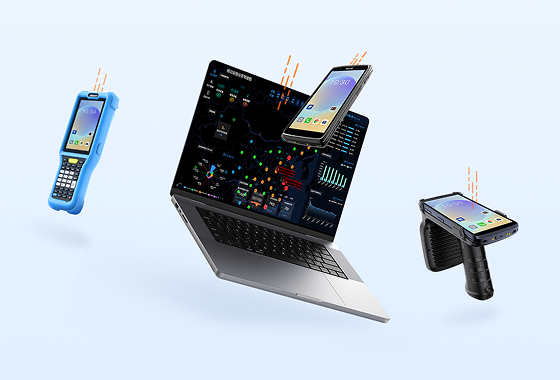
"Which one is better — a barcode scanner or a handheld terminal?" This is the most common question PCB/PCBA factories ask when starting their digital transformation. The answer is: neither is inherently better. It's about what fits your specific scenario. For fixed workstations with high-speed pass-through and hard-to-read DPM codes, choose an industrial barcode scanner. For mobile operations that need an all-in-one device (scanning + MES + inventory + NFC + photos), choose a handheld terminal. On the actual production line, the two often work together: scanners handle high-speed fixed stations to maintain takt time, while handheld terminals handle mobile stations for multi-function data collection.
Let's break down the two device types against real-world conditions.
1. First, Understand What You're Actually Scanning in a PCB Workshop
Before selecting equipment, you need to understand the real conditions in an electronics manufacturing workshop. PCB/PCBA production lines present a classic set of data collection pain points:
Heavy DPM codes: Low-contrast codes, missing bars, split-toned codes, perforated codes — traditional devices frequently fail to read them.
Fast line takt: Pass-through takes seconds. If scanning slows down by even one second, it drags the entire line.
Demanding environment: ESD protection and cleanroom requirements are strict, with occasional liquid splashes and oil contamination.
Strict traceability: Serial-number-level process traceability — every product and every process step must be verifiable.
In short: you need something that is both fast and accurate (even on difficult codes), and that connects seamlessly to MES. This is exactly where the selection paths diverge.
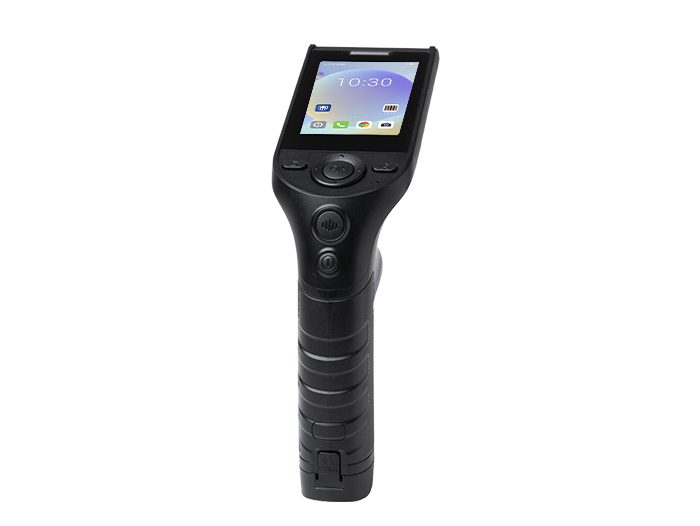
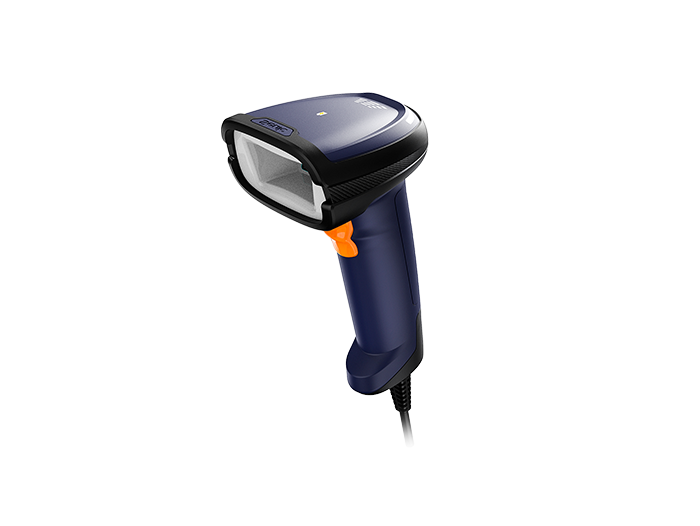
2. For Fixed High-Speed Workstations, Choose an Industrial Barcode Scanner: SEUIC HS325DP
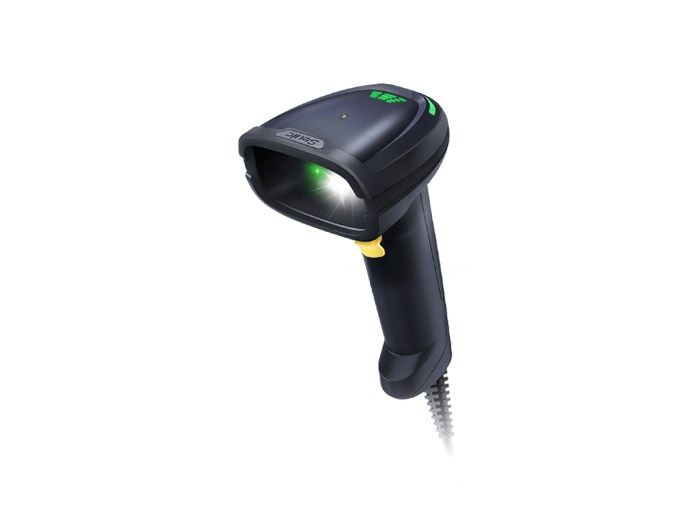
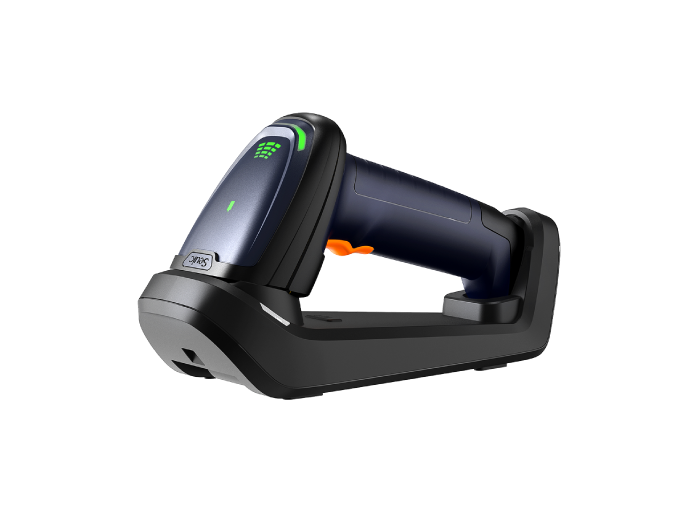
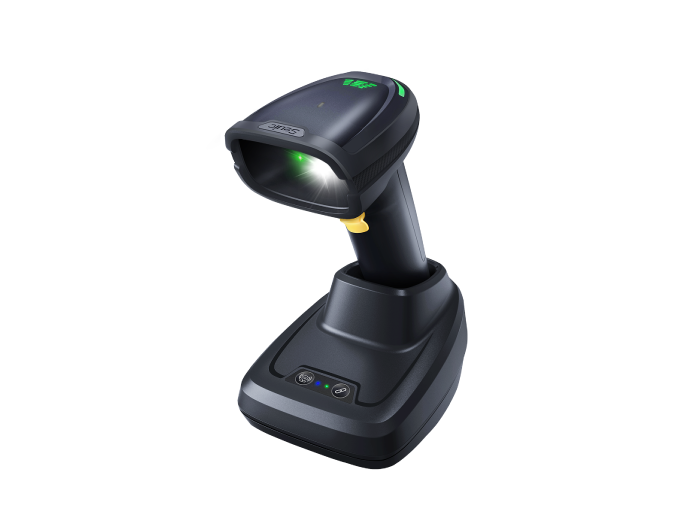
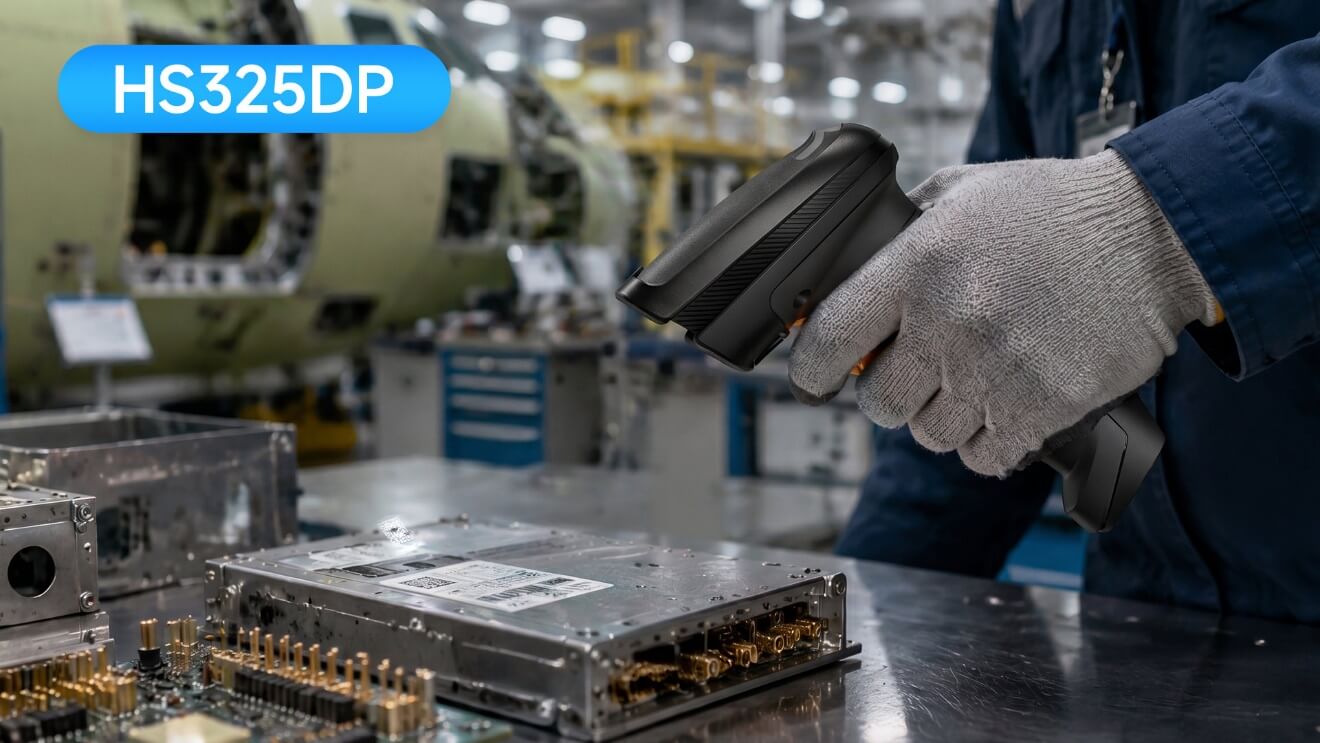
If your scenario is a fixed workstation with high-frequency, pure scanning operations — PCB pass-through, post-SMT process collection, finished product inspection and code verification — a professional industrial barcode scanner delivers the highest efficiency. Take the SEUIC HS325DP as an example:
AI algorithm + dual-core processor: Millisecond-level response on DPM codes, accurately reading even the most difficult engraved codes.
Tri-color intelligent illumination: Blue (metal curved surfaces/reflective/low-contrast codes), red (dark background codes), and white (flat metal engraved codes) — automatically switches without manual intervention.
Ultra-high sensitivity: Low-contrast, worn, split-toned, and perforated codes read in a single pass. Rapid localization on complex backgrounds.
User-friendly design: Tri-directional status indicator + hidden battery gauge — green/yellow/red gives real-time feedback on battery level and decoding status.
Fatigue-free ergonomics: Ergonomic grip design for comfortable long-duration, repetitive scanning.
In field tests, the HS325DP achieved a 99.9% first-pass read rate, ensuring data flow is both accurate and clean from the source.
One sentence summary: It's ideal for fixed workstations with fast pass-through, poor code quality, and a single requirement — "scan fast and scan accurately."
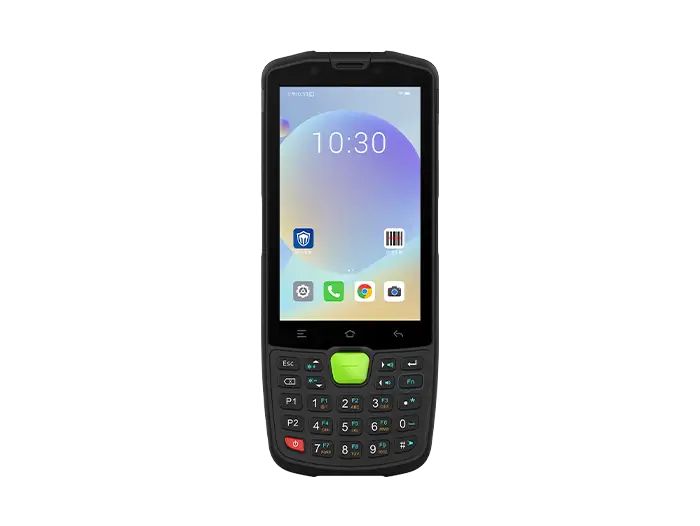
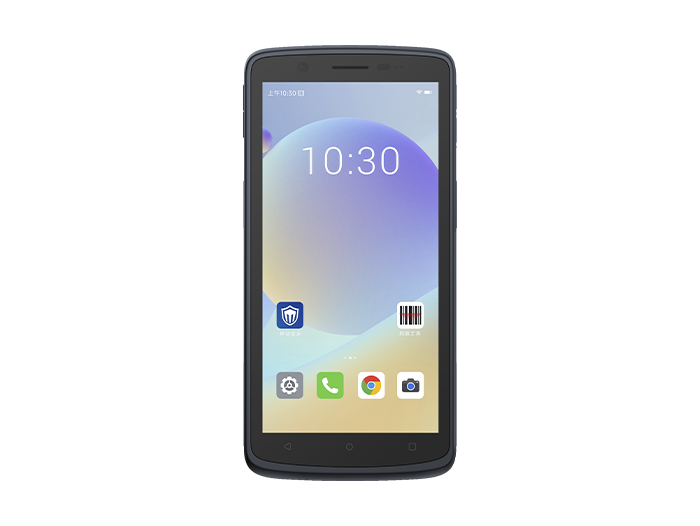
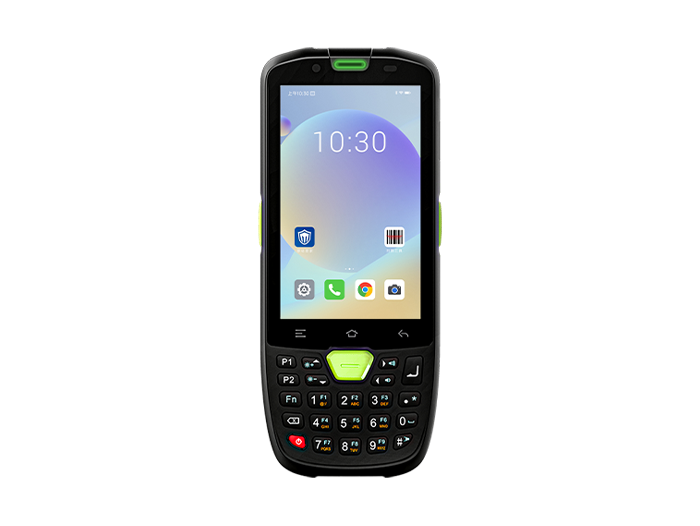
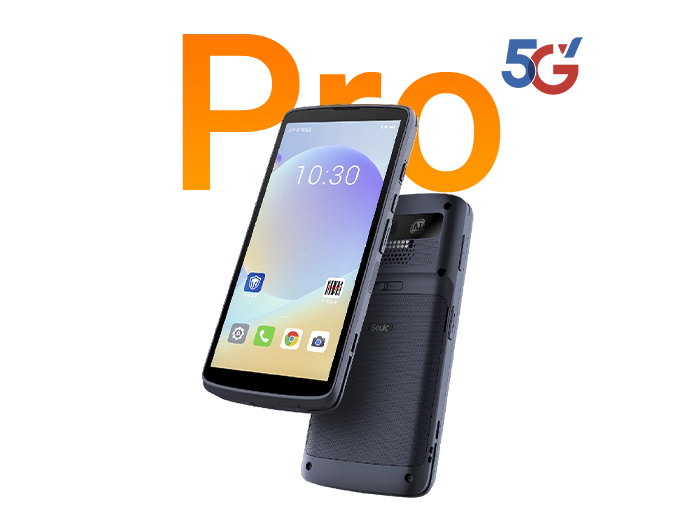
3. For Mobile Multi-Function Operations, Choose a Handheld Terminal: AUTOID Q9 Pro
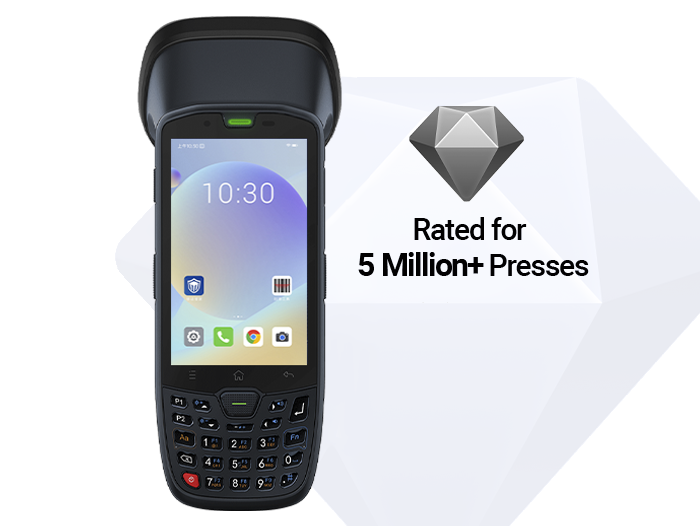
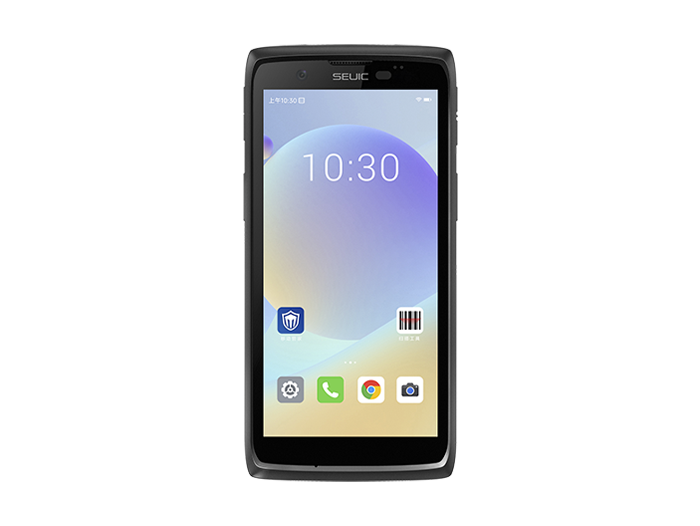
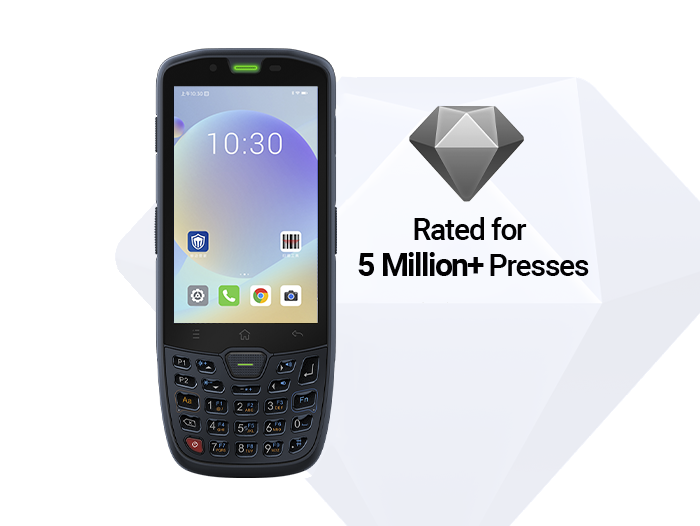
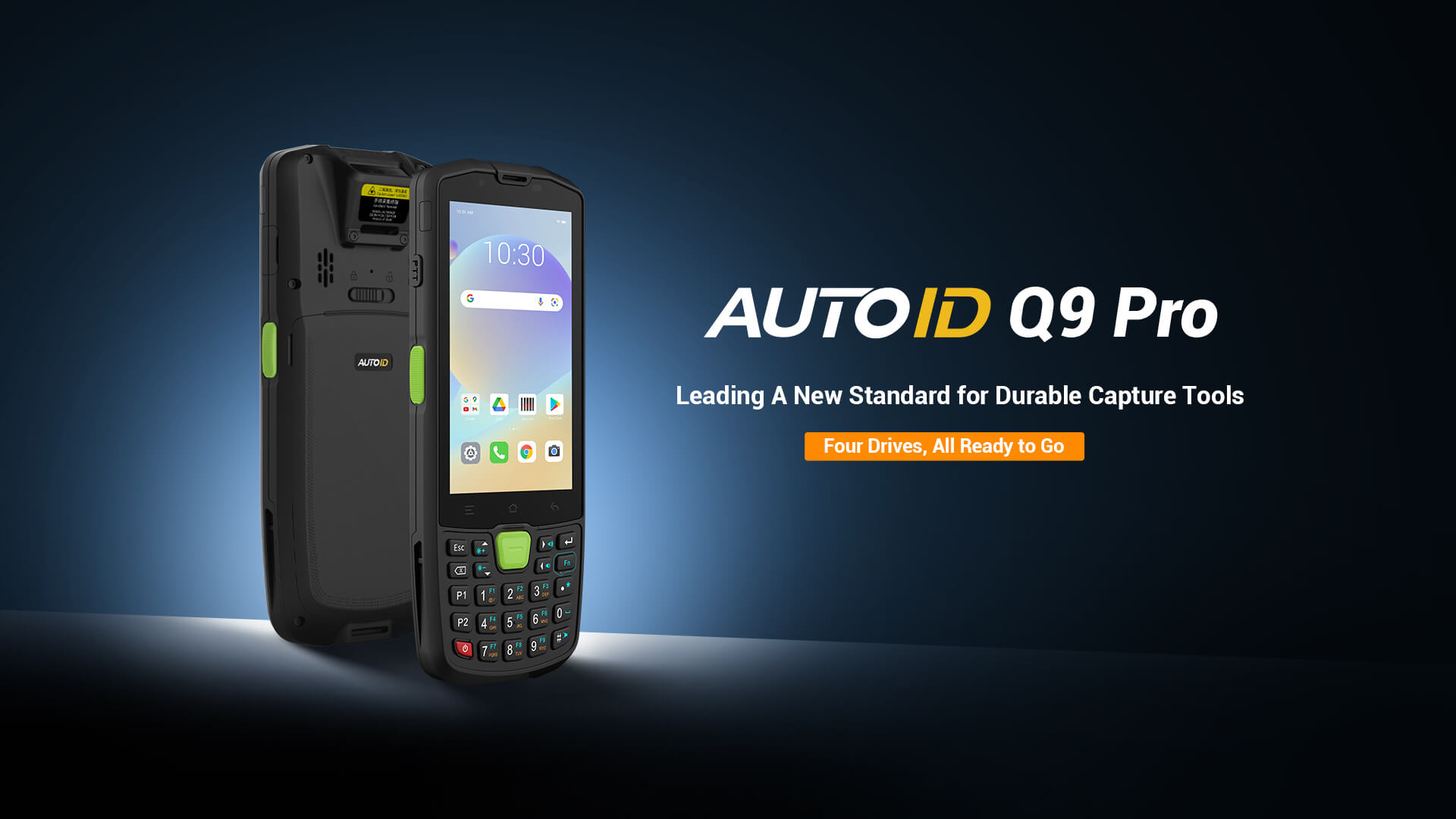
If your scenario involves mobile operations with multi-function integration — pass-through collection, material loading error-proofing, inventory counting, finished product inbound/shipment, and equipment inspection all rolled into one — you need an industrial handheld terminal. Take the SEUIC AUTOID Q9 Pro as an example:
Full-performance hardware: MTK octa-core 2.0GHz, Android 13 (GMS certified), 4GB RAM + 64GB ROM — multiple applications run smoothly in parallel.
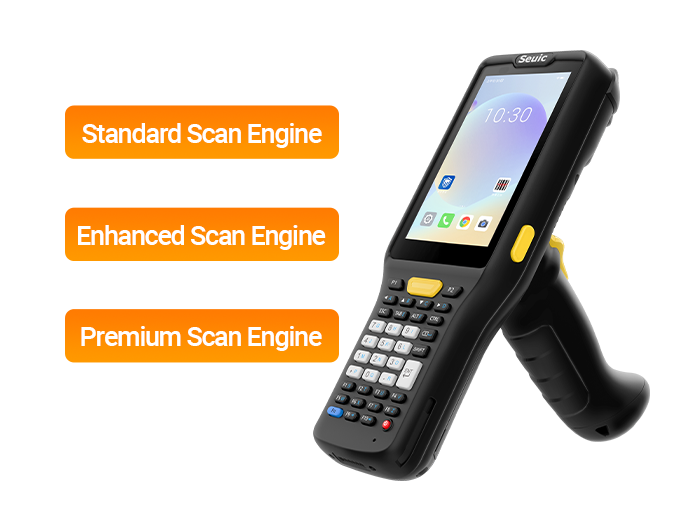
Professional scanning: Seuic 2D imaging scan engine (X3P/MX6 and other options available), optimized for oily, worn, low-contrast, split-toned, perforated, and metal DPM codes. Over 3 scans per second, supports single-capture multi-code reading.
Long battery life: 5200mAh removable lithium battery + 60mAh backup battery. Approximately 14 hours of continuous use in lab testing. Hot-swappable without shutdown — covers two or three shifts.
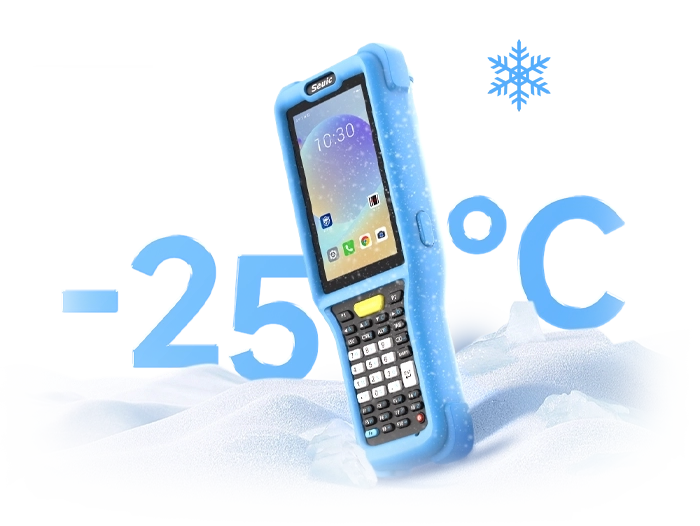
Rugged + touchscreen: 4-inch IPS display (800×480, 400 nits). Operable with wet hands and thick gloves. IP67 dust/water resistance, 1.8m marble drop survival, 1000 tumbles at 0.5m, -20°C to 50°C wide temperature range — suitable for cleanrooms, ESD-controlled workshops, and occasional liquid splashes.
Integration capabilities: 27-key keypad + dual side scan buttons, NFC (ISO15693/14443A/B), dual-band Wi-Fi 2.4G/5G, 4G global LTE, Bluetooth 5.0, GPS/BeiDou/GLONASS, Type-C/OTG — scanning, near-field reading, photography, and positioning in one device.
Corresponding to five high-frequency PCB workshop applications: pass-through collection (SN + process + operator + timestamp transmitted directly to MES), material loading error-proofing (scan material code + workstation code, bind and verify against BOM), inventory counting (scan material trays in warehouse, compare in real time with ERP), finished product inbound/shipment (bind box code + bin location code + photo documentation), and equipment inspection (NFC or equipment code confirmation + photo archiving).
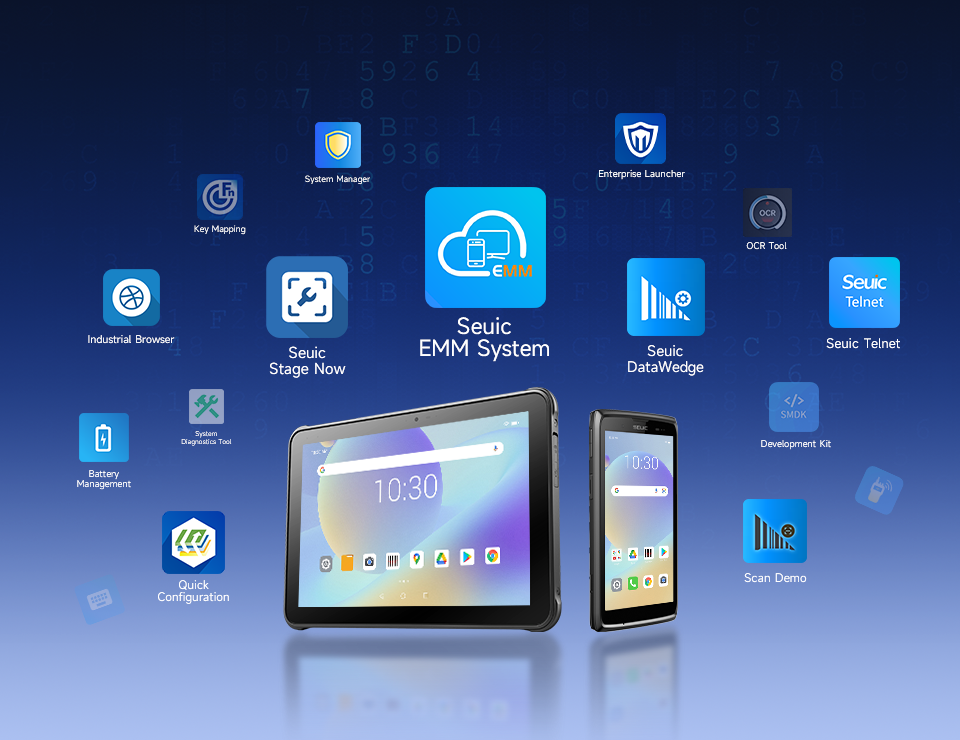
It can also connect to the SEUIC EMM platform for batch deployment, permission levels, geofencing, remote diagnostics, and data wipe — cutting O&M costs for dozens or hundreds of devices in half while doubling efficiency.
One sentence summary: It's ideal for mobile workstations that need "scanning + system access + photography + NFC" all-in-one, and require MES/ERP integration for full-process traceability and mobile management.
4. Side-by-Side Comparison
| Dimension | Industrial Barcode Scanner: SEUIC HS325DP | Handheld Terminal: AUTOID Q9 Pro |
| Core Strength | Millisecond-level precision on difficult DPM codes | All-in-one, full-coverage mobile operations |
| Scanning Capability | AI algorithm + tri-color illumination, specialized for low-contrast/split-toned/perforated codes | Seuic 2D professional engine, 3+ scans/sec, captures oily/worn/DPM/multi-codes in one pass |
| First-Pass Read Rate | Up to 99.9% | High first-pass rate on complex codes, multi-code output in one scan |
| Work Pattern | Fixed workstation, one-handed continuous scanning | Mobile patrol, inventory, reporting, inspection |
| System Integration | Serial/wireless connection to collection system | Android 13 + MES/ERP App + SEUIC EMM |
| Battery Life | Wireless portable, long-lasting operation | 5200mAh removable + 60mAh backup, ~14h, hot-swappable without shutdown |
| Protection Rating | Industrial gun body, designed for production line grip | IP67, 1.8m drop, 1000 tumbles at 0.5m, -20~50°C |
| Typical Use Cases | PCB pass-through, SMT process collection, QC code verification | Pass-through + material error-proofing + inventory + shipping + inspection |
| Selection One-Line | "Just need it to scan fast and accurately" | "Need scanning + management + mobility — all of it" |
5. Real-World Deployments, Not Just Theory
Case 1: Li Auto Solves the DPM Code Challenge
At Li Auto's core component assembly stations, DPM codes varied widely in material (aluminum alloy, stainless steel, plastic) and engraving method (laser dot peening, etching, pneumatic pin marking). Traditional scanners frequently failed to read or experienced lag, threatening line takt. After deploying the SEUIC HS325DP: scanning efficiency improved by 50%; first-pass read rate on difficult DPM codes increased significantly; equipment management costs dropped by 10% (one device handles multiple material types, eliminating the need for multiple specialized units); line takt stabilized with scanning no longer a bottleneck; data traceability was enhanced, supporting full-lifecycle quality closure for components.
Case 2: AUX Boosts MES Digital Efficiency
AUX Air Conditioning produces over 10 million units annually. Original production lines struggled with difficult-to-read codes and old terminals with small batteries that frequently interrupted multi-shift operations. After introducing the SEUIC AUTOID Q9 Pro — MTK octa-core 2.0GHz, Android 13, Seuic professional 2D scan engine, 5200mAh removable battery, IP67 protection — and integrating it with MES for line collection, material in/out, process flow, finished product QC, and warehouse inventory, the factory achieved stable two-shift non-stop data output with overall production efficiency improving by over 30%.
6. How to Choose: Find Your Scenario
Choose the barcode scanner (HS325DP) if: Your workstation is fixed, line takt is extremely fast, code quality is poor (PCB/chip DPM codes), and your core requirement is "scan fast and accurately."
Choose the handheld terminal (AUTOID Q9 Pro) if: You need mobile operations, MES/ERP integration, and composite functions like material error-proofing, inventory counting, inspection, NFC, and photography.
The optimal solution for most PCB factories: Combine both. Use the HS325DP at fixed high-speed pass-through stations to maintain takt and first-pass read rate. Use the AUTOID Q9 Pro for mobile stations like material loading, inventory, shipping, and inspection — handling multi-function collection and full-process traceability. This "scanner + handheld terminal" combination ensures both efficiency and a complete data closed loop.
7. FAQ
Q1: Our PCB DPM codes (low-contrast, perforated) can't be read by ordinary scanners. What should we do?
Use a professional industrial barcode scanner with an AI decoding algorithm and multi-color intelligent illumination, such as the SEUIC HS325DP. Its blue/red/white tri-color light source automatically adapts to metal curved surfaces, dark backgrounds, flat engraving, and other difficult code scenarios. Specialized for low-contrast and perforated codes, it achieves up to a 99.9% first-pass read rate.
Q2: Can the AUTOID Q9 Pro be used directly with the MES system in manufacturing?
Yes. The Q9 Pro is powered by an MTK octa-core 2.0GHz processor, Android 13, and 4GB+64GB memory. Its Seuic2D professional scan engine recognizes oily, worn, low-contrast, and DPM codes. The 5200mAh removable battery + 60mAh backup supports two-shift continuous operation. Dual-band Wi-Fi/4G/Bluetooth 5.0 enables real-time synchronization. It can be connected to the SEUIC EMM platform for batch deployment, permission management, and remote diagnostics — suitable for pass-through, material error-proofing, inventory, shipping, and inspection scenarios.
SEUIC Technologies Co., Ltd., founded in 2002, is dedicated to mastering core technologies and driving innovation to deliver outstanding branded products, including mobile computers, RFID readers, tablet computers, barcode scanners, and fixed-mount readers. With highly reliable products and efficient service, our solutions are widely deployed across manufacturing, retail, logistics, healthcare, and other industries. We equip frontline workers with more durable real-time data collection tools, helping you improve operational efficiency and take productivity to the next level.
Related News
-
Portable Barcode Scanner Vendor Evaluation Guide: Support, Lifecycle & Fleet Management
Product Updates | 2026.10.08Learn More
-
Rugged Android Tablet for Retail Stores: Inventory Management, Assisted Selling & Store Inspections
Product Updates | 2026.09.30Learn More
-
11-Inch Rugged Android Tablet: One Device for Inventory, Sorting & Dispatch
Product Updates | 2026.09.30Learn More
-
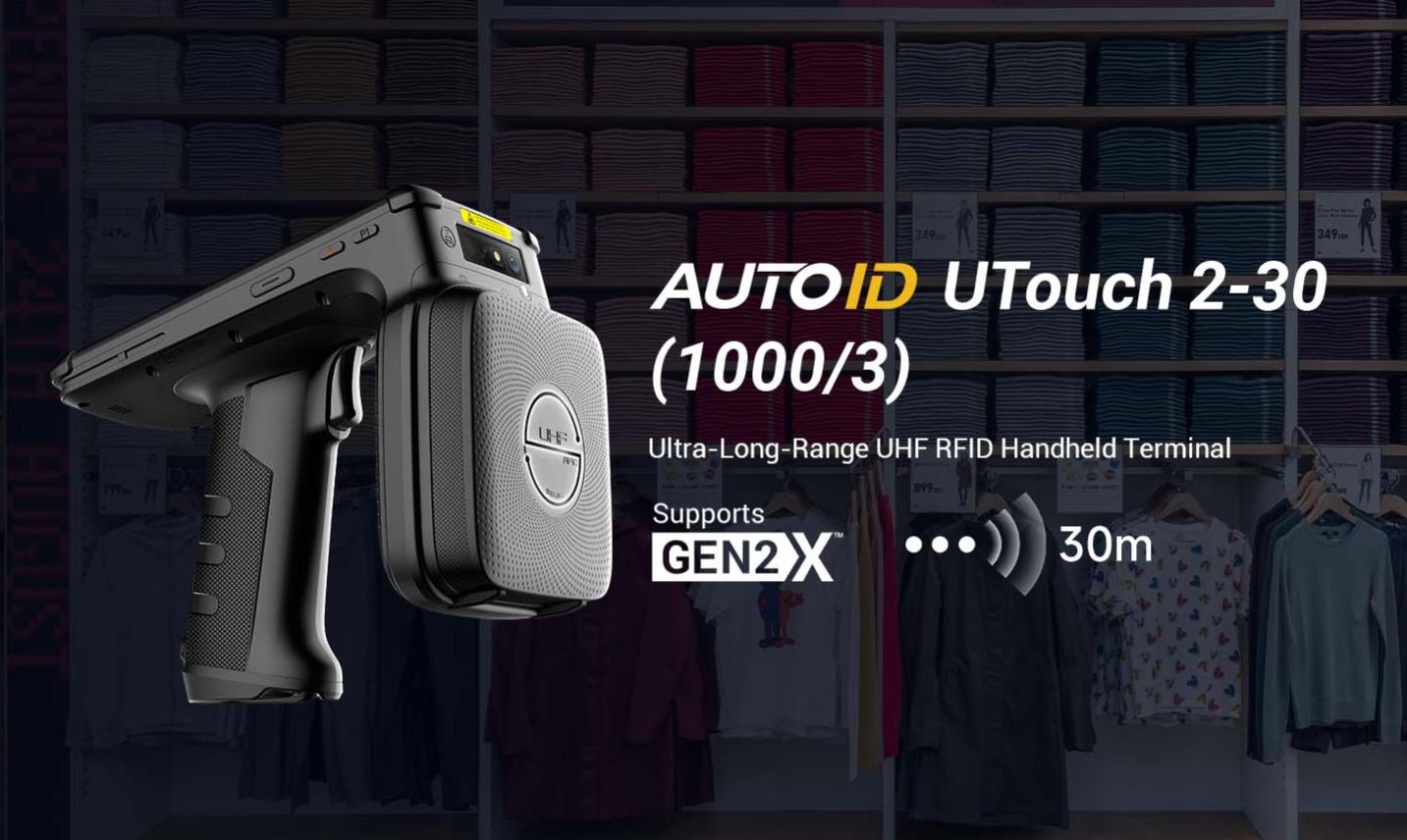
RFID Handheld Reader Selection: High-Bay Needs Range, Pallet Needs Speed
Product Updates | 2026.09.29Learn More