








RFID Tracking vs Barcode: The Ultimate Asset Tracking Selection Guide
There are multiple technologies available for asset tracking, with barcode and RFID being the two most mainstream options. Both can map "physical items" to "system data," but they operate on fundamentally different principles: barcode relies on optical line-of-sight, reading items one by one, while RFID Tracking uses wireless radio frequency for batch identification. Each has its strengths and limitations — there is no "one is absolutely better." The right choice depends on your asset value, turnover frequency, labor costs, and environmental conditions. This article provides a side-by-side comparison across four dimensions — reading method, cost, accuracy, and application scenarios — to help factory managers, warehouse supervisors, retail operations, hospital equipment administrators, and utility field inspectors make the right decision.
1. Reading Method: One-by-One Optical vs. Wireless Batch
1.1 Barcode: Must Be Visible, Scanned Individually
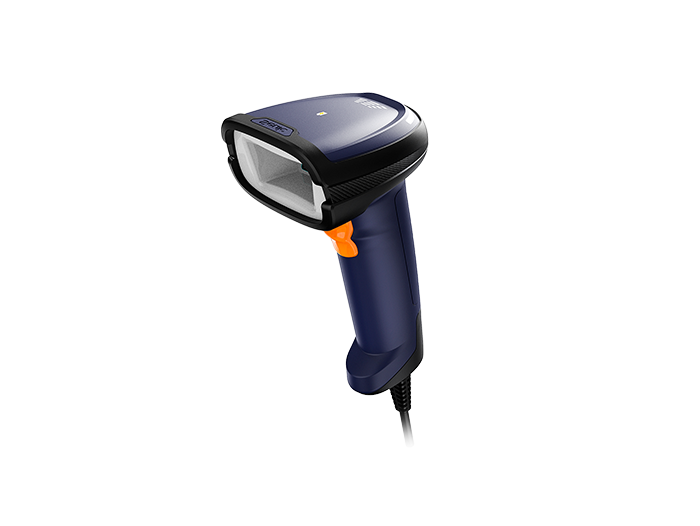
Traditional 1D/2D barcodes use lasers or cameras to read printed patterns. Operators must align the label with the scanner and identify each item individually. The advantage is simplicity and universality — almost any PC, phone, or handheld terminal can read them.
The drawbacks are equally clear:
Requires line-of-sight — labels that are obscured, folded, wrinkled, or dirty cannot be scanned
Items must be scanned one at a time; contents inside pallets, boxes, or cabinets must be unpacked or turned over
During high-speed receiving, batch outbound, or dynamic production line counting, manual one-by-one scanning becomes a bottleneck
1.2 RFID Tracking: Radio Waves, Non-Line-of-Sight, Bulk Read
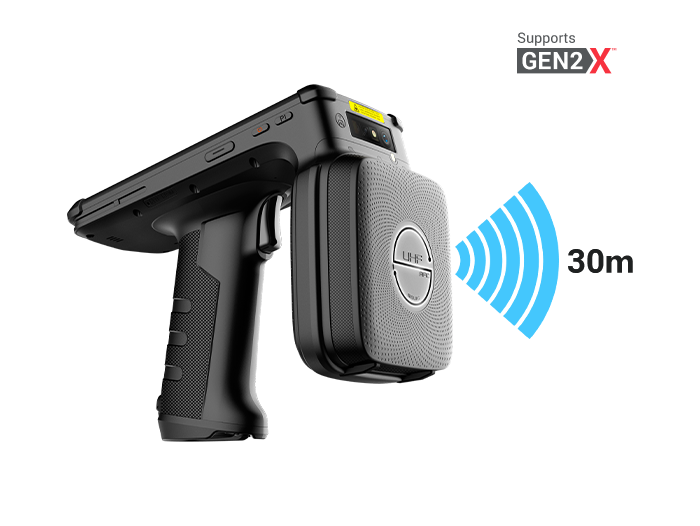
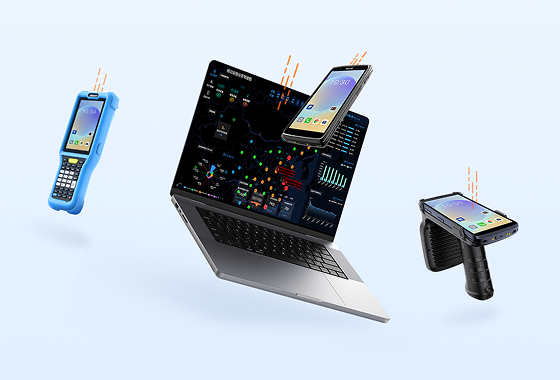
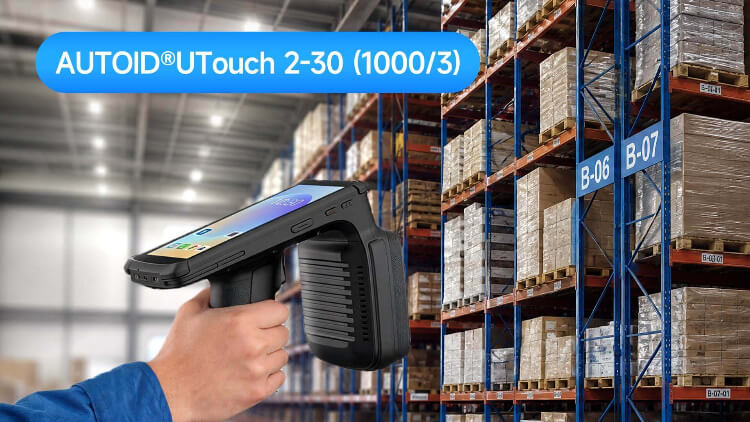
RFID (Radio Frequency Identification) consists of electronic tags and RFID readers. The reader emits radio frequency signals; passive tags return a unique ID via their antenna; active tags have built-in batteries, supporting longer range and real-time positioning. For asset tracking, the key capabilities are:
Non-line-of-sight reading: Tags inside cartons, plastic bins, garment hang tags, or toolboxes can be identified without direct visibility
Bulk reading: A single handheld reader can capture tens to hundreds of tags at once; RAIN/UHF systems under ideal portal conditions can achieve even higher concurrency
Automatic capture: Fixed readers deployed at doorways, production lines, sortation chutes, medicine cabinets, or meter rooms can record items as they pass, reducing manual intervention
Rewritable data: Some RFID tags support rewriting status, batch, or maintenance count, whereas barcode content is essentially fixed after printing
Intuitive analogy: Barcode is like checking an ID card — each person has to pull it out and show it. RFID is like a security checkpoint that batch-reads passes — anyone within range gets registered simultaneously.
2. Cost: Barcode Labels Are Cheap, RFID Depends on Total Cost of Ownership
Selection should not be based solely on "price per label." Consider labels, read hardware, software integration, labor for counting, error rates, and relabeling costs.
2.1 Barcode Cost Structure
Paper barcode labels: approximately $0.01–$0.05 per label; waterproof synthetic labels: approximately $0.10–$0.15
Basic handheld scanners: approximately $50–$300; enterprise-grade units and printer systems cost extra
Software: lightweight WMS, spreadsheets, or cloud inventory tools are sufficient — low entry cost
Hidden cost is labor: large-volume one-by-one scanning, re-scanning damaged labels, and overtime for cycle counting scales linearly with SKU and asset count
2.2 RFID Tracking Cost Structure
Passive UHF inlay/tags: Published ranges vary widely. Mass-produced standard inlays can be as low as approximately $0.05–$0.15; bulk purchases may approach $0.08–$0.10. Finished labels with printing, hang tags, or encapsulation typically range from $0.10–$0.30. The $0.05–$0.50 range serves as a broad reference for general passive asset/retail tags.
On-metal, high/low-temperature resistant, washable, anti-tamper hard tags: Typically higher than standard inlays; hard tags range from $0.50–$5.00, and are more cost-effective in reusable scenarios
Active RFID/beacon tags: Include batteries, long range, or sensors, typically $25–$100+, suitable for vehicles, yards, and large equipment real-time positioning
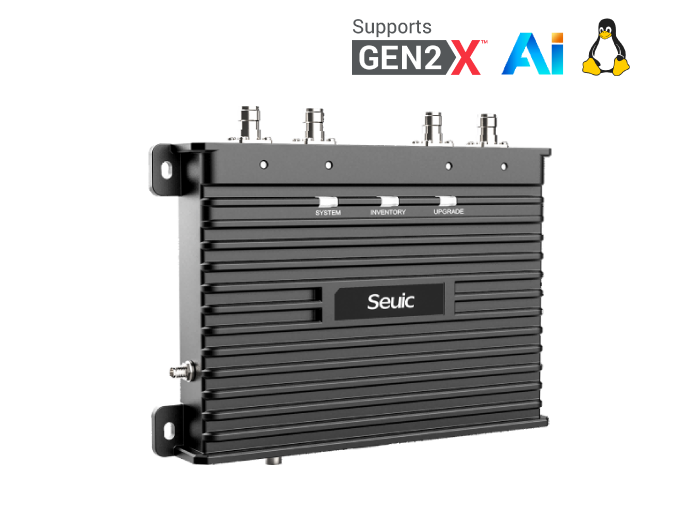
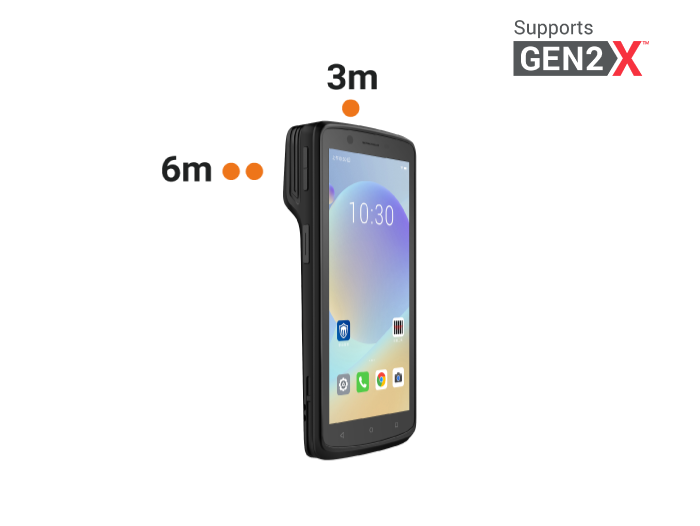
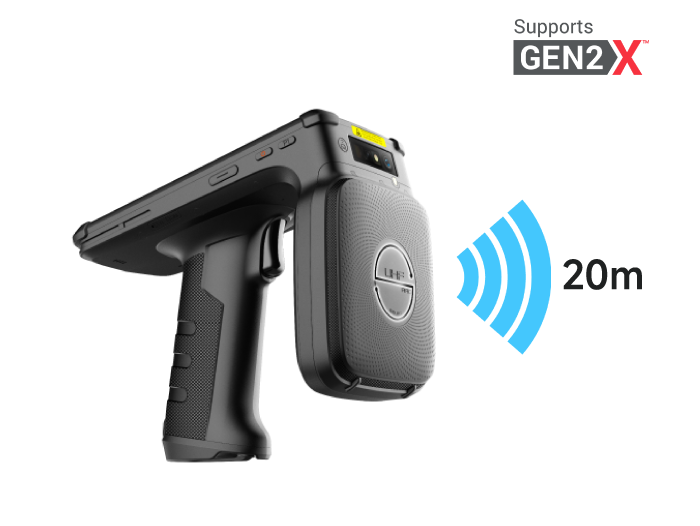
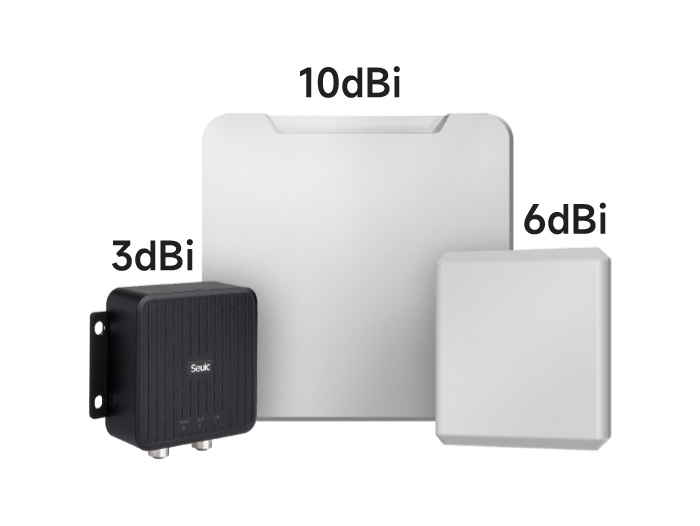
Readers: Handheld RFID readers approximately $200–$700; enterprise-grade handhelds cost more. Fixed readers approximately $800–$3,500; antennas, portal frames, middleware, and WMS/ERP integration are additional
Payback period: High-volume warehousing, retail apparel, and high-value medical equipment often evaluate ROI over 12–18 months — provided that bulk reading genuinely replaces significant manual labor and reduces shipping errors and miscounts
Conclusion: For low-volume, low-value, static assets, barcode has a lower total cost of ownership. For medium-to-high volume, high-value, high-turnover assets, RFID Tracking is more likely to recover investment through labor savings and error reduction.
3. Accuracy and Reliability: Human Error vs. RF Environment Tuning
3.1 Barcode Accuracy
Barcode decoding itself has a very high accuracy rate. The problem lies with humans:
Dirty, wrinkled, faded, or stretch-wrapped labels fail to scan
During full-count cycles, missed scans, double scans, and scanning the wrong box are common
Industry literature cites wide variation in actual accuracy for manual barcode cycle counting in retail/warehouse settings — some sources claim 95–99% under strict procedures, but with poor discipline this can drop to 65–85%
3.2 RFID Tracking Accuracy
Well-configured UHF asset/inventory projects can achieve 93–99%+, with some warehouse and apparel scenarios reaching 99.5%+. However, RFID is not "accurate just by sticking on a tag":
Metal reflects RF signals; standard tags applied directly to metal detune and require on-metal tags
Liquids absorb high-frequency energy; near reagents, beverages, or bodily fluids, frequency band and tag placement must be carefully chosen
Dense tags may collide; reader power, antenna layout, filtering rules, and deduplication logic all require optimization
For production lines, medical devices, and tool management, small-sample read-range testing is recommended before finalizing tag selection
How to view accuracy: Barcode has a high ceiling but is dragged down by human factors. RFID Tracking also has a high ceiling, but is more affected by environment and implementation quality. When buying RFID, don't just trust a vendor's "99%" claim — test with your own materials, packaging, read field, and processes.
4. Application Scenarios: Who Should Use Barcode, Who Should Use RFID
4.1 Barcode Is Better Suited For
Low-value consumables, office assets, files, low-cost FMCG items
Static management: a few counts per year, no real-time location requirement
Store price tags, POS checkout, receiving verification — employees naturally handle items anyway
Limited budget, few SKUs, no automation plans
Labels can be self-printed; system only needs "what it is and how many"
Examples: Community supermarket general merchandise, school stationery warehouse, small repair shop spare parts — barcode + handheld scanner is perfectly adequate.
4.2 RFID Tracking Is Better Suited For
Warehouses/distribution centers: Batch receiving/shipping of pallets, cartons, returnable containers; cycle counting compressed from hours to tens of minutes
Manufacturing plants: WIP tracking, tools and dies, fixtures, production line material call — reducing tool search time and downtime from material shortage
Retail chains/apparel: Item-level RFID Tracking for store counting, loss prevention, omnichannel fulfillment — brands use it to improve on-shelf availability
Hospitals/pharmacies: Infusion pumps, wheelchairs, surgical instrument kits, drug batch/expiry tracking, cold chain containers — solving "where is the equipment," "is it expired," "has it been sterilized"
3PL/e-commerce fulfillment: Multi-client inventory, high order volume, dock door portal auto-verification — reducing shipping errors
Utility field operations: Electric meters, water meters, gas valves, transformers, inspection tools — using environment-resistant tags for periodic inspection and asset ledger; metal equipment uses on-metal tags, outdoor uses sealed weatherproof tags
Government/law enforcement assets: Evidence, equipment, vehicle-mounted gear requiring audit trails — can use RFID + barcode dual labels
5. How to Choose Between Barcode and RFID: Decision Checklist
Score the following conditions — it's more practical than debating "which technology is more advanced."
Priority: Barcode
Unit price of a single asset category is low, quantity is small
Daily scan volume is low, manual one-by-one scanning is acceptable
No real-time location requirement; weekly/monthly counting is sufficient
IT budget is tight, unwilling to maintain readers and tag encoding systems
Simple environment, labels unlikely to get dirty or damaged
Priority: RFID Tracking
Single cycle count exceeds hundreds of items, or daily inbound/outbound reaches thousands
Assets are medium-to-high value, movable, prone to loss — e.g., instruments, tools, pallets, garment items
Need non-line-of-sight, through-box, through-cabinet reading
Multi-warehouse/multi-store/multi-production-line real-time visibility required
Harsh environments — metal, liquids, cold storage, outdoors — with appropriate specialty tags selected
Already have or plan to implement WMS/ERP, need automated data capture to reduce manual entry
Hybrid deployment (most commonly recommended):
High-value assets use RFID Tracking for real-time/periodic tracking; low-value consumables use barcode for cost control
Receiving portals use RFID for automatic pallet/carton verification; broken-case picking uses barcode or a combination with RFID
Compliance shipping labels retain barcode/GS1; internal asset layer adds RFID for batch management
Hospitals can use barcode for medical records and drug outer packaging, and RFID for equipment, instrument kits, and high-value consumables
6. Implementation Steps for RFID Tracking
Map the business: List asset types, unit prices, quantities, movement frequency, current counting man-hours, and error rates.
Classify tags: Cardboard boxes use standard UHF inlays; metal equipment uses on-metal; cold-chain pharmaceuticals use low-temperature; outdoor uses IP-rated hard tags.
Determine read points: Receiving doors, production line workstations, outbound tunnels, pharmacy smart cabinets, equipment rooms, inspection entrances — evaluate handheld vs. fixed for each.
Small pilot: Select one warehouse zone or one department, tag 500–2,000 items, measure read rate, missed reads, duplicate reads, and adjacent-zone interference.
Integrate with systems: Feed RFID data into WMS/ERP/CMMS; define asset status, location, maintenance records, and alert rules.
Calculate ROI: Compare "current counting labor hours × hourly wage + mis-shipment losses + asset loss rate" against RFID hardware, tags, integration, and annual maintenance.
Scale up: Start with high-value, high-turnover items, then expand to low-value bulk — avoid full-scale conversion at once, which can lead to excessive tuning costs.
7. Common Misconceptions
"RFID will definitely replace barcode": Most enterprises coexist with both long-term. Barcode manages compliance and low-cost items; RFID manages efficiency and high-value assets.
"Cheaper tags are always better": Standard inlays are cheap but unsuitable for metal/liquid applications. Choosing the wrong tag costs more than paying slightly more for the right one.
"Longer read range is always better": In warehouses, stable coverage matters more than maximum range. Edge-of-portal missed reads are more important than a theoretical 12-meter range.
"Once RFID is implemented, inventory will automatically be accurate": Encoding rules, tag placement, reader tuning, and manual exception review are still required.
Barcode is the baseline solution for low-cost, low-complexity, static identification. RFID Tracking is the non-line-of-sight, batch, real-time, automatable asset visibility solution. If your pain points are "manual scanning can't keep up, assets are often lost, cross-warehouse/store visibility isn't real-time," RFID is worth the investment. If assets are few, low-value, and processes are static, barcode remains the most economical choice. For most mid-to-large factories, warehouses, retail chains, hospitals, and utilities, the sensible path is "barcode as the foundation, RFID for high-value and high-turnover layers, and unified asset master data at the system level."
If you are evaluating an asset tracking upgrade, start with a single warehouse zone or one high-value equipment category as an RFID pilot. Compare counting man-hours, loss rates, and inbound/outbound error rates before and after — then decide on full replacement or hybrid expansion.
Related News
-
Portable Barcode Scanner for High-Rack Warehouses
Product Updates | 2026.09.20Learn More
-

RFID Tracking System Buying Guide: 10 Must-Evaluate Selection Factors
Product Updates | 2026.09.18Learn More
-
RFID Tracking in Supply Chain: An End-to-End Visibility Solution from Factory to Customer
Product Updates | 2026.09.15Learn More
-
RFID Tracking for Warehouse Assets: Achieving Real-Time Visibility for Pallets and Containers
Product Updates | 2026.09.15Learn More