




What Is an RFID Tag? Structure, Working Principle & Common Uses
In today's fast-paced business environment, efficiency and accuracy are the lifelines of any enterprise. Whether on a factory production line, in a warehouse aisle, or at a retail checkout counter, managers are constantly looking for ways to replace manual operations, reduce errors, and speed up workflows. Have you ever struggled with time-consuming inventory counts, searched an entire warehouse for a single item, or waited in long checkout lines?
This is where Radio Frequency Identification (RFID) technology takes center stage. And the core component that makes this system work is the RFID tag — a small but powerful device. This article breaks down what an RFID tag is, covering its physical structure, how it works, the different types available, and their most common applications.
1. Physical Components of an RFID Tag: Small Size, Powerful Core
Although RFID tags come in many shapes and sizes, their core physical structure typically consists of three basic parts:
Integrated Circuit (IC) / Chip: This is the "brain" of the tag. The chip stores and processes information — usually a unique Electronic Product Code (EPC) that identifies the item the tag is attached to. The chip also manages communication protocols with the reader.
Antenna: This is the tag's "mouth" and "ears." The antenna receives radio waves transmitted by the RFID reader and sends the processed response signal back to the reader. The shape, size, and material of the antenna directly affect read range and performance.
Substrate: This is the tag's "body" or carrier. The chip and antenna are mounted on the substrate. The substrate material determines flexibility, temperature resistance, waterproofing, and final packaging form. Common substrates include PET film, paper, and rigid engineering plastics.
Simply put, the chip handles thinking and memory, the antenna handles communication, and the substrate provides a stable platform. All three are essential, working together to create an intelligent information carrier that responds to wireless queries.
2. Passive vs. Active vs. Semi-Passive: Understanding the Three Main Types
RFID tags are not one-size-fits-all. They fall into three main categories based on power source and communication method. Understanding these differences is the first step in choosing the right tag.
2.1 Passive Tags
These are the most common and affordable type. They have no internal battery. How they work: when a tag enters the electromagnetic field generated by the reader's antenna, it harvests energy from the field through inductive coupling to power the chip, then reflects the stored information back to the reader.
Advantages: Extremely low cost, compact size, virtually maintenance-free, theoretically unlimited lifespan.
Disadvantages: Relatively short read range (typically a few centimeters to about 10 meters, depending on frequency and environment), requires sufficient reader transmission power.
Typical Applications: Retail product tags, library book management, access control cards, supply chain tracking.
2.2 Active Tags
Active tags have a built-in battery that allows them to autonomously and continuously transmit signals to the reader. This gives them a very long read range — up to hundreds of meters or more.
Advantages: Extremely long read range, high data transmission rates, works in harsh environments, can integrate sensors (temperature, humidity, etc.).
Disadvantages: High cost, larger size, limited battery life (typically a few years), requires periodic battery replacement.
Typical Applications: Large container tracking, vehicle identification, real-time asset location systems, cold chain monitoring.
2.3 Semi-Passive Tags (Battery-Assisted Passive)
This type combines elements of both previous types. It has a built-in battery, but the battery only powers the chip circuitry — not the signal transmission. When communicating with the reader, it still uses backscatter technology like a passive tag, reflecting the reader's energy.
Advantages: Longer read range than passive tags (due to higher chip sensitivity), can integrate sensors, cost falls between passive and active tags.
Disadvantages: Still limited by battery life, larger and more expensive than passive tags.
Typical Applications: Scenarios requiring higher read reliability with environmental monitoring, such as data center equipment tracking and hospital asset management.
3. Operating Frequencies: What Determines Performance and Application
An RFID tag's operating frequency is another core attribute that directly affects read range, speed, and performance in different environments.
3.1 Low Frequency (LF, 125 kHz – 134 kHz)
Characteristics: Very short read range (typically < 10 cm), strong penetration, especially through water and metal (though performance degrades), slow data transmission.
Applications: Animal implants, access control cards, car immobilizer keys.
3.2 High Frequency (HF, 13.56 MHz)
Characteristics: Medium read range (typically < 1 m), globally standardized (e.g., NFC), faster data transmission, good interference resistance.
Applications: Contactless payment cards, library management systems, ticketing systems, product authentication.
3.3 Ultra-High Frequency (UHF, 860 MHz – 960 MHz)
Characteristics: Long read range (passive tags up to 10–15 meters, active tags even farther), fast read speed, supports batch reading of multiple tags (hundreds per second), but susceptible to interference from liquids and metal.
Applications: This is the most widely used frequency in warehousing, logistics, retail supply chains, and manufacturing — primarily for large-scale, high-efficiency asset management and tracking. It is the go-to choice for most modern enterprises pursuing automation.
4. Common Packaging Forms: Adapting to Any Environment
To function in harsh or specialized environments, RFID tags come in a variety of packaging forms.
Adhesive Labels / Hang Tags: The most common form — thin, flexible, and similar to regular stickers or price tags. They can be applied directly to products or documents. Widely used in retail, libraries, and apparel management.
Hard Tags: Encased in rigid plastic housings (e.g., ABS), these are tough and durable, resistant to impact, water immersion, and high temperatures. Commonly used for reusable assets such as pallets, totes, tools, and laundry linens.
Card Tags: Shaped like credit cards or ID cards with embedded chips and antennas. Used for access control, membership cards, and payment systems.
Anti-Metal Tags: Specifically designed to solve the problem of UHF signal degradation on metal surfaces. By adding special absorbent materials on the back or adjusting the antenna structure, these tags can be mounted directly on metal objects. This is critical for manufacturing and asset management.
High-Temperature / Specialty Tags: Made from specialized heat-resistant materials for extreme environments like automotive paint shops or steam sterilizers.
Choosing the right packaging form is a key step in ensuring stable RFID system performance.
From a single screw on a production line to an entire pallet of goods in a warehouse to an expensive piece of hospital equipment, RFID tags are quietly transforming how we manage things. They give every item a unique digital identity, allowing us to track, identify, and manage them with unprecedented speed and accuracy.
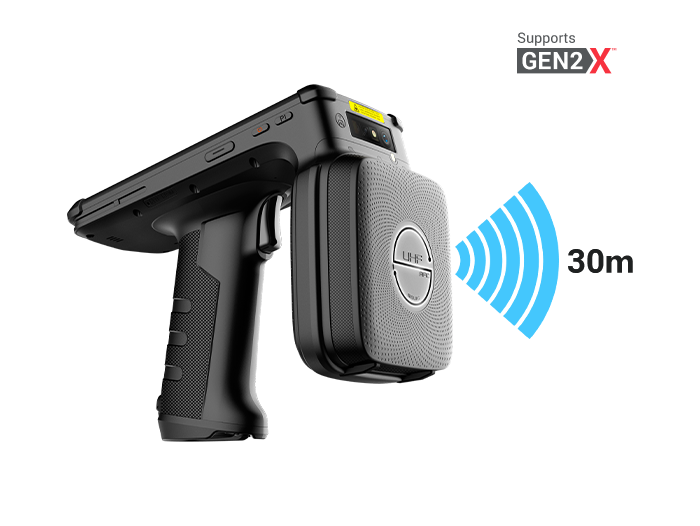
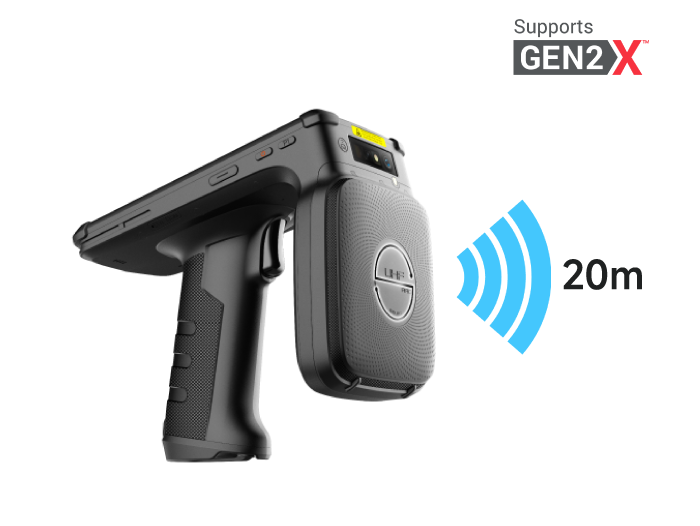
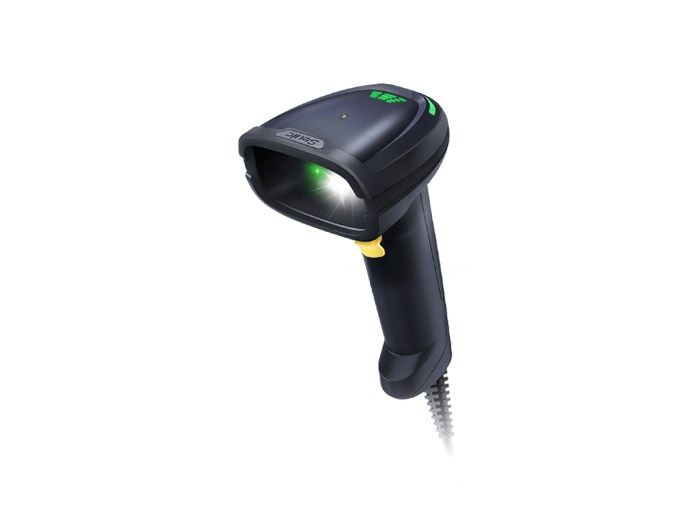
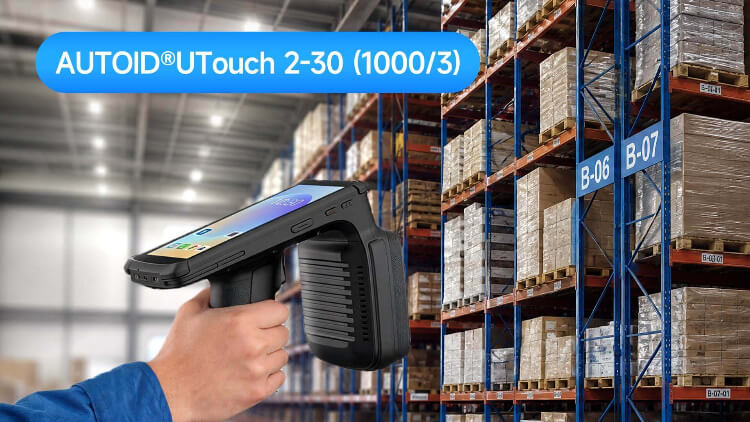
However, for these tiny tags to do their job, one critical component is indispensable — an RFID reader capable of "reading" them. The reader transmits energy to activate the tags and receives and decodes the data they send back. Especially in scenarios requiring long-range, high-volume reading of UHF passive tags, a high-performance reader is essential. For example, the SEUIC AUTOID UTouch 2-30 handheld RFID reader handles this task with ease — it can reliably read UHF passive tags from up to 30 meters away and batch-read thousands of tags in just 3 seconds, dramatically improving the efficiency of inventory counts, inbound/outbound processing, and asset audits.
RFID tags give every item a unique, traceable digital identity. To turn that identity data into actionable management insights quickly and accurately, you need a high-performance RFID reader. If you are looking to improve supply chain efficiency or asset management, contact SEUIC — we provide expert consultation and customized solutions.
Related News
-

How to Choose a Rugged Android Tablet? Ditch Spec Stacking, Use Scenario Tables
Product Updates | 2026.10.09Learn More
-

Portable Barcode Scanner Vendor Evaluation Guide: Support, Lifecycle & Fleet Management
Product Updates | 2026.10.08Learn More
-

Rugged Android Tablet for Retail Stores: Inventory Management, Assisted Selling & Store Inspections
Product Updates | 2026.09.30Learn More
-

11-Inch Rugged Android Tablet: One Device for Inventory, Sorting & Dispatch
Product Updates | 2026.09.30Learn More