






Workshop Tool Management RFID Selection Guide: One-Stop Solution for Metal Environment Inventory & Check-In/Check-Out
1. Let's Start with the Pain Points of Workshop Tool Management
If you've ever worked in a manufacturing shop, maintenance bay, or tool room, these scenarios probably sound familiar:
Month-end inventory — hundreds of wrenches, drill bits, and measuring tools spread across the floor, two people manually checking serial numbers all afternoon, and the count still doesn't match the books. Tool check-in/check-out relies entirely on a paper logbook — who took which cutter, when it was returned — flipping through pages for ages and still not finding the record. Worse still, expensive cutting tools and specialty fixtures go missing with no one held accountable, and when you finally need them, they're nowhere to be found.
Conventional barcode solutions seem promising on paper, but they fall apart on the shop floor. Barcodes can't handle oil and wear — after a few uses, the labels are ruined. Scanning requires line-of-sight alignment, one tool at a time — hundreds of tools take almost as long as manual counting. As for check-in/check-out traceability, barcodes can only tell you something was scanned, but they can't show you in real time who currently has each tool or whether it's overdue.
That's why more and more manufacturers are turning to RFID.
2. Why RFID Is a Better Fit for Workshop Tool Management
The fundamental difference between RFID (radio frequency identification) and barcodes is this: RFID doesn't need line-of-sight alignment or one-at-a-time scanning. It uses radio frequency signals to identify tags in bulk. In tool management, this changes everything.
Inventory efficiency leaps from linear to exponential. Traditional barcode scanning is one-to-one. RFID is one-to-many. A cabinet holding dozens or hundreds of tools — just sweep the handheld terminal across it and all tags are read in one pass. No need to pick up each tool and align it. For large workshops with thousands of tools, this bulk reading capability compresses inventory from "hours" to "minutes."
Check-in/check-out becomes automated. Once each tool is tagged with a unique RFID tag, the user selects their employee ID or taps their badge on the terminal, places the tools in the read zone or sweeps the terminal across them — the terminal reads all tags at once and generates a checkout record automatically: tool number, name, borrower, checkout time, and due date. When tools are returned, another sweep matches the record and closes it out. Overdue returns trigger an alert. No handwriting, no manual verification — check-in/check-out data flows into the system in real time, and managers can see each tool's current status and history at any moment.
Anti-interference potential in metal environments. This deserves special attention — many people assume RFID won't work near metal. That's not true. With properly selected on-metal tags and a capable reader, RFID performs reliably even in dense metal tool environments. The key is getting the tag selection right, choosing hardware with sufficient performance headroom, and deploying with a sound site plan.
Of course, RFID isn't just "buy a reader, stick on some tags, and you're done." For metal-rich, complex workshop environments, handheld terminal selection comes down to a few hard requirements — get these wrong and you'll pay for it later.
3. Four Must-Have Specs for RFID Handheld Readers in Metal Tool Scenarios
3.1 Bulk Read Capability: It's Not About Whether It Can Read — It's About Reading Completely and Quickly
The core action in tool management is inventory. A single tool rack may hold dozens of tools packed tightly together, with tags in close proximity. The real test isn't "can it read?" — it's "can it read everything in one pass without missing any?"
The industry measures this as "bulk read rate" — how many tags per second. For dense tool inventory, look for devices that can read hundreds of tags per second and complete a full read of hundreds to thousands of tags within seconds. Some devices claim impressive read ranges but suffer from high miss rates in dense tag environments — the count never balances. Those devices are not qualified for tool management.
Additionally, metal tools reflect and interfere with RF signals. When tags are attached to metal surfaces, read range degrades significantly. The handheld terminal must have enough RF power and receiver sensitivity headroom — don't rely on ideal lab specs; evaluate real-world performance in actual metal environments.
3.2 Read Range: It's Not About Going as Far as Possible — It's About Covering Your Operating Radius
Tool management scenarios fall into two categories for read range.
One is close-range inventory inside tool cabinets and on tool racks — a range of a few tens of centimeters to a few meters is sufficient, with emphasis on precision and avoiding cross-reads. The other is open workshop tool areas, high-bay shelving, or large tool storage zones — here you need longer range so operators can stand on the floor and read tools on high shelves without climbing ladders or using forklifts.
So match the device to your site layout: if tools are all in enclosed cabinets, short-to-medium range is fine. If you have high-bay shelving or large open storage areas, consider ultra-long-range capability — devices that can read 10+ meters or even 30 meters. Long range is a "must-have" when you need it, and when you don't, you can dial down the transmit power to control the read zone and avoid cross-reading adjacent areas.
3.3 Environmental Toughness: The Shop Floor Isn't an Office — The Device Needs to Take a Beating
Workshop environments are a real test for handheld terminals. Oil, dust, accidental drops, occasional liquid splashes — things that never happen in an office are daily occurrences on the shop floor.
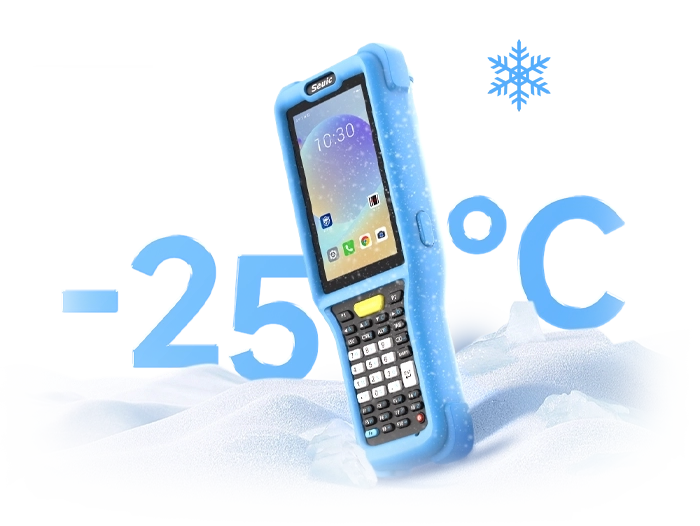
Focus on three specs: ingress protection rating, drop specification, and operating temperature range. IP65 or higher dust/water protection is the baseline for workshop dust and liquid splash. Drop rating should be at least 1.2 meters, preferably 1.5 meters — dropping a handheld from a workbench or tool cart happens all the time. Operating temperature range must cover your actual workshop conditions, especially for high-temperature shops or facilities without winter heating.
Battery life can't be overlooked. Workshop operations are often continuous for hours. If the device dies mid-shift and needs charging, the workflow is interrupted. Choose devices with large-capacity batteries that support hot-swap or fast charging, ensuring a full shift or even a full day of operation without worrying about power.
3.4 System Compatibility: You're Not Buying Hardware — You're Buying a Solution That Works
An RFID handheld terminal is just the "hands and eyes" of a tool management system. What actually makes inventory and check-in/check-out workflows run is the software behind it. Can the device interface with your existing ERP, MES, or WMS? Does it support secondary development of business apps on Android? Can data sync to the backend in real time?
Ask these questions during selection. Some devices have impressive hardware specs but closed systems and limited development interfaces — you'll hit walls when trying to connect to your management system. Choose devices based on mainstream Android, with open SDKs and a mature ecosystem of industry applications. Whether you use off-the-shelf tool management software or develop custom functions, you'll have the flexibility you need.
4. Scenario Walkthrough: How Tool Inventory and Check-In/Check-Out Actually Work
Let's map the selection criteria onto the two core operational scenarios.
Scenario 1: Monthly/Weekly Tool Inventory. The operator walks along tool racks or cabinets with the RFID handheld terminal. Within seconds, the terminal reads all tags in that zone in bulk, automatically compares them against the system ledger, and displays statuses like "on-shelf," "missing," or "misplaced." For missing tools, the system traces the last checkout record and identifies the borrower. The entire process requires no picking up tools one by one, no aligning a scanner — a large tool room inventory that used to take most of a day is now done in under 20 minutes.
Scenario 2: Daily Tool Check-In/Check-Out. For checkout, the borrower selects their employee ID on the terminal or taps their badge, then places the tools in the read zone or sweeps the terminal across them. The terminal reads all tags at once and generates a checkout record: tool number, name, borrower, checkout time, and due date. For return, another sweep reads the tags, matches the checkout record, and closes it out. Overdue returns trigger an alert. No handwriting, no manual verification — check-in/check-out data enters the system in real time, and managers can see each tool's current status and full movement history at any time.
Once these two scenarios run smoothly, tool management shifts from "manual reconciliation and after-the-fact blame" to "real-time visibility and full traceability."
5. What Kind of Device Can Handle These Scenarios?
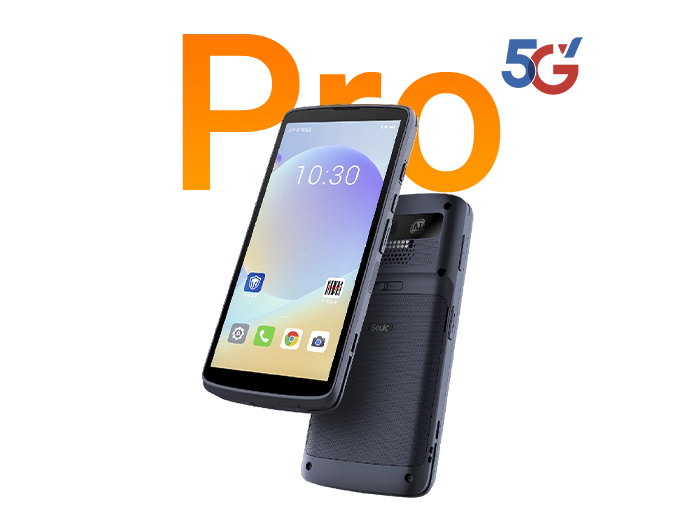
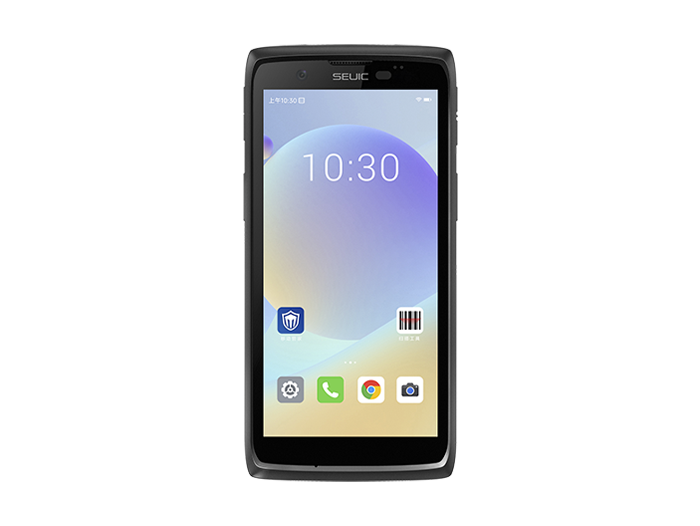
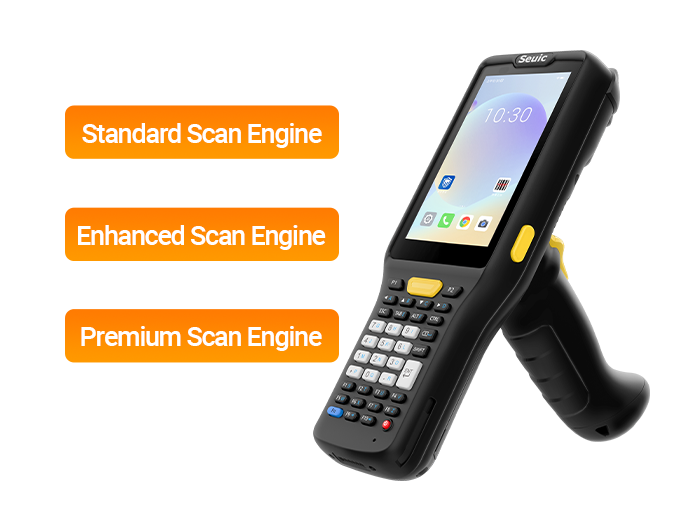
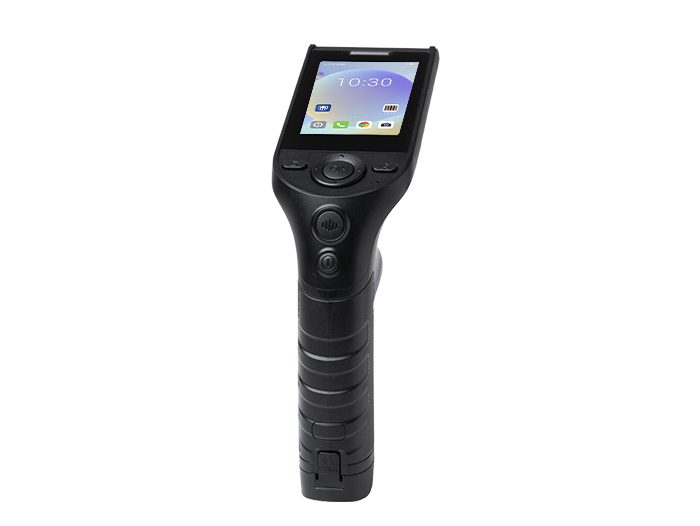
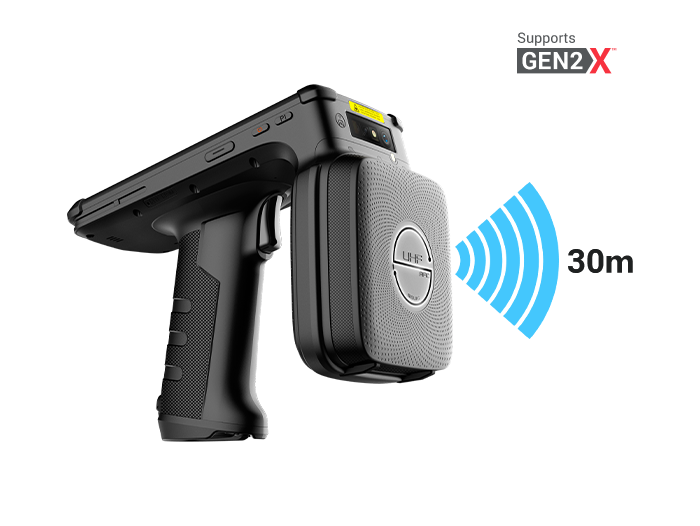
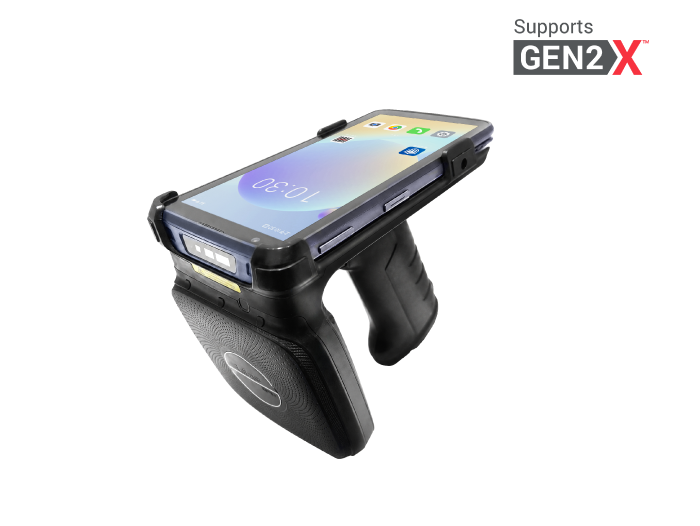
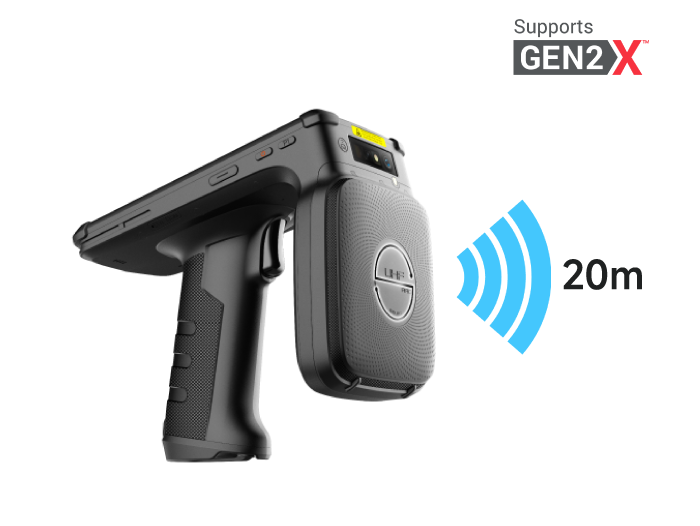
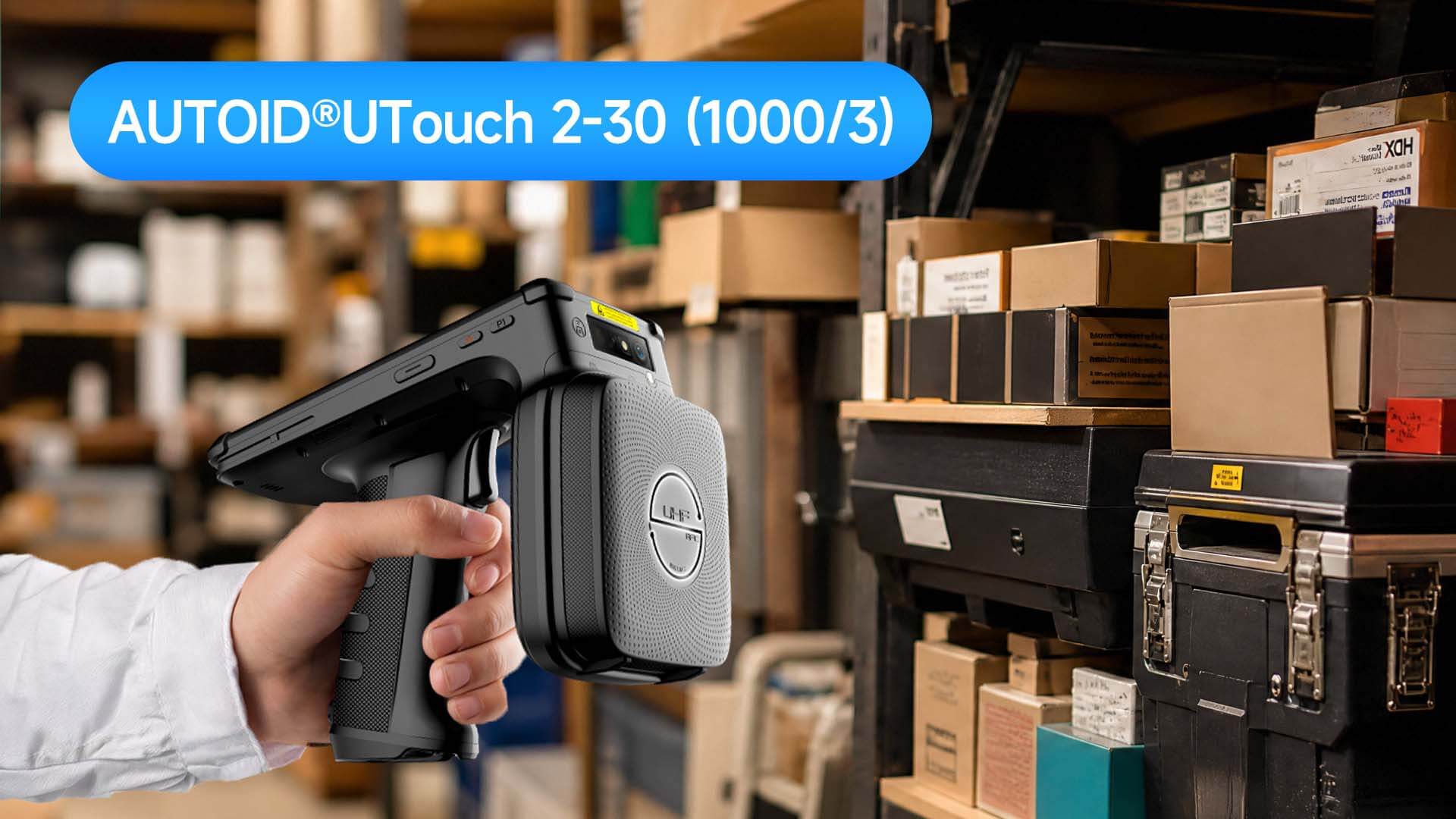
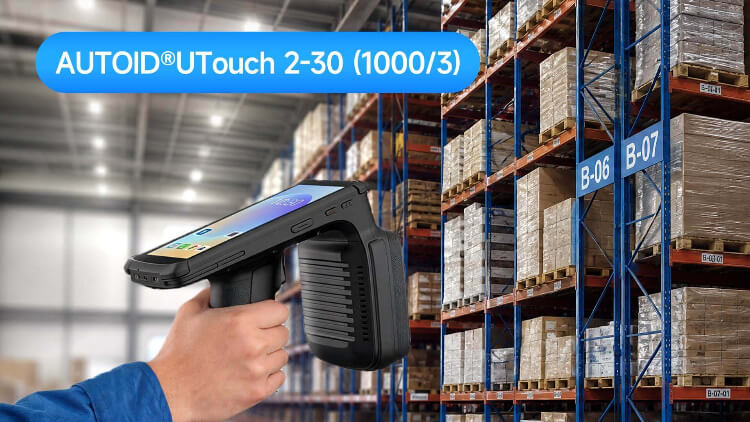
Let's come back to selection. Heavy metal tools, complex workshop environments, demanding both bulk inventory and fast check-in/check-out — this scenario puts high demands on device performance. Let's look at a real example: a handheld terminal positioned as an ultra-long-range RFID reader, and see how its specs map to the four must-have requirements. This device is the Seuic AUTOID UTouch 2-30 (1000/3) Ultra-Long-Range UHF RFID handheld reader.
Bulk read capability: It completes a full read of 1,000 tags in 3 seconds, with a bulk read rate of 1,300 tags per second. Facing densely packed metal tool tags on a rack, one sweep covers them all with virtually no misses. It also supports the GEN2X protocol with deep optimization for dense and miniature tags — particularly important for smaller tools like cutters and gauges.
Read range: Ultra-long-range reading reaches 30+ meters. This might seem "overkill" for close-range tool cabinet inventory, but if your workshop has high-bay tool shelving, large open tool storage areas, or if operators need to scan while walking down aisles, long range directly determines efficiency — standing on the floor, you complete high-shelf inventory without ladders or forklifts. Plus, transmit power is adjustable — reduce power in close-range scenarios to avoid cross-reads.
One technical detail worth highlighting: this device features multi-polarization auto-recognition technology, integrating omnidirectional, vertical, and horizontal polarization. It intelligently senses tag attachment angles and tool placement orientations, dynamically adapting the optimal reading scheme. In metal tool scenarios, tool orientations vary widely and tag positions differ — traditional single-polarization devices easily miss certain tags due to angle issues. Multi-polarization technology essentially gives the device "360-degree vision," improving recognition efficiency by approximately 40% compared to traditional circular-polarization devices. In practice, this means fewer retries and no need to rescan.
Environmental toughness: IP67 dust/water protection, 1.5-meter drop resistance — handles workshop oil, dust, and accidental drops. Battery: 11,700mAh large-capacity swappable battery, supporting 24-hour all-day runtime and 50,000+ tag reads — a full shift or even continuous operation without worrying about power. For industries requiring extended outdoor work like utilities and railways, this battery life is essential.
System compatibility: Android 14, octa-core processor (4× Cortex A73 2.0GHz + 4× Cortex A53 1.8GHz), UFS 2.1 high-speed memory — read/write speeds 2-3x faster than conventional devices. Multiple business apps run smoothly, whether off-the-shelf tool management software or custom enterprise applications. It also supports PSAM card expansion for data security — a plus for enterprises managing valuable tools.
Beyond RFID, this device integrates 1D/2D barcode scanning, top-mounted NFC, and a 13MP rear camera. So it's not just an RFID reader — it's a full-function data capture terminal. Tools with both barcodes and RFID tags can be read interchangeably. Need to photograph a damaged tool? Use the device's camera and upload directly. NFC supports badge recognition and identity verification. One device covers multiple operational needs — workers don't need to carry several terminals onto the shop floor.
6. Real-World Cases
Here are a few actual cases with logic similar to tool management.
Hainan Airlines: Life Jacket Full Lifecycle Management. Aviation life jackets share a key trait with workshop tools — they must be on-shelf, never lost, and regularly inspected. Hainan Airlines previously relied on manual checks — inspecting life jackets on a single aircraft took 30 to 60 minutes, with low efficiency and high risk of missed items. After deploying the Seuic AUTOID UTouch 2 Series RFID handheld terminal, each life jacket was tagged with an RFID label. Ground staff performed bulk reads with the handheld, cutting inspection time per aircraft to 5 minutes — a 5x+ efficiency gain — while enabling expiry date alerts and full-process traceability. The underlying logic is identical to tool management: bulk reads replace one-by-one inspection, system ledgers replace manual records, and full traceability replaces after-the-fact accountability.
Bank Cash Box Handover Management: The logic of bank cash box management is highly similar to tool check-in/check-out — both require precise records of who took what, when, and when it was returned. After deploying the Seuic AUTOID UTouch 2-S6+3 RFID handheld terminal, each cash box was assigned a unique RFID tag, enabling closed-loop management from inbound, storage, handover, to outbound. Single handover time dropped from 20 minutes to under 5 minutes, with significant improvements in branch self-inspection efficiency.
7. Practical Selection Advice
If you're considering RFID handheld terminals for workshop tool management, here are a few actionable recommendations distilled from the analysis above:
First, understand your own scenario before choosing a device. Are tools stored in enclosed cabinets or on high-bay shelving? What percentage are metal tools? How frequently do you run inventory and check-in/check-out? The answers directly determine what class of device you need. Don't blindly chase the highest specs, and don't skimp on performance to save money — the former wastes budget, the latter creates headaches in daily use.
Second, bulk read capability matters more than single-tag read range. The core of tool management is inventory, and the core of inventory is "reading everything in one pass." Bulk read rate, miss rate, and dense tag reading performance — these metrics determine your real-world experience more than "maximum read distance." When evaluating, ask suppliers for an on-site demo — bring your actual tool racks and tool tags, and see whether the device can really sweep everything in one pass.
Third, in metal environments, always pair on-metal tags with high-performance readers. Don't expect standard tags to work reliably on metal tools — on-metal tags are mandatory. At the same time, the reader's RF performance must have enough headroom to compensate for signal attenuation caused by metal environments. Tags and readers are one system — don't evaluate them separately.
Fourth, choosing a device means choosing a vendor. An RFID project doesn't end at purchase. Tag selection, site deployment, system integration, and ongoing maintenance — every step requires technical support from the vendor. Pick a vendor with industry experience, proven case studies, and localized service capabilities. That matters far more than comparing prices alone.
Digitalizing workshop tool management — RFID is currently the most mature and cost-effective technology path. Choose the right device, implement a sound plan, and inventory goes from "most of a day" to "under 20 minutes," check-in/check-out goes from "paper logs" to "auto-traceability." These aren't concepts — they're realities already running in countless workshops. The key is getting the selection right from the start.
Founded in 2002, Seuic Technologies Co., Ltd. is committed to mastering core technologies, continuously improving innovation capabilities, and delivering outstanding branded products including mobile computers, RFID readers, tablets, barcode scanners, and fixed-mount readers. With highly reliable products and efficient service, our solutions are widely applied across manufacturing, retail, logistics, healthcare, and more. We provide frontline workers with more durable real-time data collection tools, helping you improve operational efficiency and take productivity to new heights.
Related News
-
Portable Barcode Scanner for High-Rack Warehouses
Product Updates | 2026.09.20Learn More
-
RFID Tracking System Buying Guide: 10 Must-Evaluate Selection Factors
Product Updates | 2026.09.18Learn More
-
RFID Tracking vs Barcode: The Ultimate Asset Tracking Selection Guide
Product Updates | 2026.09.18Learn More
-
RFID Tracking in Supply Chain: An End-to-End Visibility Solution from Factory to Customer
Product Updates | 2026.09.15Learn More